
A History Of Religion in Nepal
The history of religion in Nepal dates back to ancient times when Nepal was isolated from the rest of the world. The country remained a mystical haven of the Himalayan high mountains, where sage and hermits visited to meditate. People from the neighboring countries began to migrate to the Himalayas, although the country’s name was unknown.
Every group of tribes who settled far and wide in present Nepal named the land. As per their ethnic tribal language, and for centuries, the country remained with provinces and principalities. Kirat ruled in the east, the Newars in the Kathmandu Valley, while Gurung and Magars occupied the mid-west. The Kirats ruled from 300 BC, and during their reign, emperor Asoka arrived from India to build the pillar at Lumbini in memory of Lord Buddha.
The Kirats, and then followed by the Lichhavi whose descendants today believed, as the Newars of the Kathmandu Valley. During this period, arts and crafts thrived in Nepal, many of the beautiful woodcarvings and sculptures. Which exists today belongs to this era. With the end of the Lichhavi dynasty, the Malla kings came to power in 1200 AD, and they also contributed tremendously to Nepal’s art and culture. However, after almost 600 years of rule, the kings were not united by themselves during the late 18th century. Prithvi Narayan Shah, King of Gorkha (a small kingdom in the mid-west of Nepal) conquered Kathmandu and united Nepal into one kingdom. Recognizing the threat of the British Raj in India, dismissed European missionaries from the country, and for more than a century, Nepal remained in isolation.
During the mid-19th century, Jung Bahadur Rana became Nepal’s first prime minister to wield absolute power. He set up an oligarchy, and the Shah Kings remained figureheads. The Ranas regime was overthrown in a democratic movement of the early 1950’s.
Today, Nepal enjoys a multi-party democratic system and is a Republic country. Nepal is probably the only country in the world where Hinduism and Buddhism exist in close harmony. Despite the religious and cultural differences. The temples and monasteries stand close to each other.
Nepal with more than 125 ethnic groups and 123 native spoken languages, the cultures and religions are divided. Mostly with the Hindu religion and followed by Buddhism, with other minority religious sects.
Like, the Kirat, Jain, Sikhism, Islam, and Christianity, including a few groups of animists.
01: What is the main religion of Nepal?
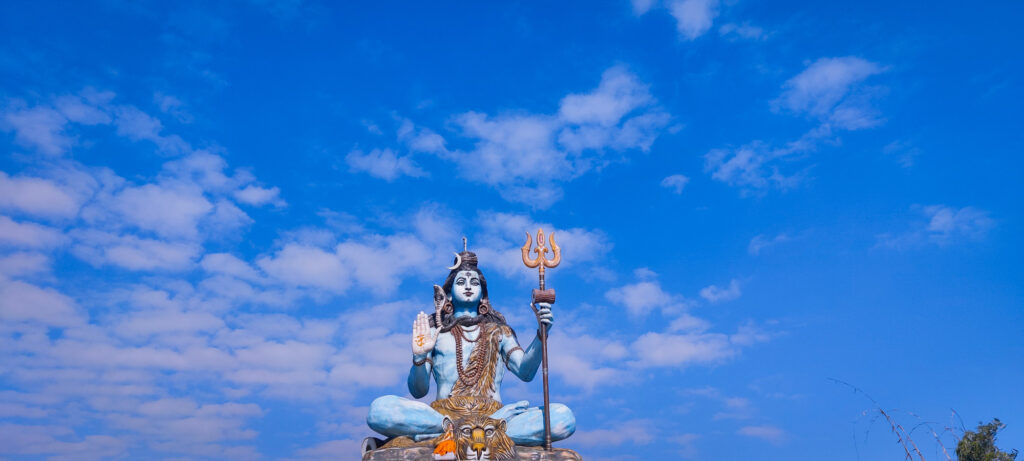
More than 81% of Nepalese follow the Hindu religion and culture, similar to their Indian predecessors. The Hindu God Shiva is the Guardian deity of the country. The oldest Hindu temple in Nepal and one of the most holy sites in Hinduism is the Pashupatinath Temple. It is on the bank of the holy Baghmati River, built in the 5th century. The Hinduism majority is due to a large population of Aryan and Dravidian origins. The next main religion, Buddhism, traces back its roots to Lumbini in Nepal, the birthplace of Lord Buddha. They are the clan of the Shakyas caste, who supported the spread of Buddhism in Nepal and neighboring countries and states.
The Kathmandu valley and then Buddhist religion flourished during the reign of Emperor Asoka. By the 18th Century, the king of Gorkha was after the unification of Nepal. From the Shah Dynasty followed Hinduism, and Buddhism existed among smaller tribal groups. The Newars of Kathmandu and highlanders of the Himalayas, the Tamang, Gurung, Thakali, and Sherpa interwoven with the Buddhist religion. As well as other minor tribes of the Nepal Himalayas follow Buddhist principles and cultures. Similar to their Tibetan predecessors across the borders and beyond the Himalayas.
02: Is Nepal A Hindu Country:
The main history of religion in Nepal is Hinduism, practiced by almost 81% of the country. Nepal is the most religious Hindu country in the world, home to most of the important Hindu pilgrimage centers, the main being the world-famous Pashupatinath Temple. The people of Nepal consider Lord Shiva as the guardian deity, while the cow is considered the national animal of Nepal. As per the ratios from the population, of little over 23 million people. More than half of the population practice Hindu religion. Making Nepal almost a Hindu Country. The majority of Hindu Nepali are fighting to make Nepal a Hindu country. However, being a democracy, Nepal is a multi-ethnic, multi-lingual and multi-religious country.

The other major religions followed in Nepal are Buddhism, Islam, Kiratism, Christianity, Sikhism, Baha’i, and some minority religions. Yet it is on the pipeline to become Nepal as a Hindu country.
03: Which Is The No. 1 Caste In Nepal?
The country, with more than 23 million people, includes more than 125 different ethnic groups and 123 native spoken languages. But the Khas, known as Bahun (Brahmin), and the Chettries are the majority spread throughout the country. From the east to west, and north towards south, are populated by the Hindu Chettries known as Khas. Chettries ranks as number one due to the population. Then comes the Magar Hill tribes. History of religion in Nepal For the Hindus the language is Nepali, it is the country’s official language. It was originally spoken by the Khas. Traditionally, the Bahun are priests and are better educated than most ethnic groups. In many high places, the important government and educational posts, are dominated by the Bahun and Chettries.
04: What is the percentage of religion in Nepal?
History of religion in Nepal At present, the number over 23 million population in Nepal. The Hindu ranks first at 81.19%, followed by Buddhists at more than 4.39 %, and Muslims at 3.17 %. Kirats of eastern Nepal, an indigenous ethnic tribal religion of 1.76% and Christian at 0.01 %. Includes the Sikhs and Jains, a minority of 0.1 %, as well as fewer atheist minimum groups of tribes.
05: What are the top three religions in Nepal?
According to the History of religion in Nepal, The top three religions are Hinduism 81.9%, with a large population of over 23. 678 hundred thousand. Then next is Buddhism, with 8.2 % of more than 2.394 hundred thousand. Then Islam at 5.02 % with over 1,483 hundred thousand. history of religion in Nepal, as per law for Religious and cultural rights of freedom. Along with the protection of the heritage culture and custom as per religion, as fundamental rights.
Conclusion Of caste and Religion In Nepal:
The inhabitants of the hill flanks that surround Kathmandu Valley and other parts of Nepal from east to mid-west. Extending to the north and south are mostly Tamang, nowadays also known by their family name Lama.
Who make up one of the largest Tibeto-Burman ethnic groups in the Kingdom of Nepal. In the Tibetan language, Tamang means “horse soldier” which provides an idea about their past occupation. Today, they farm and work as mountain guides and porters and are second to Sherpa in mountaineering skills. Tamangs practice Tibetan Lamaism and the Bon religion of pre-Buddhist and have their tribal language. Much similar to the language of the Sherpa and other hill tribes Gurung and Thakali of the northwest.
The Magars of the western and central hills of Nepal. They had their independent kingdoms. Until the 18th century, and were closely associated with the Hindu Indo-Aryans in the west. Much of their cultural practices have been influenced by Chettries, and today it is difficult to make any difference. Like in the housing, dressing, and farming practices of the two. Another ethnic group closely resembling the Magars in many aspects is the Gurung.
They also live in the western and central hills of the country although further to the east. Religion in Nepal Tibeto-Burman stock and practice Tibetan Lamaism, have their tribal language, and the Gurung also practice shamanism. Apart from being farmers and shepherds, many find employment in the British and Indian armies.

The Khas are the Bahun (Brahmin) and Chettries who formed their, kingdoms in the far west. They are Hindus, and the language is Nepali, which is the country’s official language, it was originally spoken, by the Khas. Religion in Nepal Traditionally, the Bahun are priests and are better educated than most ethnic groups. The Chettries have traditionally, been known as warriors. Those living in the higher hills in the far western region lead hard lives because of lack of fertile soil and farming is practiced in the river valleys and on the hill flanks.

Quick Inquiry

Talk to an Expert
Mr. Samir Simkhada
Online Now


