Top 10 Things to Do in Nepal, Nepal offers breathtaking adventures and rich culture for worldwide travelers. Trekking to Everest Base Camp, Annapurna Circuit and similar others many trekking trail for stunning mountains. Explore Kathmandu’s Durbar Squares, Pashupatinath, and Boudhanath Stupa. Relax in Pokhara, try paragliding or boating. Visit Chitwan for wildlife safaris. Lumbini, Buddha’s birthplace, adds spiritual depth to this Himalayan gem.
Tsum Valley and Manaslu Circuit Trek
1. Trek in the Nepal Himalayas
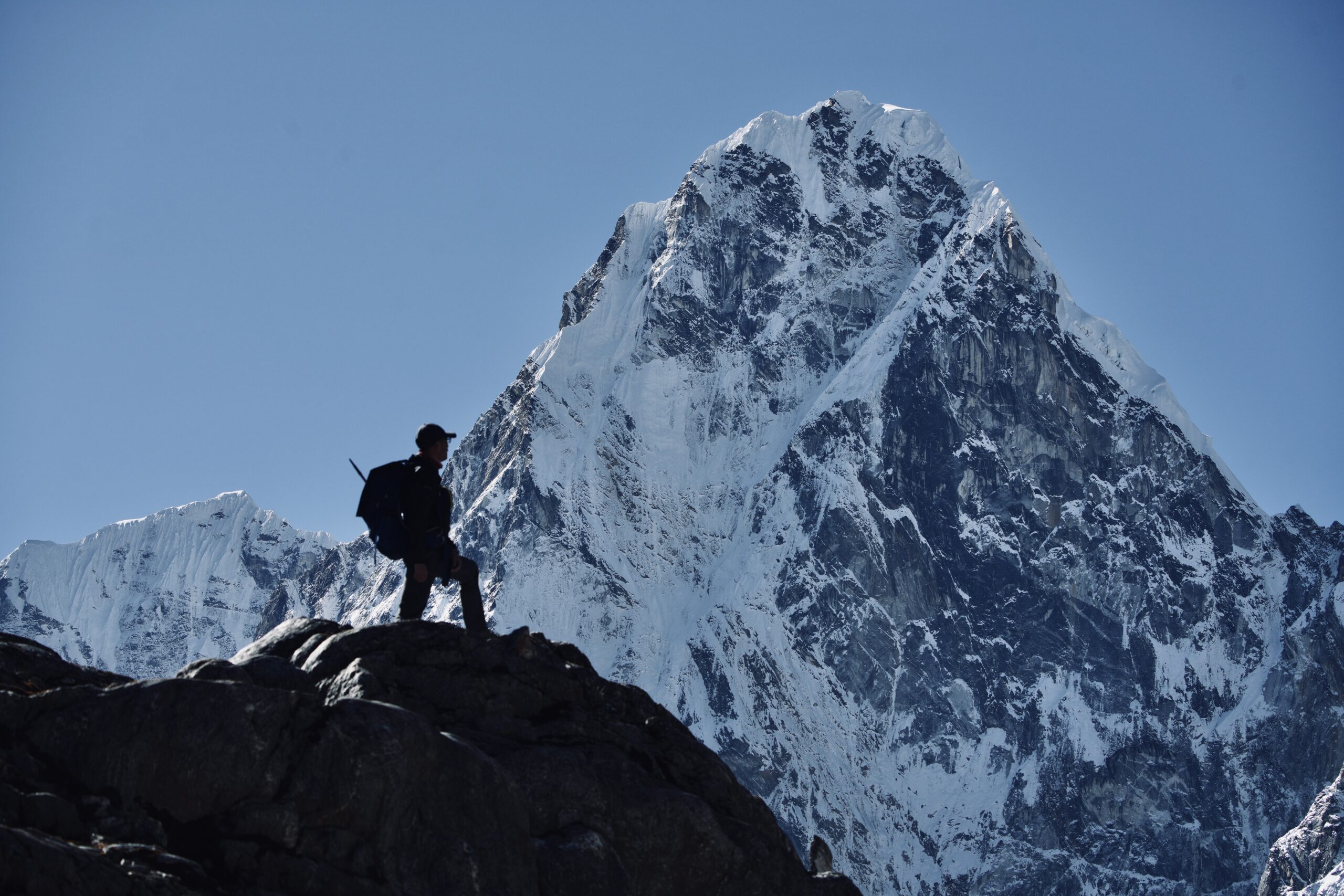
Trekking in the Nepal Himalayas offers an unforgettable journey through some of the world’s most iconic mountain trails. From Everest, Makalu, Kanchenjunga, Manaslu, Dhaulagiri and Annapurna to Langtang regions, trekkers experience breathtaking snow-capped peaks, diverse landscapes, traditional villages, and warm local hospitality, making Nepal a top destination for mountain adventures.
Best tour around pokhara
2. Explore Around Kathmandu, Patan & Bhaktapur Durbar Squares
Discover Nepal’s rich history by exploring Kathmandu, Patan, and Bhaktapur Durbar Squares. These UNESCO World Heritage Sites showcase ancient palaces, intricately carved temples, and traditional Newari architecture. Walking through these historic squares reveals royal heritage, vibrant culture, and centuries-old art and craftsmanship.
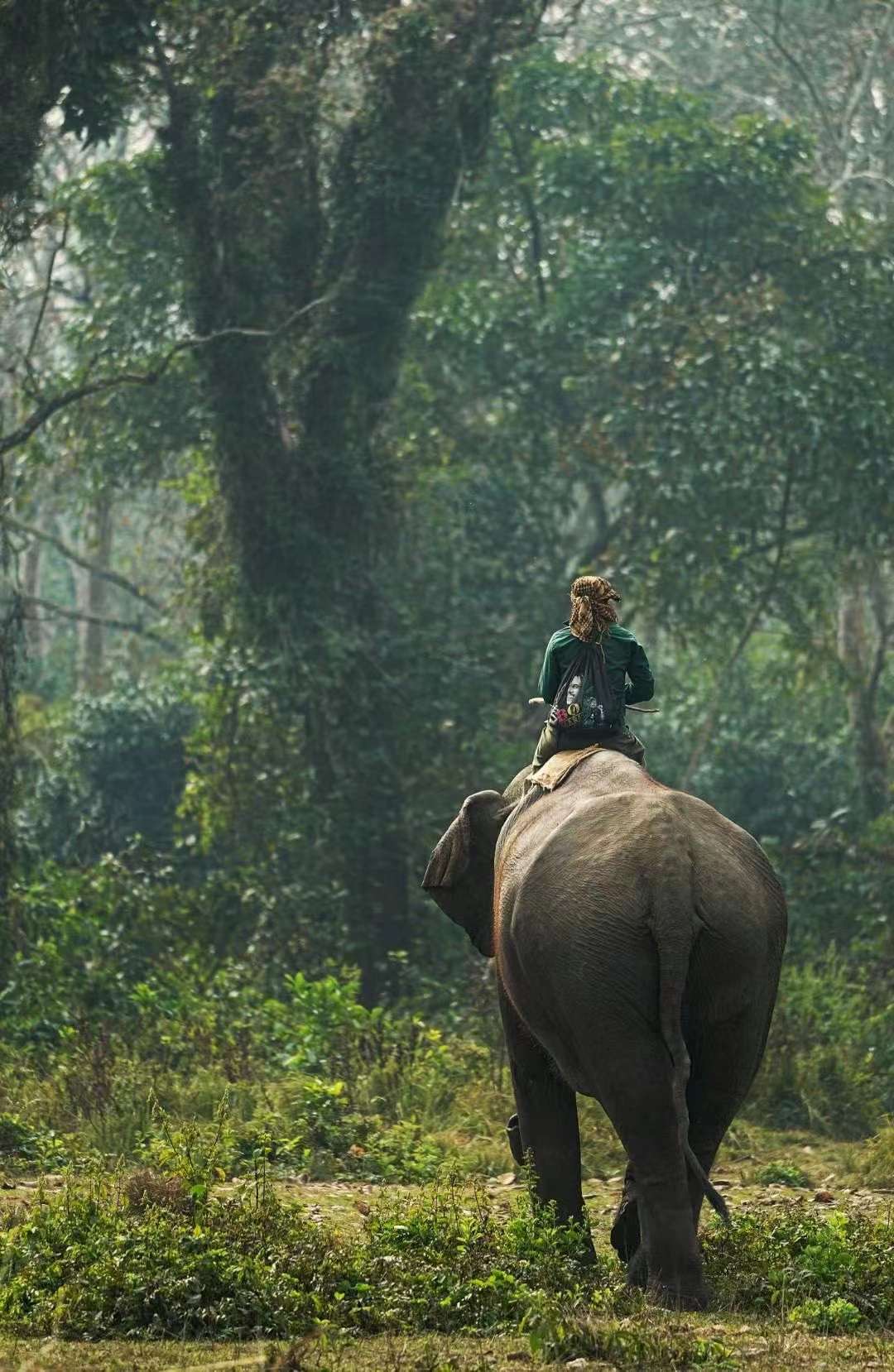
3. Go on a Jungle Safari in Chitwan
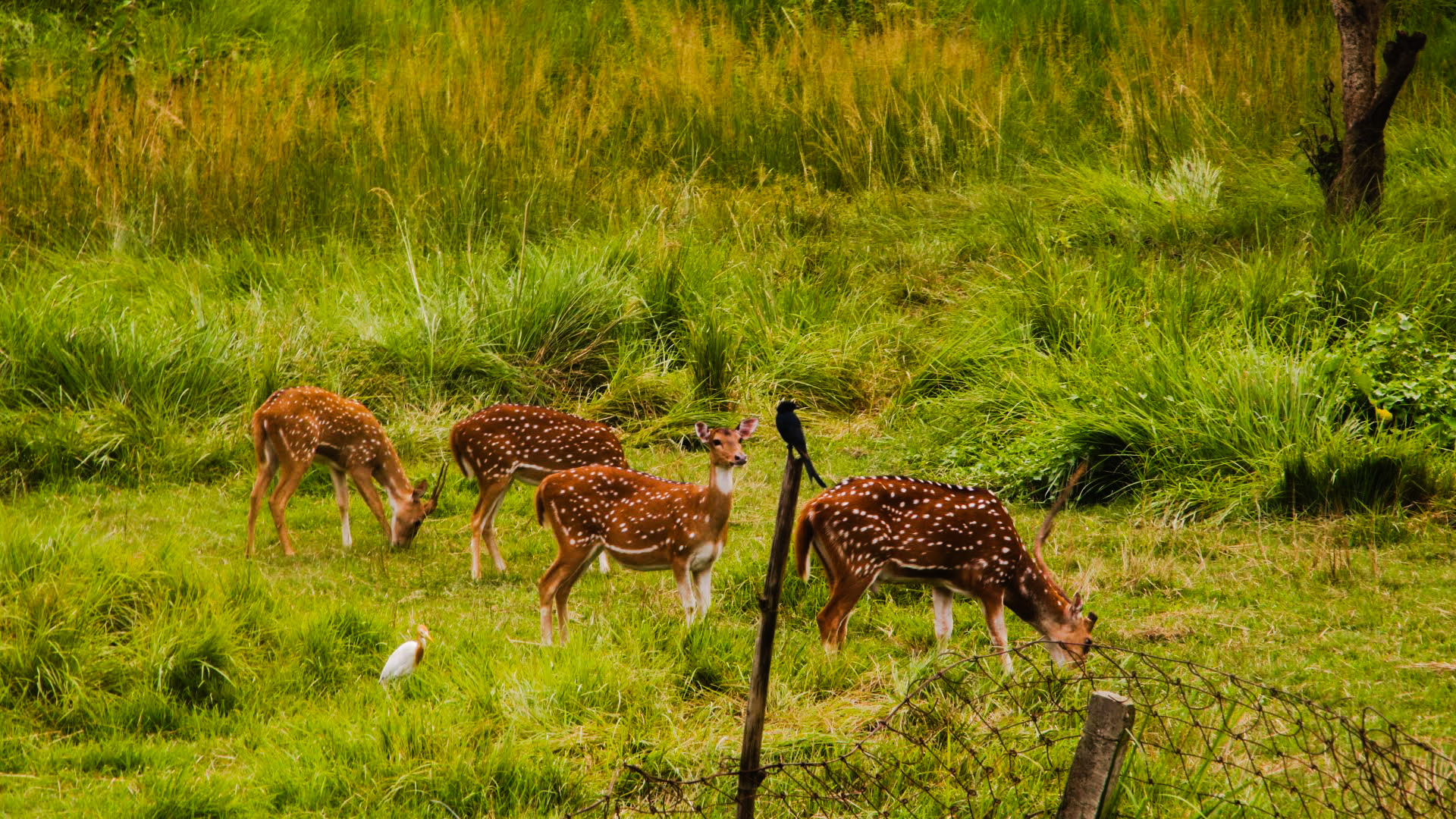
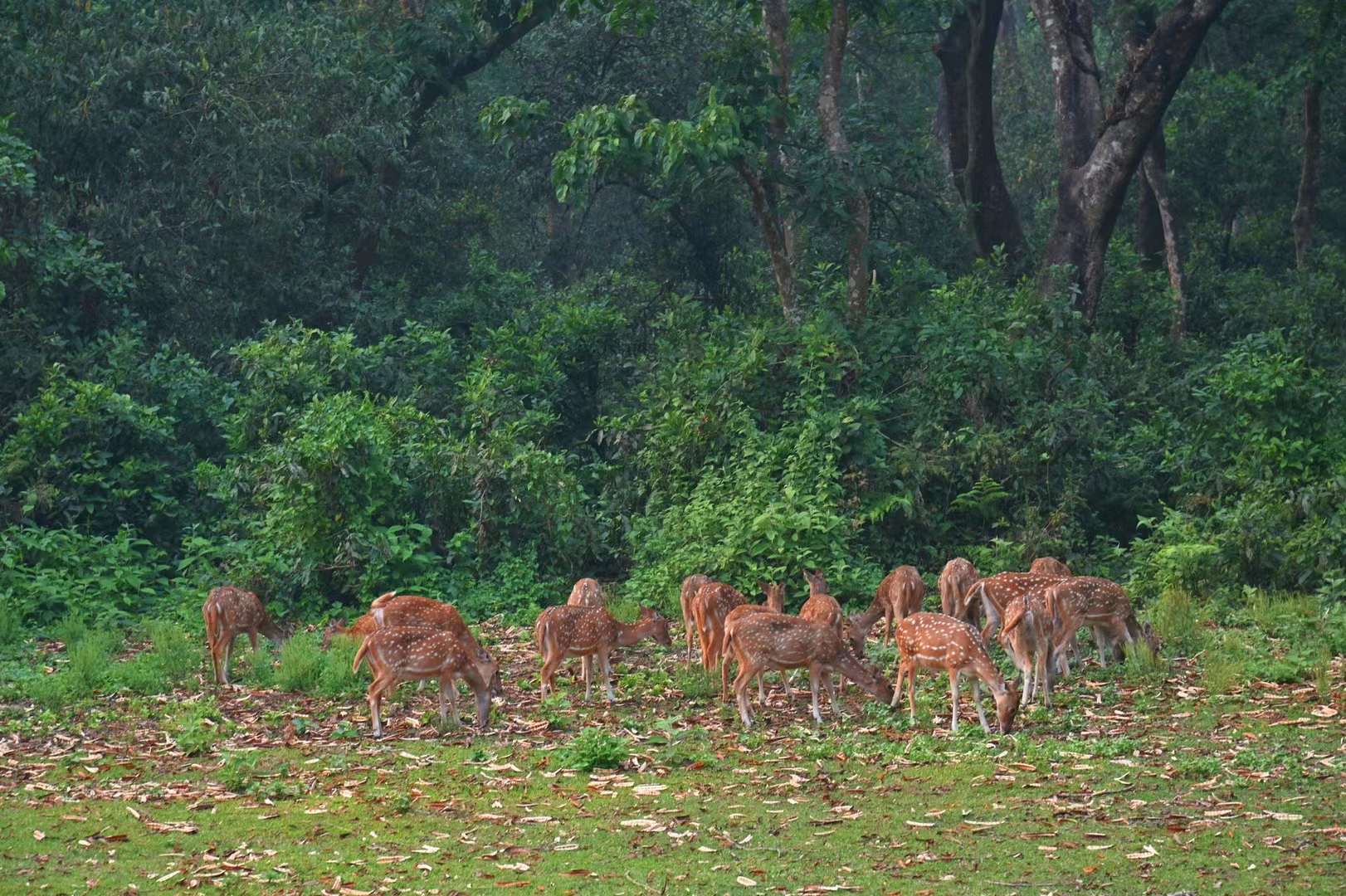
Nepal First established Chitwan National Park offers an exciting jungle safari experience in Nepal’s subtropical lowlands. Explore dense forests and grasslands by jeep or canoe while spotting one-horned rhinos, crocodiles, deer, and exotic birds, with a rare chance to encounter the majestic Bengal tiger in its natural habitat.
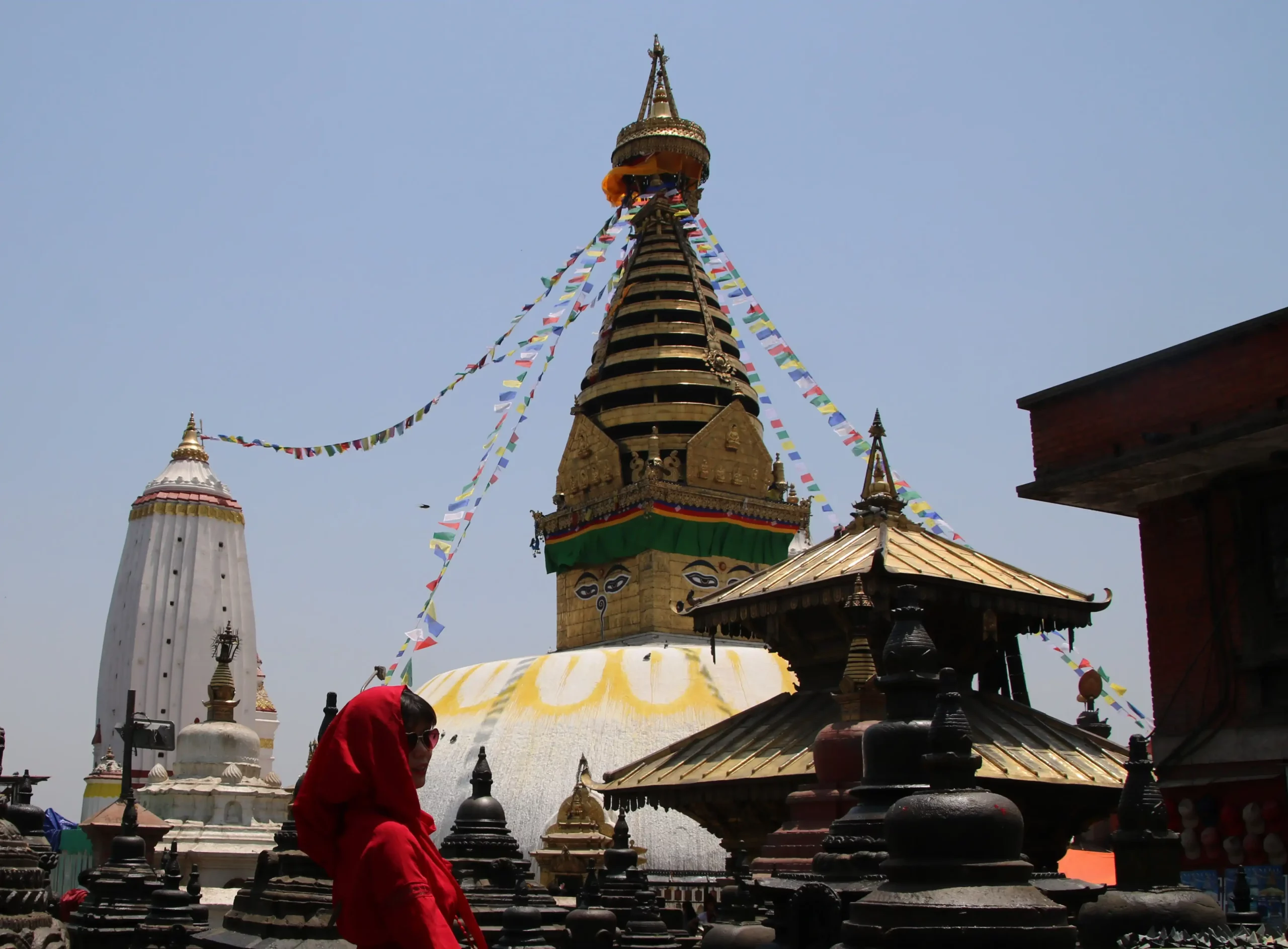
Explore Nepal’s sacred Buddhist sites, including Lumbini, the birthplace of Lord Buddha, and the iconic Swayambhunath and Bouddhanath stupas. These UNESCO World Heritage Sites offer serene surroundings, ancient architecture, prayer rituals, and deep spiritual significance, providing a peaceful journey into Nepal’s religious and cultural heritage.
5. Experience Adventure Sports in Nepal
Nepal is a paradise for adventure lovers, offering thrilling activities like paragliding over mountain lakes, bungee jumping into deep gorges, zip-lining across valleys, and white-water rafting on Himalayan rivers. Surrounded by dramatic landscapes, these experiences combine adrenaline, natural beauty, and unforgettable outdoor excitement.
6. Mountain Biking in the Hills
Top 10 Things to Do in Nepal, Mountain biking in Nepal offers adventurous trails through rural villages, terraced farmlands, forests, and hilltop viewpoints. Routes around Kathmandu Valley and Pokhara provide both cultural interaction and natural beauty, making it an exciting way to explore off-the-beaten-path areas.
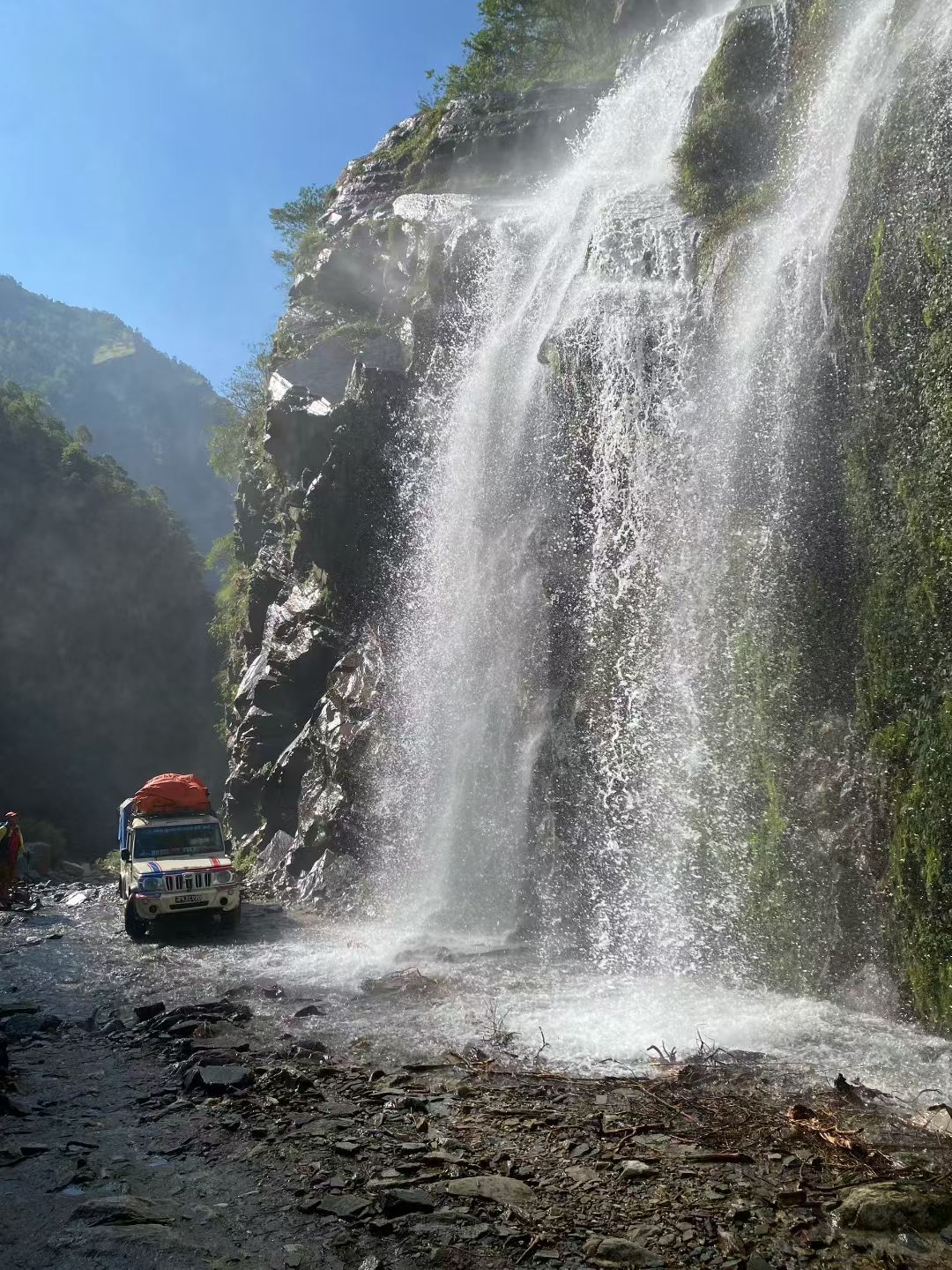
7. Explore 4WD Jeep Tour in Nepal
A 4WD jeep tour in Nepal offers an adventurous way to explore remote villages, rugged mountain trails, and off-road landscapes. Ideal for travelers seeking comfort and excitement, these tours provide access to high-altitude regions, scenic valleys, and cultural sites beyond traditional trekking routes.
4 -WD Jeep Tour In Nepal
8. Attend Nepali Festivals
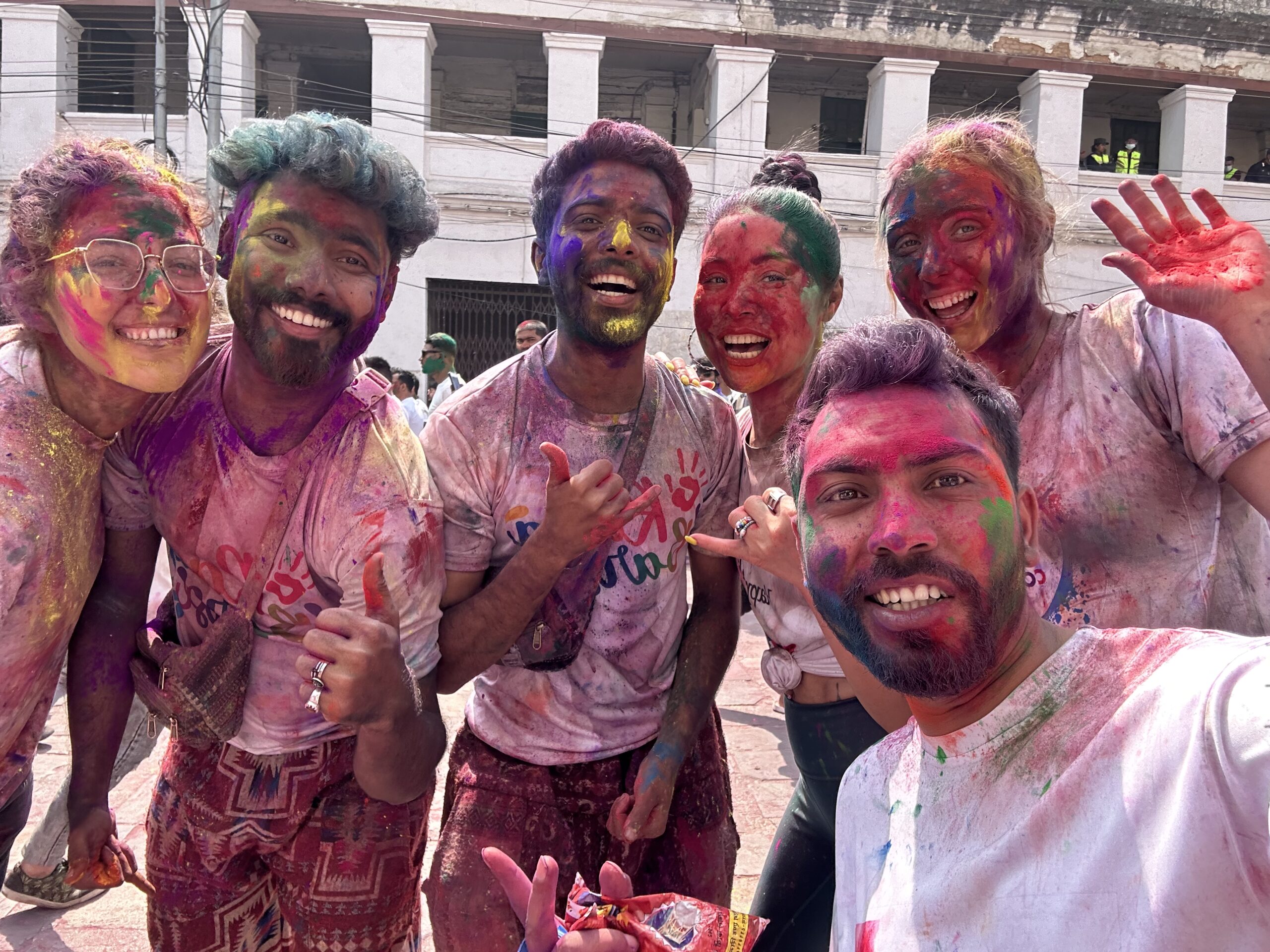
Top 10 Things to Do in Nepal , Nepal’s festivals are vibrant, colorful, and deeply rooted in tradition. Celebrations like Dashain, Tihar, Holi, and Indra Jatra feature rituals, music, dances, and family gatherings. Attending a festival allows visitors to experience Nepal’s cultural diversity and joyful spirit.
Festival Celebration in Nepal
9. Enjoy Local Nepali Cuisine
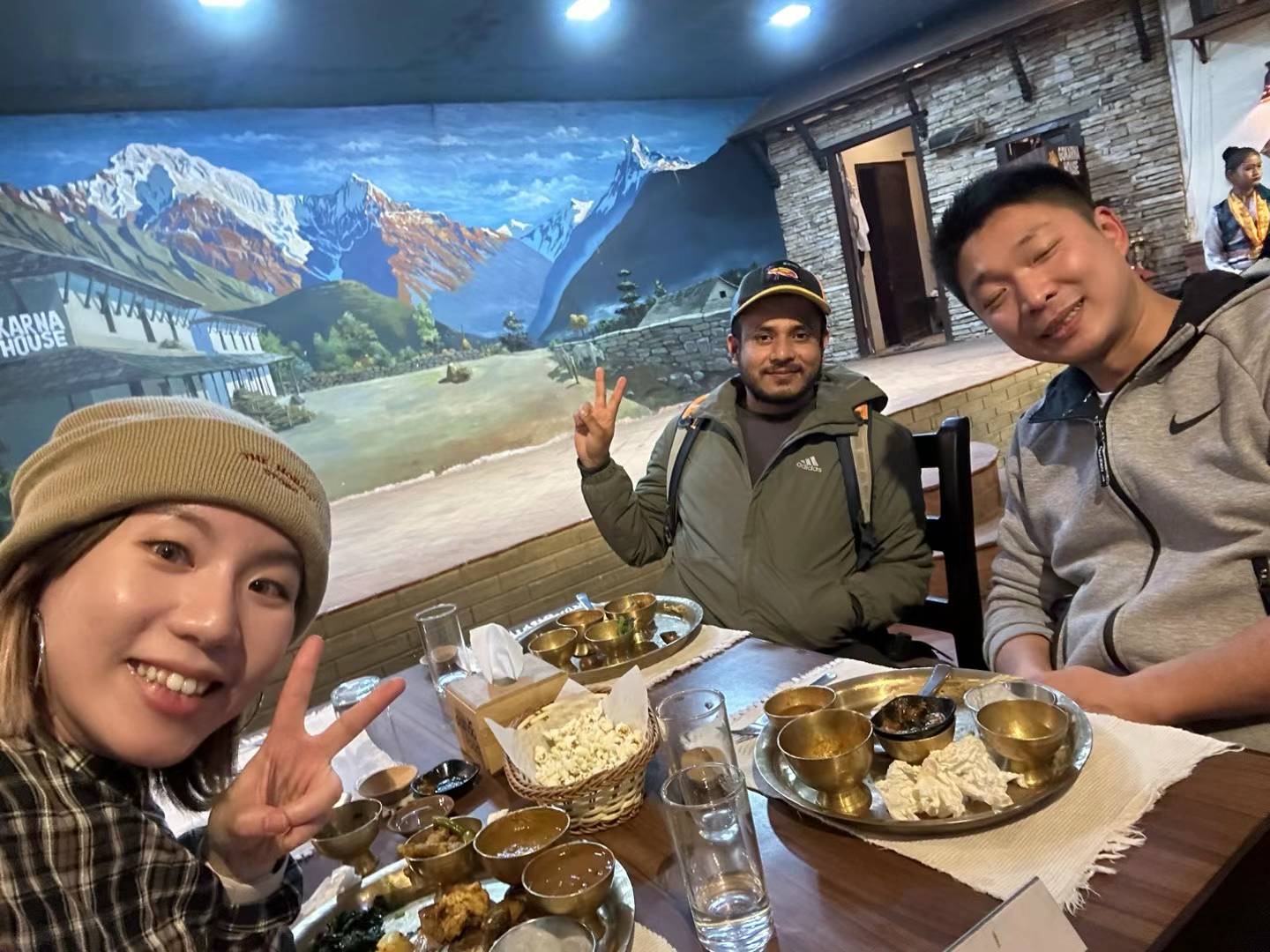
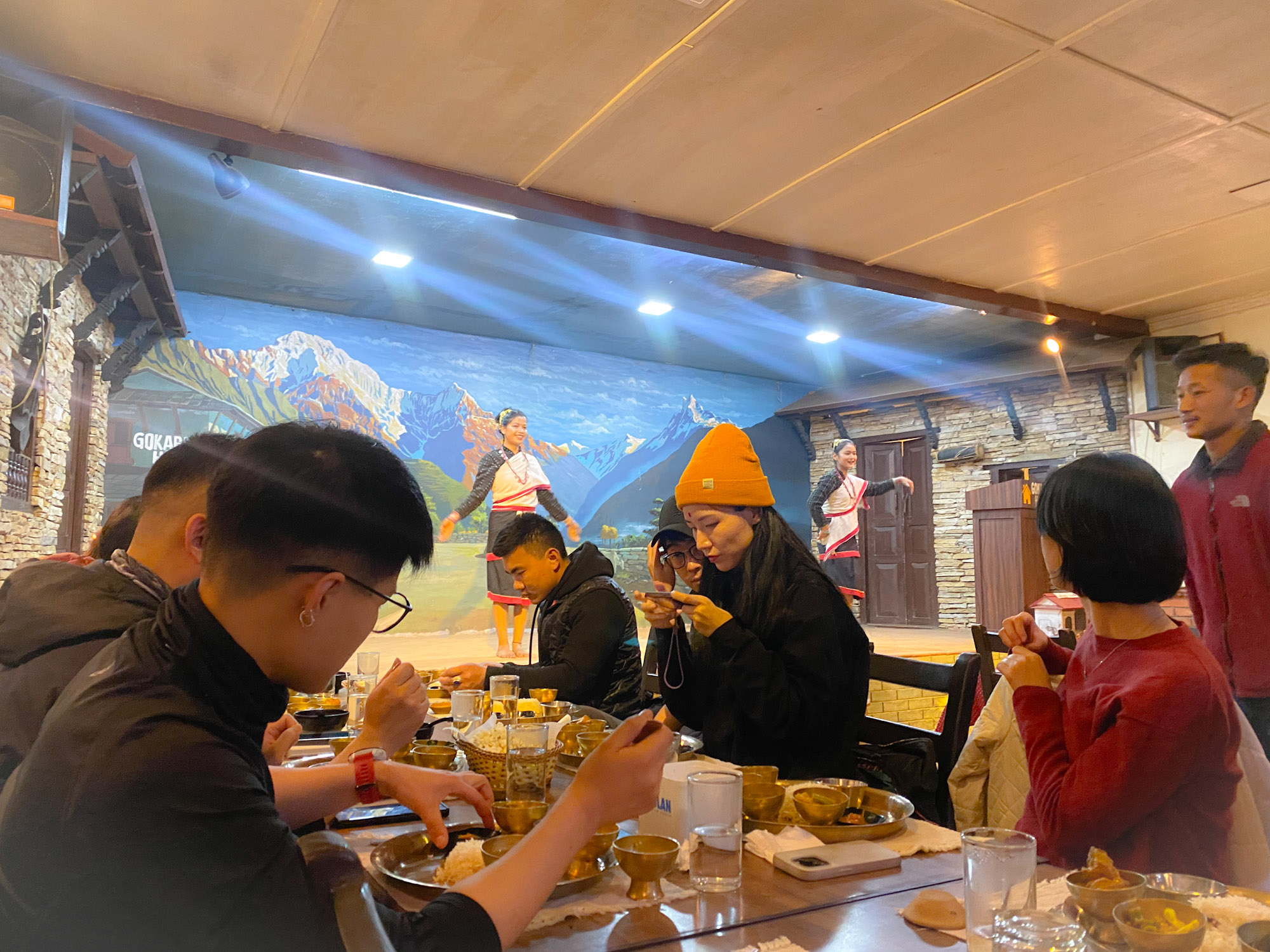
Trying Nepali food is an essential part of visiting Nepal. Dishes like dal bhat, momos, sel roti, and traditional Newari cuisine reflect local flavors and culture. Sharing meals with locals offers insight into daily life, hospitality, and Nepal’s diverse culinary traditions.
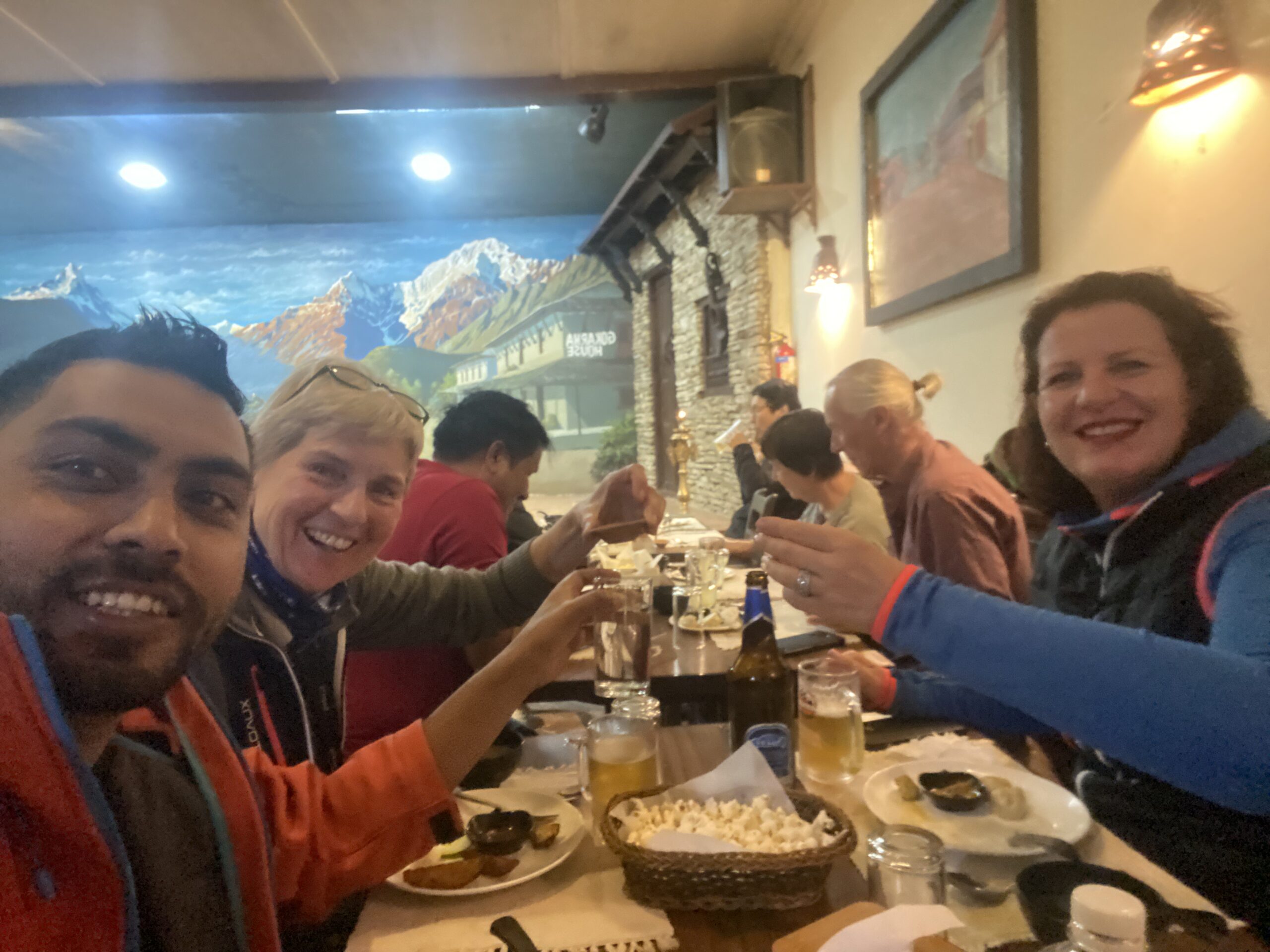
Welcome Dinner in Kathmandu
10. Yoga and Meditation in Nepal
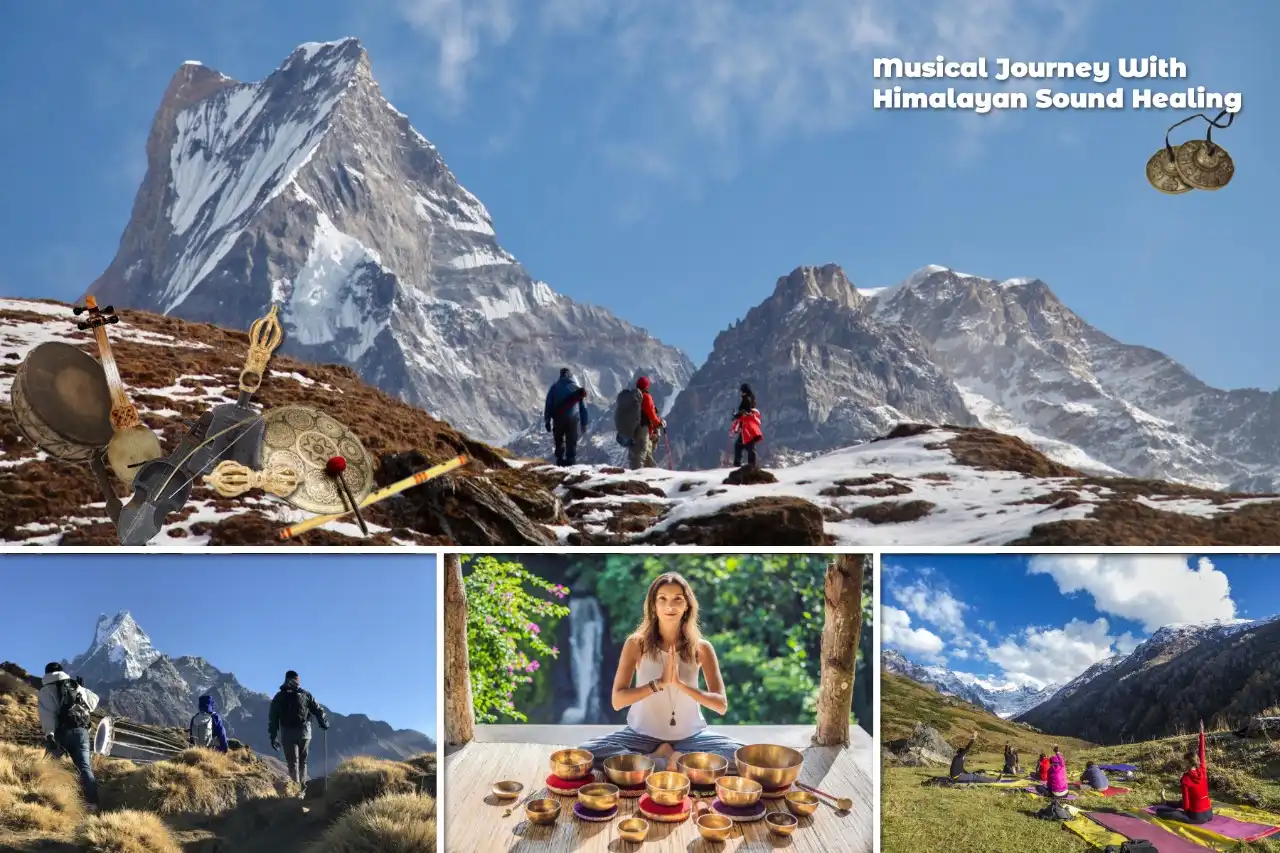
Nepal is a peaceful destination for yoga and meditation, surrounded by Himalayan serenity and spiritual heritage. From monastery retreats to ashrams and wellness centers, practitioners can deepen mindfulness, practice ancient techniques, and reconnect with nature. The calm environment makes Nepal ideal for inner healing and self-discovery.
Sound healing therapy in the himalayan country of Nepal is one of traditional way of relaxation in Nepal.
32 Best Tour Packages in Nepal, Nepal offers a diverse range of tour and trekking packages catering to various interests, from high-altitude trekking to cultural immersion and wildlife safaris. Some of the most popular options include treks to Everest Base Camp and the Annapurna region, cultural tours of Kathmandu Valley, and wildlife experiences in Chitwan National Park. Here are 30 Best tour packages in Nepal.
Pilgrimage Tour in Nepal
The Pilgrimage Tour in Nepal, is a religiously enriching experience that ties together the most religious Hindu and Buddhist sites in the country. This journey typically starts in Kathmandu, which is 1,300m above sea level, and is the cultural hub of Nepal. Pilgrims traveling along this route visit the Pashupatinath Temple, which is one of the most religious Hindu temples, dedicated to the Hindu god, Lord Shiva, situated on the banks of the Bagmati River.
The journey then proceeds westwards via scenic roads to Manakamana Temple (1,302m), which can be reached via a cable car ride, and enjoys views over rivers, hills, and agricultural landscapes. Devotees proceed to Lumbini (150m), which is the birthplace of Lord Buddha, situated in the peaceful plains of southern Nepal. The final journey may also end at Muktinath Temple (3,710m), which is situated in the region of Mustang and signifies salvation or freedom, and is recognized as such by both Hindu and Buddhist cultures.
The trek route includes river valleys, hill, and subtropical plain, and Trans-Himalayan region. Villages around this region display an assortment of ethnic groups such as Newari, Gurung, Thakali, and Tibetan influences.
32 Best Tour Packages in Nepal
Climate ranges from warm and humid in Lumbini to Alpine in Muktinath. Spring and autumn are the best seasons.
The Annapurna, Dhaulagiri, and Nilgiri ranges of the Himalayas can be seen, especially towards the upper
Kathmandu, Chitwan, Lumbini City Tour
This tour provides a comprehensive view of the culture, wildlife, spirituality, and beauty of Nepal. The tour begins in the valley of Kathmandu (1,300m), where the UNESCO World Heritage Sites are visited, including the Kathmandu Durbar Square, Patan, Bhaktapur, Pashupatinath Temple, and the Buddhist stupa
This is followed by a scenic drive to Chitwan National Park (415m) in the subtropical Terai area. This is where the adventurer goes on jungle adventures, canoe rides, and cultural shows of the local Tharus, the original people of the park area. Then follows the scenic drive to Lumbini, a peaceful religious place whose monasteries were constructed by Buddhist countries worldwide.
The tour ends at Pokhara (822m), declared as the most beautiful city in Nepal because of Phewa Lake, Davis Falls, Gupteshwor Cave, and fabulous Mountain Views.
This tour takes you through hills, valley systems, forests, wetlands, and plains. Village experiences include Newari villages, Tharu villages, and Gurung villages.
The climate of Kathmandu and Pokhara is mild. Chitwan and Lumbini have warm weather. The journey can be done at all times of the year; spring and autumn
The Rara Lake Jeep Tour is a thrilling adventure trip to one of the most remote and unspoiled corners of Nepal. The trip takes a rough and tough road from Kathmandu to either Jumla (2,514m) or via Surkhet, by four-wheel jeep. The last point of the trip reaches Rara Lake (2,990m), situated within the Rara National Park.
Rara Lake is the biggest lake in Nepal and is surrounded by pine, spruce, and juniper forests, giving it a serene untouched environment. The lake has contrasting deep blue water that mirrors the surrounding hills and snow-covered peaks.
The area boasts Alpine forests, fauna, and unique varieties of birds. The villages around this area are scarcely populated, comprising mostly of the Khas and Tibetan cultures, leading very rustic lives.
Summer is cool with pleasant weather. The winters are cold with snowy days. Spring and autumn are the best seasons.
One of the mountains visible during the trek is the Kanjirowa Himal.
Upper Mustang Jeep Tour
Upper Mustang Jeep Tour is conducted in the restricted area beyond the Himalayas, also referred to as the “Last Forbidden Kingdom.” The journey for this tour is from Pokhara, along the Kali Gandaki River Valley, passing Jomsom (2,720m), Kagbeni, and then finally to Lo Manthang (3,840m).
The region is in the rain shadow of the Himalayas and has a dry climate similar to that of a desert. This region has huge cliffs, caves, and monasteries, and Lo Manthang, which was the royal city, has medieval walls.
The landscape is dry with colorful rocks and deep gorges. The villages of Kagbeni, Ghami, and Tsarang have preserved mud-brick architecture and old monasteries that date back several centuries.
Arid and windy, with cool summers and cold winters. Even summer is apt because of less rainfall.
Nilgiri, Annapurna I, Dhaulagiri, Tukuche Peak, and other trans-Himalayan ranges.
Ghale Gaon Jeep Tour
The Ghale Gaon Jeep tour is a short yet culturally interesting excursion into a typical Gurung village situated at an altitude of about 2,100 meters. The journey will begin with a drive from either Kathmandu or Pokhara to Besisahar, and then there will be a jeep journey up to Ghale Gaon.
This village is famous for its stone pathways, typical Gurung houses, hospitality, and community-based tourism. The tourists feel as if they are living in the midst of Gurung culture, food, and folk dances.
The environment is scenic with terraced farmlands, rhododendron forests, and hills. Some villages nearby are Bhujung and Ghanpokhara.
Year-round pleasant weather with cool nights. It enjoys rhododendron blooms during spring and a clear sky during autumn.
Mountains Visible on the trek Annapurna II, Lamjung Himal, Manaslu, & Machhapuchhre when the weather is clear.
Ghandruk Jeep Tour
The Ghandruk Jeep Tour provides a brief and relaxing cultural jaunt through the Annapurna region. It begins from Pokhara and passes through Nayapul and Birethanti before finally reaching Ghandruk village at 1,940m. This journey passes through lush mountain roads lined with hills of terraced fields and accompanied by the constant flow of numerous rivers. Ghandruk is a traditional Gurung community and is renowned for its stone buildings, distinctive culture, and friendly locals. The environment is dominated by rhodendron and oak forests and is close to villages like Kimche and Landruk that portray a quintessential rural Nepal. It is neither too hot nor too cold and is quite pleasant almost throughout the year, with the best time being the Spring and Autumn seasons. From Ghandruk village, trekkers get sufficient views of Annapurna South, Hiunchuli, Gangapurna, and the majestic Machhapuchhare.
Everest Base Camp Sharing Helicopter Tour
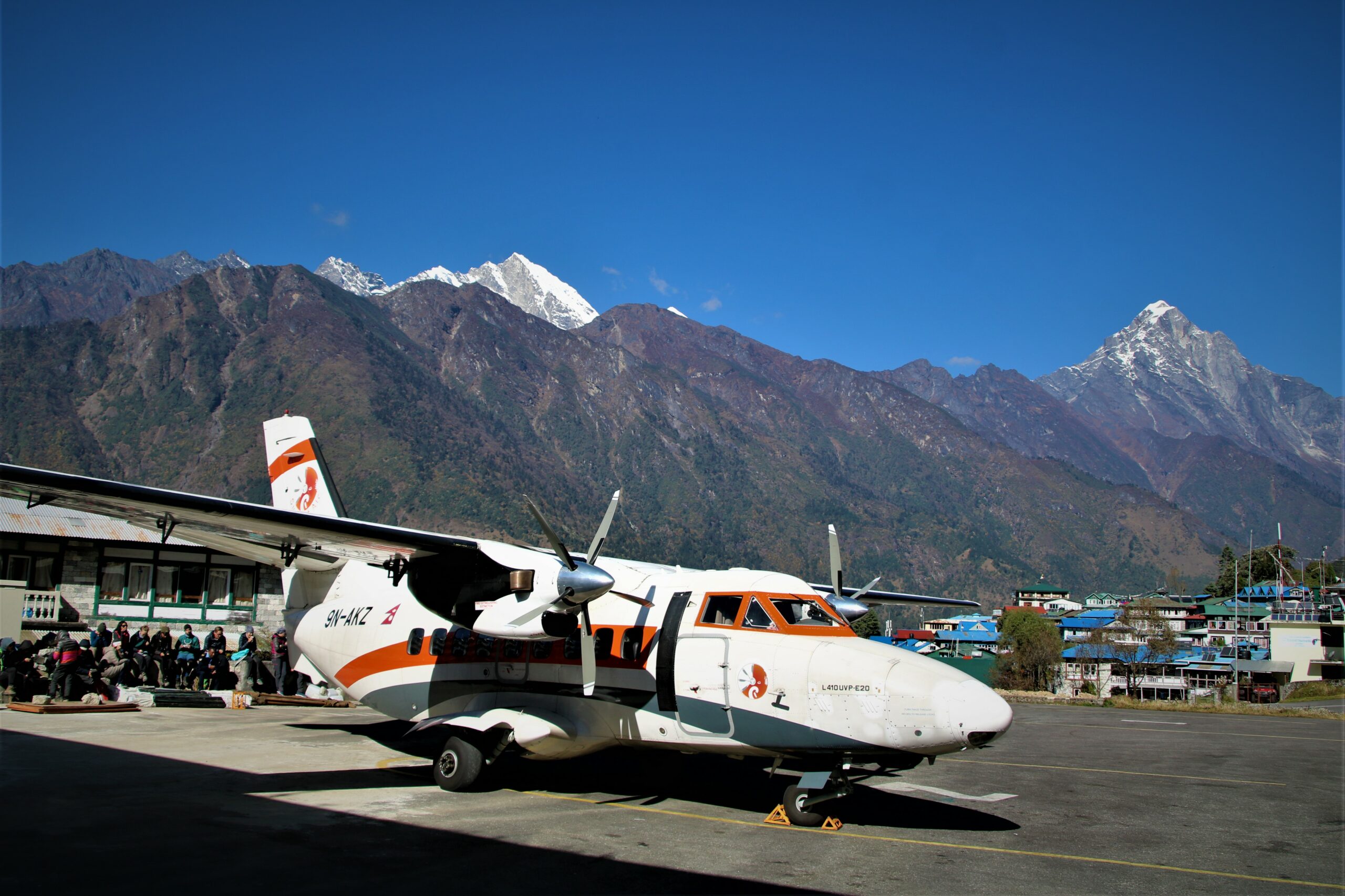
The Sharing Everest Base Camp Helicopter Tour is a luxury flight tour starting off at Kathmandu. The flight moves into the Khumbu region with a view of the villages of Lukla, Namche Bazaar, Tengboche, before finally moving into the Everest Base Camp or Kala Patthar point. This is an adventure tour of a lifetime where one gets to explore the highest point of the ranges of the world within a single day without having to trek into the mountains.
With increased elevation, the scene changes from green slopes to ice glaciers and snowy peaks. This is a sight to behold. However, the best time to undertake this journey is during spring and autumn seasons when the weather is favorable and clear, and one is able to capture the views of Mount Everest, Lhotse, Nuptse, Ama Dablam, Pumori, and Cho You.
Halesi Tour from Kathmandu
The Halesi Tour takes a spiritual/religious tour of a holy site named Halesi Mahadev Temple, situated within Khotang district, Eastern part of Nepal, at an elevation of 1,310 meters. This tour involves a thrilling drive from Kathmandu through river valleys, hills, and villages.
Halesi has great importance to Hindus, Buddhists, and Kirats. The temple lies within a complex of natural caves and is also known to be the meditation site of Lord Shiva and Guru Padmasambhava.
The region has wooded hills, terraced farms, as well as serene countryside settlements. The villages that surround this region depict very simple living and rich religious practices.
Moderate climate throughout the entire year. The best seasons are spring and autumn.
Distant mountain ranges in the east can be seen on clear days, Francis remarks.
Everest Mountain Flight in Nepal
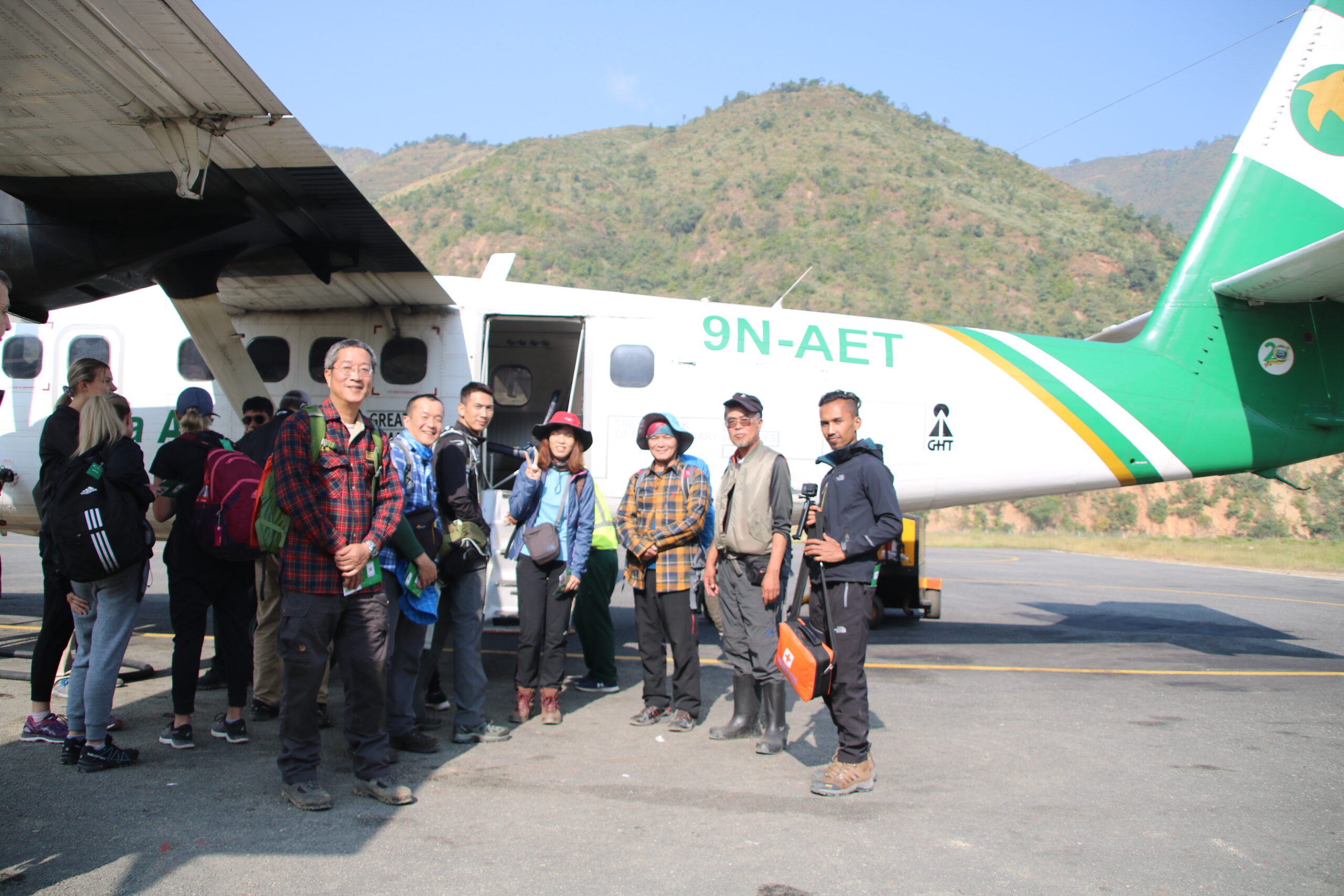
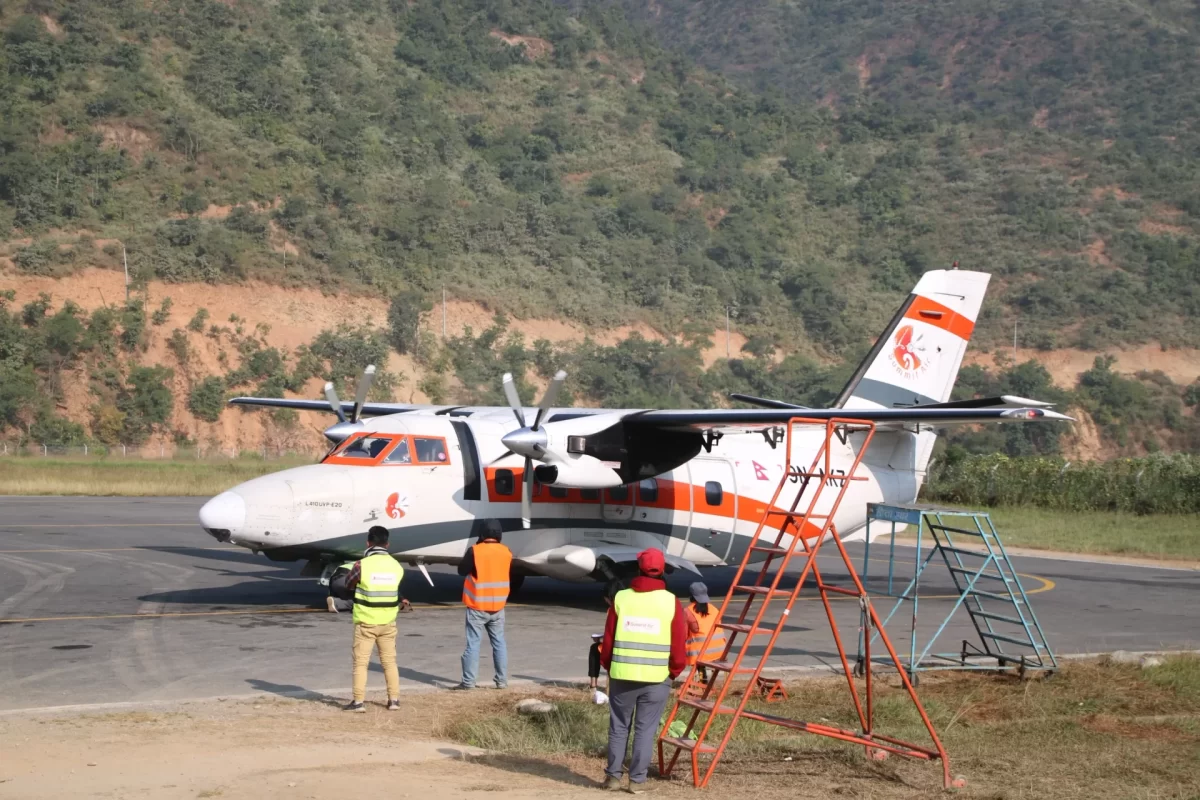
The Everest Mountain Flight is a scenic, one-hour aerial tour for those who want to experience the glory of Everest without trekking to the mountain by a helicopter. The Everest Mountain Flight begins early in the morning at the Kathmandu Domestic Airport.
The advantages of traveling through this airline include guaranteed window seats, professional flight announcements, as well as views of the massive Himalayan ranges.
The plane flies east along the range and returns to Kathmandu, and the views of the mountains are unbroken.
It functions best when the weather is clear, ideally during spring and autumn.
Mountain seen from the trek are Mount Everest, Lhotse, Nuptse, Makalu, Cho Oyu, Shishapang
Manakamana Muktinath Tour
Manakamana Muktinath Tour is a very popular religious tour that offers rides by cable cars and Himalayan Treks. This thrilling tour begins from Kathmandu and moves westward towards Manakamana Temple at an altitude of 1,302 meters. The place gives views of the hills and rivers.
The trek then proceeds to Muktinath Temple (3,710 m) located in Mustang, after passing through Pokhara, Jomsom, and Kali Gandaki Valley. Muktinath is a religious place for both Hindus and Buddhists that signifies liberation or salvation.
It traverses subtropical hills, deep gorges, Alpine valleys, and arid trans-Himalayan zones. There are villages of Gurung, Thakali, & Tibetan cultures.
The lower parts are warm, but Muktinath is a cooler to cold zone. The best time to visit is Spring (March-May) or Autumn (September-November).
Mountain ranges spotted included the Annapurna Range, Dhaulagiri, Nilgiri, and Tukuche Peak.
Education Tour in Nepal
The Educational Tour in Nepal will cater to students, researchers, and culture fanatics to learn about the history, culture, biodiversity, and geographic aspects of Nepal. Beginning in Kathmandu (1,300m), the itinerary will cover UNESCO World Heritage sites like Kathmandu Durbar Square, Patan, Bhaktapur, Pashupatinath Temple, Boudhanath Stupa, and SWAYAMBHUNATH. The tour will further visit Chitwan National Park (415m) to discover wildlife and Pokhara (822m) to learn about the geology and environment.
This tour incorporates classroom teaching and excursions to provide firsthand exposure to the varied culture and natural environments of Nepal. Neighboring villages expose participants to examples of Newari, Gurung, and Tharu cultures. Weather ranges from temperate near Kathmandu and Pokhara to subtropical near Chitwan, with spring and autumn being the best times to visit.
Everest Base Camp Trek
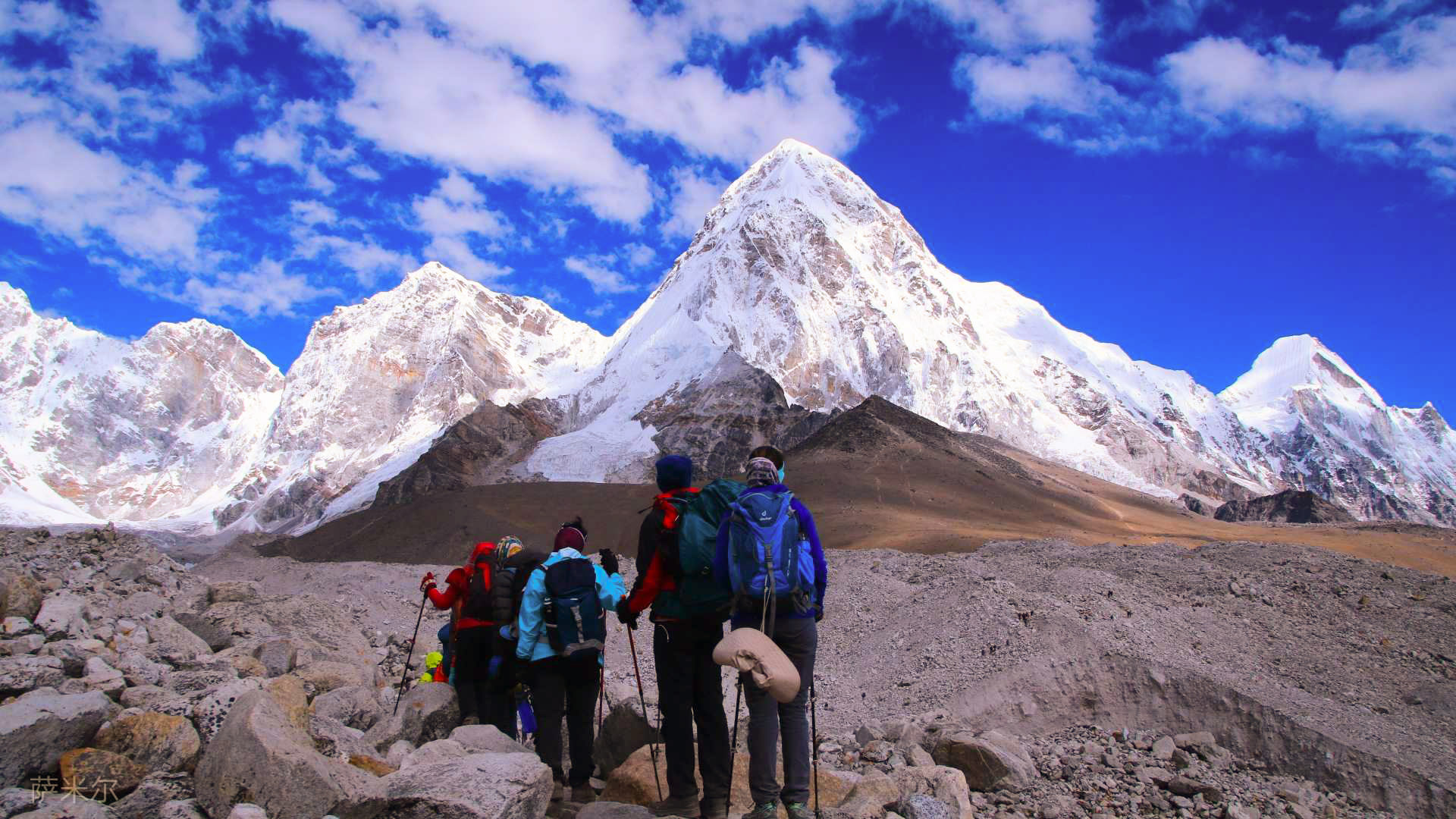
The Everest Base Camp Trek is a classic in the world of trekking routes, taking trekkers from Lukla at 2,860 meters up through Namche Bazaar, Tengboche, Dingboche, Lobuche, and to Everest Base Camp at 5,364 meters. It will pass through forests of rhododendrons, alpine valleys, glacial moraines, and Sherpa villages along the Khumbu region.
Trekkers experience traditional Sherpa culture in villages like Namche Bazaar and Pangboche, with the opportunity to visit ancient monasteries and intermingle with the locals. The climate is cold at higher altitudes; spring and autumn are the best trekking seasons. The majestic Himalayan peaks visible along the route include Everest, Lhotse, Nuptse, and Ama Dablam.
Everest Base Camp with Chola Pass
This trekking trail is an advance level trek compared to the Everest Base Camp Trek and incorporates Chola Pass (5,420m), which joins the Gokyo area with the Khumbu area. This adventure trails through Namche Bazaar, Dole, Gokyo Valley, Dzongla, over Chola Pass to Lobuche and then to the Base Camp of the highest mountain in the world.
The trail provides breathtaking views of glacial landforms and high-altitude lakes along with the picturesque Sherpa village. The landscape varies from moraines, peaks, and alpine vegetation in a sparse manner. This trekking route involves high-altitude glaciers and icy terrain, making it a challenging route only suited for experienced trekkers.
This route provides breathtaking views of the following mountains: Everest, Lhotse, Makalu
Everest Three Passes Trek
Everest Three Passes Trek is an expert-level high-altitude trek that also comprises Everest Base Camp and threehigh-altitude passes: Kongma La (5,535m), Cho La (5,420m), and Renjo La (5,360m) passes. From Lukla, one passes through various villages and monasteries and also passes along glaciers and moraines.
Everest Region Trek
This trekking route provides spectacular views of Everest, Lhotse, Nuptse, Ama Dablam, Makalu, and Cho Oyu mountains along with pristine mountain lakes and glaciers. However, the cold climate along with the presence of glaciers at the passes makes it all the more challenging; hence the best time to take on this trekking route is spring and autumn. This trekking route also demands a good level of physical fitness and acclimatization.
Pikey Peak Trek
Pikey Peak trek is a moderate trek in eastern Nepal, offering breathtaking panoramic views of Everest, Kanchenjunga, and Makalu from Pikey Peak at 4,065 meters. Most hikes begin from Salleri at 1,800 meters, move through forested hills and terraced farmland, and tiny Sherpa villages; all adding flavors to village life.
The area is rich in rhododendron forests, and the climate is temperate in the lower regions and cold at higher altitudes. Spring and autumn are ideal seasons to trek. Pikey Peak is very famous for sunrise views and its unobstructed panoramic vistas of eastern Himalayan peaks.
Annnapurna Base Camp Trek
The Annapurna Base Camp Trek is known as one of the most rewarding trekking trails in Nepal, as it takes adventurers to the base camp of Annapurna I (8,091m). The trek begins in Pokhara and includes villages such as Ghandruk, Chhomrong, and Bamboo before finally reaching Annapurna Base Camp at 4,130m. The Annapurna trekking trail involves crossing fields, rhododendron and bamboo forests, pasturelands, and glacial regions.
Trekking trails provide experiences of Gurung and Magar culture, a warm welcome in the villages, and a glimpse of mountain life. Weather will be mild in the lower areas with a cold climate in the higher regions; the best time to have the trek is during the spring and autumn season. The trekking trail gives a panoramic sight of Annapurna South, Hiunchuli, Machhapuchhre, Gangapurna, and Annapurna.
North Annapurna Base Camp Trek
The North Annapurna Base Camp Trek is remote and less-explored for experienced trekkers in search of solitude and raw Himalayan beauty. Starting from the northern rim of the Annapurna range, usually near the villages of Besisahar or Koto, this trek mostly travels north to North Annapurna Base Camp at approximately 4,200 meters.
The route cuts through narrow gorges, alpine forests, high pastures, and rugged terrain with meager settlements. It is a true wilderness experience. It’s remote, the facilities are basic, and the weather conditions can be extreme, especially at the higher reaches. It gives close-up views of Annapurna I and Tilicho Peak, along with some surrounding Himalayan giants. The spring and autumn seasons are best for this trek.
Ghorepani Poon Hill Trek
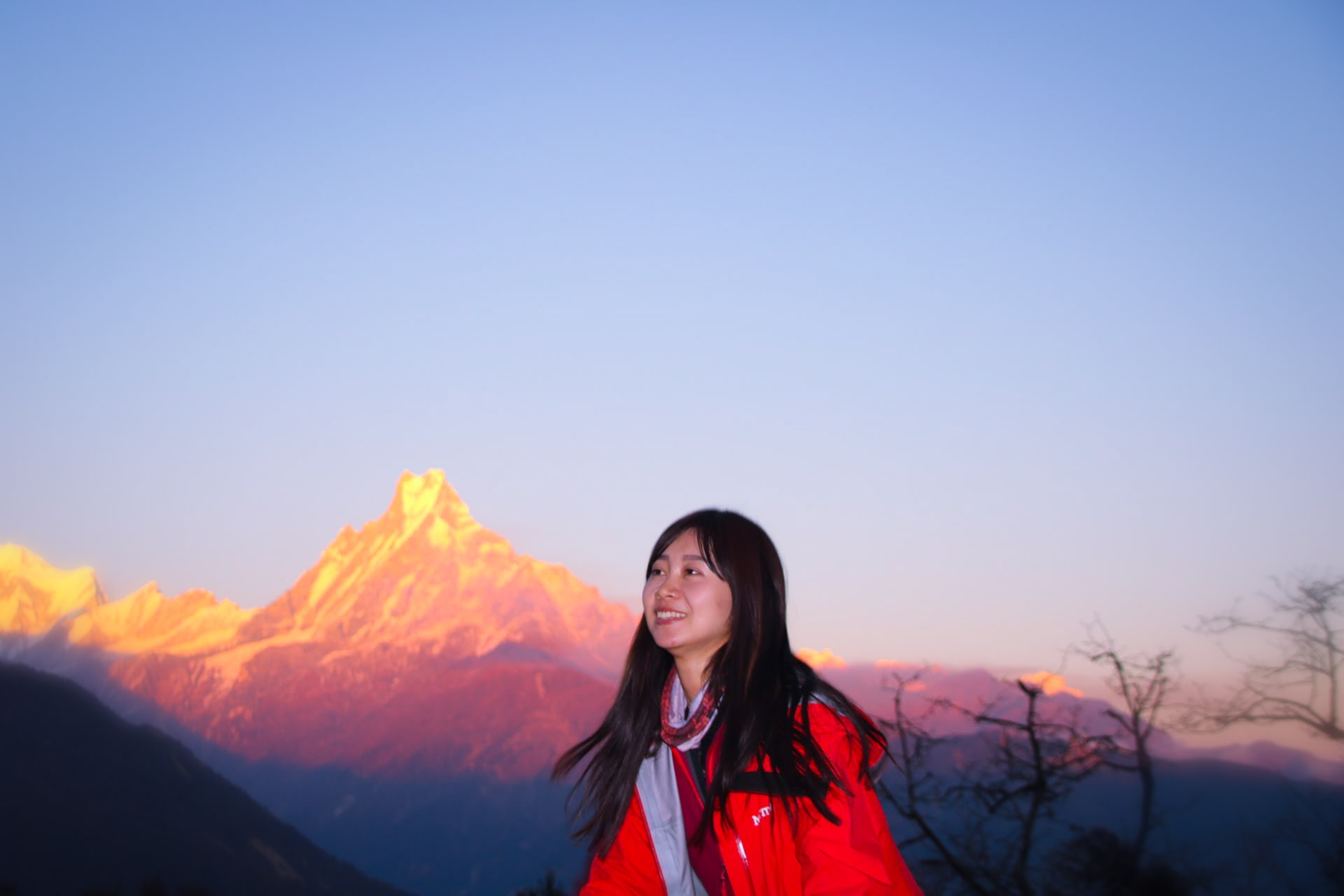
The Ghorepani Poon Hill Trek is a short and easy trekking route, ideal for novices, giving one of the finest sun rises within Nepal.
The route commences from Nayapul, moving through Tikhedhunga, passing via Ulleri and Ghorepani, finally arriving at Poon Hill, which is 3,210 meters high.
Ghorepani Poon Hill Trek Photo
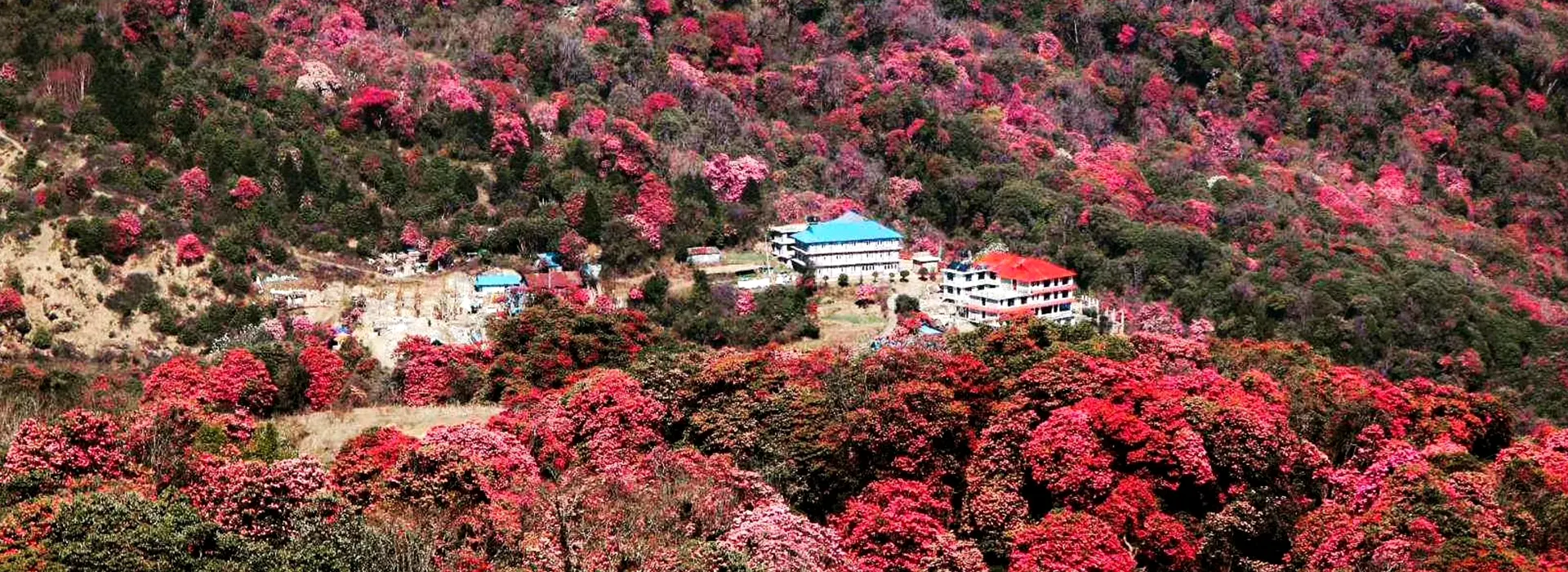
The trek route passes through picturesque villages, crop-filled land, and rhododendron forest. The climate remains moderate over the year. During spring, rhododendrons bloom in the region. Fall makes the mountain ranges clearer to see. When at Poon Hill, trekkers get to see the ranges of Annapurna, Dhaulagiri, Machhapuchhre, Nilgiri, and Tukuche peaks.
Khopra Trek
32 Best Tour Packages The Khopra Trek, also known by the name of Khopra Danda Trek, is an unperturbed substitute for treks in Annapurna. From Pokhara, the trek passes by Ghandruk, Tadapani, Dobato, and ultimately ends at Khopra Ridge at an altitude of 3,660 meters.
This trekking route presents breathtaking ridge walks, alpine forests, and isolated areas, together with the opportunity to visit the revered Khayer Lake. The surrounding settlements are Gurung and Magar cultures, which are authentically experienced. The temperature is moderate lower down and cold higher up, accompanied by breathtaking views of Annapurna South, Dhaulagiri, Nilgiri, and Machhapuchhre.
Annapurna Circuit Trek
The Annapurna Circuit Trek ranks among the best long distance treks in the world. The trek takes one through varied landscapes and cultures. This trek begins at Besisahar and goes around the Annapurna massif with the Thorong La Pass at an elevation of 5,416m to reach the end point of Muktinath and Jomsom.
The trekking trail traverses through subtropical forests, alpine valleys, high mountain desert regions, and Tibetan villages like Manang and Marpha. The regions range from tropical to alpine, which means spring and autumn are the best seasons to trek, due to the wide range of climate zones. The trek offers the trekkers breath-taking sights of Annapurna, Dhaulagiri, Manaslu, and Tilicho Peak, which make it one of the most rewarding treks of Nepal.
The Mardi Himal and Khopra Danda Trek
The Mardi Himal and Khopra Danda Trek is a mixed adventure expedition in terms of having both mountainous and relatively peaceful routes with less population. Usually starting from Pokhara, it goes through forest ridges of Dhampus, Forest Camp, and High Camp towards reaching Mardi Himal Base Camp at an altitude of 4,500m, followed by Khopra Danda.
The trek involves going through rhododendron forests, meadows, and ridges, which are marked by a sparse population and a sense of being in the wilderness. The trek allows one to have complete views of Machhapuchhre, Annapurna South, Hiunchuli, Dhaulagiri, and Nilgiri mountains. The climatic conditions range from temperate at lower elevations to cold at higher points, making spring and autumn the best months to trek.
Langtang Valley Trek
The Langtang Valley Trekking Trail is one of the most easily accessible trekking routes in the Himalayas and lies north of Kathmandu near the Tibet boundary. The trekking route begins at Syabrubesi and gradually hikes up along the bamboo forests, alongside the riverbeds, and reaches the end at Kyanjin Gompa at an altitude of 3,870 meters.
The valley is known for its Tamang culture, with native Tamang villages, monasteries, and stone houses along the way. The spring and autumn are cool and pleasant, while winter is colder with snow, unlike the warmer climate at lower elevations. Trekking groups get to enjoy views of Langtang Lirung, Dorje Lakpa, and surrounding snow-capped peaks along the way.
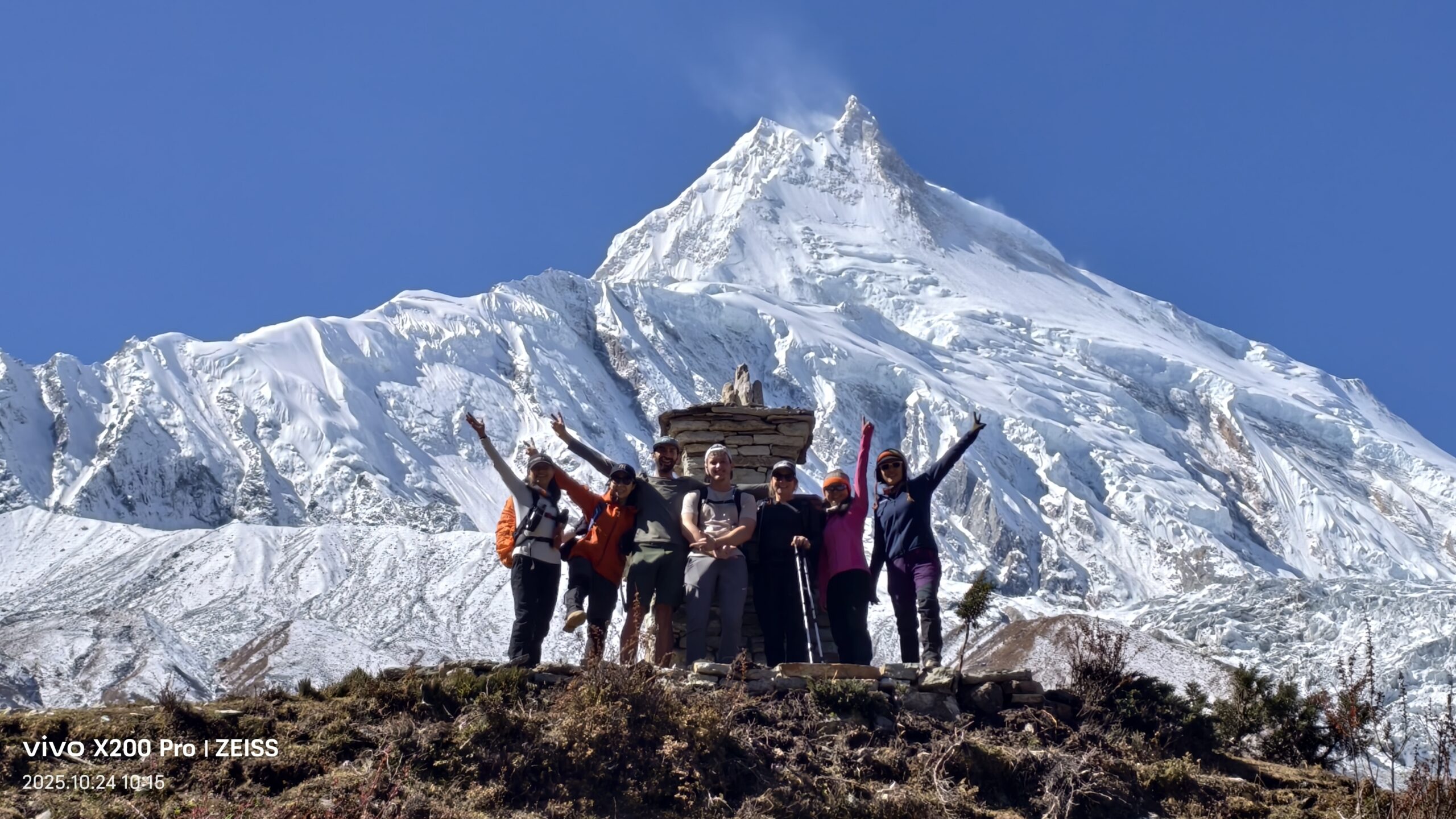
Manaslu Circuit Trek
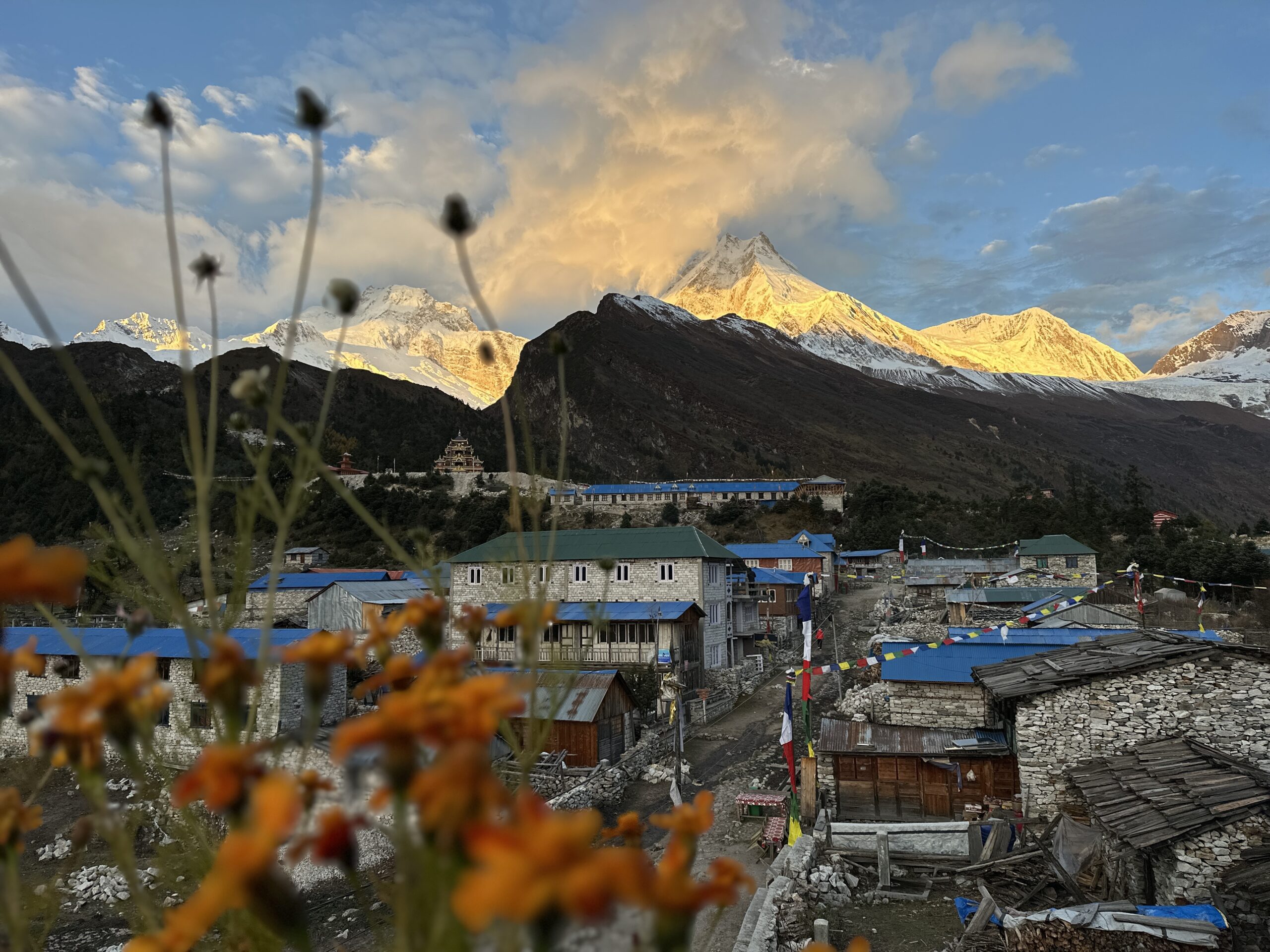
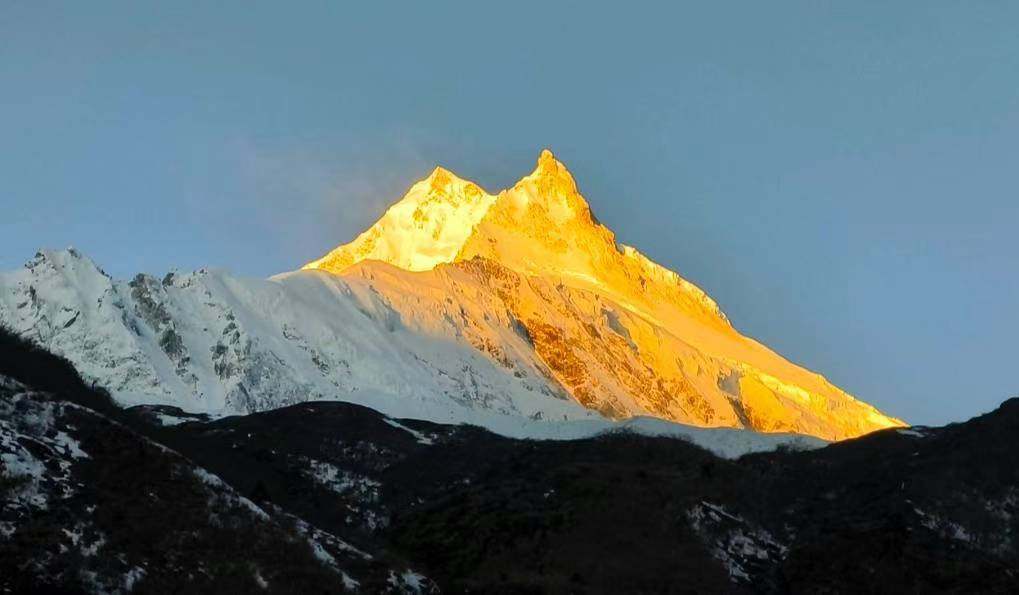
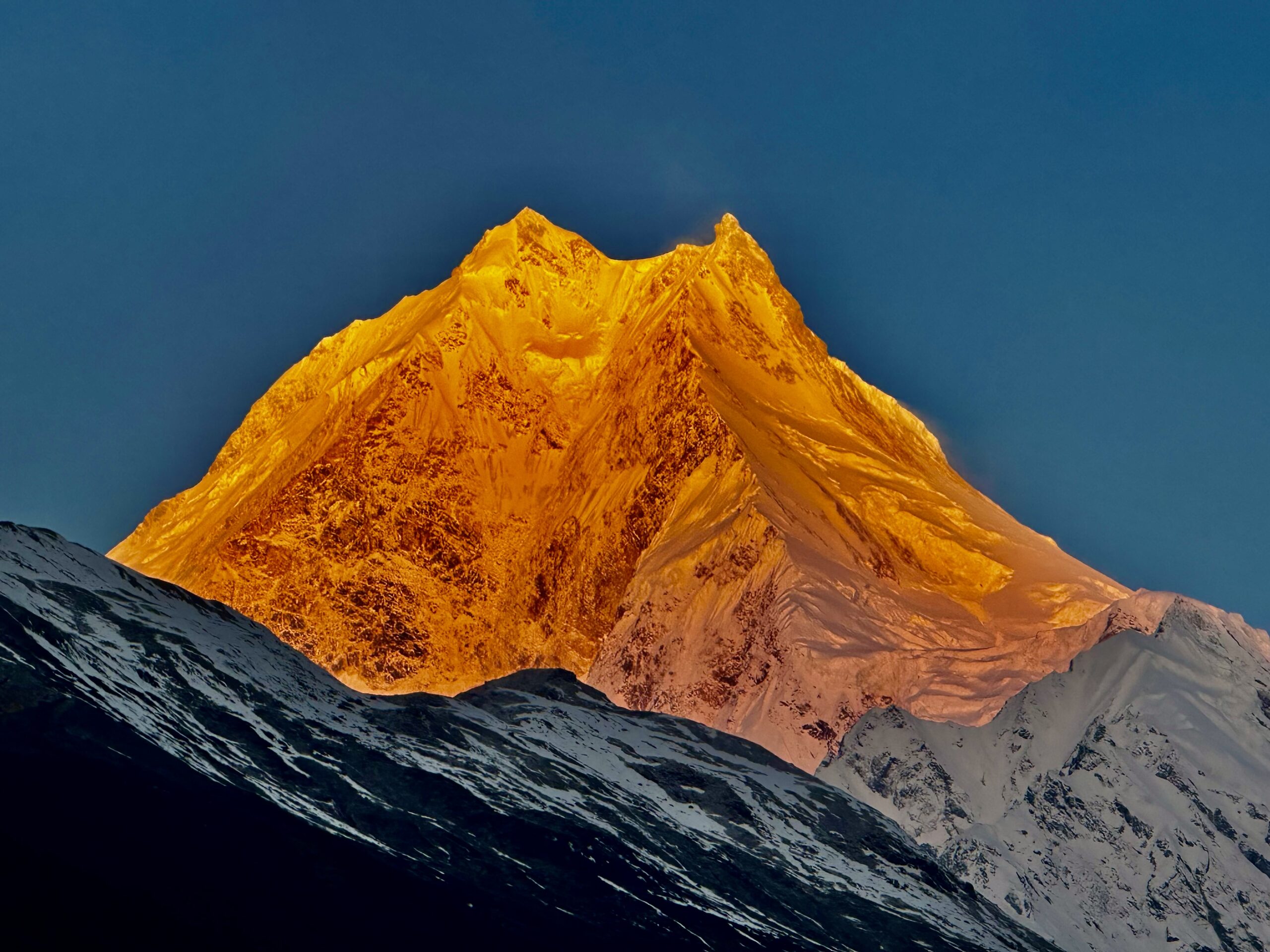
The Manaslu Circuit Trek is an epic and ethnically diverse adventure around Mt. Manaslu (8,163m)– the eighth highest mountain in the world. The trek begins from Soti Khola and goes along the Budhi Gandaki River gorge and then onto the top of the high Larkya La Pass (5,160m).
Manaslu Circuit Trek
This region has Gurung and Tibetan cultures, which provide actual cultural experiences, especially in the villages of Samagaun and Samdo. This region has a temperate climate in the lower valleys, which can be very cold in the higher regions. It provides excellent landscapes of peaks such as Manaslu, Himalchuli, Ganesh Himal, and the Annapurna ranges, especially during spring and autumn.
Tsum Valley Trek
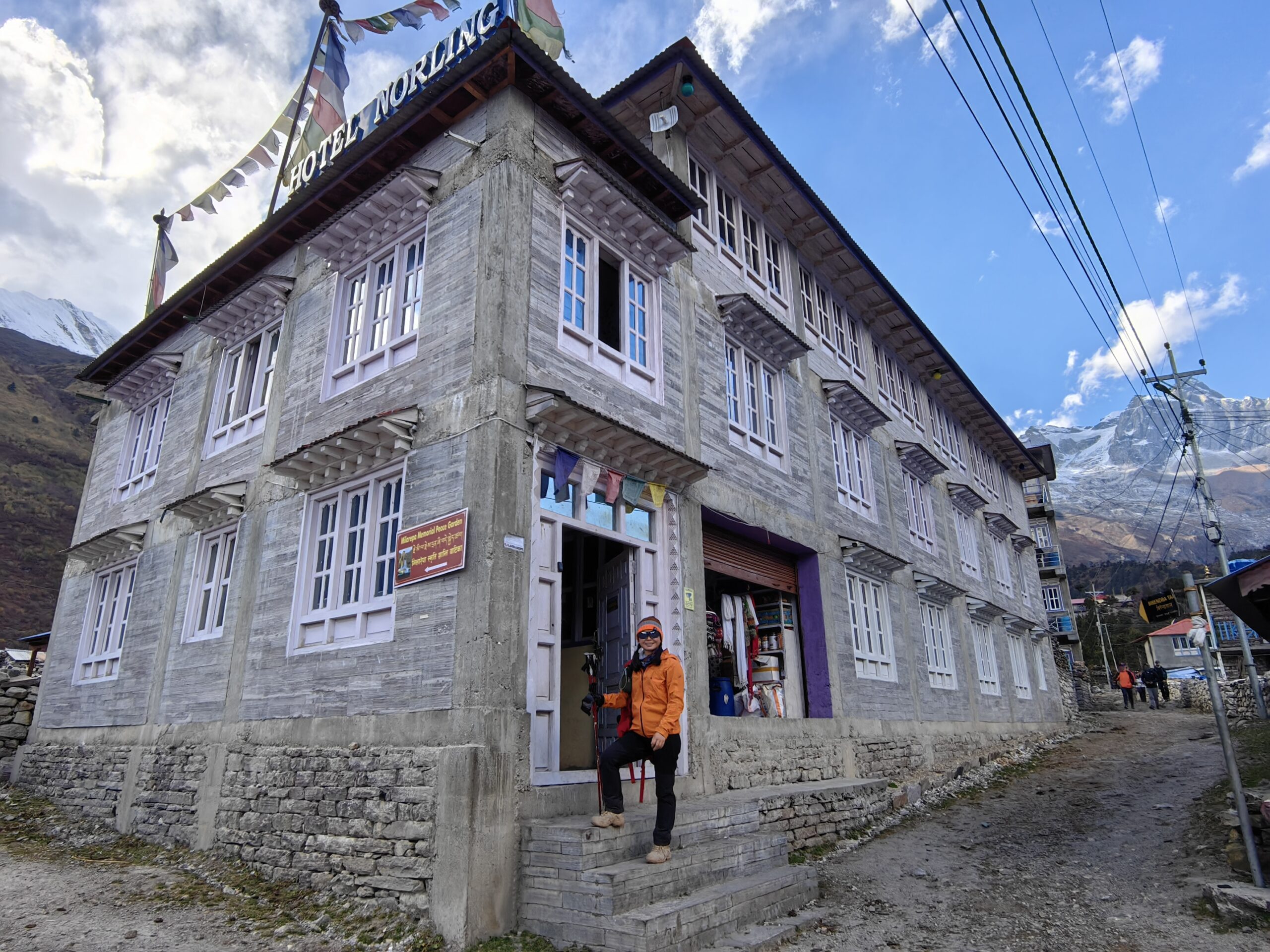
This is a sacred and remote journey into the hidden Himalayan valley with a rich Tibetan Buddhist culture. The journey begins from Arughat/Soti Khola and then follows the Budhi Gandaki river and turns off into the peaceful valley of Tsum, reaching an altitude of 3,700 meters.
In the valley, there are old monasteries, mani walls, and prayer flags. In the villages of Chhokangparo and Mu Gompa, there is evidence of the long-held traditions of the area. The landscape consists of forests, meadows, and mountain cliffs. The climate is cool and arid with panoramic views of Ganesh Himal, Shringi Himal, and neighboring summits.
The Tsum Valley Manaslu Circuit Trek
This Himalayan adventure combines cultural experiences with high-altitude treks. The trek begins with the revered Tsum Valley and follows around the high mountainside of Manaslu before conquering the difficult Larkya La Pass at an altitude of 5,160 meters.
Tsum Valley and Manaslu Circuit Trek
Tsum Valley and Manaslu Circuit Trek presents numerous varies in landscape works, like subtropical forests and river gorges through alpine valleys and ice cliffs. Trekkers gain a complete insight into the Tibet-inspired villages and old monasteries and distant settlements. The climatic variation varies significantly according to elevation, and the pre-summer and post-summer seasons are the best for trekking because the views of Manaslu, Ganesh Himal, Himlung Himal, and Annapurna II mountains are spectacular.
Upper Mustang Trekking
32 Best Tour Packages The Upper Mustang Trek is an excursion into the remote Trans Himalayan part of the Kingdom of Mustang, known as the Last Forbidden Kingdom. This trekking route begins from Jomsom and moves along the Kali Gandaki Valley into Kagbeni, Chele, Ghami, and Tsarang and culminates in Lo-Manthang (3,840 m), the ancient walled capital of the Kingdom of Mustang.
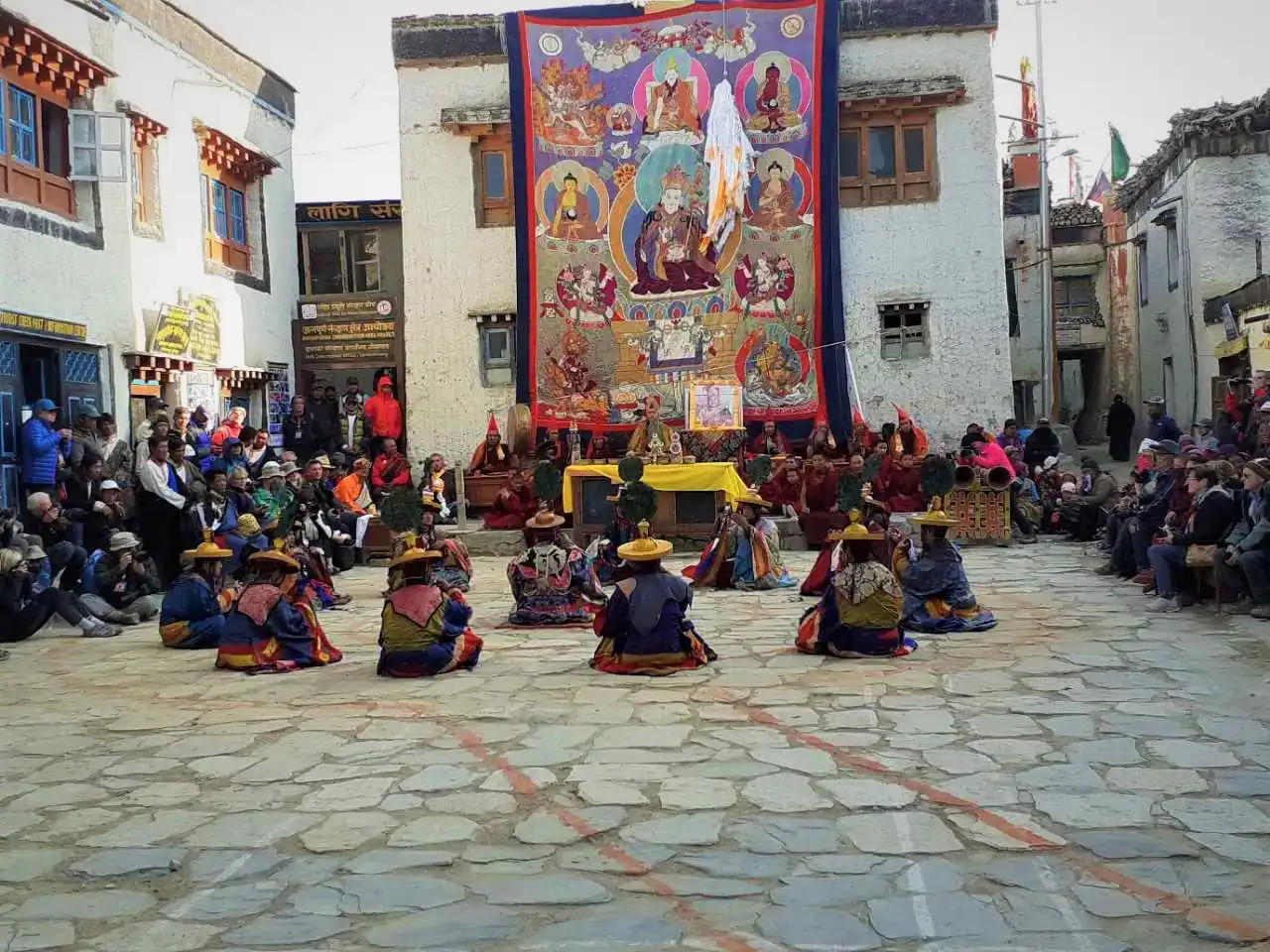
Cultural Ceremony of Tiji Festival
The region is dry and very desert-like due to the rain shadow, featuring steep cliff faces, caves, and bright rocky formations. It is also very rich in Tibet Buddhist culture, featuring ancient monasteries, prayer flags, and villages made of mud-bricked dwellings. It has dry climatic conditions, which are chilly during summer and very cold during winter. The trekking route provides magnificent views of Nilgiri, Annapurna I, and Dhaulagiri.
Dhaulagiri Circuit Trek
32 Best Tour Packages in Nepal, The Dhaulagiri Circuit trek can be described as an adventurous trek for experienced trekkers only. This trek begins at the town of Beni and follows the Myagdi river along a forested region, followed by a series of glaciers and passes including the French Pass at 5,360 m and the Dhampus Pass at 5,240 m.
The trekking trail is rather lonely and has heavy terrain along with spectacular views of the mountains. The higher regions possess harsh climatic conditions and intense cold temperatures along with the possibilities of having snow in the trekking season only. Treks have access to spectacular sights of Dhaulagiri I (8,167m), Tukuche Peak, Dhampus Peak, and the glaciers in the surrounding areas.
Ten Days to Everest Base Camp by Helicopter, Back to Kathmandu
32 Best Tour Packages, The Ten-Day Everest Base Camp Trek with a Helicopter Return is an adventure trek combined with comforts. The trekking trail passes through Lukla, Namche Bazaar, Tengboche, Dingboche, and Lobuche to reach Everest Base Camp (5,364 m) & Kala Patthar, followed by a helicopter flight back to Kathmandu.
This route reduces the days spent walking, avoiding the long descent, but still offering an insight into Sherpa culture, monasteries, and high-altitude landscapes. The route gives excellent vistas of Everest, Lhotse, Nuptse, Ama Dablam, and Pumori mountains, while the weather is normally clear in the spring and autumn months.
9 Days Everest Base Camp Trek
The Nine Days Everest Base Camp Trek is a short form of the EBC trek that is designed for those trekkers who have less time but are physically fit to accomplish the trek. The EBC trek begins from the Lukla and traverses through the main trail to Tengboche, Dingboche, Lobuche, and finally reaches the Everest Base Camp (5,364m) and the Kala Patthar.
The trail passes through Sherpa villages, alpine forests, and glaciers, offering you a wide range of experiences. Since the trail is relatively short, it is essential that you acclimatize well along the way. The colder it gets the further you climb, and the treks feature breathtaking views of the Everest, Lhotse, Nuptse, and the Ama Dablam mountains, among others.
Everest Base Camp Trek by Road
Everest Base Camp Trek by Road – This is for people who prefer not to take a plane. This trip begins with a nice drive from Kathmandu to either Salleri or Phaplu, and then trekking through villages and hill forests to join the main Everest trail either in Lukla or slightly north.
Everest Region Trek
32 Best Tour Packages, In this option, you get a gentler climb in terms of altitude, an encounter with the rural Sherpa and Rai people, and less trafficked trails compared to those along the regular flight. The climate during the lower parts will be mild, with cold climatic conditions along the way. Once you reach the actual trekking trail, you will encounter the breathtaking sights of Mount Everest, Lhotse, Nuptse, Ama Dablam, and Khumbu Glacier.
Kanchenjunga Circuit Trek
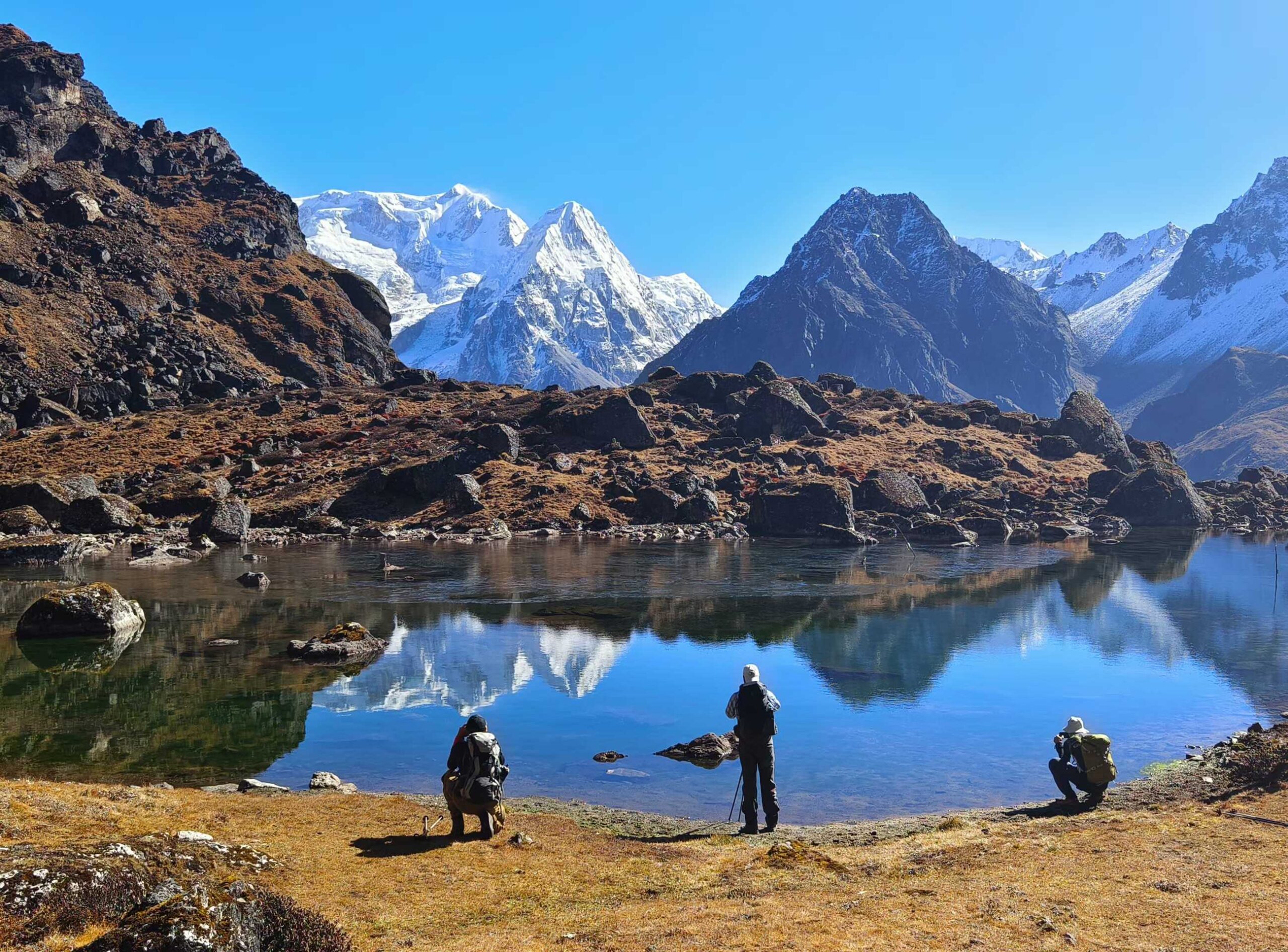
The Kanchenjunga Circuit Trek is one of Nepal’s most isolated and difficult high-altitude treks. It circumnavigates Mount Kanchenjunga (8,586m), which is the third highest mountain peak around the globe. The trekking trail leads from Taplejung (760m) to the Kanchenjunga Conservation Area, isolated villages, forests, meadows, as well as ridges, culminating at 5,143m of altitude.
There are numerous cultures in the region because there are people from the Limbu, Sherpa, and Tibet-related communities. This region has a harsh landscape consisting of glaciers and hard-to-overcome passes. Due to its inaccessibility, the trekker has the advantage of having the place all to themselves and enjoying the undiscovered landscape. The best season to explore the region has been confirmed to be spring and autumn when the weather allows the viewing of mountainous treasures such as Kanchenjunga and Jannu.
10 Best Short Tours In Nepal, Nepal has a wide selection of trips that go deeper than trekking, offering to visitors seeking cultural immersion, wildlife encounters, natural splendour, and spiritual enlightenment. From seeing the historic UNESCO World past Sites of the Kathmandu Valley and relaxing by the calm Phewa Lake in Pokhara to watching spectacular Himalayan sunrises from Nagarkot and flying over Mount Everest, each experience reveals a unique aspect of Nepal’s rich past. Wildlife enthusiasts can take thrilling safaris in Chitwan and isolated Bardia National Parks, while spiritual seekers can explore the holy places of Lumbini and Namobuddha. Hidden gems such as Bandipur, Tansen, and Rani Mahal offer real village life, architecture, and breathtaking scenery. These trips, which last anywhere from a few hours to a few days, are ideal for families, culture aficionados, photographers, and anybody looking to discover Nepal without the difficulties of high-altitude trekking.
1.Cultural Tour in the Kathmandu Valley
10 Best Short Tours In Nepal, For those who wish to fully experience Nepal’s spiritual legacy, historic buildings, and customs, the Kathmandu Valley Cultural Tour is a must. This tour, which lasts two to four days, includes major UNESCO World Heritage Sites like the ancient Durbar Squares of Kathmandu, Patan, and Bhaktapur; the sacred Hindu burning site Pashupatinath Temple; the Buddhist pilgrimage sites Boudhanath Stupa and Swayambhunath (Monkey Temple); and more. Intricately carved temples, bustling courtyards, active local markets, and historic palaces are all explored by tourists. Within easy commuting distance, the valley provides an intriguing window into Nepal’s multilingual harmony, creative accomplishments, and ageless customs.
Swayambhunath (Monkey Temple)
2.Pokhara Sightseeing Tour
A serene yet breathtaking getaway into the lap of nature may be had with a two- to three-day Pokhara sightseeing tour. 10 Best Short Tours In Nepal, pokhara is a charming lakeside city, which is frequently referred to as Nepal’s tourism capital, has calm areas like Phewa Lake where guests may take leisurely boat rides while admiring Machapuchare (Fishtail) peak. The enigmatic Gupteshwor Cave, the expansive World Peace Pagoda, and Davis Falls are other attractions. Sarangkot offers breathtaking Himalayan vistas of the Annapurna and Dhaulagiri mountains on a morning excursion. Pokhara is the perfect destination for children, couples, and anyone looking to unwind because of its pleasant climate, breathtaking scenery, and ease of access.
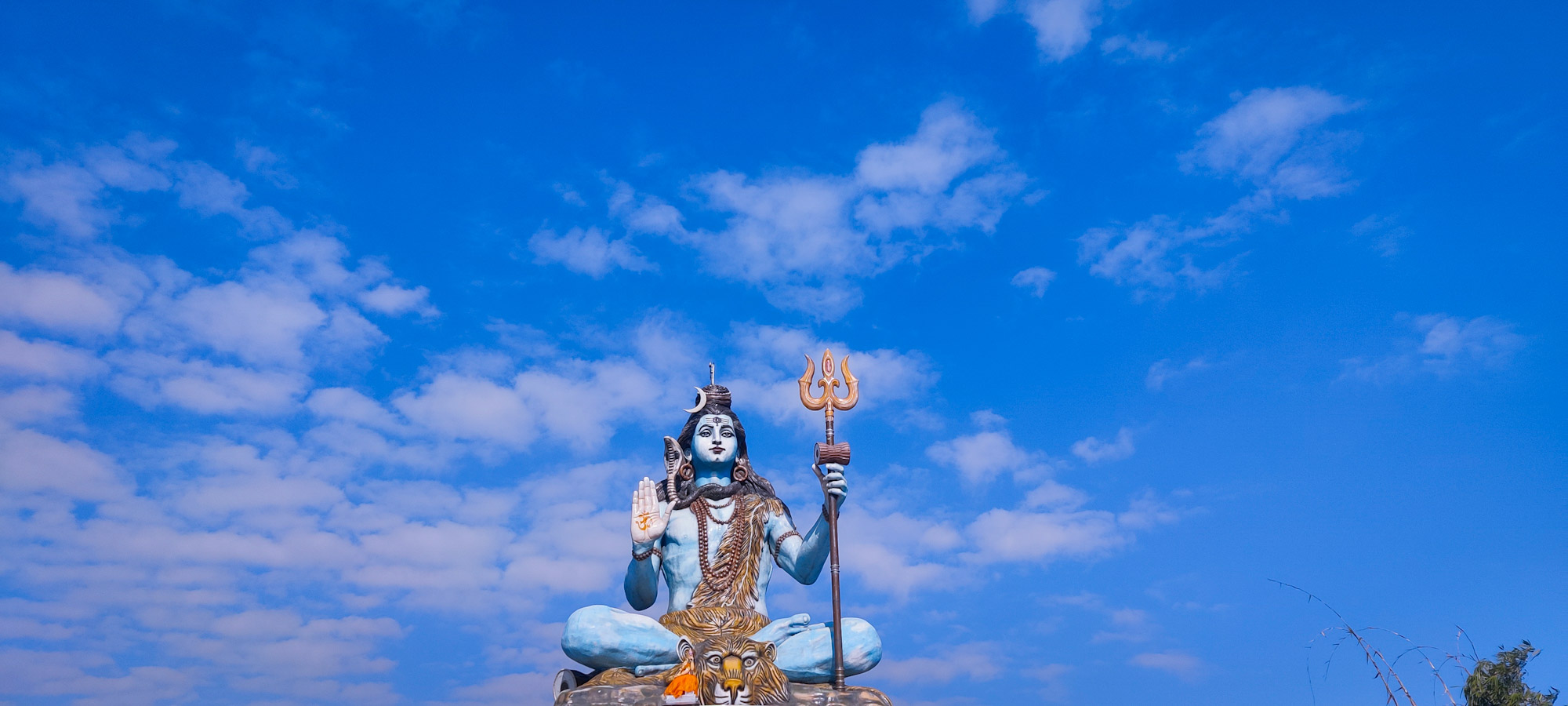
Lord Shiva
3.Chitwan Jungle Safari
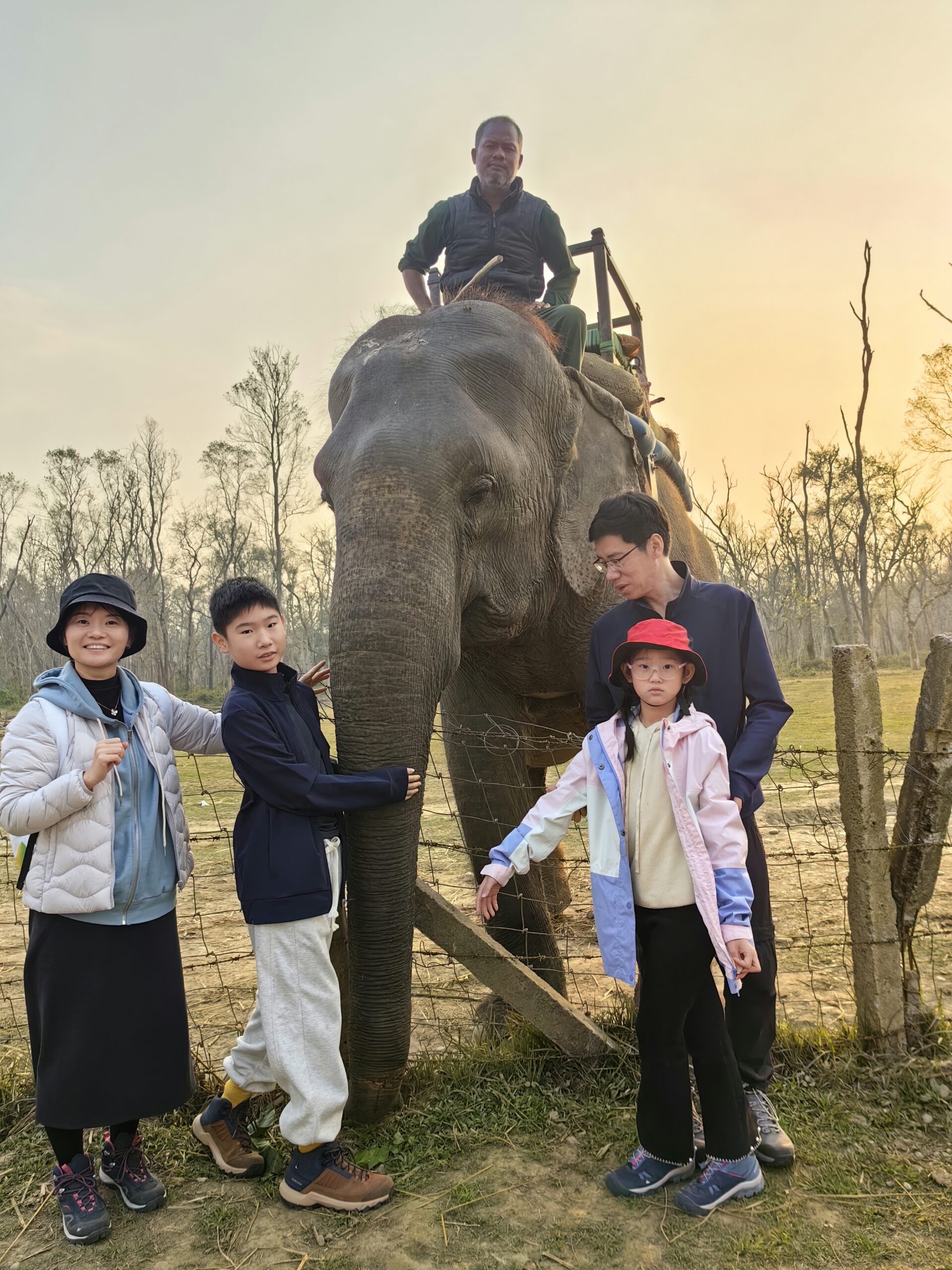
The two- to three-day Chitwan Jungle Safari Tour offers an exhilarating exploration of Nepal’s tropical nature. This vacation includes canoe rides, bird watching, jeep safaris, and visits to the elephant breeding centre in the UNESCO-designated Chitwan National Park. Exotic animals including gharial crocodiles, Bengal tigers, one-horned rhinoceroses, and hundreds of bird species can be seen by nature enthusiasts. Traditional meals and Tharu cultural activities enhance the evenings. Perfect for explorers and relationships, Chitwan offers a striking contrast to Nepal’s hilly landscape.
Elephent Safari
4.Lumbini Buddhist Pilgrimage Tour.
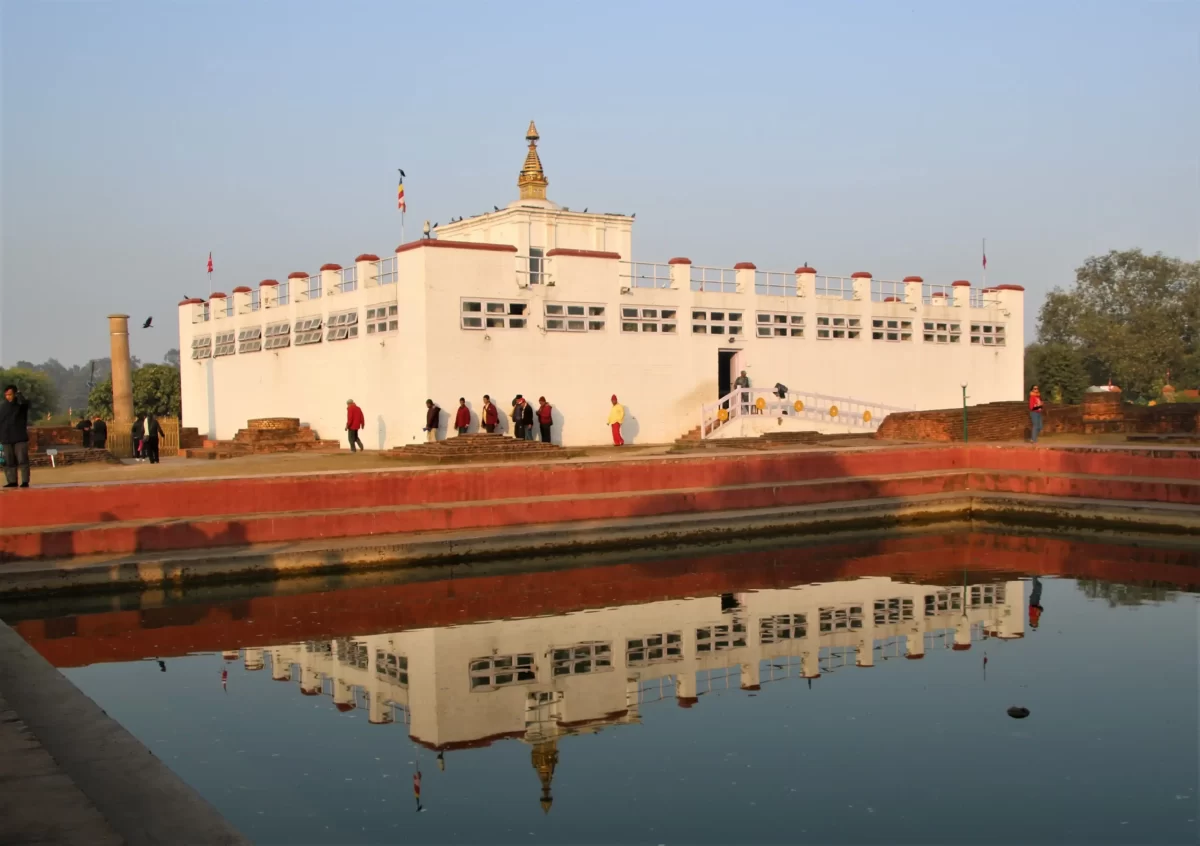
Best Short Tours In Nepal, The Lumbini Tour from Kathmandu, one to two-day journey to Lord Buddha’s birthplace, is Nepal’s spiritual landmark. This beautiful place in western Nepal is home to the Maya Devi Temple, which marks precisely the spot of Buddha’s birth, as well as the Ashokan Pillar and a massive monastery zone filled with temples built by Buddhist nations throughout the entire world. Tranquil gardens, meditation centres, and historical sites draw pilgrims, scholars, and peace seekers alike. The journey provides calm thought, historical knowledge, and a profound emotional connection to one of the world’s most important ideas.
5.Everest Mountain Flight Tour.
For those who want to see the Himalayas without trekking, the 1-hour Everest Mountain Flight from Kathmandu Airport is a lifetime memory. Travellers are may see Mount Everest, Lhotse, Makalu, and other snow-covered giants up close as they fly parallel to the Himalayan range. The aircraft’s big windows and beautiful morning skies are great for photography and sightseeing. It’s ideal for those short on time or physical ability who want to experience the world’s tallest peaks in magnificent style.
Mount Everest
6.Bandipur Heritage Village Tour.
The Bandipur Tour is a relaxing one to two-day excursion to one of Nepal’s most lovely mountain communities. Bandipur, located between Kathmandu and Pokhara, is home to a rich Newari cultural legacy, including well preserved buildings, temples, and small stone-paved roads. This car-free community overlooks beautiful hills and provides panoramic views of the Himalayas, which include Dhaulagiri, Manaslu, and Annapurna. Bandipur’s laidback environment, cultural charm, and breathtaking scenery make it a great destination for anyone searching genuineness and tranquilly.
7.Nagarkot Sunrise and Bhaktapur Tour
This 1- to 2-day tour is the ideal combination of natural beauty and old legacy. Nagarkot, a mountaintop near Kathmandu, is known for its expansive views of the Himalayan range, particularly around sunrise. After experiencing the magic of the mountains, the tour proceeds to Bhaktapur, one of Nepal’s best-preserved medieval cities. Visitors can discover the elaborately carved temples, royal courtyards, and long-standing traditions of this historic Newar city. Ideal for photographers, history buffs, and anyone wishing to blend nature and culture in a short time.
8.Dhulikhel & Namobuddha Tour
For a peaceful spiritual retreat, the Dhulikhel and Namobuddha Tour (1 to 2 days) combines Buddhist legacy with magnificent highlands. Dhulikhel is a tranquil village famed for its spectacular mountain vistas and Newari architecture. Namobuddha is a nearby sacred location associated with one of Buddha’s previous lifetimes, where he is claimed to have given his body to a famished tigress. The walk between the two is picturesque and quiet, flanked by trees and terraced farms. This excursion is suitable for spiritual introspection, gentle hiking, and cultural inquiry.
9.Tansen and Rani Mahal Tour.
This 2 to 3-day excursion, which takes place in western Nepal’s Palpa area, reveals hidden gems. Tansen is a medieval hill village with breathtaking vistas, cobblestone walkways, and Newari construction, which famous for its Dhaka fabric and welcoming friendliness. The main attraction is an excursion to the Rani Mahal, sometimes known as the “Taj Mahal of Nepal,” which was built beside the Kali Gandaki River as an icon of love. The trek to this mysterious palace, surrounded by forests and cliffs, is as enchanting as the narrative itself. Excellent for cultural travellers and romantics as well.
10.Bardia National Park’s Wildlife Tour
For an additional isolated and wild safari, the Bardia Tour (3 to 4 days) is an uncrowded substitute to Chitwan. Bardia National Park, situated in far western Nepal, has robust populations of Royal Bengal tigers, Asian elephants, swamp deer, river dolphins, and over 400 different kinds of birds. The excursion includes vehicle safaris, forest walks, rafting, and visits to Tharu villages. Because there are lesser people and deeper jungle, animal observations can be more rewarding here. It’s great for nature lovers, photographers, and those looking off the grid experience.
The Everest Base Camp trek Packages, (EBC) trek is a world-renowned adventure, attracting thousands of trekkers annually to witness the grandeur of the Himalayas and experience Sherpa culture. Vertex Holiday offer diverse packages to cater to different preferences, budgets, and time constraints. These packages typically include variations in duration, accommodation standards, and modes of return from the base camp.
Popular 4 different Everest Base Camp trek packages offered by Vertex Holiday include the 14_days standard Everest Base Camp Trek, Ten days Everest Base Camp Trek with helicopter return, 15 days Everest base camp trek by road and a Nine Days Everest Base camp Trek both way by Helicopter.
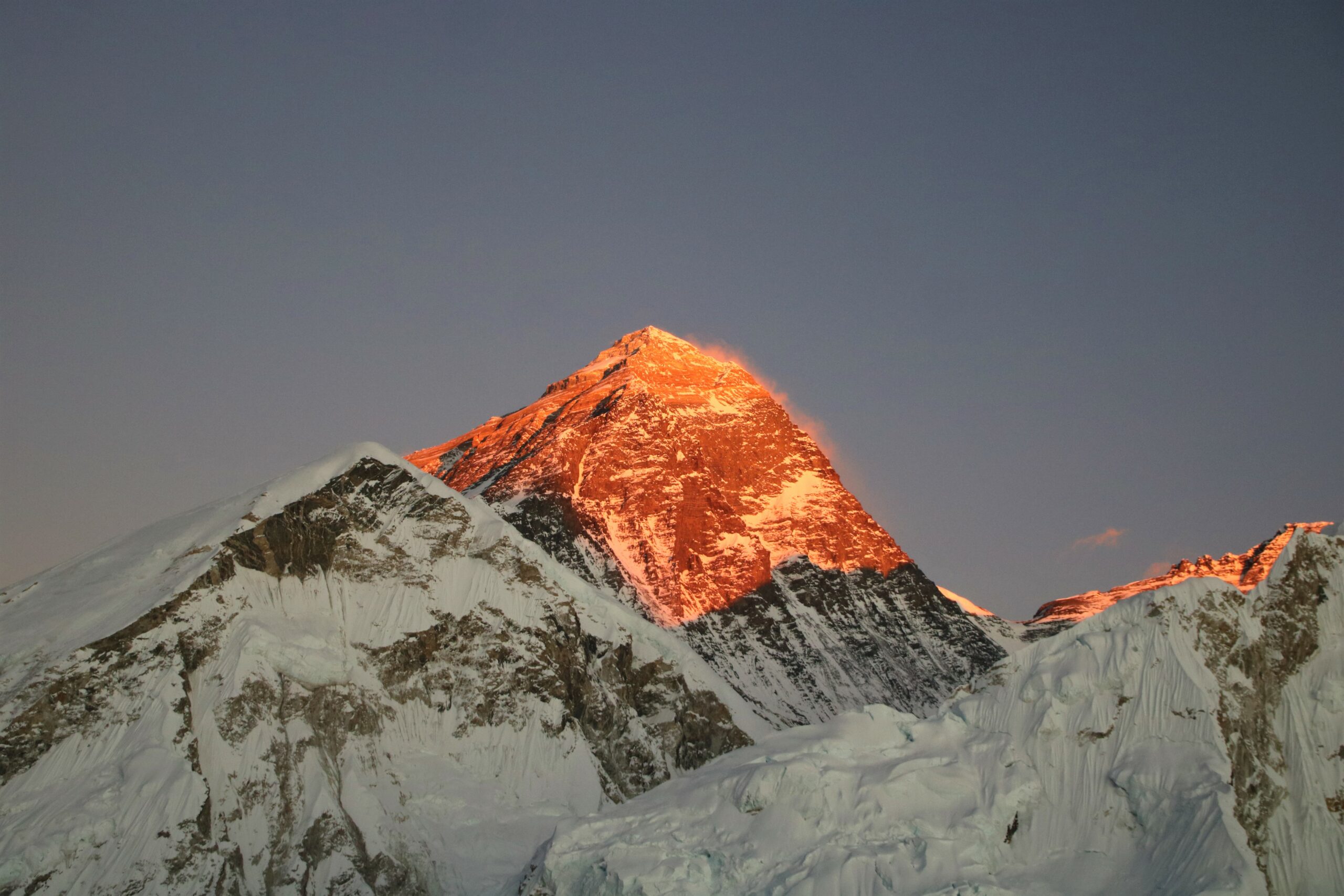
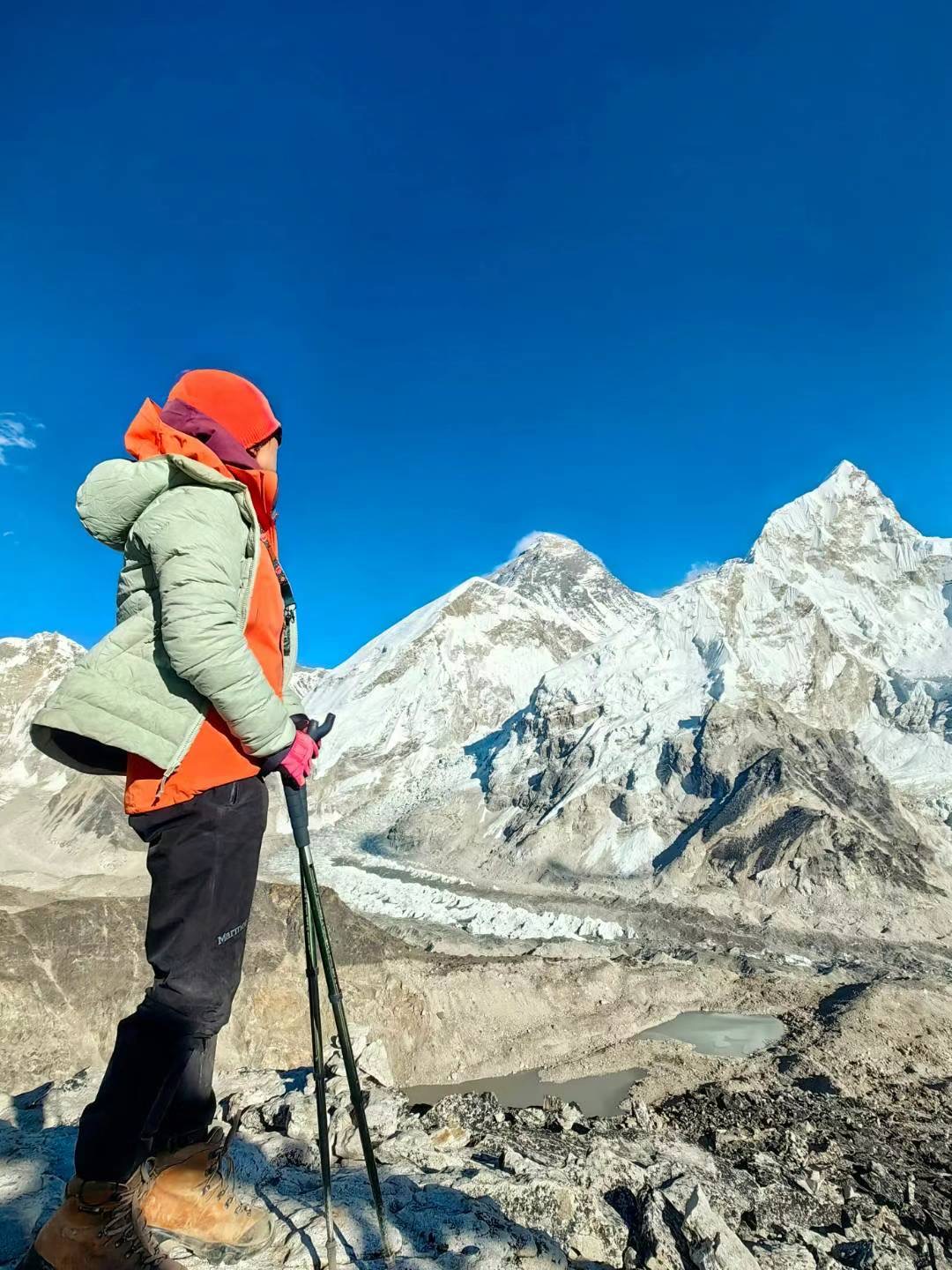
Mount Everest view From kalapathhar 5555m
14 Days Standard Everest Base Camp Trek Packages
The standard Everest Base Camp Trek packages offered by Vertex Holiday is a 14-day itinerary, classified as a difficult and strenuous journey due to altitudes ranging from Lukla (2,860m) to Kalapathar (5,555m). This trek highlights culturally significant UNESCO World Heritage sites, Sherpa valleys with traditional Himalayan Buddhist culture, and panoramic views of peaks including Mt. Everest (8,848.86m), Lhotse, Makalu, and Ama Dablam. Trekkers can explore Sagarmatha National Park, home to diverse flora and fauna like the Snow Leopard and Red Panda. Accommodations are primarily in lodges and teahouses, with food and supplies transported by helicopters, yaks, and porters. The cost for this package varies based on group size, starting at US$1160 for a single person and decreasing for larger groups. The itinerary includes acclimatization days in Namche Bazaar and Dingboche, with a significant hike to Kalapathar for close-up views of Mt. Everest.
Ten Days Everest Base Camp Trek with Helicopter Return Packages
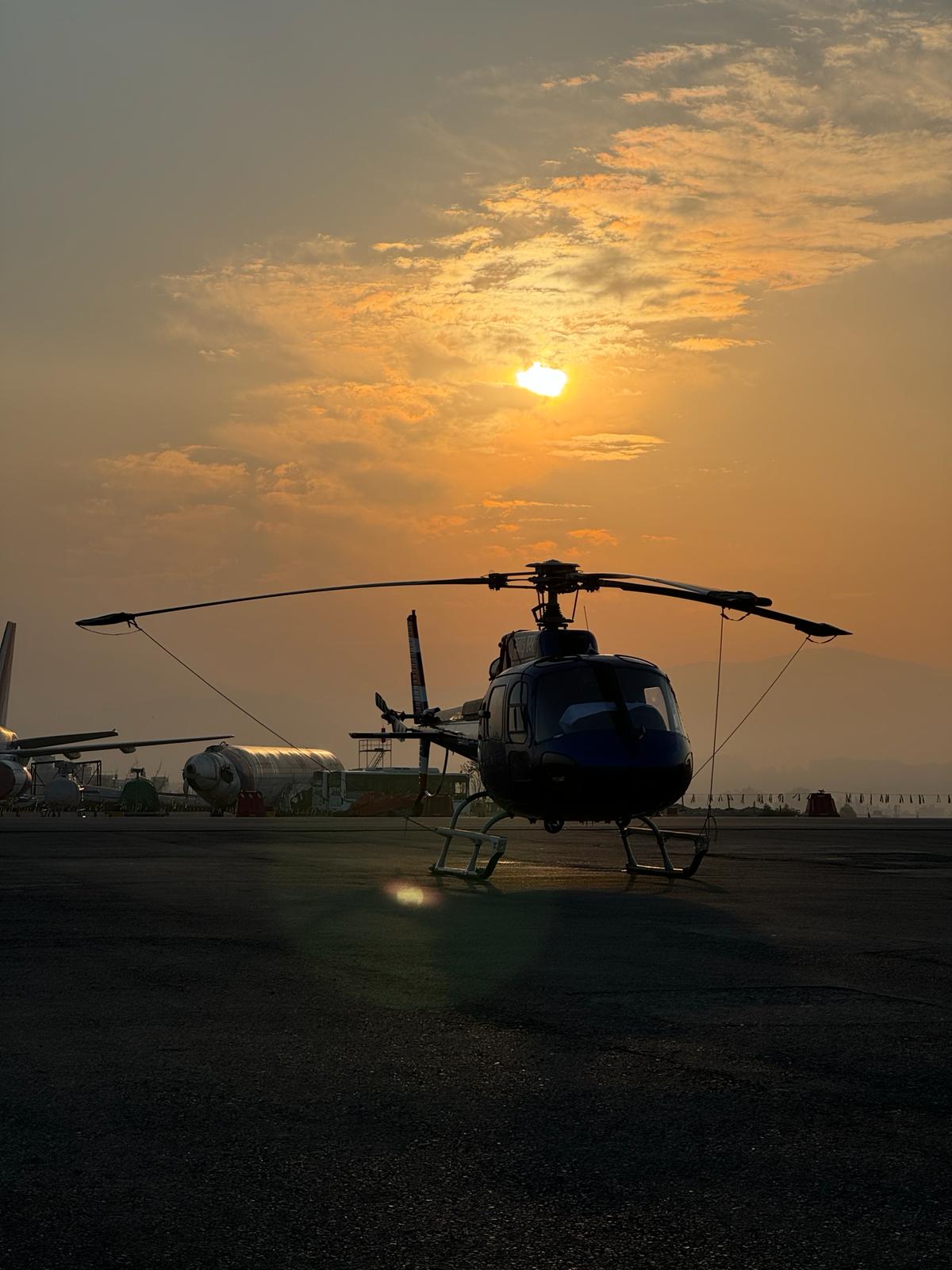
For those with limited time, Vertex Holiday offers a Ten days Everest Base Camp Trek with a helicopter return to Kathmandu. This package provides a condensed adventure, allowing trekkers to experience the highlights of the EBC trek, including scenic flights, exploration of Sherpa villages, and stunning views of Everest and other peaks. The trek follows a straightforward route to Everest Base Camp and Kalapathar, after which a helicopter transports trekkers back to Kathmandu from Gorakshep. This option saves 2-3 days of walking back to Lukla, making it ideal for those seeking a quicker yet comprehensive experience. The cost for this package starts at US$2600 for a single person, with group discounts available. The helicopter used is typically an AS 350 B series (Eurocopter Ecureuil model), certified for high-altitude flights.
EBC Trek on the way to Gorakhsep
15 days Everest Base Camp Trek by Road Packages
The 15 days Everest Base Camp trek by road packages, Vertex Holiday offers an alternative to the popular flight into Lukla. This option involves an overland journey from Kathmandu to Salleri and then to Surkhe village, where the trek begins. This route allows trekkers to experience more of Nepal’s rural life and diverse landscapes, contrasting the lower Solu region with the high Khumbu area. The drive itself is an adventure, traversing through farm villages and towns, and on rough country mountain off-roads. The 15-day Everest Base Camp trek by road packages typically includes 12 nights and 13 days of active travel, starting with the drive from Kathmandu to Salleri (2,390 meters). From Salleri, the journey continues overland to Phaplu and then on rough off-road tracks to Takshindo and Surkhe. At Surkhe, the trekking portion commences, following the main trails towards the Khumbu and Everest region. This route offers sweeping panoramas of the Central and Eastern Himalayan ranges during the drives and allows for witnessing the age-old heritage and traditional cultures of mountain villagers.
Nine Days Everest Base Camp trek Packages
The nine days Everest Base Camp trek packages is designed for physically fit and experienced trekkers who can handle a faster pace and less acclimatization time compared to longer itineraries. This condensed schedule Helicopter flying from Kathmandu to Lukla, trekking to Everest Base Camp and Kala Patthar, then trek back to Namche Bazaar from Namche Bazaar flying back to Kathmandu by helicopter journey.
Everest Base Camp Trek Packages Key Differences
A standard Everest Base Camp trek packages typically involves flying into Lukla and then trekking for approximately 12-14 days, including acclimatization days, to reach EBC and return. This duration allows for a gradual ascent, which is crucial for acclimatization to high altitudes, minimizing the risk of acute mountain sickness (AMS). A “Longer Treks Vertex Holiday” package would likely align with or exceed this typical duration, potentially incorporating additional side trips, such as Kala Patthar for sunrise views of Everest, or extending the trek to include Gokyo Lakes or the Three Passes, making it a more comprehensive and challenging experience.
The 15 Days Everest Base Camp Trek by Road packages is a less common and significantly different approach. Instead of flying to Lukla, this option involves driving as far as possible, typically to Jiri or Salleri, and then trekking from there. This adds several days to the overall trek duration, as the starting point is much lower in elevation and further from EBC. The “Longer Treks Vertex Holiday” would differ significantly from this by likely utilizing the more conventional and time-efficient flight to Lukla, unless the “Longer Treks” specifically refers to a road-based, extended journey.
Everest Region Trek
The primary goal of Ten Days Everest base camp trek packages is to reach Everest Base Camp (5,364m / 17,598ft) and ascend Kala Patthar (5,555m / 18,208ft) for panoramic views of Mount Everest and surrounding peaks then from Gorak shep helicopter fly back to kathmandu. The trek typically begins with a scenic flight from Kathmandu (or Manthali during peak seasons) to Lukla (2,850m / 9,350ft). From Lukla, trekkers proceed through various Sherpa villages, including Phakding (2,650m / 8,694ft) and Namche Bazaar (3,440m / 11,285ft). Namche Bazaar often serves as a crucial acclimatization stop, though in a ten days itinerary, dedicated rest days might be replaced by acclimatization hikes. The route continues through Tengboche (3,855m / 12,687ft), known for its significant Buddhist monastery, and then to Dingboche (4,360m / 14,469ft) and Lobuche (4,930m / 16,273ft). The final push to Everest Base Camp and Kala Patthar is from Gorak Shep (5,185m / 17,010ft), which is the last settlement before the base camp. The return journey using small helicopter flight back to Kathmandu.
The Nine Days Everest Base Camp Trek packages is a considered express or shorter versions of the EBC trek. These itineraries typically reduce the number of acclimatization days or shorten the trekking days, making them more physically demanding and increasing the risk of AMS due to rapid ascent. The key difference from a “Longer Treks Vertex Holiday” is that the “Longer Treks” package would almost certainly offer a more extended and therefore safer and more comfortable acclimatization schedule, along with potentially more comprehensive inclusions like additional porter services, higher-quality accommodation, or more meals. Shorter treks often appeal to those with limited time but come with inherent risks if not properly managed. A longer trek allows for a more relaxed pace, better acclimatization, and potentially more exploration of the Khumbu region.
Before joining any treks in Nepal and Himalayas find out difficulty level of journey it will helps you complete trip, The Manaslu Circuit Trek Difficulty ( MCT) is widely considered a strenuous and demanding high-altitude restricted area trek in Nepal, requiring fitness, physical and mental preparation. It is generally rated as “difficult” to “very difficult” on standard trekking scales. While challenging, it is achievable for individuals with good fitness and the right mindset, even for some first-time trekkers with proper guidance and acclimatization. Several factors contribute to the Manaslu Circuit Trek difficulty, including its remote location, challenging terrain, significant altitude gain, unpredictable weather, and basic infrastructure.
Manaslu Circuit Trek Remote Location and Infrastructure
The Manaslu region is Restricted area more remote and less developed compared to popular trekking areas like Langtang, Everest or Annapurna. There are no airports connecting to the Manaslu region from Kathmandu,pokhara & Chitwan, requiring a 8-9 hour drive on often bumpy and curvy off-roads to reach the trailhead to Machha Khola. This remoteness means limited access to facilities such as electricity, Wi-Fi, and mobile reception, which become increasingly unreliable at higher altitudes. Medical and emergency services are minimal, making immediate professional help difficult to access and often necessitating costly helicopter rescues in case of serious illness or injury.
Mount Manaslu
Accommodation, known as “teahouses, Lodge” is basic, offering simple rooms, shared facilities, and often no heating in sleeping Rooms. Food options are Normally local Nepali, simple chinese, some Indian and Tibetan dishes, with limited variety, especially at higher elevations, as supplies must be carried for days.
14 Days Manaslu Circuit Trek Itinerary:
Arrival In Kathmandu (1300m)
Drive From Kathamndu to Maachha Khola (900m) 9 hrs / 160km
Trek to Jagat (1410m) 8 hrs / 22 km
Trek to Deng (2280m) 7 hrs / 20km
Trek to Namrung ( 2630m) 7 hrs / 19km
Trek to Lho gau (3200m) 6 hrs / 11km
Trek to Samagaon via Pugnen Gumpa (3530m) 7 hrs / 18km
Rest day Samagaon , Exploration day / Manaslu Base Camp 4800m (8 hrs ) 12km
Trek to Samdo (3860m) 6 hrs 16km
Trek to Dharmasala Larkya la Base Camp (4460m) 5 hrs / 6 km
Trek to Bhimtang via Larke La pass 5160m (3720m) 9 hrs / 16km
Trek to Tiliche (2300m) 6 hrs / 20km
Drive to Kathmandu via Besisahar & Dharapani (1300m) 8 hrs /220km
Departure
Manaslu Circuit Trek Distance and Terrain
The Manaslu Circuit Trek typically covers a distance of 160 to 180 kilometers, depending on the exact itinerary and any side trips. This is longer than the EBC And ABC Trek. Trekkers walk around 6 to 10 hours per day. The terrain is rugged and varied, featuring steep ascents and descents, rocky trails, narrow mountain paths, and numerous suspension bridge crossings over rivers and gorges. Trekkers will navigate through dense forests, terraced farmlands, and high alpine trails, passing glaciers and moraines. Landslide-prone areas are also a feature of the trail, particularly in lower sections. The final push over the Larkya La Pass often involves loose scree slopes, snow-covered trails, and potentially icy conditions, requiring careful footing and sometimes technical gear like microspikes or crampons.
Manaslu Circuit Trek Altitude and Acclimatization
A significant challenge of the Manaslu Circuit Trek is the rapid and substantial altitude gain. The trek starts from Machha Khola (900 meters) and ascends to its highest point at Larkya La Pass, which stands at 5,160 meters (16,929 feet). This represents a vertical gain of over 4,300 meters in less than two weeks. Spending multiple days above 3,000 meters (9,842 feet) and several days above 4,000 meters (13,123 feet) significantly increases the risk of Acute Mountain Sickness (AMS). Symptoms can range from headaches and fatigue to more severe and life-threatening conditions like High Altitude Pulmonary Edema (HAPE) or High Altitude Cerebral Edema (HACE). To mitigate this risk, itineraries typically include one or two dedicated acclimatization days, usually at Samagaun (3,530 meters / 11,581 feet) and Samdo (3,860 meters / 12,125 feet). These days involve “climbing high and sleeping low” to help the body adjust to reduced oxygen levels. Proper hydration, a slow trekking pace, and avoiding alcohol are crucial for acclimatization.
Manaslu Circuit Trek Difficulty Weather and Seasonal Variations
The weather condition around Manaslu region can be unpredictable and localized, adding to the Manaslu Circuit trek difficulty. Temperatures can vary drastically, from warm days to freezing cold nights, especially at higher altitudes from samagaon. The best times and seasons to undertake the Manaslu Circuit Trek are during the spring (March to May), autumn (mid-September to mid-November) and During the Winter season (December – February) presents extreme cold heavy snowfall & challenging but suitable for those people who love snow. These seasons offer generally clear skies, stable conditions, and moderate temperatures, making the trek more manageable.
Trekking during the monsoon season (June to August) is not recommended due to heavy rainfall in lower Manaslu Region, which makes trails slippery, increases the risk of landslides, and limits mountain views.
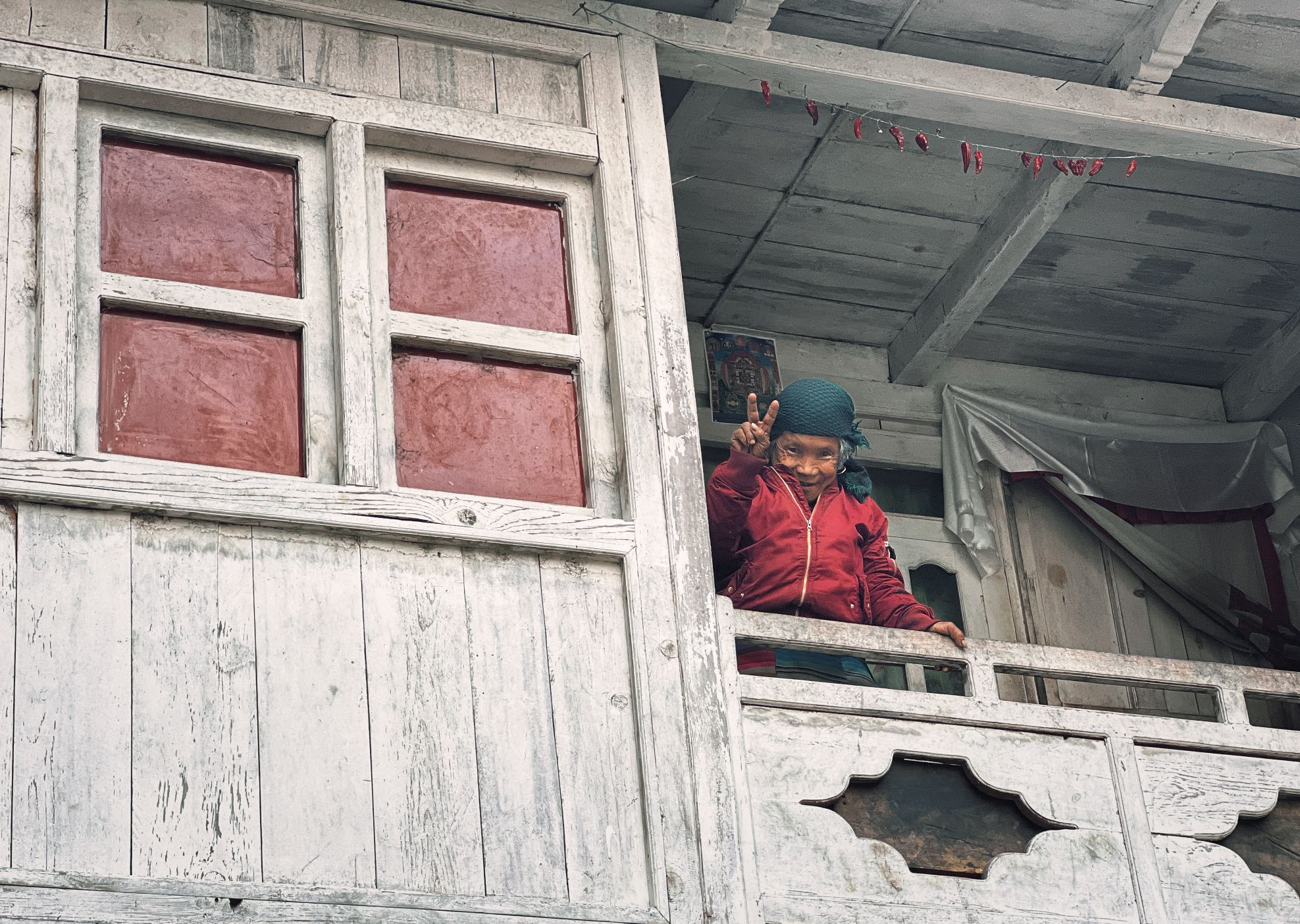
Life of Local people
Manaslu Circuit Trek Physical and Mental Fitness
The Manaslu Circuit Trek demands a Good level of physical fitness and mental strength. Trekkers need strong cardiovascular fitness, muscular endurance, and the ability to sustain physical exertion for consecutive days. While prior trekking experience is highly recommended, beginners with a good fitness level and proper preparation can complete it. Training should include, swimming, Yoga, cardiovascular exercises, strength training (especially for legs and core), and practice hikes with a loaded pack. Mental toughness is equally important to cope with long walking days, basic living conditions, unpredictable weather, and potential discomfort or illness. Staying positive, maintaining determination, and being prepared for challenges are key.
Manaslu Circuit Trek Comparison with Other Treks
While being travel agent in Nepal we provide Manaslu Circuit Trek Difficuly with our opinion and experiense, the worldwide popular trekking route (EBC) Everest Base Camp trek which is reaches a higher maximum altitude (Kala Patthar at 5,550m vs. Larkya La Pass at 5,160m), many consider the Manaslu Circuit Trek to be comparably or even more difficult due to its greater remoteness, less developed infrastructure, longer overall distance, and the technical nature of crossing the Larkya La Pass. The Manaslu Circuit offers a more authentic and less crowded experience compared to the popular EBC and Annapurna routes.
Annapurna Circuit Trek:
Annapurna Circuit Trek with Tilicho lake is a one of the oldest trekking routes, Besides Everest Base Camp, is among the most popular hiking destination in the Gandaki province of Nepal attracting tourists and travelers from all around the world. Scenic Mountain vistas of Dhawalagiri (8167m), Annapurna (8091m), Manaslu (8163 m), Gangapurna(7445m), Nilgiri (7061m), Machapuchhre (6993 m), and many other high snow peaks bejewel the entirety of the trip. Annapurna Circuit trek highst altitude is Thorang La pass 5416m, also challengeable trek, this route can join from Dharapai, 13th day of Manaslu circuit trek.
Everest Base Camp Trek:
One of the finest trekking trips in the entire world, Everest Base Camp Trek is a daring hiking trail in the Everest Himalayan territory of Nepal. With an altitude ranging from Lukla (2860 m) to Kalapathar (5555m), the Everest Base Camp trek is classified as a difficult and strenuous journey.Compare to Manaslu Circuit trek Everest Base camp has a less daily walking distance but higher altitude make changeable.
Everest Region Trek
Overcoming Manaslu Circuit Trek Difficulties
Proper preparation: Engage in a comprehensive physical training regimen for several months prior.
Acclimatize properly during the trip: Follow the experience company recommended itinerary with dedicated acclimatization days and trek at a slow, steady pace.
Pack Essential Equipment: Carry Good-quality, Down Jacket, trekking boots, warm layers, a good sleeping bag, and essential equipment for varying weather conditions.
Choose Best Travel Agency in Nepal : Company Local quality Guide provide right information, cultural insights, and emergency support, while porters can significantly ease the physical burden of carrying heavy loads.
Maintain proper nutrition and hydration: Stick to local vegetarian food to minimize health risks and drink plenty of fluids.
Be mentally prepared Before Starting Trek: Understand route & challenges and cultivate resilience to push through difficult moments.
Buy a travel insurance before start the trip: Ensure sudden health problem it covers high-altitude trekking and emergency helicopter evacuation.
Vertex Holiday is a well-organized travel agency in Nepal. The agency prides itself on its local knowledge and network, which allows for the creation of unique itineraries and access to off-the-beaten-path experiences. Their services encompass everything from cultural tours and wildlife safaris to high-altitude treks and mountaineering expeditions. Clients receive detailed pre-trip information, including visa requirements, packing lists, and cultural etiquette, ensuring they are fully prepared for their journey. The company emphasizes sustainable tourism practices and works with local communities to ensure responsible travel.
Services Offered
Vertex Holiday provides a comprehensive suite of travel services, meticulously designed to meet the varied needs of international travelers:
Trip Planning: Tailored itinerary creation based on client preferences, budget, and desired activity level. This includes route optimization, accommodation selection, and activity scheduling.
Tour Packages: A diverse range of pre-designed and customizable tour packages covering cultural heritage sites, natural landscapes, and spiritual journeys in Nepal, Bhutan, and Tibet. Examples include Kathmandu Valley cultural tours, Pokhara adventure tours, and Bhutanese cultural immersion tours.
Trekking and Expedition Needs: Full logistical support for trekking and mountaineering expeditions, from popular routes like the Everest Base Camp Trek and Annapurna Circuit to more challenging peak ascents. Services include permits, experienced guides, porters, equipment rental, and safety protocols.
Information Provision: Comprehensive pre-trip information and ongoing support throughout the journey. This includes details on local customs, weather conditions, health and safety guidelines, and emergency contacts.
The Nepali New Year 2083 BS may seem far off and a wonder for foreign visitors in Nepal. The country with an ancient history and heritage, traditional cultures still intact, as they have been for hundreds of centuries. This makes Nepal one of the most amazing and unique countries in the world. Located in South East Asia, sandwiched between India and Tibet-China, with an area of 147,181 sq. km. Despite the country’s size, it occupies 0.03% of the Earth’s surface and is home to more than 23 million Nepali.
Nepal with 2 % of all the flowering plants in the world, 8 % of the world’s population of birds (more than 857 species), 4 % of mammals on earth, 11 of the world’s 15 families of butterflies (more than 500 species), 600 indigenous plant families, and 319 species of exotic orchids. Nepal treasures the 8th-highest peaks out of the 14 in the world.
The country has more than 60 ethnic groups and 70 Native languages, and Nepali is the official language. The other amazing fact about Nepal is that it is the only country in the world. Where both Hindu and Buddhist religions exist in peaceful harmony, Nepal is one of the safest and friendliest countries.
Nepali New Year Celebration
In the world of fast-growing modernization with high technology. Nepal still retains its ancient glories of history, tradition, and cultural heritage of both the great Hindu and Buddhist religions. Following its ancient calendar called Bikram Sambat, which was established in the early days. It is still practiced by all Nepali from the Far East to the remote west, and north and south of the country. Visitors will certainly enjoy a mesmerizing holiday in Nepal, from cultural and heritage tours to various adventures around the Himalayas. Travelers will experience a new era, the year 2083 BS, only in Nepal.
According To Nepali Calender New Year Date in AD:
Nepali New Year 2083BS, Visitors from around the world might be astonished upon entering Nepal in the year 2083. It is not AD as in the Gregorian calendar, but the year BS from the Nepali age-old calendar. The official calendar is practiced throughout Nepal by all Nepali.
It is called Bikram Sambat. In short, it is B.S. based on lunar-solar astronomy and the ancient Hindu calendar. In Nepal, it was established by the king Bikram Sambat for religious and cultural purposes and ceremonies. It is still in use as the official calendar in Government offices, schools, and private enterprises.
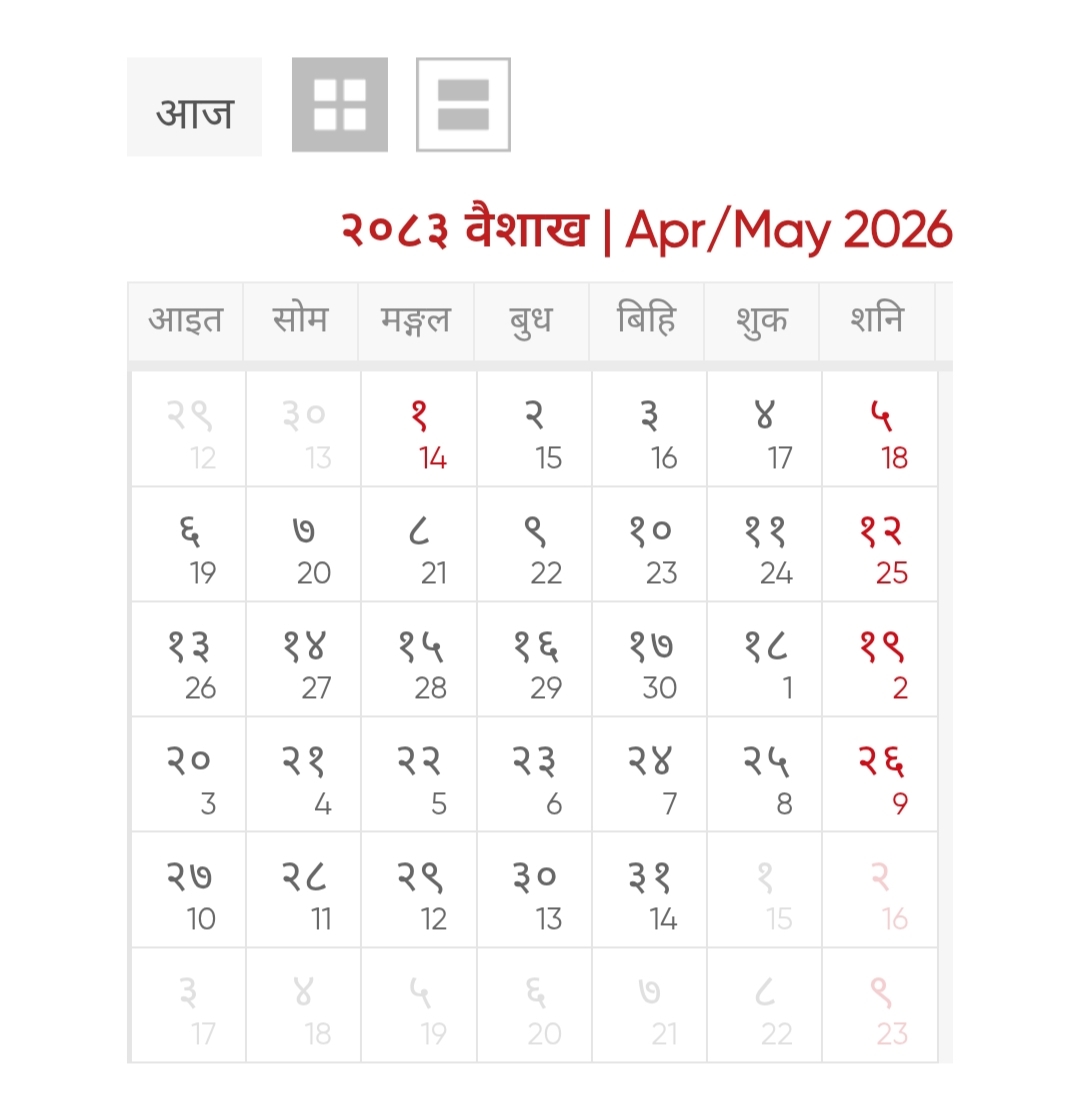
The Gregorian calendar is also used in the tourism industry for foreign visitors. As per the Nepali Calendar, the New Year starts from the first month of the year ‘Baisakh’ 2083 BS. On April 14th of 2026 AD, in the Christian or Gregorian calendar, the New Year is called Nava Varsha/Bharsa. The Nepali year, as per BS, is about 56 years and 8.5 months ahead of the Gregorian calendar. The Nepali BS calendar does not have leap years like February 29, which falls every four years. Instead, Nepal has a maximum of 32 days and a minimum of 30 days in some months as per the BS calendar.
Nepali New Year 2083 Date
Although the Nepali calendar differs from the Gregorian calendar, it does have 12 months a year with four seasons. The Nepali calendar was originally established by the emperor Vikramaditya of Ujan from Northern India. After his victory in the war over the Sakas kingdom around 56 BC. Later, King Bikram Sambat introduced the Nepali Calendar during his rule in Nepal.
Various New Year’s For Diffrent Tribal Communities Of Nepal:
Nepal has more than 60 ethnic groups, and the Nepali New Year, Bikram Sambat, is celebrated throughout the country. Apart from the country’s official New Year B.S. The mountain tribes around the high hills and the Himalayan regions. For instance, the Sherpa, Bhot people of Manang, Mustang, and Upper Manaslu, including Tamang, Gurung, and Newar. These Tibetan-origin tribes celebrate their own New Year’s, which falls in different months of the Nepali Calendar B.S.
The Newar Nepal Sambat A New Year:
Nepali New Year 2083 BS, The Newars of Kathmandu Valley celebrate their own traditional New Year called Nepal Sambat. Established in 879 AD by Shankhadhar Sakkhwa, the Lunar Calendar is used only by the Newar communities. It falls during mid-October or the first week in November, depending upon the lunar and astrological calendars. In 2026 AD, it will be the 1146th year of the Nepal Sambat. During the Malla dynasty period, it was the official calendar of Kathmandu Valley and some parts of Nepal. The official use of Nepal Sambat ended in 1769 AD, when all provisions were united into one Nepal. This is when Gorkha King Prithvinarayan Shah conquered all the provinces of Nepal in the 17th Century.
The Tamu Or Gurung Losar:
The Gurung celebrate Tamu Losar, which the native Gurung call Lochar instead of Losar. It is similar to the Tibetan and Chinese calendars, based on the lunar calendar, but celebrated in different months of the year. It is due to cold climate conditions and the migration of the Gurung communities. The Tamu Losar festival falls during the 9th month of B.S. During the cold winter month at the end of December.
Nepali New Year 2083 BS The “Gurung New Year of Tamu Losar” is a grand festival of the Gurung in Nepal. Tamu Losar marks the beginning of the Tamu Sambat or New Year in the Gurung Calendar Year. The New Year is from the cycle of an animal or bird. At the end of December, the Tamu Losar is held to herald the beginning of the Horse Year, similarly to the Chinese and Tibetan New Year.
Sonam Losar Of The Tamnag Communities:
Sonam Losar, or Lochar, is celebrated by the Himalayan Tamang tribe, one of the largest tribal groups in Nepal. They are settled across Nepal to the border of North East India, Darjeeling, Sikkim, and as far as Bhutan. The Sonam Losar is the same year as the Gurung, Tibetan, or Sherpa New Year Losar. Following the New Year of the animal’s cycles, the Sonam Losar is marked, according to the ancient Uyghur calendar. The same calendar used by the Chinese, Mongolian, Tibetan, and the Sherpa, but celebrated a month apart. Due to the cold winter migration of mountain tribes, they moved from the high, cooler hills to lower, warmer areas.
The Sonam Losar for 2026 A.D. falls on 19th January, the beginning of a horse year. The Tamang communities celebrate Sonam Losar with great pomp and joy of religious, cultural fervor. It can extend for five to fifteen days from place to place around the hill villages, towns, and cities. The belief is that Lord Buddha was born on the first day of the full moon. It falls in the Nepali B.S. 10th month of Maghe, a day for celebrations, dances, family, and gathering of all Tamang communities, including friends.
Gyalpo Losar Tibetan And Sherpa New Year:
The Gyalpo Losar, celebrated by the Tibetans and Sherpa, Hyalmo Communities. As they are of the same Tibetan origin tribes and follow a similar Chinese zodiac. For 2026, it is the Year of the Horse, as well as the Chinese New Year, which is held on February 17th, 2026. The Sherpa of Nepal’s high Himalaya celebrate Gyalpo Losar for a week, visiting families and friends. Engaged with ritual prayers, worship, and offerings in the monasteries, and celebrations with lavish foods and local brews. Includes dance and songs throughout the day and nights, for a week’s duration.
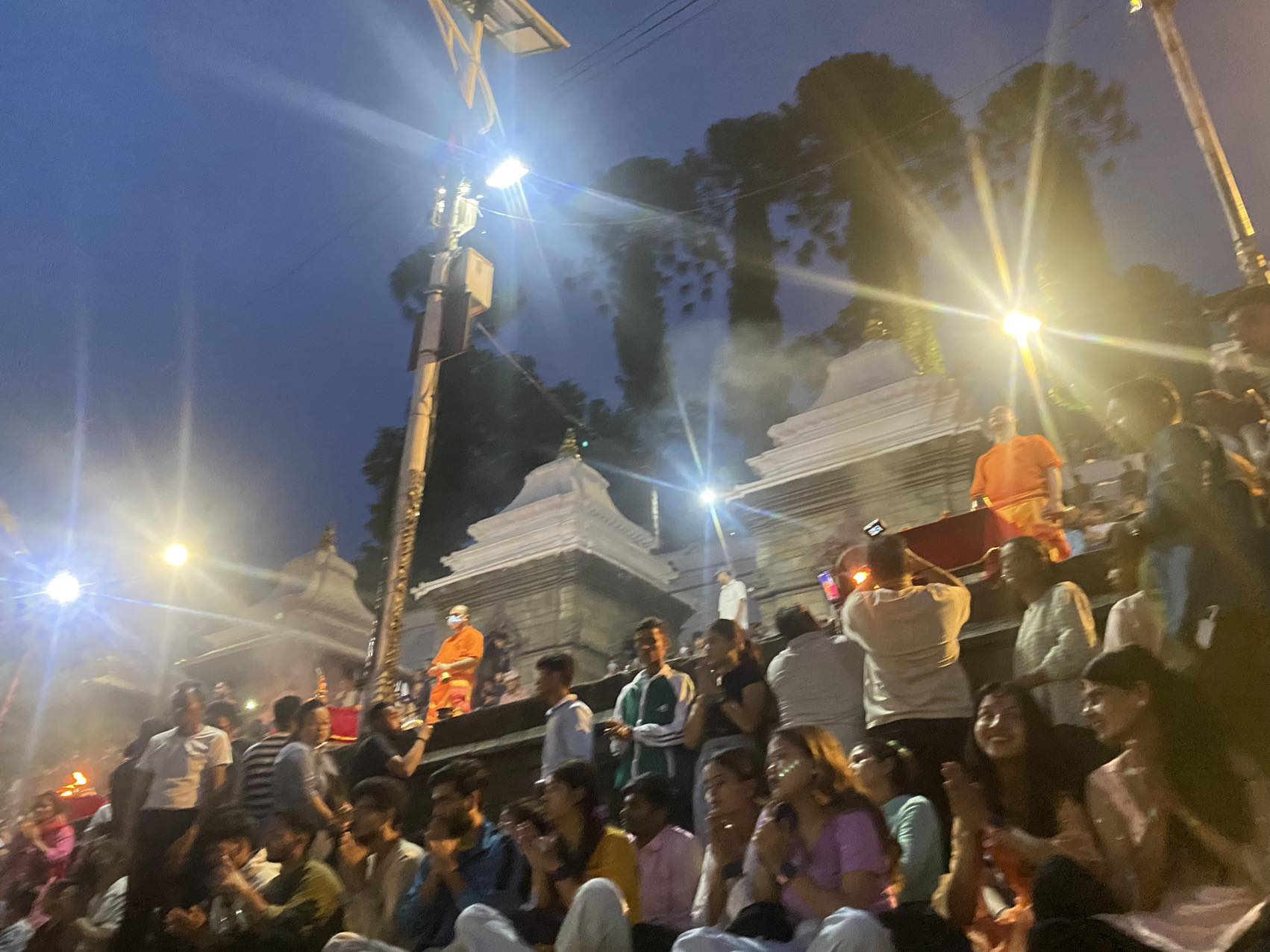
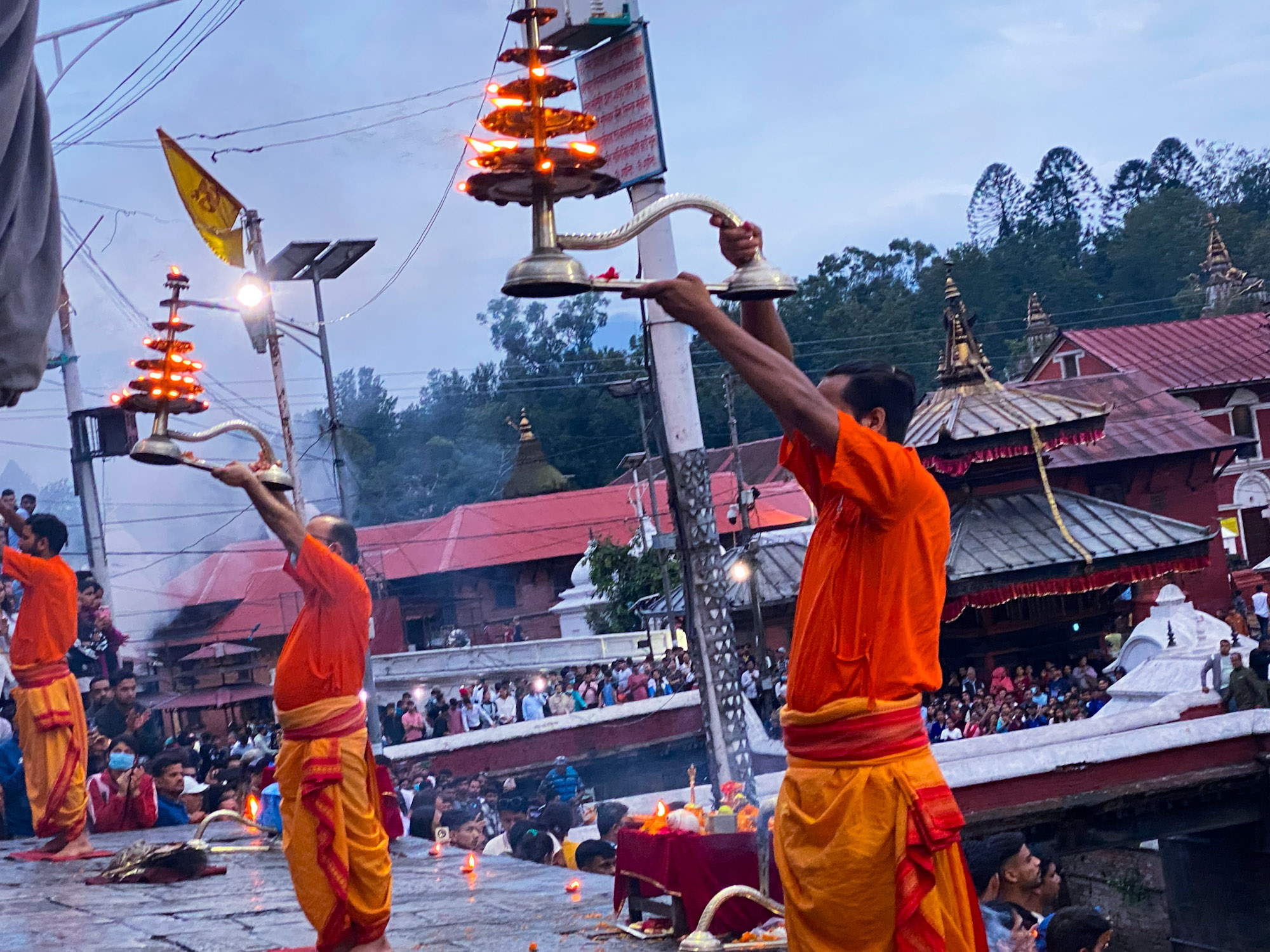
Aarati at Pashupatinath Temple
When Is The Nepali New Year Celebrated?
Nepali New Year celebration takes place with great pomp and glory, especially in large towns and cities. For 2026 A.D., the ‘Baisakh’ of the Nepali first month of the year 2083 B.S, which is April 14 of 2026 A.D.
The Background Behind The Nepali Calender:
Although the Nepali Calendar was brought and started in use in Nepal by the King Bikram Sambat. The Nepali Calendar is still in use in Nepal since the reign of King Bikram Sambat. The calendar is believed to have been established by Emperor Vikramaditya of Ujjain after his victory over the Sakas in 56 BCE. While the exact date is still unknown, it is generally accepted that the calendar was introduced to Nepal. During the rule of King Vikramaditya, the Bikram Sambat calendar is still practiced today.
How Do Nepali People Celebrate The New Year?
Nepali New Year 2083 BS, While Bikram Sambat is the official calendar of Nepal, Nepal Sambat is also recognized and used, particularly for cultural celebrations.
Most Nepali newspapers and publications use both calendars, as well as the Gregorian calendar. In Kathmandu city, a parade is held by the Police Force and the Nepal Army. A large number of public attendants and dignitaries to observe the impressive parades at Tundikhel, in the hub of Kathmandu. It is a gathering of friends, families, and neighbors exchanging wishes and having get-togethers with joyful parties.
Major Location Of New Year Celebrations:
The major locations are mostly in, large villages, towns like Thamel kathmandu and Pokhara cities. Nepal is enriched with its age-old culture. As well as traditions and customs within various communities and religions. This makes the country and its people lively, enjoyable, and interesting. The old saying is that festivals never end in Nepal.
Where every week or month, some religious rites and celebrations take place, whether small or big. Including various New Years of different tribal communities from the lowland of Terai to the high Himalayan Villages.
Culture Aand Religious Significance Of Nepali B.S. Calender:
Nepali New Year 2083 BS, Nepalese New Year’s Day is observed with great glory. One of the great Bisket Jatra held in Bhaktapur, which is not to be missed.
The Bikram Sambat is a unique ancient calendar that plays a significant role in Nepali culture and religion. All big or small festivals and ceremonies are linked with old traditions are attached to Nepali calendar dates. For example, the Nepali New Year is a major celebration marking the start of the year according to this calendar.
The Newari Nepal Sambat calendar, introduced during the Malla regime, was also used officially in Nepal from 881 to 1769 AD. Later on, from the late 17th Century, the Nepal Sambat was replaced by Bikram Sambat. Since then, Bikram Sambat has been in use, and the government recognized it as a national calendar in 2007. The Bikram Sambat calendar is a Lunar-solar calendar, a combination of both lunar and solar cycles. It has 12 months, with the number of days in each month varying from 29 to 32.
Nepal Tour & Trekking Packages During The Nepali New Year:
During the Nepali New Year 2083, for those interested in a Nepal tour and trekking experience that includes observing the Nepali New Year 2083 B.S., Vertex Holiday is a reputable travel agency registered with the Nepal Government that can provide short and long duration packages. For the right dare to coincide with the events and happenings all around Nepal. From the bustling city of Kathmandu, Pokhara, to the cooler mid-hill and beyond the high Himalayan regions short Ghorepani poon Hill Trek, Short Annapurna Base Camp Trek is the best option for those who don’t have enough holiday vacation. The Nepali New Year 2083 B.S. tour packages start from Kathmandu city and witness the gathering of friends and families. As well as have time to observe the Nepal Army and Police Force on parade with various drills. A short drive around Patan/ Lalitpur and Bhaktapur cities to enjoy the exciting Bisket Jatra. One of the big events of Bhaktapur, as well as a drive to the cooler and scenic Nagarkot Hill Station. One can enjoy the sunrise, with the first sunlight of the Nepali New Year 2083, in the comfort of a nice hotel.
The other places to visit apart from the Nepali New Year can include other tribal communities’ New Year celebrations. Enjoy visiting the Newari area to observe the Nepal Sambat New Year. The Gurung New Year or Losar in Pokhara and around the mid-hill of the Annapurna Himalayan ranges. Drive to Langtang Himalayan ranges to Dhunche and Gatlang to observe the Tamang Sonam New Year. The other New Year best to witness is the Tibetan and Sherpa Gyalpo New Year starting from the Bouddhanath Stupa. Then fly or drive to Phaplu and Salleri to observe the Gyalpo Losar; visitors can enjoy the Everest Base Camp trek by Road trip to Namche Bazaar.
A few days pilgrimage tour in Nepal around Manakamana temple, Muktinath, pokhara, Kathmandu, Bhaktapur, and Patan/ Lalitpur is the best package. The Nepali New Year 2083 B.S. Tour and Trek packages for all age groups. Interested people can venture towards the high hill villages of Annapurna, Langtang, and the Everest region. To coincide with the Gurung, Tamang, and Sherpa Losar to observe the beginning of the Horse Year, the Losar.
Pilgrimage Sites in Nepal, Honourable by devotees of Buddhism, Hinduism, and traditional faiths, Nepal is a spiritually rich country known as the Land of the Gods.Nepal small country everyday events and customs are intricately entwined with its sacred geography, which is characterized by tranquil monasteries, historic temples, and divine lakes. In addition to offering a breathtaking natural setting, the magnificent Himalayas heighten the reverence of locations such as Pashupatinath, Lumbini, Muktinath, and Gosaikunda.
For pilgrims and spiritual seekers, Nepal provides life-changing experiences, from the birthplace of Lord Buddha to the sacred sanctuaries of Lord Shiva and Vishnu. Throughout the year ceremonies, events, and blessings foster a lively spiritual environment. Nepal is an universal choice for people looking for inner calm and a link to the holy because of its distinctive fusion of natural beauty, cultural legacy, and devotion to God.
1.Pashupatinath Temple – The Sacred Abode of Shiva
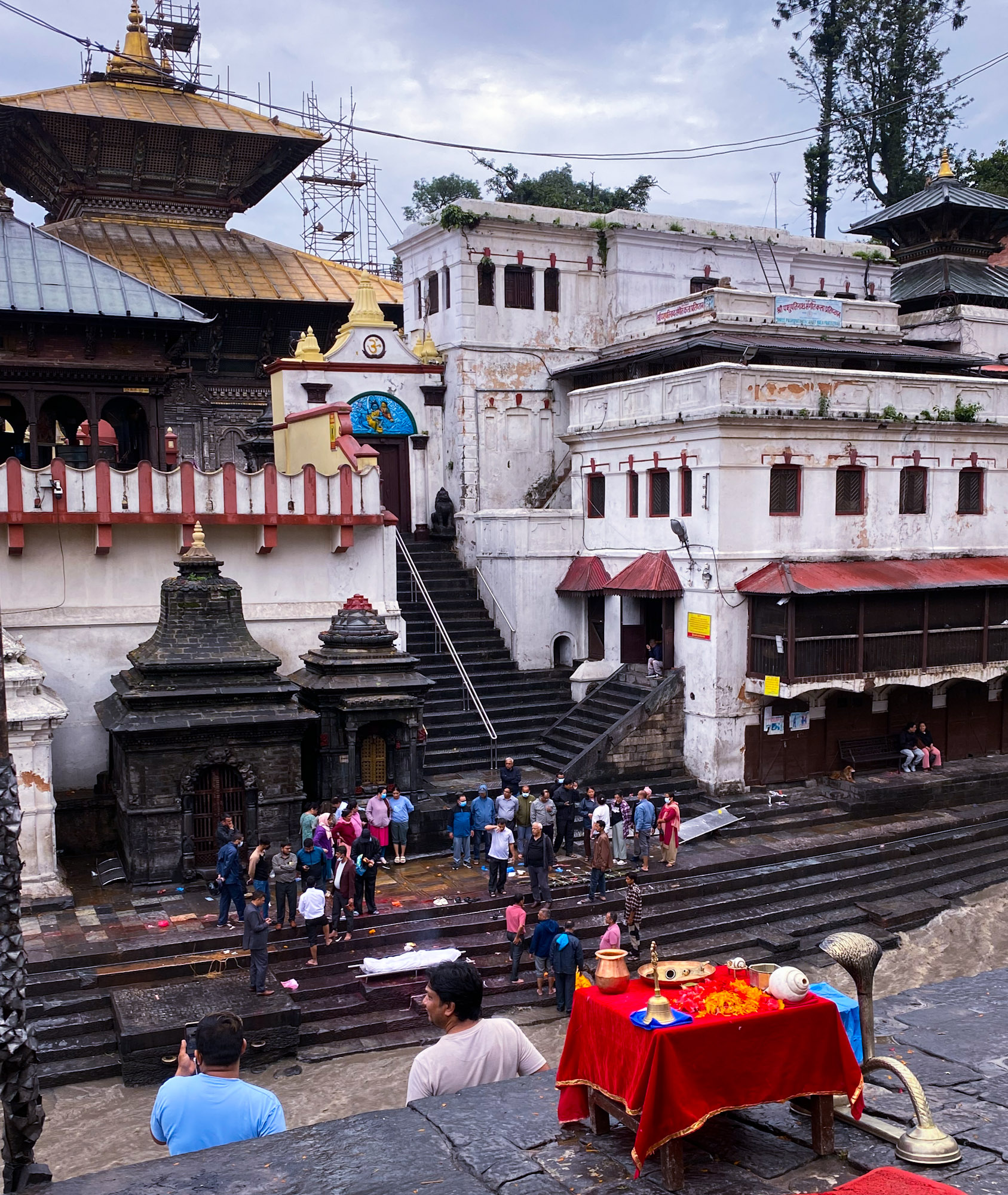
Pilgrimage Sites in Nepal Pashupatinath Temple is a one of the most revered Hindu temples, devoted to Lord Shiva is Pashupatinath Temple, which is situated in Kathmandu on the banks of the Bagmati River. Thousands of devotees visit it every year as a UNESCO World Heritage Site, particularly during Maha Shivaratri, when devotees and believers from all across South Asia assemble. Along the riverbanks, the temple complex serves as both a place of prayer and a location for cremation ceremonies, signifying the life-death cycle. Pashupatinath, with its elaborately crafted wooden structures and gilded roofing, is a symbol of Nepal’s rich spiritual legacy.
Pashupatinath Temple 21
2.Temple of Muktinath: Temple of Freedom
Muktinath Temple, located in the Mustang district at an elevation of 3,800 meters, is important to both Buddhists and Hindus. Buddhists view the location as a place where Guru Rinpoche (Padmasambhava) visited, while Hindus think that soaking in its 108 sacred water spouts will bring salvation (moksha). It represents the fusion of the fundamental elements of fire, water, and earth and is referred to locally as Chumig Gyatsa. The temple serves as both a spiritual hub and a picturesque destination for hikers due to its placement on the Annapurna Circuit.
3.The Sacred Himalayan Lake is Gosaikunda Lake.
After ingesting poison at the Samudra Manthan, Lord Shiva is said to have constructed the high-altitude lake Gosaikunda in Rasuwa to assuage his thirst. Thousands of pilgrims travel to the lake for ceremonial bathing during the Janai Purnima festival, which makes it a revered location. The lake, which is surrounded by untamed Himalayan peaks, provides both nature lovers and devotees with a profoundly meditative and peaceful experience.
4.Manakamana Temple: The Goddess Who Fulfills Wishes
The Goddess Bhagwati, a manifestation of Parvati, is worshipped in the Manakamana Temple in the Gorkha district. To have their deepest desires granted, believers go to the temple. Conveniently reachable from Kurintar via Nepal’s first cable car arrangement, the temple is situated atop a hill. The pilgrimage is made more picturesque by the expansive vistas of the river valleys and Himalayas that can be seen from the site of the temple.
5.The Temple of Pathibhara Devi: A Strong Shakti Peeth
One of the most important pilgrimage sites in eastern Nepal is the Pathibhara Devi Temple in the Taplejung district. The believers from India and Nepal travel to this renowned Shakti Peeth to ask for good fortune and have their aspirations fulfilled. Because they believe in the goddess’s magical abilities, pilgrims present her with gold, silver, and animals. Beautiful vistas of Kanchenjunga, the third-highest mountain in the world, may be seen on the hike to the temple.
6.The Cave of Divine Energy: Halesi Mahadev
The Halesi Mahadev Temple in Khotang is revered by Buddhists, Hindus, and Kiratis. Buddhists identify the cave as the Maratika Cave, where Guru Padmasambhava achieved the ability to live forever while Hindus claim Lord Shiva hid there to flee a demon. The temple complex, which draws both pilgrims and scholars, is made up of a number of naturally occurring caverns that are rich in religious and mythical meaning.
7.The Temple of Budhanilkantha: The Sleeping Vishnu
A huge recumbent stone figure of Lord Vishnu resting on a bed of serpents in a cosmic ocean may be found at Budhanilkantha, which is situated just north of Kathmandu. The statue is thought to be more than a thousand years old and was carved from a single black stone. According to a spiritual tale, the king of Nepal does not typically visit, but it is particularly significant to Vaishnav believers.
8.Lumbini: The Buddha’s Birthplace
The most revered pilgrimage site for Buddhists worldwide is Lumbini, which is situated in the Rupandehi area and is the birthplace of Lord Siddhartha Gautama Buddha. The Maya Devi Temple, Ashoka Pillar, sacred Bodhi tree, and a monastic zone with stunning foreign monasteries from Thailand, Myanmar, China, Japan, and other places are all part of Lumbini, a UNESCO World Heritage Site. Pilgrimage Sites in Nepal It’s a calm and spiritual hub for meditation, introspection, and the study of Buddhism worldwide.
Lumbini – Birthplace Of Gautam Buddha
9.Swayambhunath Stupa: The Light That Exists on Its Own
One of Nepal’s earliest and most recognizable Buddhist monuments is Swayambhunath Stupa, sometimes called the Monkey Temple, which is situated atop a hill in Kathmandu. Pilgrimage Sites in Nepal, The wisdom of Buddha is symbolized by the stupa’s all-seeing eyes. It provides breathtaking views of the Kathmandu Valley and is a gathering place for both Buddhist and Hindu pilgrims, surrounded by temples, prayer wheels, and monkey groups.
10.Nepal’s Tibetan Heart, Boudhanath Stupa
One of the biggest stupas in the world, Boudhanath Pilgrimage Sites in Nepal, is located along the historic trading route from Tibet. Many Tibetan refugees established monasteries near the stupa after the 1959 Tibetan uprising, transforming the region into the mystical centre of Tibetan Buddhism in Nepal. An aura of intense devotion is created when pilgrims and nuns walk around the stupa, reciting mantras and spinning prayer wheels.
11.Namobuddha: The Act of Compassion
Namobuddha is a peaceful hilltop location around 40 kilometres southeast of Kathmandu. It is thought that during a past life, the Buddha sacrificed his flesh to a famished tigress and her pups. It is now home to the magnificent Thrangu Tashi Yangtse Monastery and a Buddhist retreat centre. The site’s serene settings and expansive vistas of the Himalayas heighten its spiritual atmosphere.
12.The City of Goddess Sita is Janakpur.
Hindus revere Janakpur in the southern Terai as the birthplace of Lord Ram’s bride, the goddess Sita. The focal point is the elaborate marble Janaki Temple, which was constructed in the 19th century and combines Rajput and Mughal architectural styles. During Ram Navami and Vivaha Panchami, when the heavenly marriage of Ram and Sita is celebrated with elaborate rites and processions, devotees swarm here.
13.The Gateway to Heaven, Swargadwari
Swargadwari, in the Pyuthan district, is thought to be the location of the Mahabharata Pandavas’ ascent to heaven. Additionally, Swargadwari Mahaprabhu, a famous sage who helped innumerable people, used the location as his meditation place. As a hub for vegetarian, Vedic, and yoga activities, it continues to be a significant spiritual destination today.
14.Dakshinkali Temple: The Goddess in Her Fierce Form
Dakshinkali Temple is a revered Hindu shrine devoted to Goddess Kali, the ferocious and guardian form of Parvati, situated roughly 22 kilometres south of Kathmandu. The temple is situated in a wooded ravine at the meeting point of two rivers, which makes for a mysterious and potent scene. For devotees looking for strength, protection, and an absence of barriers, it is particularly important. As a sign of love and appreciation, animal sacrifices are frequently performed, especially on Tuesdays and Saturdays, especially of cocks and male goats. Thousands of pilgrims swarm Dakshinkali to obtain the goddess’ graces during the Dashain festival, making it a popular destination as well.
15.The oldest Hindu temple still standing is Changu Narayan Temple.
Changu Narayan Temple Pilgrimage Sites in Nepal, which dates to the fourth century, is regarded as the oldest Hindu temple in Nepal and is located close to Bhaktapur on a hilltop east of Kathmandu. It is devoted to Lord Vishnu and contains some of the best sculptures, artwork, and monuments from the Licchavi dynasty. This UNESCO World Heritage Site is valued for its historical history, architectural beauty, and spiritual significance. Experts come to study the elaborate stone and wood sculptures that represent numerous avatars and mythical tales, while pilgrims come to worship Vishnu in his Narayan form.
16.Badhimalika Temple
One of the most potent Shakti Peeths in Nepal, Badimalika Temple is tucked away in the isolated western hills and is devoted to the Goddess Bhagwati. It is a strenuous but spiritually fulfilling hike through alpine meadows and hills covered in wildflowers to get to the temple. Although the temple is quiet and serene for the majority of the year, thousands of pilgrims visit it during the Janai Purnima festival.
17.Dolakha Kalinchowk Bhagwati
Pilgrimage Sites in Nepal, Kalinchowk Bhagwati Temple continues to have a strong sense of unadulterated spirituality despite its increasing popularity. At 3,842 meters above sea level, it provides sweeping views of the Gaurishankar Himalayas in addition to heavenly gifts. Hindus particularly venerate the temple because they think the goddess grants her adherents’ requests. It is very lively during Dashain and may be reached by cable car or off-road jeep.
18.The Mountain Goddess of Doti, Shaileshwari
Shaileshwari, a strong goddess revered as a manifestation of Durga or Parvati, is situated in Nepal’s far western area. In the Doti district, the temple devoted to Shaileshwari is a popular destination for local pilgrims, particularly during holidays like Dashain. Devotees have a peaceful space for prayer and contemplation thanks to the neighbouring terrain, which is characterized by rocky hills and peaceful woodlands.
19.Swargadwari: Pyuthan’s Doorway to Heaven
The fabled pilgrimage spot Swargadwari, which is tucked away in the Pyuthan district’s hills, is regarded as the “gateway to heaven.” Local legend states that during the epic battle in the Mahabharata, the Pandavas ascended to heaven from this location. A renowned monk who dedicated his life to helping pilgrims and disseminating religious principles ultimately turned the location into a spiritual centre. Famous for its vegetarian holiness (no meat nor drink are allowed), Swargadwari is still an essential location for meditation, spiritual retreats, and Ayurveda ceremonies.
20.Gulmi’s Sacred Confluence, Ridi
Known for the Rishikesh Temple, which is devoted to Lord Vishnu, Ridi is a holy pilgrimage site situated in the Gulmi district at the meeting point of the Kali Gandaki and Ridi Khola rivers. During the Maghe Sankranti festival, when hundreds of people visit to take baths in the sacred rivers and carry out ceremonies said to atone for sins and bestow blessings, this location assumes special religious significance. Despite its spiritual significance, Ridi is nonetheless a calm and uncrowded place that is loved for its cultural heritage and beautiful riverbanks.
21.Halesi-Maratika Caves
Pilgrimage Sites in Nepal, Halesi Temple & Maratika Cave, apart from their religious aspect. It is also a great homage site. Hindu and Buddhist devotees from India, Bhutan, Tibet, Japan, and the USA also visit the Halesi and Maratika Caves. This religious area is a natural wonder with four large and several smaller caves. The three main caves represent the three eyes of Lord Shiva. Buddhists call these caves Maratika, the exact spot where Saint and Guru Rinpoche, Padmasambahava. The founder of Tibetan Buddhism of Nyingma, also known as the Red Hat sect. He and his wife, Mandarava, got liberated from the cycle of life and attained Nirvana.
The Complete Guide to Nepal’s Top Domestic Airlines (2025)
Flying into the Himalayan heartland despite its beauty, Nepal’s rugged terrain frequently makes overland travel challenging and time-consuming. Domestic planes act as lifelines, linking the nation’s urban centers, hiking destinations, and isolated areas. Nepal’s domestic airlines are vital to both tourism and local life, offering everything from picturesque mountain routes to necessary flights for rural access.
Despite frequent obstacles including unpredictable climate and insufficient facilities, Nepal’s domestic airlines had improved in professionalism and dependability by 2025. With its state-of-the-art ATR aircraft and reliable service, top airlines like Buddha Air and Yeti Airlines control the main city routes, while Shree Airlines provides jet flights to important Terai economic hubs. In order to reconnect underserved areas, Nepal Airlines has also started operating a small number of rural flights again after a challenging period of suspension. Domestic air travel in Nepal offers not just convenience but also some of the most picturesque flying experiences in the world, whether you’re planning a fast business trip inside the nation or an excursion into the Himalayas.
The Complete Guide to Nepal’s Top Domestic Airlines
Nepal’s Leading Domestic Airlines (2025)
Buddha Air: The Most Reliable Airline in Nepal
Nepal’s top Domestic airlines since its founding in 1997, Buddha Air has upheld its standing as the most dependable and customer-focused local airline in Nepal. Among all domestic carriers, it flies the most flights with a fleet of ATR 72-500 and ATR 42-320 aircraft. Major places including Pokhara, Biratnagar, Janakpur, Bharatpur, Tumlingtar, and Nepalgunj are also on its routes. For those who would prefer to see Mount Everest without climbing, it also provides daily mountain flights.
Both domestic and foreign tourists choose Buddha Air because of its excellent safety standards, skilled staff, and timely service.
Yeti Airlines: The Greenest Airline
Nepal’s top Domestic airlines Yeti Airlines is another well-known brand in Nepal’s domestic aviation industry, having been founded in 1998. Kathmandu is connected to cities such as Bhairahawa, Bharatpur, Bhadrapur, and Pokhara by the airline’s ATR 72 aircraft.
Yeti Airlines is a fantastic choice for environmentally aware tourists because it was among the first airlines in South Asia to pledge to operate carbon-neutral flights. The airline provides seamless check-in and travel experiences and has excellent customer service scores.
Ramechap to Lukla Airport
Shree Airlines: Domestic Jet Service in Nepal
Initially operating helicopters, Shree Airlines presently uses CRJ-200 and CRJ-700 jet aircraft to provide scheduled jet services on important domestic routes. Particularly on longer routes like Kathmandu–Dhangadhi, Kathmandu–Nepalgunj, and Kathmandu–Bhadrapur, these planes speed up and smooth out travel.
It’s a great choice for passengers seeking comfort, speed, and expert jet-level service on flatland itineraries, even though it doesn’t serve mountain airstrips.
Tara Air: The Option for Trekkers
Tara Air, Yeti Airlines’ sibling firm, specializes in short takeoff and landing routes at high altitudes. Its Dornier and DHC-6 Twin Otters are ideal for reaching Nepal’s most picturesque and isolated locations.
Tara is the primary airline for flights such as Nepalgunj–Simikot (Upper Humla), Pokhara–Jomsom (Annapurna and Mustang regions), and Kathmandu–Lukla (entrance to Everest). Trekkers and adventurers love it because of its reliable and tough service.
Summit Air: Expert in Western Nepal
One of Nepal’s most significant airlines in terms of facilitating air travel to isolated and impoverished areas, particularly in Western Nepal, is Summit Air, formerly known as Goma Air. It is essential for linking untamed mountain regions with either nonexistent or underdeveloped road networks.
The LET L-410 UVP-E20, a twin-engine short takeoff and landing (STOL) aircraft built to handle short runways, steep approaches, and high-altitude terrain, is the main aircraft used by Summit Air. These planes are perfect for Nepal’s difficult-to-reach airstrips.
Sita Air: Reasonably Priced Travel to Far-Off Places
The tiny airline Sita Air flies mostly Dornier planes. It provides a lifeline for remote areas, serving routes such as Kathmandu–Lukla, Kathmandu–Phaplu, and Surkhet–Simikot.
Sita Air’s broad coverage and straightforward style will appeal to tourists searching for reasonably priced flights to trekking beginning locations.
Manthali Airport
Nepal Airlines: Back in the Sky in 2025
Suspension and Resuming Operations For many years, Nepal Airlines, the country’s flag carrier, has served as a symbol and a useful means of uniting the country, especially its most isolated areas. However, the airline experienced one of its worst operational setbacks in recent memory towards the end of 2024. It was forced to ground its two surviving de Havilland Canada Twin Otter DHC-6 300 aircraft, registered 9N ABU and 9N ABT. While one experienced a mechanical problem and was kept waiting for replacement components and technical maintenance, the other hit its engine cycle limit.
Administrative delays, complicated international contract processes (including dealings with Israeli manufacturer Bet Shemesh Engines), and a general lack of preparedness prevented the airline from obtaining replacement engines or completing necessary repairs in a timely manner. As a result, all domestic flight operations were halted from December 23, 2024, to March 25, 2025. Several mountain villages lost access to basic amenities, forcing tourists to find alternative, often slower or riskier forms of transportation.
Challenges Faced by Nepal Airlines
In 2024, the national flag carrier, Nepal Airlines, experienced a string of serious failures that had a significant impact on its domestic operations. The two de Havilland Twin Otter planes, which were the foundation of its domestic fleet, were grounded, which was the most serious problem. Due to engine failure, one aircraft (9N ABT) was taken out of service in June 2024, and the other aircraft (9N ABU) hit its engine flight-hour limit in December 2024. The airline was compelled to halt all domestic flights from December 23, 2024, to March 25, 2025, since it had no more functioning aircraft. As a result, for almost three months, many isolated and mountainous areas of Nepal, including Simikot, Dolpa, Bhojpur, and Taplejung, were totally cut off from air travel.
The suspension revealed more serious structural issues with the airline. Long and ineffective tender procedures, along with inadequate planning and a lack of vision, resulted in delays in the acquisition of replacement engines and spare components. Timelines for maintenance and repairs were further slowed by bureaucratic obstacles, such as international collaboration with suppliers like Bet Shemesh Engines in Israel. Meanwhile, frequent delays, erratic timetables, and a general lack of communication from the airline’s end contributed to a steady increase in passenger displeasure. Even prior to the suspension, many passengers complained of delays of two to six hours, which undermined public trust.
Even prior to the suspension, many passengers complained of delays of two to six hours, which undermined public trust. The data showed the effect: in 2024, Nepal Airlines carried just 11,275 domestic passengers, a 15% decrease from the year before. In addition to highlighting the airline’s financial difficulties, this operational problem brought attention to its excessive reliance on an aging fleet and the pressing need for reform and modernization in Nepal’s domestic aviation industry.
Nepal’s Top Domestic Flight Routes for Visitors (2025)
In addition to providing necessary transportation, domestic planes in Nepal provide breathtaking aerial views of the Himalayas, valleys, and river systems. The following are the most well-liked and often utilized domestic flight routes for both domestic and foreign trekkers:
Route
Airlines
Flight Time
Purpose & Highlights
Kathmandu – Lukla
Tara Air, Sita Air, Summit Air
~25–30 mins
Gateway to Everest Base Camp trek; Scenic mountain airport; Morning flights preferred
Pokhara – Jomsom
Tara Air, Summit Air
~20–25 mins
Annapurna & Mustang trekking; Scenic flight through Kali Gandaki valley
Kathmandu – Bhairahawa
Buddha Air, Yeti Airlines
~35–40 mins
Pilgrimage to Lumbini; Gateway to western Terai and Indian border
Nepalgunj – Simikot
Sita Air, Nepal Airlines
~1 hr 10 mins
Access to Humla & Mount Kailash trail; High Himalayan region; Cultural immersion
Kathmandu – Pokhara
Buddha Air, Yeti Airlines, Shree Airlines
~25 mins
Gateway to Annapurna Base Camp, Poon Hill, Mardi Himal; Popular tourist city
Kathmandu – Bharatpur
Buddha Air, Yeti Airlines
~20–25 mins
Access to Chitwan National Park; Ideal for jungle safaris and wildlife viewing
Kathmandu – Tumlingtar
Buddha Air
~40 mins
Gateway to Makalu Base Camp trek; Less crowded trekking destination
Kathmandu – Rara (via Nepalgunj)
Tara Air, Sita Air
1.5–2 hrs (incl. stopover)
Visit Rara Lake; Remote and pristine alpine lake; Requires stopover in Nepalgunj
Kathmandu – Taplejung
Nepal Airlines
~1 hr 15 mins
Access to Kanchenjunga Base Camp; Remote eastern Nepal; Weather dependent
Travel Advice for Nepali Domestic Flights
Because Nepal offers expansive views of snow-capped peaks, flowing rivers, deep valleys, and terraced farmlands, flying there is frequently just as remarkable as the actual destination. However, flying also necessitates some flexibility and planning because of Nepal’s distinct geography and erratic mountain weather. These useful suggestions might help you get ready for a comfortable and pleasurable trip, whether you’re travelling to the Everest region or exploring the far west.
Easy Travel Advice Detail
Plan Ahead During the Busiest Times of the Year (March–May and September–November):
In Nepal, these are the busiest times of year for trekking and travel. Weeks in advance, flights to trailheads like Lukla and Jomsom frequently sell out. In addition to securing your seat, making your reservation early increases your chances of taking a morning flight, when the weather is at its best.
Select Early Flights for Increased Dependability:
In the afternoon, mountain weather usually deteriorates, with fog, winds, or clouds leading to cancellations or delays. Flights in the morning (usually before 11:00 AM) have a higher chance of leaving on schedule and offering more picturesque sights.
Avoid Tight Connections with foreign Flights:
Avoid scheduling a domestic flight on the same day as your foreign departure, especially if it is from Lukla, Jomsom, or Simikot. Delays are frequent, even under the best of circumstances. To prevent missing connections, always factor in at least one day as a buffer between domestic and foreign flights.
Allow 1–2 Extra Days After Remote Treks:
It’s a good idea to plan 1–2 days off in Kathmandu or Pokhara following your trek if you’re trekking in the Everest, Mustang, or Dolpo regions. Weather-related flight disruptions are common, especially from Lukla or Jomsom. Last-minute worry and extra expenses are avoided with a flexible return timetable.
Pack Light: There Are Baggage Limits
Due to weight limits, the majority of small aircraft (such as Twin Otters or LET L-410s) that travel to mountain areas have stringent baggage policies. Typically, you are permitted to check in 10 kg (22 lbs) of luggage and carry 5 kg (11 lbs) of hand luggage. Oversized luggage might not be allowed or might cost more.
Always Have Identification on Hand
You must show a legitimate government-issued ID upon check-in. While visitors need to present a copy of their passport and visa, Nepali nationals can utilize their national ID or citizenship card. Some distant airports demand physical confirmation, so bring a printed or digital copy of your ticket.
Nepal’s top Domestic Airlines Extra Tips:
Have patience: Mountain flying involves last-minute adjustments and delays. Remain composed and let employees handle the logistics.
Sit by the window: When flying east from Kathmandu (for example, to Lukla), the left side (A-side) frequently offers greater views of the Himalayas.
Bring water and food because airport kiosks are simple and smaller flights don’t have in-flight amenities.
Weather updates: Stay informed about any changes to your itinerary by contacting your airline or tour operator, particularly during the winter months of December through February or the monsoon season of June through August.
Nepal’s top Domestic Airlines Final Thoughts: Flying in Nepal Made Simple
For many individuals and locations in Nepal, domestic flights represent a lifeline, not merely a way to save time. The best options for dependable, comfortable, and safe travel in 2025 are Yeti Airlines and Buddha Air. The finest airlines for getting to high-altitude locations like Lukla, Jomsom, or Simikot include Tara Air, Summit Air, and Sita Air if you’re travelling to the Himalayas or other isolated regions.
Over the past year, Nepal Airlines, the country’s flag carrier, has experienced delays and grounded aircraft. However, it is now gradually making a comeback, particularly to assist those in remote areas that are not served by other airlines. It must upgrade its service and introduce modern aircraft if it hopes to remain strong.
Thus, flying in Nepal is not only practical, but also a part of the experience, whether you’re planning a Himalayan climb, visiting a sacred site like Lumbini, or simply wanting to avoid lengthy road travels. Just prepare ahead of time, be prepared for some delays, and take in the breathtaking aerial views!
Nepalese Food In Kathmandu, Kathmandu is more than simply a bustling metropolis situated in the Himalayan foothills; it is also a gastronomic treasure trove reflecting the country’s deep-rooted customs, various ethnic groups, and lively cultural past. The capital city, influenced by Tibetan, Indian, Newari, and other indigenous cuisines, is more than just a gateway to trekking adventures; it invites you to go on a sensory journey through its food. From street vendors to heritage eateries, each bite tells a narrative about Nepal’s complex and colourful identity.
1. Nepalese dumplings, or momo:
When people in Kathmandu are asked what their favourite food is, momo is nearly invariably mentioned. These tiny packages of happiness are possibly the most popular street dish in Nepal. Momos are stuffed with minced meat (usually chicken or buffalo) or vegetables and served with acidic tomato and chili achar (pickle). They are often steamed, but they can also be fried or even in a spicy soup. Each bite is irresistibly moreish because to the spicy dipping sauce, which enhances the flavour. Some of the most genuine experiences can be found at local establishments like Momo Magic, Yangling Tibetan Restaurant, or innumerable roadside kiosks. A plate (or three) of momos is a must-have for any foodie in Kathmandu, regardless of whether you’re a frequent tourist or a local.
Nepali Dal Bhat
2. Dal Bhat (rice and lentil soup)
Dal Bhat is a way of life, not just a food. Every day, people in Nepal eat this basic dish, which is the lifeblood of the typical Nepalese household. Steamed white rice (bhat), lentil soup (dal), seasonal vegetables, hot pickles (achar), and occasionally meat curry—typically chicken, goat, or buffalo—are the main ingredients. The dish is nourishing, satisfying, and frequently referred to as providing “dal bhat power, 24 hour.” This filling dish is served in traditional eateries like Nanglo Café and Thakali Kitchen. In addition to satisfying hunger, Dal Bhat provides a true taste of Nepalese hospitality and rural culture.
3. Sel Roti:
A typically Nepalese dish, sel roti is a deep-fried ring made of rice flour that is soft and fluffy within but crispy on the outside. The golden loops of this sweet bread are usually made during festivals like Dashain and Tihar and left to dry in family courtyards. The batter, which is made by combining soaked rice, sugar, milk, and a little cardamom, is poured into hot oil in the shape of a ring to create a warm and joyous dessert. Fresh and authentic sel roti, ideal with a cup of milky Nepali tea, can be found from early-morning vendors near temples or market places like Asan and Indra Chowk, even though it is traditionally made at home.
4. Newari Khaja Set (Samay Baji:
Nepalese Food In Kathmandu, One of the most extensive and advanced culinary traditions in Nepal is possessed by the Newars, who are the native inhabitants of the Kathmandu Valley. A perfect example is the Samay Baji, a ceremonial tray that includes black soybeans, ginger slices, marinated grilled buffalo meat (choila), boiled eggs, seasoned potato salad, beaten rice (chiura), and a variety of pickles. This meal, which is frequently served at feasts, festivals, and family get-togethers, is a celebration of flavour, texture, and history. To enjoy this feast the way the Newars have for decades, visit Bhojan Griha, a heritage residence turned restaurant in Dillibazar, or Honacha in Patan’s Durbar Square for a genuinely authentic experience.
5. The Newari pizza, or chatamari
Chatamari, a Newari specialty that elevates the idea of a flatbread, is known as the “Nepali pizza.” It is prepared using a fermented rice flour batter as a base, cooked on a flat pan, and then lightly fried after being topped with chopped veggies, green chilies, minced pork, and egg. The end product is a flavorful, thin, crispy, savoury crepe. It tastes best hot and fresh, right off the griddle. Lalitpur’s Village Café is renowned for its mouthwatering and genuine chatamari, making it the ideal place to start enjoying this Newari staple.
6. Yomari
Nepalese Food In Kathmandu, Yomari More than just a dessert, this joyous treat is a representation of Newar community and culture. Made from rice flour dough and fashioned like a fish or crescent moon, yogi is a steamed dumpling that is filled with a sweet concoction of sesame seeds and chaku (molasses). The dumplings are a warm and cozy delicacy because they are cooked until the insides are soft and gooey. They are traditionally consumed at the December Yomari Punhi festival, which represents prosperity and wealth. Despite being seasonal, yomari is now available year-round at some Newari restaurants; if it’s on the menu, don’t pass up the opportunity to eat it.
7. The Thukpa
20 Nepalese Food In Kathmandu, a warm bowl of thukpa is a wintertime need. This noodle soup, which originated in Tibet, has been adopted by Nepal’s Himalayan communities and is now a staple comfort dish in the city, particularly in the winter. The soup, which is made with hand-pulled noodles, seasonal vegetables, and chunks of meat (usually buffalo or chicken), is filling and substantial. It is perfect for chilly evenings because it is served hot and frequently contains Himalayan spices. The best thukpa may be found at small eateries near Boudhanath Stupa or at Tibetan-owned eateries like Yangling Tibetan Restaurant.
8. The Gundruk
The most popular fermented dish in Nepal is gundruk, which proudly displays traditional Himalayan preservation methods. Usually eaten as a tart soup or combined with onions, tomatoes, and chilies to make a hot pickle, it is made from fermented leafy greens like mustard or radish leaves. Gundruk has a lot of fibre and probiotics, and it tastes good. In local restaurants, it’s usually served as a side dish or with a dal bhat set. First-time diners may be surprised by its sour taste, but it soon becomes a favourite part of the Nepalese palate.
9. Dried buffalo meat, or sukuti
Consider sukuti to be Nepal’s version of jerky, only considerably more savoury, smoky, and spicy. To make a chewy, savoury snack that goes well with rice or wine, buffalo meat is sun-dried and then flash-fried with spices, garlic, and onions. Sukuti, a mainstay of the Newar population and a favourite in Kathmandu’s numerous neighbourhood pubs and restaurants, is frequently served with spicy pickles and bhuja, or puffed rice. It’s a communal dish that’s best enjoyed with friends over chat and regional beverages; it’s more than just food.
10. Lassi
20 Nepalese Food In Kathmandu, lassi has its unique appeal while being typically linked with India. This yogurt-based beverage is a popular way to cool off on hot days. Kathmandu’s lassi, which comes in sweet and salty varieties, is often thick and creamy with saffron, dried fruits, or nuts on top. Some of the better varieties, cooled and ready to calm the palette after a spicy dinner, are served by vendors in the Thamel and Asan areas. It’s the ideal way to cap off a day of exploring Kathmandu’s streets for food.
11. Newari Lentil Pancake (Bara (Wo))
Made from ground black lentils, bara is a savoury, high-protein pancake that has strong roots in the Kathmandu Valley’s Newar culture. Lentils are soaked and ground to make the batter, which is then mildly seasoned with salt, ginger, and turmeric before being fried in mustard oil. A fried egg (anda bara) or minced buffalo meat (masu bara) can be put on top of bara, or it can be eaten plain. It is customarily cooked for religious or familial rites and ritually offered to the gods.20 Nepalese Food In Kathmandu Places like Patan’s Bhoe Chhen, which serve Newari food in its purest form, are a must-try.
12. Kwati: Sprouted Soup with Nine Beans
Mung, kidney, chickpea, black gram, and nine more beans are sprouted and boiled to make the traditional, wholesome soup known as khati. Kwati, which is typically consumed during the Janai Purnima celebration, represents rebirth and purity. A rich, thick soup that is both restorative and filling is made by simmering the sprouted beans in a broth that has been flavoured with ghee, cumin, ginger, and garlic. It’s a homemade treat that’s sometimes served in Newari eateries and frequently consumed during family get-togethers.
13. Gundruk and Dhido: A Mountain Main Course
A nutritious and filling food that resembles porridge, dhido is created by stirring millet, buckwheat, or maize flour into boiling water until it thickens and takes on the consistency of dough. A staple that doesn’t require oil and is gluten-free, it’s traditionally consumed in hilly and mountainous areas. Typically served as a sour soup or stir-fried side dish, gundruk is a fermented leafy green vegetable, typically mustard or radish leaves. The combination is incredibly nourishing and exemplifies the highland communities’ resourcefulness and resiliency. In Kathmandu, try dhido sets at genuine eateries like Thakali Bhanchha or Nepali Chulo.
14. Choila: Grilled Meat with Spicy
Choila is a spicy Newari dish made from marinated and grilled chicken or buffalo meat (buff choila). To create a robust, smoky, and fiery dish, the meat is grilled and then combined with mustard oil, green chile, garlic, ginger, fenugreek seeds, and other spices. Originally offered to ancient gods and served during religious feasts, it is today frequently consumed as a festive delicacy or bar snack. Newari kitchens like Honacha or Newa Lahana serve choila, which is served with cooked egg and chiura (beaten rice).
15. Thekuwa: A Customary Festival Delight
Thekuwa is a popular dessert, especially among the Terai region’s Tharu and Madhesi populations. The dough, which is formed into discs and deep-fried till golden, is made from wheat flour, ghee, jaggery (molasses), and cardamom or fennel. Traditionally, during Chhath Parva, thekuwa is cooked and served to the sun when it sets and rises. Despite coming from the lowlands, it is currently becoming more and more well-liked in Kathmandu’s sweet stores and fairs. It is a delicious food with cultural importance because of its crispy outside and soft, sweet within.
16. Stinging Nettle Curry by Sisnu Ko Tarkari
The wild green leafy plant known as sisnu, or stinging nettle, is widely distributed throughout Nepal’s hilly and mountainous areas. When boiled and cooked with potatoes, ghee, and garlic, it loses its sting and turns into a tasty, earthy dish that is high in iron and has therapeutic benefits. Sisnu ko tarkari, which is typically consumed with rice or dhido, is prized for its health advantages, particularly in supporting digestive and joint health. It can be ordered at local homes and eco-lodges, or it can be found at restaurants serving traditional hill food.
17. Traditional Goat Curry, Khasiko Masu
The most popular non-vegetarian food in Nepal is khasiko masu, particularly during celebrations like Dashain and weddings. To create a rich, intensely flavoured sauce, goat flesh is slow-cooked with tomatoes, onions, garlic, and a mixture of handmade spices. Depending on the area, it is frequently eaten with roti, rice, or even dhido. It is more than just a meal because of its ceremonial significance and careful preparation; it is a joyous custom. You can order a traditional Nepali thali set with goat curry at Bhojan Griha or Thakali Bhanchha, or you can taste it in homestyle eateries.
18. Steamed Rice Cake, or Bhakka
Bhakka is a steaming treat made from broken rice flour that originated in Eastern Nepal, specifically among the Rajbanshi and Tharu populations. A clay or metal mould is used to steam the rice flour after it has been gently soaked and hand-pressed into a fluffy texture. Typically, it is eaten with spicy pickles or jaggery (molasses). The cake is a fantastic breakfast or snack since it is airy, light, and delicately sweet. In Kathmandu, it has grown in popularity during the winter, particularly at street food fairs and morning markets.
19. Fulaura Fritters with Lentils
Nepalese Food In Kathmandu, A traditional deep-fried Nepali snack, fulaura is cooked with a batter of ground lentils, typically mung beans or black grams, and flavoured with herbs, ginger, garlic, and chile. They are formed into tiny patties or balls, cooked till golden brown, and served with sesame or tomato achar. Familiar in both hilly and Terai areas, fulaura is frequently consumed as a side dish in khaja (snack) sets or at tea time. They can be found at roadside tea booths, particularly in traditional neighbourhoods, and are crispy, savoury, and simple to enjoy.
20. Aloo Tama: Curry made with fermented bamboo shoots and potatoes
Nepalese Food In Kathmandu the earthy and sour curry known as aloo tama perfectly captures the flavour profile of the Himalayas. While aloo (potatoes) and black-eyed peas or beans provide balance and texture, tama (fermented bamboo shoots) lends the meal a distinctive sourness. Comforting, rustic, and usually served with rice, this dish is frequently prepared with garlic, turmeric, and chile. It is prevalent in both rural villages and urban residences throughout the hills. In Kathmandu, you may find great versions at Thakali restaurants and neighborhood diners.
20 Nepalese Food In KathmanduSome Advice for Foodies in Kathmandu
Go Local: Roadside booths and little alleyway restaurants offer some of the most genuine flavours. Don’t be afraid to try little restaurants; they frequently have the best food in town.
Prioritize hygiene by avoiding crowded areas with a high client turnover rate. Fresher food and higher levels of hygiene are typically found in crowded areas.
Take a Food Tour: In addition to providing an opportunity to try a variety of foods, guided food tours also help participants comprehend the cultural importance of each bite. Stories from local guides frequently make the food come to life.
HISTORICAL, CULTURAL SITES AROUND KATHMANDU VALLEY, THREE CITIES
Best Things to Experinence in Kathmandu, Kathmandu Valley was once a huge lake. It is believed that the saint Manjushree drained the waters into a fertile valley, as believed by the early settlers from myth and belief tales. Kathmandu Valley’s three cities make the country’s major hub for all Nepali and foreign visitors. Although a semi-modern and metropolitan city, it retains its past, ancient, glorious arts, culture, and history. These three cities are enriched with beautiful temples, monasteries, stupas, old palaces, and royal courtyards.
Within these cities are seven UNESCO World Heritage Sites to explore, making it the only country in the world. Hinduism and Buddhist religions blend in perfect harmony with temples and monasteries standing next to each other.
Kathmandu (previously Kantipur) dates back to the 8th century between the 16th and 18th centuries. People still dwell in the city center, which is like an open-air museum. It is steeped in traditional style, made of wood, with numerous embellishments.
Kathmandu Valley was listed as a UNESCO World Heritage Site in 1979. It houses many well-known Hindu and Buddhist temples, as well as the Newari architecture. It is one of the most famous World Heritage Sites in Nepal.
Kathmandu Durbar Square, Patan Durbar Square, Bhaktapur Durbar Square, Changu Narayan, Swyambhunath Stupa, Pashupatinath, and Bouddhanath Stupa. They are among the sites within the Kathmandu Valley wing and its three cities. Kathmandu Valley Three cities tour for all seasons except the wet monsoon times of mid-summer.
SCENIC VIEWS AROUND KATHMANDU’S NATURAL SURROUNDING GREEN HILLS:
Best Things to Experinence in Kathmandu , Visitors can experience various outdoor activities in and around Kathmandu Valley, besides its world heritage sites. Interested people who are bored with bustling city life can take a break for a day or more. Hiking around the green high hills around the Kathmandu valley rims provides serenity in the harmony of pristine natural surroundings. Where one can enjoy the stunning panorama of the Himalayan snow peak ranges.
EBC大环线徒步
Majestic Mountains and green rolling hills, where one can breathe refreshing, clean air and enjoy serene sunrises and sunsets. Every snow peak offers unique charms for trekkers and hikers for an ultimate adventure.
Capture the essence of natural wonders, the mountains and surrounding hills, offers a peaceful serenity from busy hectic urban life. Where air is crisp the essence of nature with beautiful unique landscapes.
SPIRITUAL & RELIGIOUS EXPLORATION IN KATHMANDU
Spiritual and Religious Exploration around Kathmandu, an exciting place for worship, religious rites, and prayers. Kathmandu is steeped in religious and historical wonders, in the harmony of various cultures of Hinduism and Buddhism. Religious practices are an important part of the lives of the Nepalese people.
Mythologies of various Hindu gods and goddesses abound in this country and its cultural values. It is based on the philosophies of holy books, which are important to all travelers in Nepal. As you explore and respect the local cultures, religions, nature, and mountain spirits, follow the norms of all faiths. Nepal is not only the land of mountains; it is also the land of festivals. More than 50 festivals are celebrated in Nepal every year. While the national festivals have fixed dates, religious festivals are set by astrologers following the lunar calendar. The best part about the festivals in Nepal is that all the events are celebrated with the same enthusiasm.
The way it used to be hundreds of centuries ago, when people had no other means of entertainment. The only best activities of their daily life were following the spiritual and religious.
CULTURE AND ARTS AROUND KATHMANDU
Culture and arts have been the backbone of the Nepali people from ancient times and continue to thrive. It is the way of daily traditional life of all Nepalese, practiced and followed by both religions.
Culture In Nepal
Best Things to Experinence in Kathmandu, Visitors can witness Nepal’s different cultures and arts. The country has more than 60 ethnic tribes and 70 native languages. The blend of two major religions, Hinduism and Buddhism, makes the country more interesting, with its culture and age-old heritages.
Mt. Everest Helicopter Tour From kathmandu:
One of the leisure and exciting activities is taking 3 hours Helicopter flight to Everest base camp. The Mt. Everest Helicopter Tour, offers mind-blowing panorama of the Himalayan arrays of snow peaks with views of Mt. Everest, Mt. lhotse, Mt Cho oyu , mt Pumori Mt. Ama Dablam etc. The Helicopter takes off early morning on a fine, clear day in the best time of the season. In spring, autumn, and winter also, the spacious seated aircraft fly parallel to the Himalayan snow mountain ranges.
Trekking Agency In Nepal
All passengers will be on the window seat the aircraft fly vice-versa from Kathmandu airport. From the moment of take-off passengers will be excited overlooking grand panorama of Kathmandu city and the valley.
Helicopter tour is the easiest way of enjoying the world’s highest mountain range, with Mt. Everest. Contact Vertex Holiday, for chartering the helicopter or in a group, for the breathtaking flights on a Helicopter. On Helicopter Everest Flight lands at the base of a high Kalapathar rocky hill, close to Everest base camp. Where passengers can enjoy the closest views of majestic Mt. Everest at a mere distance. It is worth the experience of a lifetime amidst the world’s tallest mountain ranges.