The Everest Base Camp trek Packages, (EBC) trek is a world-renowned adventure, attracting thousands of trekkers annually to witness the grandeur of the Himalayas and experience Sherpa culture. Vertex Holiday offer diverse packages to cater to different preferences, budgets, and time constraints. These packages typically include variations in duration, accommodation standards, and modes of return from the base camp.
Popular 4 different Everest Base Camp trek packages offered by Vertex Holiday include the 14_days standard Everest Base Camp Trek, Ten days Everest Base Camp Trek with helicopter return, 15 days Everest base camp trek by road and a Nine Days Everest Base camp Trek both way by Helicopter.
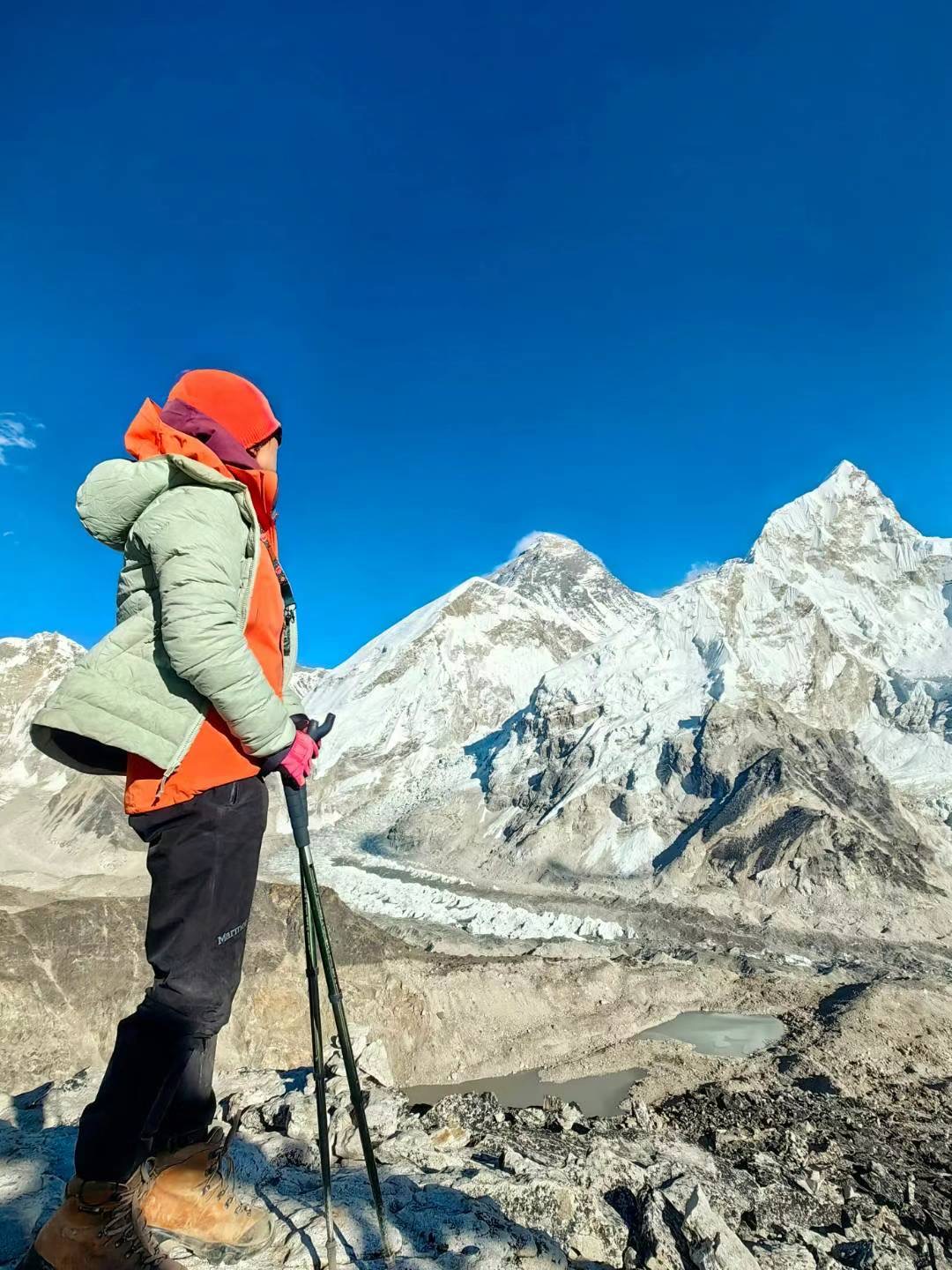
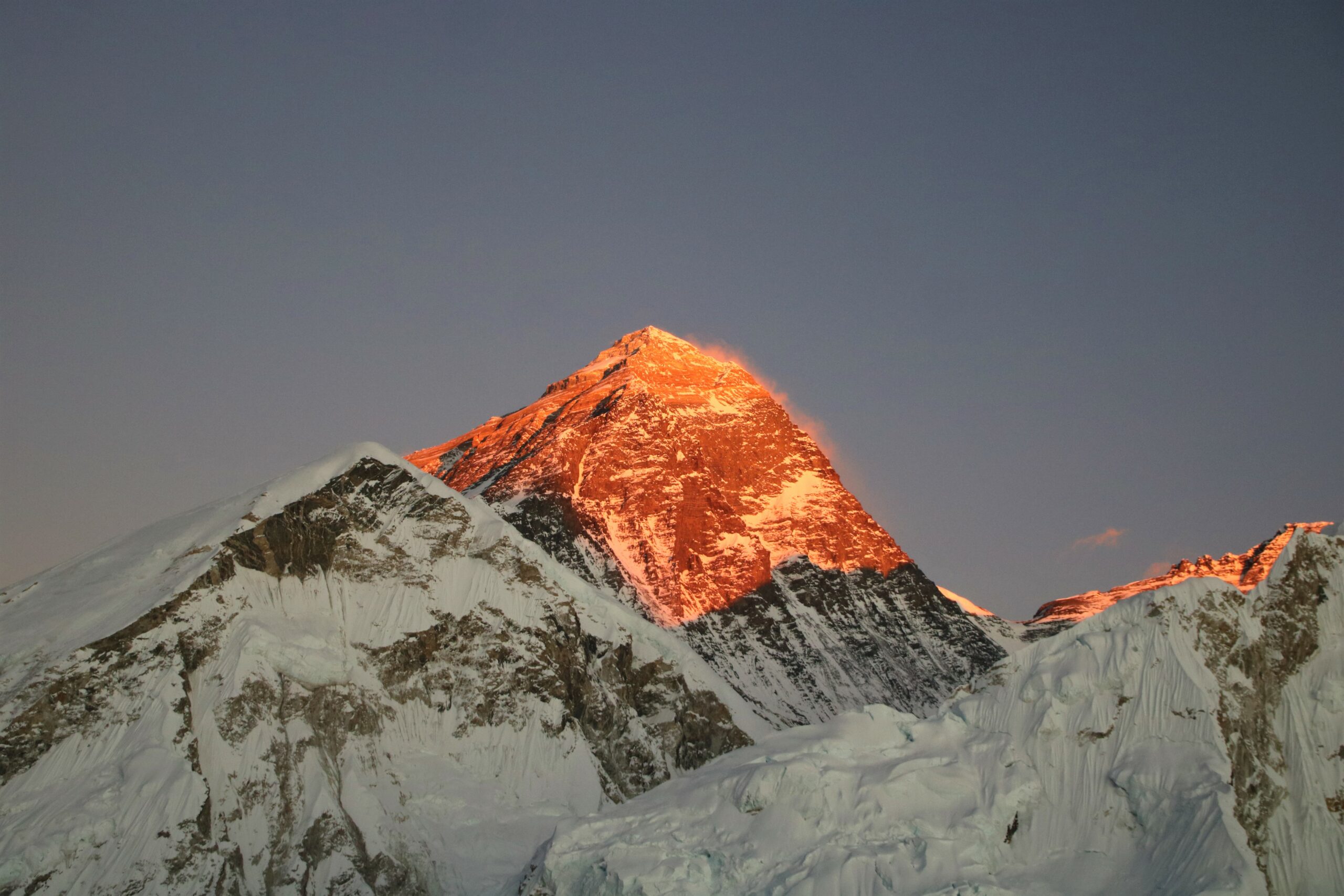
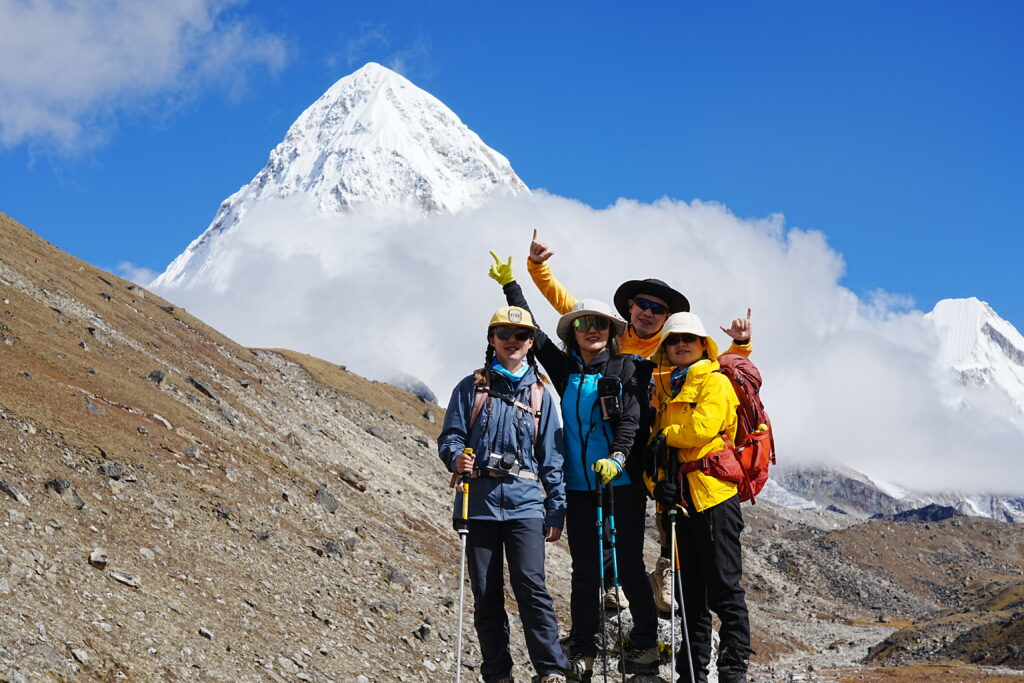
Mount Everest view From kalapathhar 5555m
14 Days Standard Everest Base Camp Trek Packages
The standard Everest Base Camp Trek packages offered by Vertex Holiday is a 14-day itinerary, classified as a difficult and strenuous journey due to altitudes ranging from Lukla (2,860m) to Kalapathar (5,555m). This trek highlights culturally significant UNESCO World Heritage sites, Sherpa valleys with traditional Himalayan Buddhist culture, and panoramic views of peaks including Mt. Everest (8,848.86m), Lhotse, Makalu, and Ama Dablam. Trekkers can explore Sagarmatha National Park, home to diverse flora and fauna like the Snow Leopard and Red Panda. Accommodations are primarily in lodges and teahouses, with food and supplies transported by helicopters, yaks, and porters. The cost for this package varies based on group size, starting at US$1160 for a single person and decreasing for larger groups. The itinerary includes acclimatization days in Namche Bazaar and Dingboche, with a significant hike to Kalapathar for close-up views of Mt. Everest.
Ten Days Everest Base Camp Trek with Helicopter Return Packages
For those with limited time, Vertex Holiday offers a Ten days Everest Base Camp Trek with a helicopter return to Kathmandu. This package provides a condensed adventure, allowing trekkers to experience the highlights of the EBC trek, including scenic flights, exploration of Sherpa villages, and stunning views of Everest and other peaks. The trek follows a straightforward route to Everest Base Camp and Kalapathar, after which a helicopter transports trekkers back to Kathmandu from Gorakshep. This option saves 2-3 days of walking back to Lukla, making it ideal for those seeking a quicker yet comprehensive experience. The cost for this package starts at US$2600 for a single person, with group discounts available. The helicopter used is typically an AS 350 B series (Eurocopter Ecureuil model), certified for high-altitude flights.
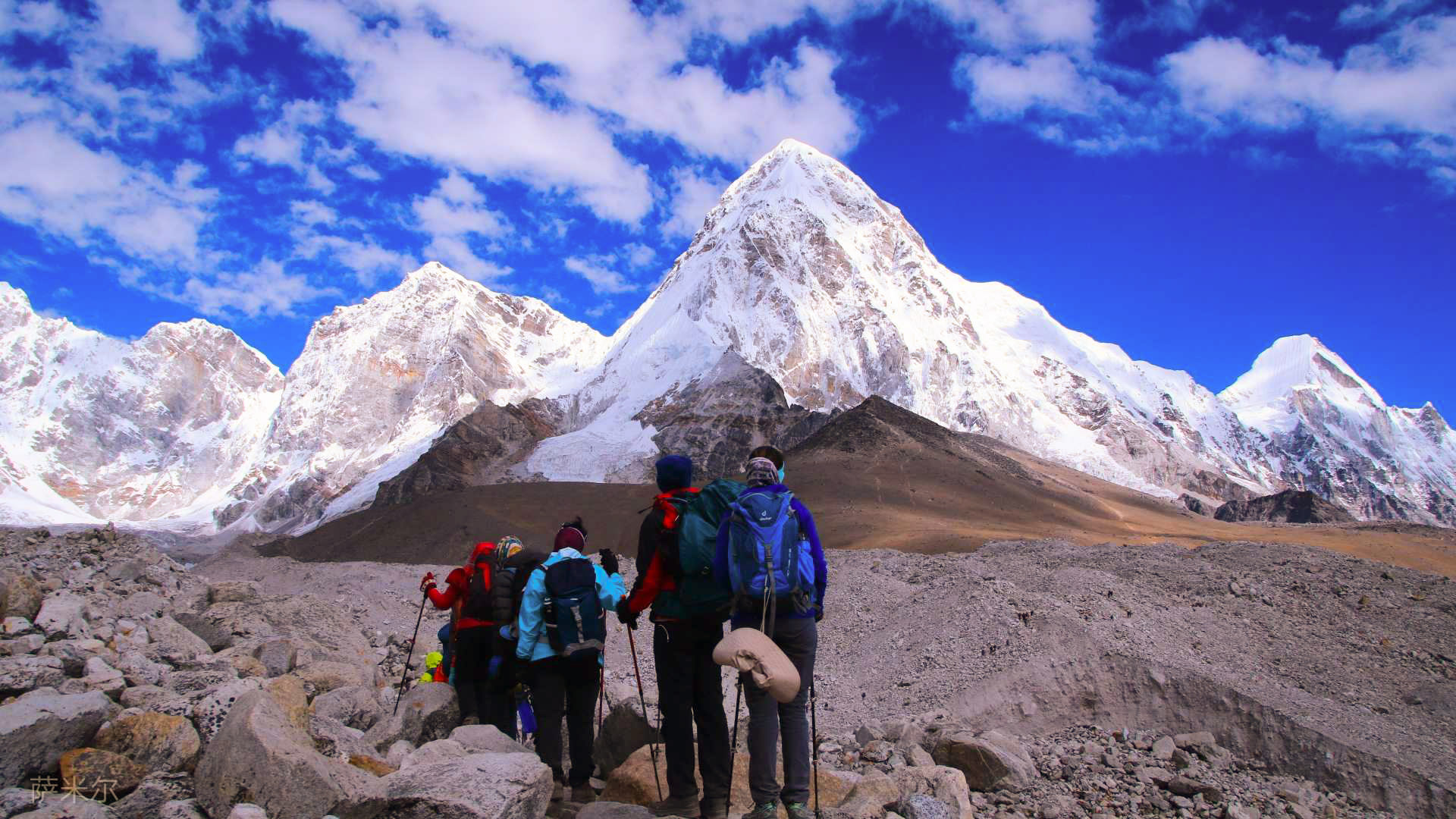
EBC Trek on the way to Gorakhsep
15 days Everest Base Camp Trek by Road Packages
The 15 days Everest Base Camp trek by road packages, Vertex Holiday offers an alternative to the popular flight into Lukla. This option involves an overland journey from Kathmandu to Salleri and then to Surkhe village, where the trek begins. This route allows trekkers to experience more of Nepal’s rural life and diverse landscapes, contrasting the lower Solu region with the high Khumbu area. The drive itself is an adventure, traversing through farm villages and towns, and on rough country mountain off-roads. The 15-day Everest Base Camp trek by road packages typically includes 12 nights and 13 days of active travel, starting with the drive from Kathmandu to Salleri (2,390 meters). From Salleri, the journey continues overland to Phaplu and then on rough off-road tracks to Takshindo and Surkhe. At Surkhe, the trekking portion commences, following the main trails towards the Khumbu and Everest region. This route offers sweeping panoramas of the Central and Eastern Himalayan ranges during the drives and allows for witnessing the age-old heritage and traditional cultures of mountain villagers.
Nine Days Everest Base Camp trek Packages
The nine days Everest Base Camp trek packages is designed for physically fit and experienced trekkers who can handle a faster pace and less acclimatization time compared to longer itineraries. This condensed schedule Helicopter flying from Kathmandu to Lukla, trekking to Everest Base Camp and Kala Patthar, then trek back to Namche Bazaar from Namche Bazaar flying back to Kathmandu by helicopter journey.
Everest Base Camp Trek Packages Key Differences
A standard Everest Base Camp trek packages typically involves flying into Lukla and then trekking for approximately 12-14 days, including acclimatization days, to reach EBC and return. This duration allows for a gradual ascent, which is crucial for acclimatization to high altitudes, minimizing the risk of acute mountain sickness (AMS). A “Longer Treks Vertex Holiday” package would likely align with or exceed this typical duration, potentially incorporating additional side trips, such as Kala Patthar for sunrise views of Everest, or extending the trek to include Gokyo Lakes or the Three Passes, making it a more comprehensive and challenging experience.
The 15 Days Everest Base Camp Trek by Road packages is a less common and significantly different approach. Instead of flying to Lukla, this option involves driving as far as possible, typically to Jiri or Salleri, and then trekking from there. This adds several days to the overall trek duration, as the starting point is much lower in elevation and further from EBC. The “Longer Treks Vertex Holiday” would differ significantly from this by likely utilizing the more conventional and time-efficient flight to Lukla, unless the “Longer Treks” specifically refers to a road-based, extended journey.
Everest Region Trek
The primary goal of Ten Days Everest base camp trek packages is to reach Everest Base Camp (5,364m / 17,598ft) and ascend Kala Patthar (5,555m / 18,208ft) for panoramic views of Mount Everest and surrounding peaks then from Gorak shep helicopter fly back to kathmandu. The trek typically begins with a scenic flight from Kathmandu (or Manthali during peak seasons) to Lukla (2,850m / 9,350ft). From Lukla, trekkers proceed through various Sherpa villages, including Phakding (2,650m / 8,694ft) and Namche Bazaar (3,440m / 11,285ft). Namche Bazaar often serves as a crucial acclimatization stop, though in a ten days itinerary, dedicated rest days might be replaced by acclimatization hikes. The route continues through Tengboche (3,855m / 12,687ft), known for its significant Buddhist monastery, and then to Dingboche (4,360m / 14,469ft) and Lobuche (4,930m / 16,273ft). The final push to Everest Base Camp and Kala Patthar is from Gorak Shep (5,185m / 17,010ft), which is the last settlement before the base camp. The return journey using small helicopter flight back to Kathmandu.
The Nine Days Everest Base Camp Trek packages is a considered express or shorter versions of the EBC trek. These itineraries typically reduce the number of acclimatization days or shorten the trekking days, making them more physically demanding and increasing the risk of AMS due to rapid ascent. The key difference from a “Longer Treks Vertex Holiday” is that the “Longer Treks” package would almost certainly offer a more extended and therefore safer and more comfortable acclimatization schedule, along with potentially more comprehensive inclusions like additional porter services, higher-quality accommodation, or more meals. Shorter treks often appeal to those with limited time but come with inherent risks if not properly managed. A longer trek allows for a more relaxed pace, better acclimatization, and potentially more exploration of the Khumbu region.
The Everest Base Camp Trek route map is best way to take information for trekkers from various parts of the world. Everyone who makes this dramatic trip is rewarded with a stunning view of the world’s tallest peak, Mount Everest and a wonderful taste of Sherpa life. Thus, the opportunity to complete the EBC trek successfully depends on how much you will know about this route. Detailed Everest Base Camp Trek mapping will better prepare one for planning and navigating this incredible experience, making the journey to the base of Everest safe, enjoyable, and rewarding.
This highly informative guide provides everything one needs to know to navigate the challenging yet rewarding trek—including detailed Everest Base Camp mapping. It helps one understand distances and altitudes, plan daily schedules, and foresee obstacles one might face during such an adventure. Whether you are an experienced trekker or just starting your first Himalayan expedition, this route map will be your vital guide to Everest Base Camp.
The Importance of a Map for Everest Base Camp
Everest Region Trek
While an unreliable map is a beautiful thing to behold, a map of the EBC trek is more than beautiful – it’s necessary for safe travel to the region. Here’s why: They give assurance and self-esteem, knowing full well that you have a good guide to lead you through what is ordinarily a difficult though balmy trail.
Staying on Track (Navigation): However, something to be understood is that as much as this circuit does offer a few handy rock cairns offering direction, it does include some very confusing regions particularly during bad weather. Map guides help you avoid getting lost since it most definitely is a vast area to explore in the Himalayas. Also, the map helps identify some of the landmarks lightly recognizable, as well as the point where several trail junctions.
Planning Your Days (Itinerary & Distances): It is possible to determine the distances from one lodge to another on a map; thus, with given information one can easily set possible daily trekking program. This is important in time management as well as owing to the altitude of the area. The distances will assist you estimate the time taken while trekking and prevent over-exhausting yourself.
Understanding the Terrain (Elevation & Acclimatization): Terrains changes are one of the distinguishing features of the EBC trek. The map includes profiles which depicts inclines or declines the gradient of the ascends or descends. This information is crucial for proper acclimatization as it will inform you when you are set to gain altitude and when to best take rest days to avoid altitude sickness.
Prioritizing Safety (Hazards & Emergencies): Single large-scale maps can focus on specific risk factors, including areas that have had landslides, glaciers, or cliffs. This awareness lets you be careful and better geared for this situation. In the event of an emergency, a map can guide you on the evacuation plan and also show the rescuers where you are.
Enhanced Trekking Experience: A map also adds to the experience as a whole, but not merely in terms of functions. It enables one to prepare for the following moves, admire the scenery of the surrounding environment and even feel more influx of the mountains.
Everest Base Camp Trek Route Map: Distance and Elevation
The Everest Base Camp Trek is an approximately 130 km round trip from Lukla to the top of Base Camp, reaching 5,364 meters. It includes famous stops at Namche Bazaar, Tengboche Monastery, and Kala Patthar for a panoramic view of Everest.
Key points on the map include:
Lukla: Starting point of the trek.
Phakding (2,652m/8,700ft): First overnight for most trekkers.
Namche Bazaar (3,440m/11,286ft): A central Sherpa trading hub and acclimatization point.
Dingboche (4,360m/14,300ft): Another essential acclimatization stop.
Lobuche (5,170m/16,961ft): The last village before reaching Gorak Shep.
Gorak Shep (5,545m/17,594ft): The previously inhabited settlement before Everest Base Camp.
Everest Base Camp: The ultimate destination is Everest Base Camp (5,364m/17,594ft).
Essential Features of the Best EBC Maps
The correct map is essential for a safe and enjoyable Everest Base Camp Trek. Here are the key features to look for:
Accurate Topography (Elevation Profiles): Try and find maps with dense contour lines an clearly labeled elevations. Elevation profiles are essential for understanding the terrain, planning daily ascents and descents, and managing acclimatization.
Marked Accommodation Teahouses & Campsites: Ideally, the maps depict the location of the teahouses, lodges as well as scale of the campsites at the particular trail. Planning where to spend night-time is crucial and it is important to have a plan of where to sleep at night.
Identified Hazards: Hazardous situations have common features which may include landslides, glaciers, drop-offs, and other areas of risk shown by good maps. This makes it easier for you to avoid dangers, and make good decisions while on the trail.
Detailed Trails: The main EBC trail should be noted, but alternatives and side treks should also be included. One example is the Gokyo Lakes trek or routes up Kala Patthar. This will give you options and allow you to be flexible in your itinerary.
Current Details: The map must reflect the current state of the trails, position of teahouses or other useful info and it is better if it was created not a year ago. An old map may decieve and in certain cases may be deadly.
Digital Options: GPS is useful too, especially when visibility is low, maps in digital format are valuable tools. They provide better location identification coupled with offline mapping and commonly have extra bonuses, such as waypoints and altitude.
Easy-to-Read Format: The map must be brief, simple and understandable from a distance and even in the worst weather ever. Prefer simple and clear product labeling which gives straightforward, easily readable text.
A Guide to Daily Planning on the Everest Base Camp Trek
A typical Everest Base Camp trek takes 13 to 16 days, allowing for proper acclimatization.
Day-to-Day Itinerary for the Everest Base Camp Trek (14 Days – Sample)
(Just a sample itinerary can be adjusted based on the needs and preferences of the individual.)
Day 1: Arrival in Kathmandu Nepal
Day 2: Fly to Lukla, Trek to Phakding
Day 3: Trek to Namche Bazaar
Day 4: Acclimatization Day in Namche Bazaar
Day 5: Trek to Tengoche
Day 6: Trek to Dingboche
Day 7: Acclimatization Day in Dingboche
Day 8: Trek to Lobuche
Day 9: Trek to Gorak Shep, Everest Base Camp, and back to Gorak Shep
Day 10: Hike to Kala Patthar, trek down to Pheriche
Popular Base Camp Trekking in Nepal is the foremost country on this planet for all types of adventures and outdoor sports. Interested adventurers, trekkers, and explorers can enjoy the walks from the popular routes to off-the-beaten trails. Where some of the base camps are well hidden from the main trekking trails within absolute wilderness.
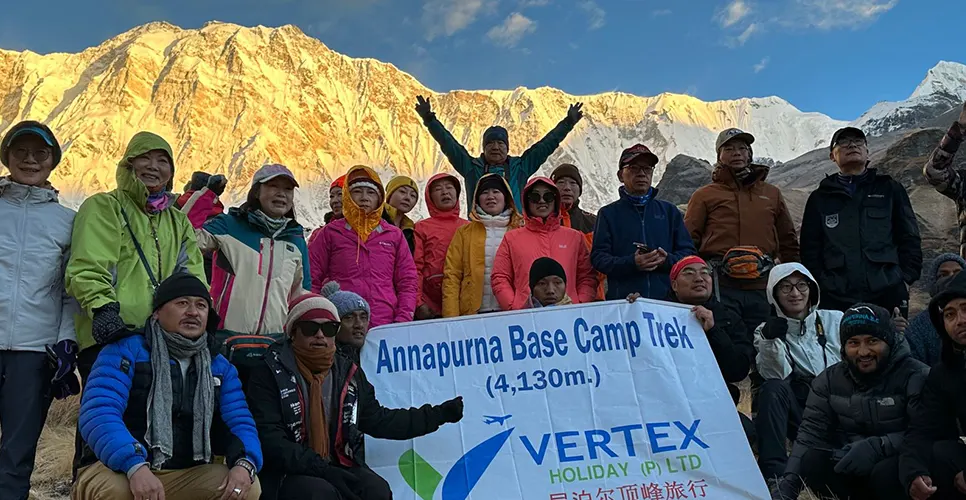
Amazing view near the Annapurna base camp
The country with great dramatic contrast and diversity from the low warm sub-tropical of the Terai belt to cooler alpine hills. Which extends towards a higher mountain range and ends at the arctic zone of snow, ice, and glaciers of the great Himalayas. From the 14th world’s highest peaks, Nepal with the most of 8th highest mountain within the Himalayas. The Himalayan Mountain range stretches from the Far East to the West of the country.
The popular base camp trekking Includes Mt. Everest 8,848.86 m, Mt. Kanchenjunga 8,586 m and Lhotse 8,516 m with Mt. Makalu 8,463 m. The list continues with Mt. Cho Oyu 8,201, Mt. Dhaulagiri 8,167 m, and Mt. Manaslu 8,163 m. The last on the list is Mt. Annapurna-I 8,091 m, the 10th highest and Nepal’s most popular base camp. Besides major world highest peaks base camps, there are other popular base camps below 8,000 meters. Like the famous Ama Dablam, Ganesh, Langtang, and Jugal Himal Base Camps above and under 7,000 meters. The most popular base camps trek are Everest, Annapurna, Dhaulagiri, Makalu, and Kanchenjunga. The Manaslu and Cho Oyu base camps are off the main routes, trekkers seldom visit except for the mountaineers.
Some major mountains have two base camps, like Kanchenjunga and Annapurna where trekkers can visit in one single journey. Especially on Kanchenjunga, the world’s 3rd highest, the treks include both Kanchenjunga North and South Base Camps. The other interesting to know is that Everest and Lhotse share, the same base camps.
List Of Popular Base Camp Trekking:
01: Annapurna Base Camp:
Annapurna Base Camp
The shortest and most scenic Annapurna base camp, often referred to as ABC for short. It is a picturesque spot, unlike all the Himalayan region base camps, due to its proximity. Start and end points of trekking from the nearest motorable road to and from Pokhara.
Trekkers can cover the whole trek from Pokhara to Pokhara within a week. The best about the Annapurna Base Camp is that the trekkers do not have problems with HAS or High Altitude Sickness.
The elevation gains with slow and gradual paces to the highest point at Annapurna Base Camp. It is 4,130 m/13,550 feet, located beneath the towering east face of Mt. Annapurna-I. It is the only base camp around the Himalayas, where trekkers can enjoy the comfort of nice and cozy lodge accommodations.
Annapurna-I is the world’s tenth-highest peak and a massive range of mountain range. It extends as far as Manaslu Himalaya in the east and Mt. Dhaulagiri towards the west.
The Annapurna Base Camp is in the heart of the Sanctuary, around Kaski District and Gandaki Zone, Mid-West Nepal. Mt. Annapurna-I was the first 8,000-meter peak ever climbed in mountaineering history, on June 03rd, 1950. By the French Expeditions, three years before Mt. Everest was summited, on May 29th, 1953. Around the Annapurna Himalayan region and Annapurna Base Camp, trekkers need TIMS (Trekking Information Management Systems) permits.
As well as ACAP (Annapurna Conservation Area Project), entrance fees are obtained by the local trekking agencies in Kathmandu.
02: Everest Base Camp:
Everest Base Camp
Everest base camp lies beneath the world’s number one Mt. Everest. Everest base camp is the most famous and popular of all the base camps around the Himalayan ranges. It is one of the favorite destinations among all trekkers and mountaineers, a dream destination for millions of travelers and adventurers.
Everest Base Camp is located in the Khumbu district around Nepal North Mid-East, with various routes to reach Everest base camp. The earliest and classic route to Everest base camp was from Jiri, also known as Switzerland of Nepal.
It was the original route to high Khumbu through Solo areas to reach Namche Bazaar and then to Everest Base Camp. Since the airport was built in Lukla, for STOL aircraft the classic trail of Jiri is almost forgotten at present. Most trekkers prefer the shortest way taking the flight from Kathmandu to Lukla Town airport. Then following the scenic trail towards Everest base camp, it takes about 12 days from Lukla to Lukla. Covering a distance of approx. 130 km or 81 miles, exploring the lovely villages of Phakding, Namche Bazaar, and beautiful Tengboche.
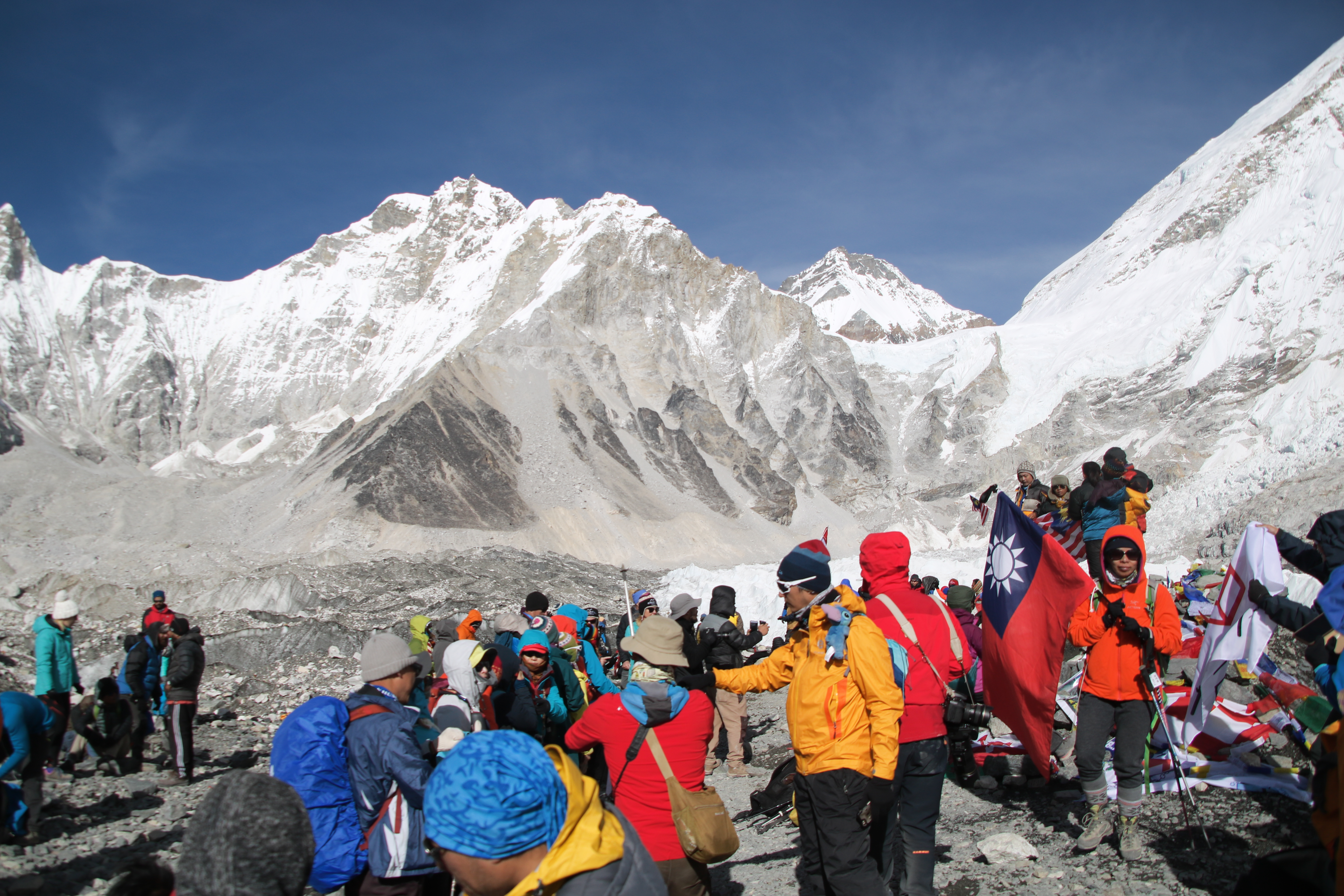
Everest Base Camp Trekking, where all visitors need time to get acclimatized, having extra days at certain heights. As well as to enjoy the surrounding stunning scenery of landscapes and snow-capped peaks. The route to Everest Base Camp is well maintained with a straightforward route, as well as crossing bridges over glacial rivers. The Everest and high Khumbu region is located within Sagarmatha National Park, the name Sagarmatha for Everest in Nepal. The native Sherpa calls Chomolungma for Everest, from Tibetan origin language. For the trek to Everest Base Camp, the permits are controlled by the Khumbu village community. Includes entrance fee for Sagarmatha National Park, at Lukla or Monjo or from the park entrance post. The trek to Everest Base Camp follows on winding scenic trail with constant views of giant snow-capped peaks. From Namche Bazaar onwards views of Mt. Everest are seen most of the time during the walks. Until Everest base camp is reached, where you will stand beneath the towering peaks of Everest, Lhotse, and Nuptse. As well with close views of Khumbu Ice Fall and the glaciers, the base camp is flooded with tented camps. During the peak mountaineering season of spring from March to May, with various camps of different nationalities mountaineering expeditions.
Everest base camp at 5,364 m / 17,599 feet high, the views of Mt. Everest are obstructed by adjoining peaks. For the best closest views of Mt. Everest and surrounding mountains climb up to the high Kalapathar rocky hilltop.
Kalapathar is a high black rocky ridge, close en route to Everest base camp and above Gorakshep. The highest points of the adventure, at 5,643 m /18,514 feet, offer a spectacular panorama of giant snow peaks. The closest views of Mt. Everest at a mere distance with incredible scenery of towering mountain ranges.
After completing the adventure to Everest base camp and climb of Kalapathar, heading back to Lukla. Then, on a short sweeping flight to Kathmandu, with unparalleled views of the Himalayan peaks.
03: Kanchenjunga Base Camp:
Mt. Kanchenjunga is the world’s 3rd highest peak with a massive range, located in Far Eastern Nepal. Around the district of Taplejung, one of the less visited base camps of Mt. Kanchenjunga. Due to its remote locations and lack of good accommodation and food facilities, then on other popular base camp treks.
Despite the remote country of Kanchenjunga areas, it is one of the most interesting and exciting adventures to experience. Mt. Kanchenjunga the original name is Kanchendzonga, which means mountains with five jewels, referring to its five adjoining peaks. Mt. Kanchenjunga at 8,586 m/ 28,169 feet high, first ascent to the summit of Mt. Kanchenjunga on May 25th, 1955.
Climbed by the British Expeditions, since then the mountain is often climbed by various nationalities mountaineers. Kanchenjunga with two base camps the North and South Base Camps.
The North Base Camp is higher at 5,150 m/16,896 feet, located at the small settlement of Lhonak and Pang-Pema. The trek to Kanchenjunga is a full circuit visiting both base camps the south and the north. Where South Base Camp is popular among the mountaineers, due to its accessible route to the summit.
Most mountaineers use the original route for the climb from South Base Camp at Oktang. The treks to Kanchenjunga both base camps, is an adventure of a three-week duration. It involves flights both ways with drives on the hilly rough road to the starting point of the treks. As well as on the way back, on completing the whole Kanchenjunga circuit, trekking to both base camps.
Kanchenjunga Base Camp Trekking is an adventurous walk from mid-hill farm villages to dense lovely forest. Covered in tall rhododendrons, magnolia, oaks, pine, and fir trees, then reaching the arctic zone amidst snow, ice, and glaciers.
A remarkable adventure, where trekkers can enjoy the pristine wilderness, in less visited areas by the main flow of trekkers.
04: Lhotse Base Camp:
Lobuche Base Camp
Mt. Lhotse is the world’s 4th highest peak at 8,516 m/27,940 feet. Mt. Lhotse, might not be a famous and popular peak, among the trekkers and mountaineers. But most trekkers are unaware that Mt. Lhotse shares the same base camp as Mt. Everest.
Mt. Lhotse is the adjoining peak of Mt. Everest, it is separated by the South Col. When visiting the Everest base camp, you will be standing at the base of Everest and Lhotse as well.
05: Makalu Base Camp:
Makalu Base Camp is in the district of Sankha Sabha, of Koshi Zone in Nepal Far East, around the Khumbukarna Himalayan range. Mt. Makalu is the world’s 5th highest peak at 8,463 m/27,766 feet high.
The first ascent was on May 15th, 1955, by the French Expeditions, and since then, often visited by mountaineers. Makalu Base Camp, at 4,870 m/15,978 feet high at the western end of Barun Valley. The trek to Makalu Base Camp involves flights and drives from Tumlingtar to Tumlingtar, a moderate town.
It is the start and ending points of Makalu Base Camp Trekking after flying in from Kathmandu. Then, on the drive for a few hours to the Num Village, the trek leads to several farm villages. From the last Tashi-Gaon village, there are no permanent villages except temporary settlements. The lodges are small and very simple en route to Makalu Base Camp.
Barun Valley and Makalu Base Camp are less ventured by the mass flow of trekkers. Due to its remote location, it leads to a perfect country walk around the mountain wilderness. An adventure starts from low sub-tropical areas to a cooler alpine hill covered in dense pine and rhododendrons forest.
The walk follows to traverse and crossing the small pass of Keke, Shipton, and Tutu-La. The views of the snow-capped mountain remain constant as the walk reaches Makalu Base Camp.
At Makalu Base Camp, stand amidst remorseless fields of moraines filled with ice, snow, and glaciers. Makalu Base Camp is famous for its views of the rare Khansung or East Face of Mt. Everest.
Makalu Base Camps is protected by the Makalu and Barun National Park and Conservation. Makalu Base Camp Trek is of a two-week duration with drives and flights from Num to Tumlingtar and towards Kathmandu.
06: Cho Oyu Base Camp:
Cho Oyu Base Camp
Mt. Cho Oyu, the world’s 6th highest peak, like Everest, straddles the borders between Nepal and Tibet-China. Mt. Cho Oyu towers high at 8,201 m/26,906 feet and most of the climb is done from Tibet.
The North side of Mt. Cho Oyu is much more accessible to reach the summit than from Nepal. Which is tough, difficult, and technical from Nepal, situated around the high Khumbu at the far end of Gokyo Valley. Mt. Cho Oyu was climbed on October 19th, 1954 from Tibet by the Austrian Expeditions.
Cho Oyu Base Camp in Nepal side is the least visited by mountaineers and trekkers. The mountain is located in the far northwest of the Gokyo Valley close to the 5th and 6th Gokyo lakes. The Cho Oyu Base Camp is at 5,600 m / 18, 372 feet high. Trekkers on a visit to Gokyo Valley, where only a few groups seldom dare to venture to Cho Oyu Base Camp. Due to its remote and isolated location, the views from Cho Oyu Base Camp offer a magnificent panorama of surrounding high peaks. The views include Mt. Cho Oyu, and Gyachung Kang, with both the north and south face of Mt. Everest. The walk from Gokyo Lodge around the 3rd lake takes more than 6 hours. Trekkers need to carry tents and sleeping bags, including food for overnight halt. From the main Gokyo areas, there are no lodges and human settlements, which is why most trekkers hike up to 5th Lake only. Due to its long distance as well as the rise in altitude. Interested people can enjoy the trek to Cho Oyu Base Camp of two-week duration hikes from Lukla to Lukla.
07: Dhaulagiri Base Camp:
Mt. Dhaulagiri is the 7th highest peak at 8,167 m high. It is one of the adventurous walks to reach the base camp of Mt. Dhaulagiri.
The treks require more than 12 days to cover the Dhaulagiri Circuit. Includes drives to reach the starting point of the treks around Mygdi District, around the Nepal Far West, of Gandaki Zone, then the treks end at Lower Mustang in Jomsom.
From Jomsom, on a short flight or a long drive to Pokhara, which is the starting and ending points. The trek to Dhaulagiri, camping equipment, and food required to carry for a week.
Dhaulagiri Base Camp
Dhaulagiri Base Camp is 4,740 meters high and situated around the moraine of rocks and glaciers. Right beneath the northwest face of Mt. Dhaulagiri and its massive Ice Fall and glaciers are the source of the Mygdi River. Although a challenging trek, it leads to an enjoyable and exciting walk on a tranquil path. Away from the mainstream and human habitations and villages for a week till the walks reach Kaligandaki Valley.
The trek takes you from low sub-tropical farm areas and isolated villages, then towards complete mountain wilderness. Walk through a lovely forest amidst dense rhododendrons, oaks, firs, and pine trees. Then, the walk heads beyond the lush green vegetation, entering the wild arctic zone landscapes covered in ice, rocks, and glaciers.
Walk past the glaciated valley to reach Dhaulagiri Base Camp, and cross French Pass to scenic Hidden Valley. From Hidden Valley, the walk leads to traverse the last Thapa or Dhampus to reach charming Marpha Village. The walk follows to the large town of Jomsom, the headquarters of Mustang district, for an exciting flight back to Pokhara.
08: Manaslu Base Camp:
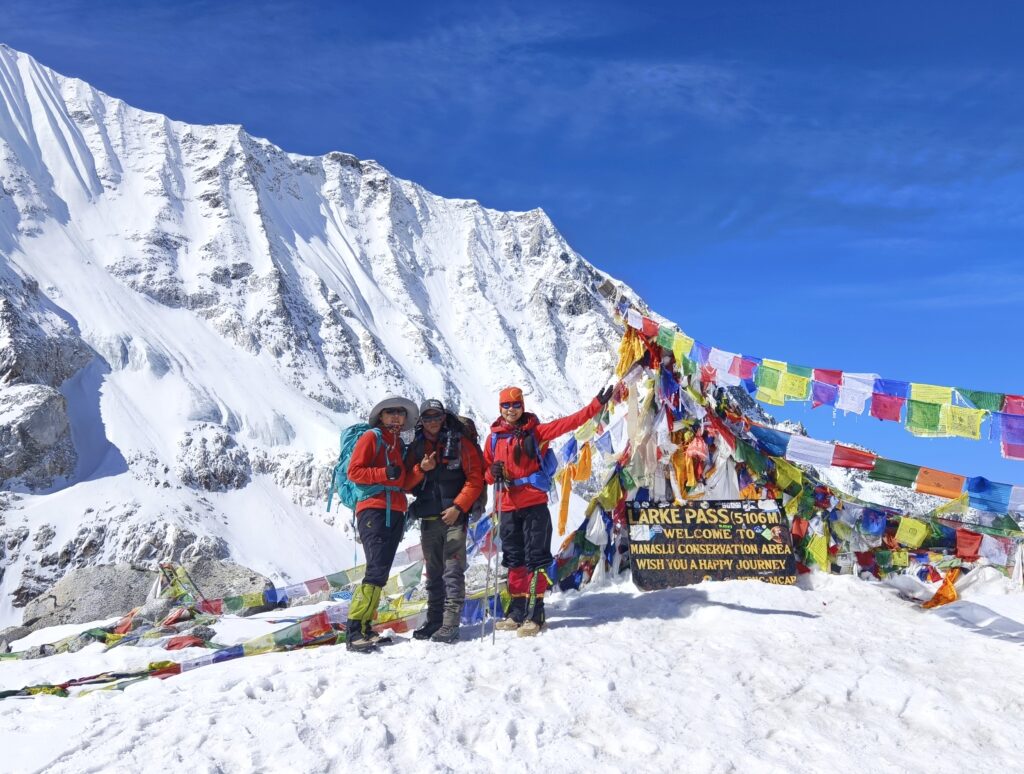
Manaslu Base Camp Larke la pass
Manaslu Base Camp treks take you to the bottom of the world’s 8th-highest Mt. Manaslu. The base camp is at 4,800 m/15,748 feet high, the mountain was first climbed in 1956 by the Japanese Expeditions.
From then on, the mountaineers mostly visit for the summit bid at 8,163 m/26,781 feet high. Manaslu Base Camp is situated far away from the main Manaslu Circuit route. Only a few interested trekkers often visit the Manaslu base camp for a long day hike from Sama Gaon.
The Manaslu base camp is well hidden and away from the main trekking trail. It is visited only by groups of mountaineering expeditions during the best climbing seasons. For the trekkers, it is a long day hike while spending a rest day for acclimatization at Sama Gaon.
Manaslu Base Camp is located on the far corners of Manaslu Valley, close to the beautiful Birendra glacial Lake. Most trekkers on the Manaslu Circuit trekking sometimes visit on rest days up to Birendra Tal/Lake. From this spot trekkers can enjoy the view of Manaslu Base Camp, the ice falls and glaciers, and the towering peaks of Manaslu.
To enjoy a hike to Manaslu Base Camp, trekkers need to carry tents and food to spend an overnight. The hike takes more than 5-6 hours one way from Sama Gaon. This is why only a few trekkers hardly visit the Manaslu Camp, only if they are involved with the expedition group.
An amazing with beautiful scenery on the walks to Manaslu Base Camp. Trekkers can experience the dramatic contrast of green forest against the white snow-capped peaks. The journey to Manaslu Base Camp with a full circuit takes about two weeks.
It includes drives from Kathmandu to the starting point of the treks and at the end of the adventure, after crossing Larke-La Pass to reach Manang areas at Dharapani Village, and for the drive back to Kathmandu.
The popular base camp trekking Conclusion:
The popular base camps trekking around the Nepal Himalayas are just information for interested adventurers and trekkers. Some of the base camps are highly popular among the trekkers.
Only a few 8,000-meter mountain base camps are rarely visited by trekkers, other than mountaineers. Due to its remote location and lack of accommodation facilities for overnight stops, after the long strenuous walks.
The most popular base camps are Annapurna and Everest base camps, where thousands of trekkers and mountaineers visit every season.
It is due to the facilities, availability of the lodge accommodations, and the good foods to enjoy, with the picturesque mountain views.
Besides Annapurna and Everest, Makalu and Kanchenjunga base camps are gradually getting more visitors over the past few years. As the influx of trekkers has increased, and as well as the local lodge en route to base camps has been built. To cater to the trekkers, with the good foods and warm traditional hospitality.
Mt. Manaslu and Mt. Cho Oyu are the only base camps with the least number of visitors, except for the mountaineering expeditions.
The other base camps, like Dhaulagiri, are getting quite popular, as the Dhaulagiri Circuit trek itinerary includes base camp also. For interested trekkers and adventurers, an opportunity to choose from the popular or enjoy the less ventured base camps treks.
Food Guide for Everest Base Camp Trekking provides travelers and adventurers with the most exciting information. Where every trekker is unknown and aware of the great varieties of food available around the close shadow of Mt. Everest in Nepal.
Everest Base Camp
Thousands of trekkers, adventurers, and mountaineers have ventured to the world’s highest Mt. Everest base camp Trek. The flow of visitors has increased over the past decades from the 1960s to the present 21st Century. In the early days, trekkers had to spend overnights in tented camping where all foods had to be carried from Kathmandu.
The mass flow of trekkers and adventurers made this destination one of the top adventure destinations. The number of guest houses and lodges has mushroomed over the past thirty years at designated villages for overnight stops.
Where there were no places for trekkers to stay, temporary settlements were established by the local villagers. Making the best accommodation and food available for trekkers’ comfort, providing a simple local food menu.
Over the years most simple and basic lodges, were replaced by posh guest houses and resorts in major places. Offering travelers the most luxury and comfortable accommodation with a compressive food menu and other best facilities.
However, at present trekkers can find various types of lodges, accommodation, and food, from budget, standard to luxury class.
Vertex Holiday welcomes all wide-world visitors to taste and experience, the local and international cuisines en-route Everest base camp.
Food to refresh trekkers en route to Everest Base Camp:
Trekkers will be surprised to find great food varieties nearly in all lodges from simple to standard lodges. From the start to the end of trekking at Lukla, where all lodge restaurants serve the best nourishing foods.
The trek begins and completes at Lukla town, with only the closest airport of Khumbu to Everest base camp. Trekkers can enjoy the walk from one traditional Sherpa village to another, not missing delightful places for lunch and dinner.
Where all lodges, inns, and guest houses have fancy, cozy restaurants serving a full food menu. The most common food available and most fulfilling is the traditional and famous, popular Nepal Dal Bhat.
Most trekkers and visitors to Nepal must have known or heard of this national meal. All restaurants en route serve Dal Bhat with various seasonal vegetables mild curry and light spices.
Trekkers might have experienced various café, eateries, and international standard restaurants in Kathmandu, as well as around tourist places of Nepal.
Food Guide for Everest Base Camp Trek, Most tourist areas around Nepal are a paradise for visitors where one can find various types of foods. From continental, and oriental to local foods with a blend of Indian, Chinese, and Tibetan flavors including excellent bakery products.
Trekkers might expect the same standard of food on treks to Everest Base Camp, where visitors will be surprised. Finding a grand long list of food menus in some of the best posh hotels and lodge restaurants. The best food on route Everest base camp is available in Lukla, Phakding, and Namche Bazaar as well as in Tengboche.
Food Guide for Everest Base Camp Trek, From Namche Bazaar and Tengboche onwards are just temporary settlements with several good lodges and restaurants. After Tengboche and Pangboche due to the high altitude and harsh cold weather, the food menu is limited.
Food Guide for Everest Base Camp Trek However, trekkers can take delight, whatever is listed on the menu, some lodge restaurants do have bakery items as well. All meals are served hygienically and well-cooked to consume as per one’s choice and options.
Trekking Agency In Nepal
Most food menu list includes Breakfast, Lunch, and Dinner with snacks, refreshments, and appetizers.
Breakfast:
Food Guide for Everest Base Camp Trek, Simple and common items in Western breakfast are oats porridge, cornflakes, muesli, or granules, served with cold or hot milk. The breakfast is followed with a main course like toast, pancakes, and eggs of variation likewise; boiled, omelet of variation including scrambled. Includes hot and cold refreshments like juice, tea, coffee, and hot chocolate. Some luxury hotels and resorts also serve sausages, bacon, hash browns, and crepes with some roasted fresh tomato.
Lunch Menu:
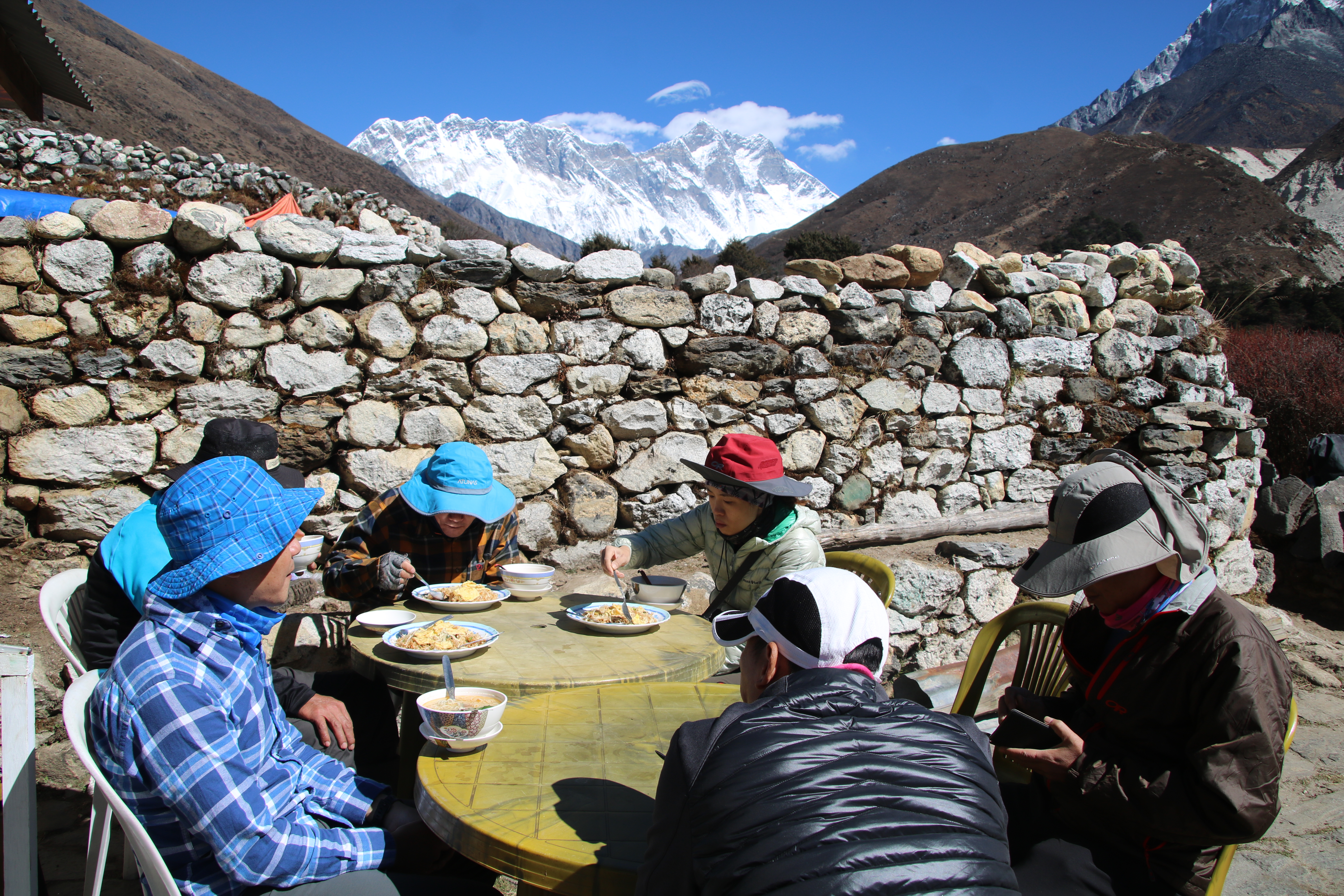
Food Guide for Everest Base Camp Trek, Most trekkers have heavy breakfast, skip lunch, or just have refreshing stops for cold or hot drinks. Normally trekkers are on the move to care for lunch, however, trekkers can have the option of a quick lunch. To add energy for afternoon walks to designated overnight stops. The lunch menu normally serves famous Nepali Dal / Bhat with mild vegetable curry and spicy pickles. Usually most trekkers fancy light lunches like plain local bread or chapatti (unleavened dry Indian-style bread). Where one can add jam, butter, or honey, other main lunch courses are fried rice, and fried veg/egg noodles. Includes noodle soup, Tibetan Bread (deep-fried wheat), fried potato and eggs are also popular items for lunch.
Trekkers prefer light lunch before starting the last hour of afternoon walks to their respective destinations.
Afternoon Tea / Refreshments:
Food Guide for Everest Base Camp Trek, Once trekkers reach their overnight halts with options of various standard lodges, one can enjoy brief refreshments. Every lodge and resort provides a big dining hall mostly decorated with local Sherpa cultural arts and design.
All dining with central heating systems to keep the room warm and cozy with light music. Dining is the main meeting place for all trekkers to share ideas and make friends with different nationalities.
The Dinner Menu Main Course or La’ Carte’ basis:
Food Guide for Everest Base Camp Trek, Like in all hotels and lodge restaurants, most places en route to Everest base camp serve similar types of food menus. The dining area is the liveliest place to interact with other travelers as well as local guides.
Dinner normally starts as per the time chosen and is ordered on arrival at respective lodges / Tea Houses.
The dinner includes various flavor types of soups as per one’s choice, followed by bread, popcorn, or papad (light thin snacks). Then follow the meals of your choice either set meals of Nepali Dal Bhat (boiled/steamed rice). The Dal is a lentil bean soup with a spicy flavor that can be brown, yellow, or black lentil. The Dal Bhat includes mild spicy flavored vegetable/meat curry, the vegetables depend upon the season. The meat variation can be Buff (Buffalo) or Chicken pork and yak meats are quite rare around the Khumbu region.
The Dal Bhat is the most common and basic meal found all over Nepal, an important basic diet of all Nepalese. The other favorite meals include Mo-Mo (meat or vegetable stuffed Dumpling), famous and popular all around towns and cities in Nepal. The second most popular food and snack of all Nepali, Mo-Mo a Tibetan name for Dumpling with a choice of spicy sauce.
Food Guide for Everest Base Camp Trek, Besides the Nepali main course of Dal Bhat or Mo-Mo, one can enjoy Indian and Chinese cuisines. As well as Continental meals of mashed potato, fried or roasted chicken, and other dishes, like Pizza, Spaghetti, or pasta. The restaurant does provide desserts canned fruits, and custard as well as some bakeries’ products like cakes or pastries.
Enjoying the main dinner course of meals can conclude the night by having a warm cup of hot chocolate or coffee.
Healthy food in Everest base camp trek:
Food Guide for Everest Base Camp Trek, Every trekker needs to be physically fit, as well as with sound medical background. So that one can enjoy and have delightful moments overlooking views and enjoying the local culture and foods.
The most important is staying healthy and fit throughout the trip, and taking care of oneself. Choosing the right choice of foods, and making sure it is hygienically prepared and served on the table.
Besides healthy food, to stay fit must be aware of high altitude sickness or AMS (Acute Mountain Sickness). Taking care and precautions against AMS, trekkers will have an enjoyable time with pleasant scenic walks.
At higher altitudes to be fit, trekkers need to consume much fluid taking plenty of safe water to drink. Besides safe boiled and filtered drinking water, trekkers can take hot soup, light green tea, or other healthy fluids.
Reaching higher elevations like at Namche Bazaar which is above 3,440 m or nearly 12,000 feet high. Trekkers can feel the altitude and thin air, one needs to take things slowly and drink much fluid.
The important thing to know about being healthy and fit on treks to Everest Base Camp is avoiding meat products. Meats are scarce around the Khumbu region, as the Sherpa of Everest interwoven with strong Buddhism, the killing of animals is prohibited.
The Sherpa does not raise livestock except for Yaks and a few cattle to use for farm work. From Namche Bazaar onwards killing is not allowed and that is why once a week Saturday Market is held. Where lower villages of Solu bring the meat products, after butchering before reaching Namche Bazaar.
Food Guide for Everest Base Camp Trek, Trekkers can find meat items on the menu list, but one needs to be careful due to hygiene reasons. Some meats can be very stale, even though the area is cold but not safe to consume meats. The best is to have meat products on the return journey back to Lukla, the other important things to know. Most menus mention Yak Steak, but can be a Buff meat instead of Yak. Buff is common and easily available from the Saturday market, whereas Yak meat is available sometimes. Yak meat is scarce, the Sherpa enjoys Yak meat, only if it accidentally dies from falling off the cliffs. Yak meat is very rare, as the Khumbu Sherpa do not butcher the animals; the only meat available is from the Saturday market.
So when you order a meat product like Yak / Buff Steak make sure it is safe and hygienic. Besides meat products, all food on the trek to Everest Base Camp is safe to consume. However, due to high altitude, some people might lose appetite, which is a slight symptom of AMS. In this case, one can order light food like soup which is much easier to take than solid food. When one is not feeling well in high altitude areas, but going down your appetite will be back again.
The cost of food on route Everest Base Camp Trekking:
Food guide for Everest base camp trek
The cost of food varies from one lodge restaurant to another, the more you reach higher, the more costly it becomes. Where all food items and fuels are transported by porters, mules, and yaks, from Lukla airport to various higher destinations.
Normally the cost comes on average of US$ 5-10 for breakfast. For lunch depending upon the choice of minimum US$ 5 to maximum US$ 10. Dinner comes from US$ 8 to US$ 15 as per the food and standard of lodges and restaurants. On average US$ 20 to US$ 25 per person for food each day, where room accommodation is at an extra cost of US$ 10 to US$ 20.
Besides main meals breakfast, lunch, and dinner one will be spending on refreshments like drinking water, and soft drinks. Where beer and hard drinks are quite expensive also, not good while going up. Better to enjoy hard drinks and beer on the way down to Lukla, after completing the trek to Everest base camp.