
Everest Three Pass Trek Map

Everest Three Pass Trek map can help trekkers with their itinerary, as you won’t find anything quite like it on the Nepali treks. It has all the features that make this undertaking feel like a real-life adventure: this is a complete map. The trek features three great high passes, namely Kongma La (5,535m), Cho La (5,420m), and Renjo La (5,360m). All the distance, crossing waypoints, elevation changes, and a lot more details will be available in this brochure: the way along the treks from the solitary valleys of the Himalayas, towards Mount Everest, and other towering peaks.
Everest Three Pass Trek map, This is a trekking map of Everest Three Passes Trek by Vertex Holiday, a guide, and a lifesaving safety net. It gives you expert views along with its active route details to keep you safe on this trek. The map has precise representation in terms of heights, distances, and landmarks, which take place as a final buddy for exploring one of the most famous adventures in Nepal. With this map in hand, you could trek with faith that you have done the handy preparation and are safe. This makes this map one of the best and invaluable resources for trekkers making one feel secure and confident since the real-time updates on weather conditions or emergency services.
Key Attractions of Everest Three Passes Trek Map

The Everest Three Pass Trek map opens up an exciting adventure for you! Key milestones mark this incredible journey, each one presenting its own unique experiences:
- Kongma La Pass (5,535m)
The Highest Pass: Kongma La is the first and most challenging pass; it rewards the trekkers with stunning views of the Khumbu Glacier and the Everest region.
- Cho La Pass (5,420m)
A Glacial Wonderland: Cross icy glaciers and rugged terrain up this demanding but breathtaking pass.
- Renjo La Pass5,360m
The Final Test: The last of three, Renjo La, offers spectacular panoramic views, including Gokyo Lakes and Mount Everest.
- Everest Base Camp 5,364m
An Iconic Destination: Rest at the base of the world’s highest mountain, taking in the surreal atmosphere.
- Kala Patthar (5,545m)
The Best Viewpoint in the Region: Views of Mt. Everest are most spectacular at sunrise or sunset.
Everest Three Pass Trek Map with Distances & Time Estimates
When planning a route, trekkers need to recognize the distances and durations between key points on the trail. Understanding the time required to finish each section helps establish achievable goals for each trekking day. Below is an estimated summary of each segment’s distances and time.
Why Is an Everest Three-Pass Trek Map Essential?
- Clarity of Route
The trek has several trails, with other routes leading to different destinations. A detailed map helps you stay on track and avoid detours, enabling you to make informed decisions about your route.
- Planning Your Itinerary
A map will help you visualize the trek’s key landmarks, including elevation profiles and distances between stops. This will help you plan your day-to-day journey and set realistic goals for acclimatization and rest.
- Safety and Navigation
Most high-altitude areas lack network connectivity, making GPS unreliable. A physical or digital map is a reliable navigation tool that can prevent you from getting lost in remote or unfamiliar areas.
- Landmarks and Villages on the Map
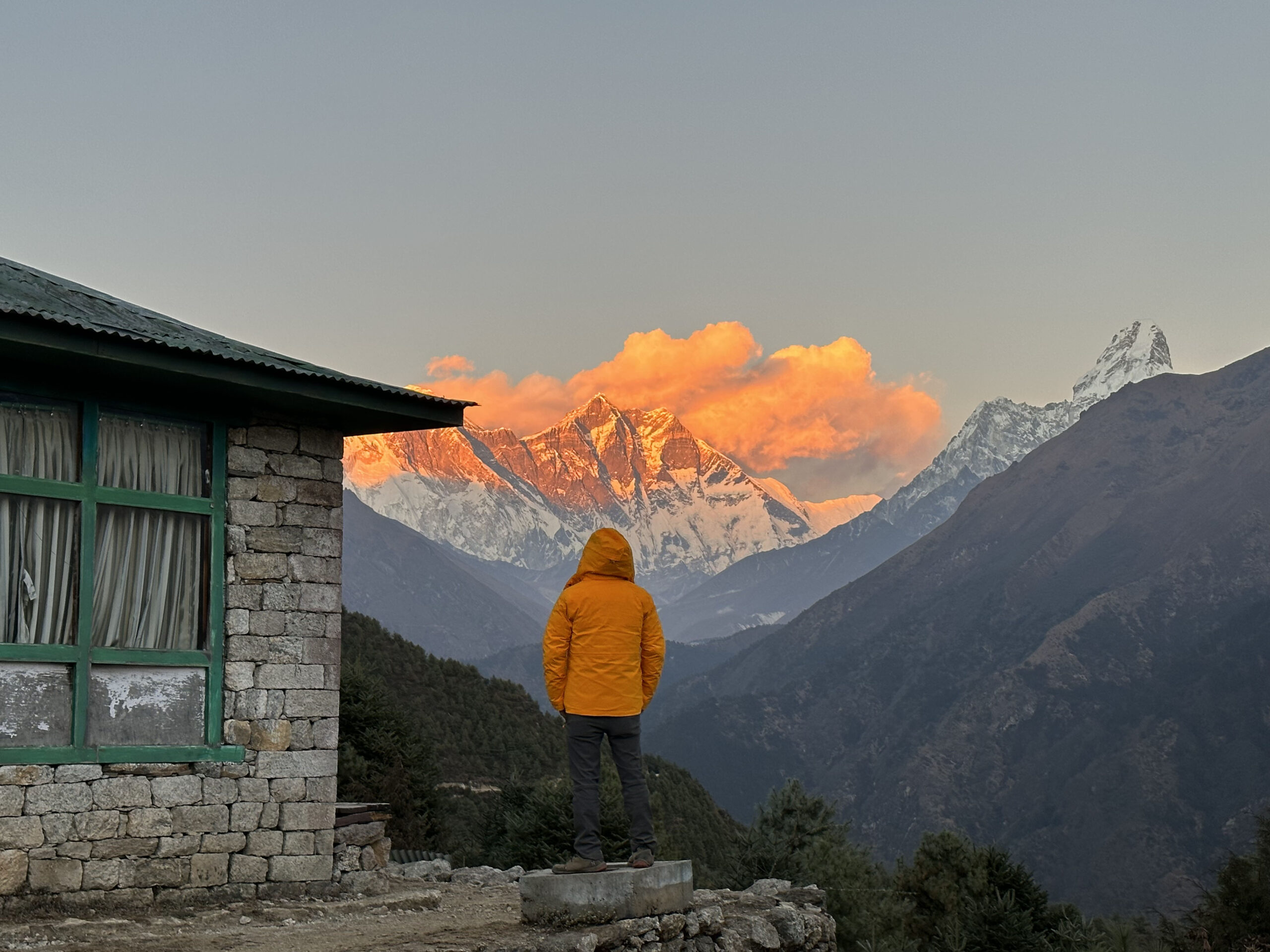
A map outlines major landmarks a trekker will pass, including villages like Namche Bazaar, Tengboche, and Gokyo, as well as key viewpoints such as Kala Patthar and Gokyo Ri. It helps you connect with the culture while tracking your progress.
- Acclimatization and Contingency Planning
Understanding the elevation at various points of the trek is vital for acclimatization. A map helps you trace routes for emergency exits and locations of medical facilities for altitude sickness or other contingencies.
A Guide to Daily Planning on the Everest Three-Pass Trek Map
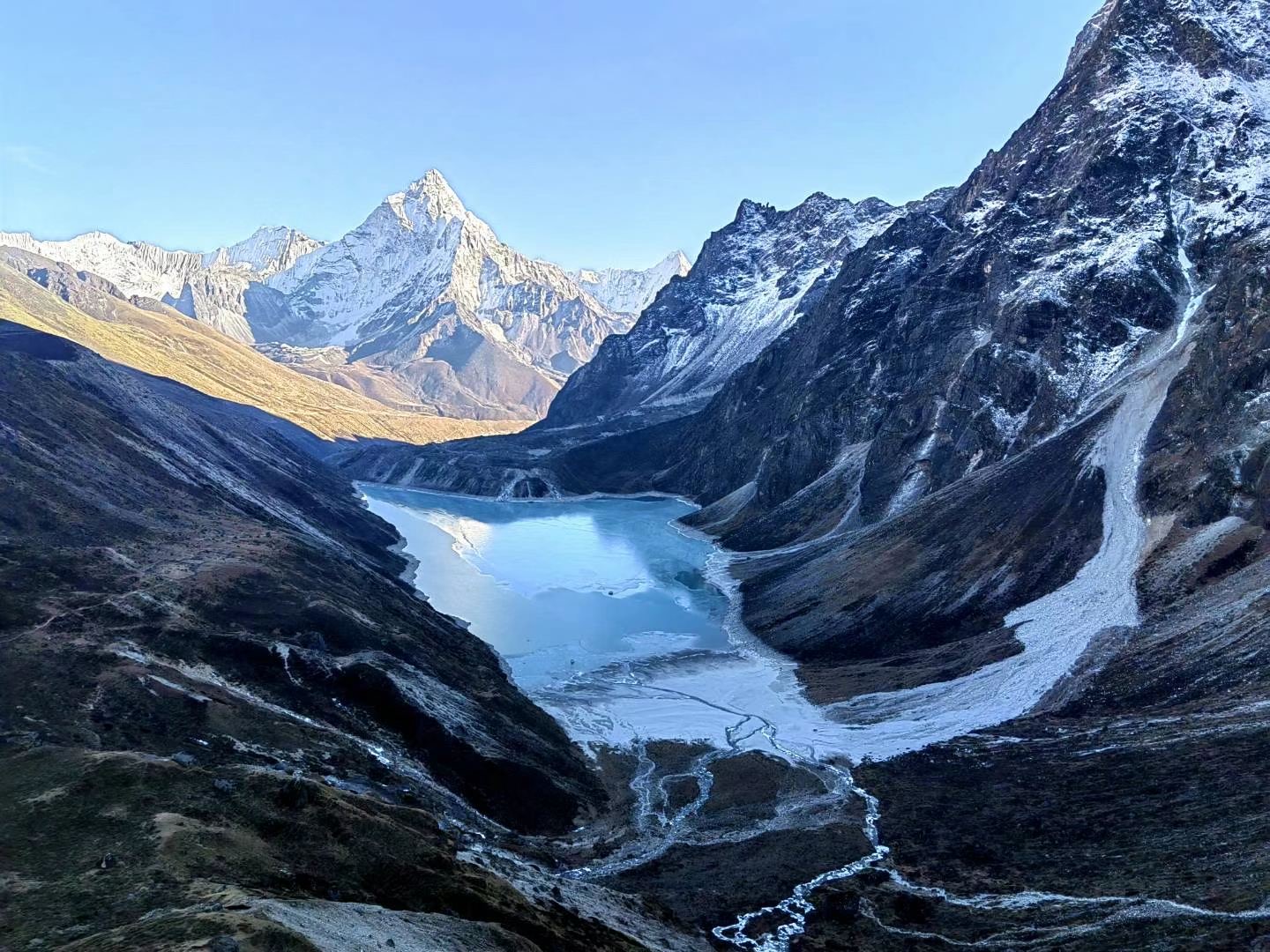
Everest Three Pass Trek is the most thrilling and adventurous journey in Nepal, offering spectacular views of the Himalayas and a challenging track that one must cross with three high passes: Kongma La (5,535m), Cho La (5,420m), and Renjo La (5,340m). Adequate planning is essential to eliminate any potential risks throughout the trek.
Day-to-Day Itinerary for the Everest Three Pass Trek (Sample 19-Day Itinerary)
Everest Three Pass Trek Map This sample itinerary is adaptable and tailored to your preferences or trekking pace.
Day 1. Arrive in Kathmandu, transfer to the hotel, and have dinner with the Nepali cultural program.
Day 2. Fly to Lukla (2804m) and trek to Phakding (2610): walk approx 3-4 hrs.
Day 3. Trek from Phakding to Namche Bazaar (3440m): walk approx 5 – 6 hrs.
Day 4. Acclimatization day at Namche Bazaar -day hiking to Khumjung valley over Everest view point hotel.
Day 5. Trek from Namche Bazaar to Tengboche Monastery (3,860m): walk approx 5 – 6 hrs.
Day 6. Trek from Tengboche Monastery to Dingboche (4,350m): walk approx 5 – 6 hrs.
Day 7. Dingboche, rest
Day 8. Dingboche to Chhukung valley (4,720m): walk approx 5 hrs.
Day 9. Chhukung – Kongma La (5,535m/18,154ft) – Lobuche
Day 10. Lobuche – Gorak Shep (5,170m) to Everest Base Camp Trek (5,364m) and back to Gorak Shep: walk approx 8-9 hrs.
Day 11. Hike up to Kalapatthar (5,555m) early in the morning and trek down to Dzonglha (4,830m) 8-10 hrs
Day 12. Dzonglha – Cho La pass 5420m) – Thangnak (4,680m) : 7-8 hrs
Day 13. Thangnak (4,680m) – Gokyo (4,800m): 4_5 hrs
Day 14. Gokyo Valley: Climb Gokyo Ri (5357m) 5 – 6 hours.
Day 15. Gokyo – Renjo La (5345m) – Lungden (4,380m) Marulung (4210m): 8-9 hrs
Day 16. Lungden – Namche Bazzar (3,440 m): 8-9 hours
Day 17. Trek from Namche Bazaar to Lukla (2804m): walk approx 6-7 hrs.
Day 18. Fly back to Kathmandu after the Three Passes trek/Rest day.
Day 19. Transfer to the international airport for your final flight departure.
Choose Vertex Holiday to experience a safe and organized Everest Three Pass Trek.
Quick Inquiry

Talk to an Expert
Mr. Samir Simkhada
Online Now


