
The Complete Guide to Nepal’s Top Domestic Airlines
The Complete Guide to Nepal’s Top Domestic Airlines (2025)
Flying into the Himalayan heartland despite its beauty, Nepal’s rugged terrain frequently makes overland travel challenging and time-consuming. Domestic planes act as lifelines, linking the nation’s urban centers, hiking destinations, and isolated areas. Nepal’s domestic airlines are vital to both tourism and local life, offering everything from picturesque mountain routes to necessary flights for rural access.
Despite frequent obstacles including unpredictable climate and insufficient facilities, Nepal’s domestic airlines had improved in professionalism and dependability by 2025. With its state-of-the-art ATR aircraft and reliable service, top airlines like Buddha Air and Yeti Airlines control the main city routes, while Shree Airlines provides jet flights to important Terai economic hubs. In order to reconnect underserved areas, Nepal Airlines has also started operating a small number of rural flights again after a challenging period of suspension. Domestic air travel in Nepal offers not just convenience but also some of the most picturesque flying experiences in the world, whether you’re planning a fast business trip inside the nation or an excursion into the Himalayas.
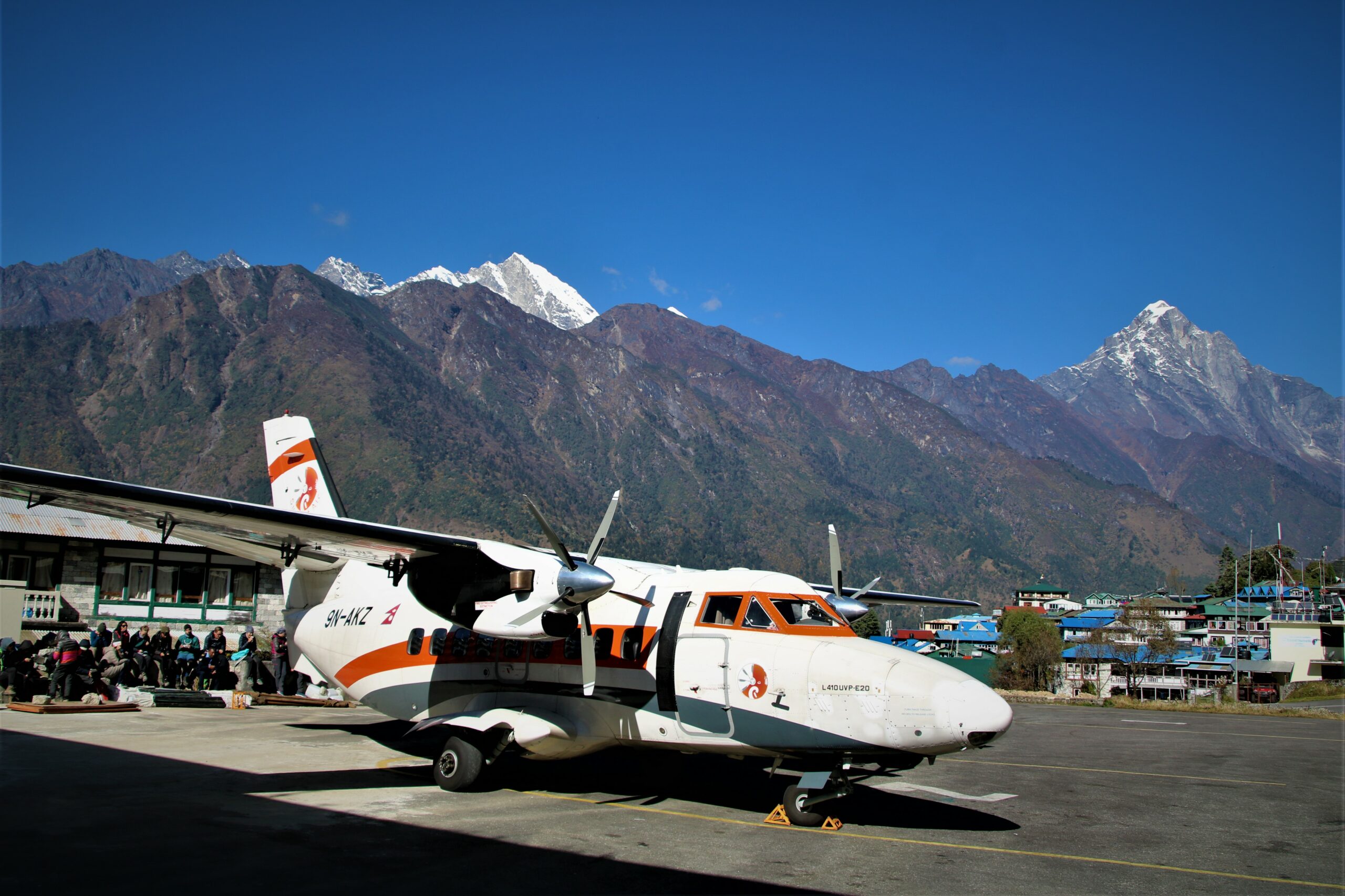
Nepal’s Leading Domestic Airlines (2025)
Buddha Air: The Most Reliable Airline in Nepal
Nepal’s top Domestic airlines since its founding in 1997, Buddha Air has upheld its standing as the most dependable and customer-focused local airline in Nepal. Among all domestic carriers, it flies the most flights with a fleet of ATR 72-500 and ATR 42-320 aircraft. Major places including Pokhara, Biratnagar, Janakpur, Bharatpur, Tumlingtar, and Nepalgunj are also on its routes. For those who would prefer to see Mount Everest without climbing, it also provides daily mountain flights.
Both domestic and foreign tourists choose Buddha Air because of its excellent safety standards, skilled staff, and timely service.
Yeti Airlines: The Greenest Airline
Nepal’s top Domestic airlines Yeti Airlines is another well-known brand in Nepal’s domestic aviation industry, having been founded in 1998. Kathmandu is connected to cities such as Bhairahawa, Bharatpur, Bhadrapur, and Pokhara by the airline’s ATR 72 aircraft.
Yeti Airlines is a fantastic choice for environmentally aware tourists because it was among the first airlines in South Asia to pledge to operate carbon-neutral flights. The airline provides seamless check-in and travel experiences and has excellent customer service scores.
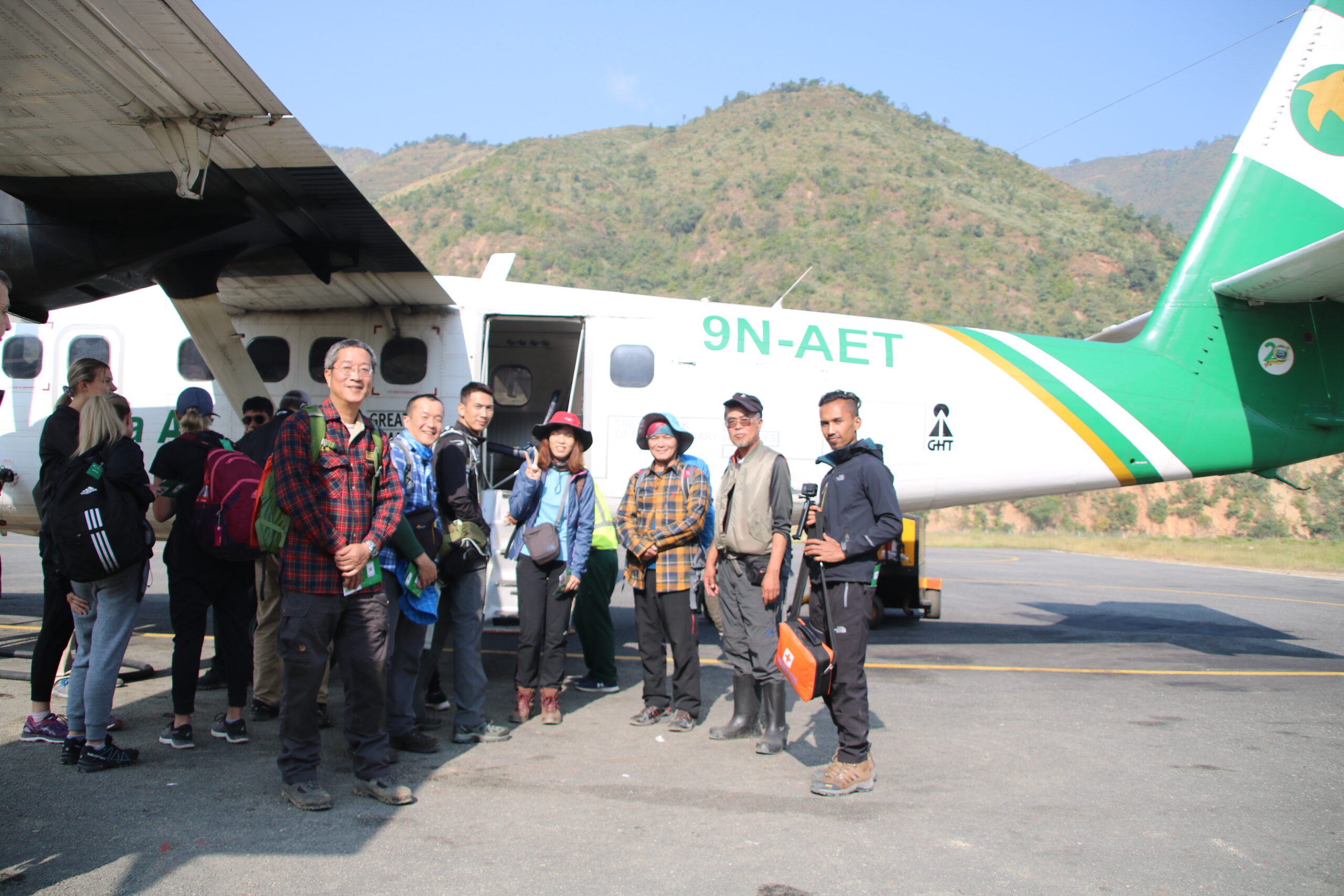
Shree Airlines: Domestic Jet Service in Nepal
Initially operating helicopters, Shree Airlines presently uses CRJ-200 and CRJ-700 jet aircraft to provide scheduled jet services on important domestic routes. Particularly on longer routes like Kathmandu–Dhangadhi, Kathmandu–Nepalgunj, and Kathmandu–Bhadrapur, these planes speed up and smooth out travel.
It’s a great choice for passengers seeking comfort, speed, and expert jet-level service on flatland itineraries, even though it doesn’t serve mountain airstrips.
Tara Air: The Option for Trekkers
Tara Air, Yeti Airlines’ sibling firm, specializes in short takeoff and landing routes at high altitudes. Its Dornier and DHC-6 Twin Otters are ideal for reaching Nepal’s most picturesque and isolated locations.
Tara is the primary airline for flights such as Nepalgunj–Simikot (Upper Humla), Pokhara–Jomsom (Annapurna and Mustang regions), and Kathmandu–Lukla (entrance to Everest). Trekkers and adventurers love it because of its reliable and tough service.
Summit Air: Expert in Western Nepal
One of Nepal’s most significant airlines in terms of facilitating air travel to isolated and impoverished areas, particularly in Western Nepal, is Summit Air, formerly known as Goma Air. It is essential for linking untamed mountain regions with either nonexistent or underdeveloped road networks.
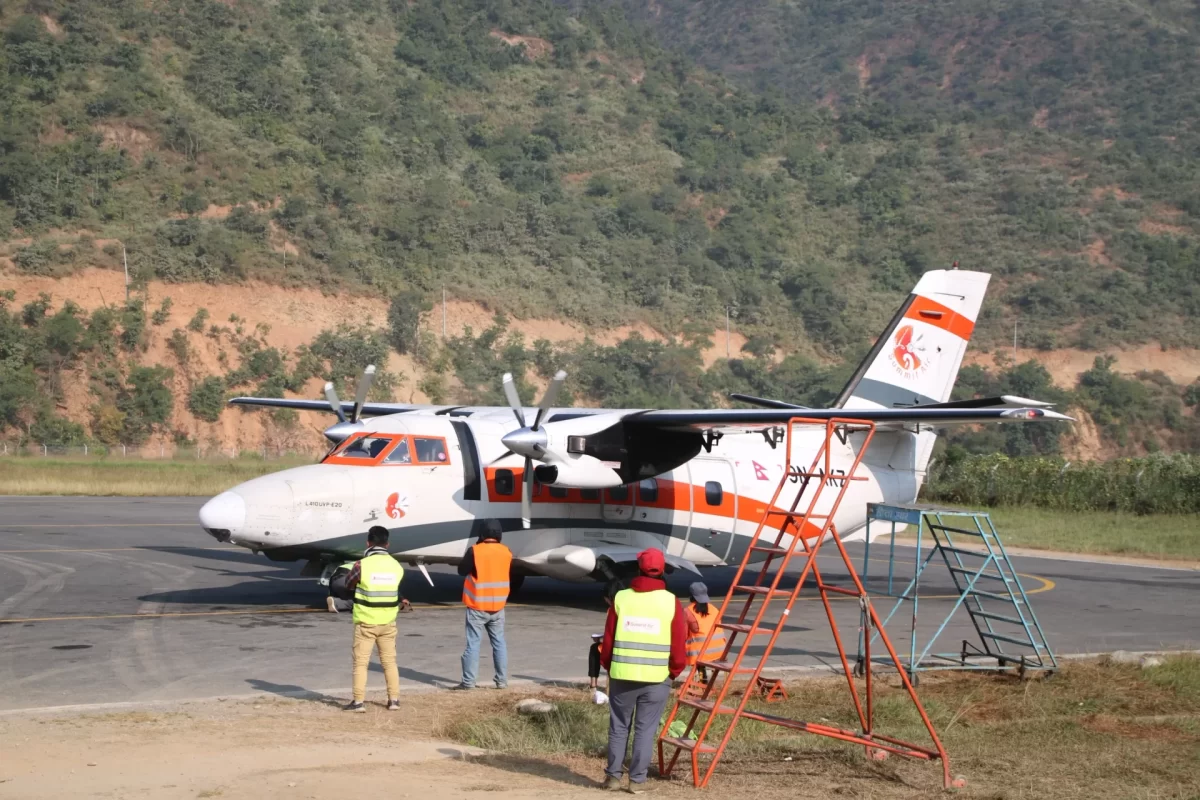
The LET L-410 UVP-E20, a twin-engine short takeoff and landing (STOL) aircraft built to handle short runways, steep approaches, and high-altitude terrain, is the main aircraft used by Summit Air. These planes are perfect for Nepal’s difficult-to-reach airstrips.
Sita Air: Reasonably Priced Travel to Far-Off Places
The tiny airline Sita Air flies mostly Dornier planes. It provides a lifeline for remote areas, serving routes such as Kathmandu–Lukla, Kathmandu–Phaplu, and Surkhet–Simikot.
Sita Air’s broad coverage and straightforward style will appeal to tourists searching for reasonably priced flights to trekking beginning locations.
Nepal Airlines: Back in the Sky in 2025
Suspension and Resuming Operations
For many years, Nepal Airlines, the country’s flag carrier, has served as a symbol and a useful means of uniting the country, especially its most isolated areas. However, the airline experienced one of its worst operational setbacks in recent memory towards the end of 2024. It was forced to ground its two surviving de Havilland Canada Twin Otter DHC-6 300 aircraft, registered 9N ABU and 9N ABT. While one experienced a mechanical problem and was kept waiting for replacement components and technical maintenance, the other hit its engine cycle limit.
Administrative delays, complicated international contract processes (including dealings with Israeli manufacturer Bet Shemesh Engines), and a general lack of preparedness prevented the airline from obtaining replacement engines or completing necessary repairs in a timely manner. As a result, all domestic flight operations were halted from December 23, 2024, to March 25, 2025. Several mountain villages lost access to basic amenities, forcing tourists to find alternative, often slower or riskier forms of transportation.
Challenges Faced by Nepal Airlines
In 2024, the national flag carrier, Nepal Airlines, experienced a string of serious failures that had a significant impact on its domestic operations. The two de Havilland Twin Otter planes, which were the foundation of its domestic fleet, were grounded, which was the most serious problem. Due to engine failure, one aircraft (9N ABT) was taken out of service in June 2024, and the other aircraft (9N ABU) hit its engine flight-hour limit in December 2024. The airline was compelled to halt all domestic flights from December 23, 2024, to March 25, 2025, since it had no more functioning aircraft. As a result, for almost three months, many isolated and mountainous areas of Nepal, including Simikot, Dolpa, Bhojpur, and Taplejung, were totally cut off from air travel.
The suspension revealed more serious structural issues with the airline. Long and ineffective tender procedures, along with inadequate planning and a lack of vision, resulted in delays in the acquisition of replacement engines and spare components. Timelines for maintenance and repairs were further slowed by bureaucratic obstacles, such as international collaboration with suppliers like Bet Shemesh Engines in Israel. Meanwhile, frequent delays, erratic timetables, and a general lack of communication from the airline’s end contributed to a steady increase in passenger displeasure. Even prior to the suspension, many passengers complained of delays of two to six hours, which undermined public trust.
Even prior to the suspension, many passengers complained of delays of two to six hours, which undermined public trust. The data showed the effect: in 2024, Nepal Airlines carried just 11,275 domestic passengers, a 15% decrease from the year before. In addition to highlighting the airline’s financial difficulties, this operational problem brought attention to its excessive reliance on an aging fleet and the pressing need for reform and modernization in Nepal’s domestic aviation industry.
Nepal’s Top Domestic Flight Routes for Visitors (2025)
In addition to providing necessary transportation, domestic planes in Nepal provide breathtaking aerial views of the Himalayas, valleys, and river systems. The following are the most well-liked and often utilized domestic flight routes for both domestic and foreign trekkers:
| Route | Airlines | Flight Time | Purpose & Highlights |
| Kathmandu – Lukla | Tara Air, Sita Air, Summit Air | ~25–30 mins | Gateway to Everest Base Camp trek; Scenic mountain airport; Morning flights preferred |
| Pokhara – Jomsom | Tara Air, Summit Air | ~20–25 mins | Annapurna & Mustang trekking; Scenic flight through Kali Gandaki valley |
| Kathmandu – Bhairahawa | Buddha Air, Yeti Airlines | ~35–40 mins | Pilgrimage to Lumbini; Gateway to western Terai and Indian border |
| Nepalgunj – Simikot | Sita Air, Nepal Airlines | ~1 hr 10 mins | Access to Humla & Mount Kailash trail; High Himalayan region; Cultural immersion |
| Kathmandu – Pokhara | Buddha Air, Yeti Airlines, Shree Airlines | ~25 mins | Gateway to Annapurna Base Camp, Poon Hill, Mardi Himal; Popular tourist city |
| Kathmandu – Bharatpur | Buddha Air, Yeti Airlines | ~20–25 mins | Access to Chitwan National Park; Ideal for jungle safaris and wildlife viewing |
| Kathmandu – Tumlingtar | Buddha Air | ~40 mins | Gateway to Makalu Base Camp trek; Less crowded trekking destination |
| Kathmandu – Rara (via Nepalgunj) | Tara Air, Sita Air | 1.5–2 hrs (incl. stopover) | Visit Rara Lake; Remote and pristine alpine lake; Requires stopover in Nepalgunj |
| Kathmandu – Taplejung | Nepal Airlines | ~1 hr 15 mins | Access to Kanchenjunga Base Camp; Remote eastern Nepal; Weather dependent |
Travel Advice for Nepali Domestic Flights
Because Nepal offers expansive views of snow-capped peaks, flowing rivers, deep valleys, and terraced farmlands, flying there is frequently just as remarkable as the actual destination. However, flying also necessitates some flexibility and planning because of Nepal’s distinct geography and erratic mountain weather. These useful suggestions might help you get ready for a comfortable and pleasurable trip, whether you’re travelling to the Everest region or exploring the far west.
Easy Travel Advice Detail
Plan Ahead During the Busiest Times of the Year (March–May and September–November):
In Nepal, these are the busiest times of year for trekking and travel. Weeks in advance, flights to trailheads like Lukla and Jomsom frequently sell out. In addition to securing your seat, making your reservation early increases your chances of taking a morning flight, when the weather is at its best.
Select Early Flights for Increased Dependability:
In the afternoon, mountain weather usually deteriorates, with fog, winds, or clouds leading to cancellations or delays. Flights in the morning (usually before 11:00 AM) have a higher chance of leaving on schedule and offering more picturesque sights.
Avoid Tight Connections with foreign Flights:
Avoid scheduling a domestic flight on the same day as your foreign departure, especially if it is from Lukla, Jomsom, or Simikot. Delays are frequent, even under the best of circumstances. To prevent missing connections, always factor in at least one day as a buffer between domestic and foreign flights.
Allow 1–2 Extra Days After Remote Treks:
It’s a good idea to plan 1–2 days off in Kathmandu or Pokhara following your trek if you’re trekking in the Everest, Mustang, or Dolpo regions. Weather-related flight disruptions are common, especially from Lukla or Jomsom. Last-minute worry and extra expenses are avoided with a flexible return timetable.
Pack Light: There Are Baggage Limits
Due to weight limits, the majority of small aircraft (such as Twin Otters or LET L-410s) that travel to mountain areas have stringent baggage policies. Typically, you are permitted to check in 10 kg (22 lbs) of luggage and carry 5 kg (11 lbs) of hand luggage. Oversized luggage might not be allowed or might cost more.
Always Have Identification on Hand
You must show a legitimate government-issued ID upon check-in. While visitors need to present a copy of their passport and visa, Nepali nationals can utilize their national ID or citizenship card. Some distant airports demand physical confirmation, so bring a printed or digital copy of your ticket.
Nepal’s top Domestic Airlines Extra Tips:
- Have patience: Mountain flying involves last-minute adjustments and delays. Remain composed and let employees handle the logistics.
- Sit by the window: When flying east from Kathmandu (for example, to Lukla), the left side (A-side) frequently offers greater views of the Himalayas.
- Bring water and food because airport kiosks are simple and smaller flights don’t have in-flight amenities.
- Weather updates: Stay informed about any changes to your itinerary by contacting your airline or tour operator, particularly during the winter months of December through February or the monsoon season of June through August.
Nepal’s top Domestic Airlines Final Thoughts: Flying in Nepal Made Simple
For many individuals and locations in Nepal, domestic flights represent a lifeline, not merely a way to save time. The best options for dependable, comfortable, and safe travel in 2025 are Yeti Airlines and Buddha Air. The finest airlines for getting to high-altitude locations like Lukla, Jomsom, or Simikot include Tara Air, Summit Air, and Sita Air if you’re travelling to the Himalayas or other isolated regions.
Over the past year, Nepal Airlines, the country’s flag carrier, has experienced delays and grounded aircraft. However, it is now gradually making a comeback, particularly to assist those in remote areas that are not served by other airlines. It must upgrade its service and introduce modern aircraft if it hopes to remain strong.
Thus, flying in Nepal is not only practical, but also a part of the experience, whether you’re planning a Himalayan climb, visiting a sacred site like Lumbini, or simply wanting to avoid lengthy road travels. Just prepare ahead of time, be prepared for some delays, and take in the breathtaking aerial views!



Quick Inquiry

Talk to an Expert
Mr. Samir Simkhada
Online Now


