
Amazing History Around Patan Durbar square
Patan Durbar Square located in the capital city of Kathmandu Valley is an amazing place on earth, blessed by the natural beauty of surrounding tiers of green hills. With a contrast of white snow-capped peaks in the north, with three main ancient cities of Kathmandu, Bhaktapur, and Patan. Around the verdant valley of Kathmandu stands the beautiful city of Patan, known as Lalitpur in the south. The two districts are bounded by the holy Bagmati River that outlines Patan / Lalitpur and Kathmandu cities.

Patan with the present and old name Lalitpur means the city of fine arts and crafts. A semi-metropolitan city, retaining its past glories from the start of human settlements by Lichavi, Malla to Shah Regime. The city of Patan / Lalitpur established since it was founded during the 3rd Century BC by the Kirat dynasty.
The old kingdom of Patan was later expanded in the 6th century by the Malla kings, Nepal’s history. When the Kathmandu Valley was ruled by the Malla dynasty from the 10th to 18th Century. According to Nepalese chronicles, Patan / Lalitpur was founded by King Varadeva in 299 AD.
The boundary of Patan is marked by the ancient Buddhist stupas that were built in 250 BC by King Ashoka. The emperor and conqueror of North India converted to Buddhism. During his visit to the Kathmandu Valley. The emperor Ashoka built four small ancient Buddhist stupas resembling four corners of Patan.
It is believed that after King Ashoka built these stupas, Buddhism flourished in the valley. Patan / Lalitpur city is certainly an impressive city of both modern with medieval era backdrop. At present a sub-metropolitan and second city after Kathmandu which is at a mere distance. Separated by a bridge over the Bagmati River within the same valley, toward the south of Kathmandu. A short drive of fewer than 30 minutes to enter the Patan / Lalitpur city area.

At Lalitpur or Patan observe and enjoy the local colorful bazaar teemed with daily traditional life and interesting to witness the local culture, and then visit its Old Durbar Square (Palace Courtyard) and many more as follows.
Places of interest around Patan Durbar Square:
I) Patan Durbar Square:
II) Mul Chowk (royal court yard and verandah):
III) Sundari Chowk:
IV) Keshav Narayan Chowk:
V) Krishna Temple:
VI) Mahaboudha:
VII) Kumbheshwor:
VIII) Jagat Narayan Temple:
IX) Rudra Varna Maha Vihar:
X) The Ashoka Stupas:
XI) Patan Industrial Estate:
XII) Tibetan Refugee Camp:
Patan Durbar Square:
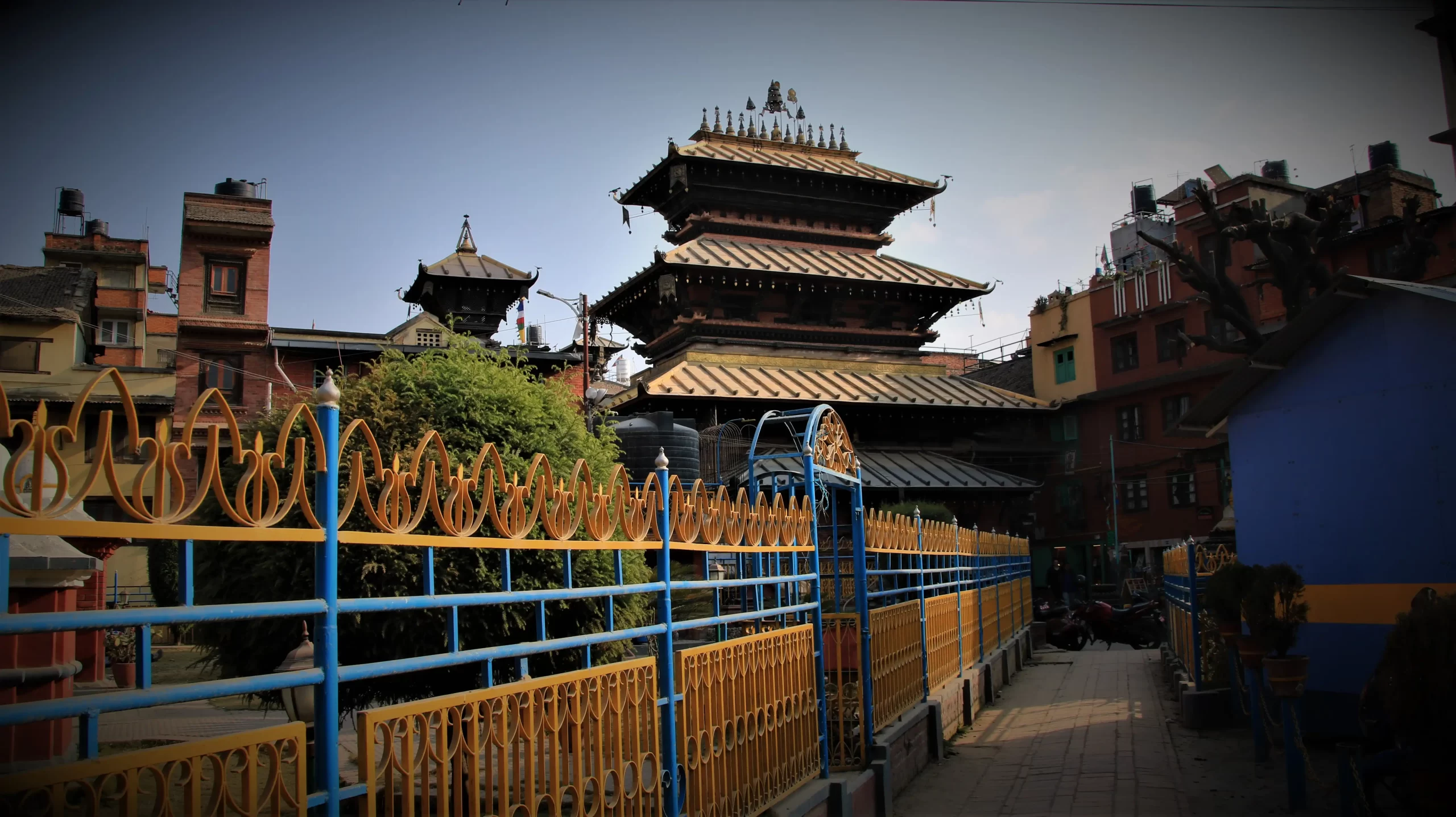
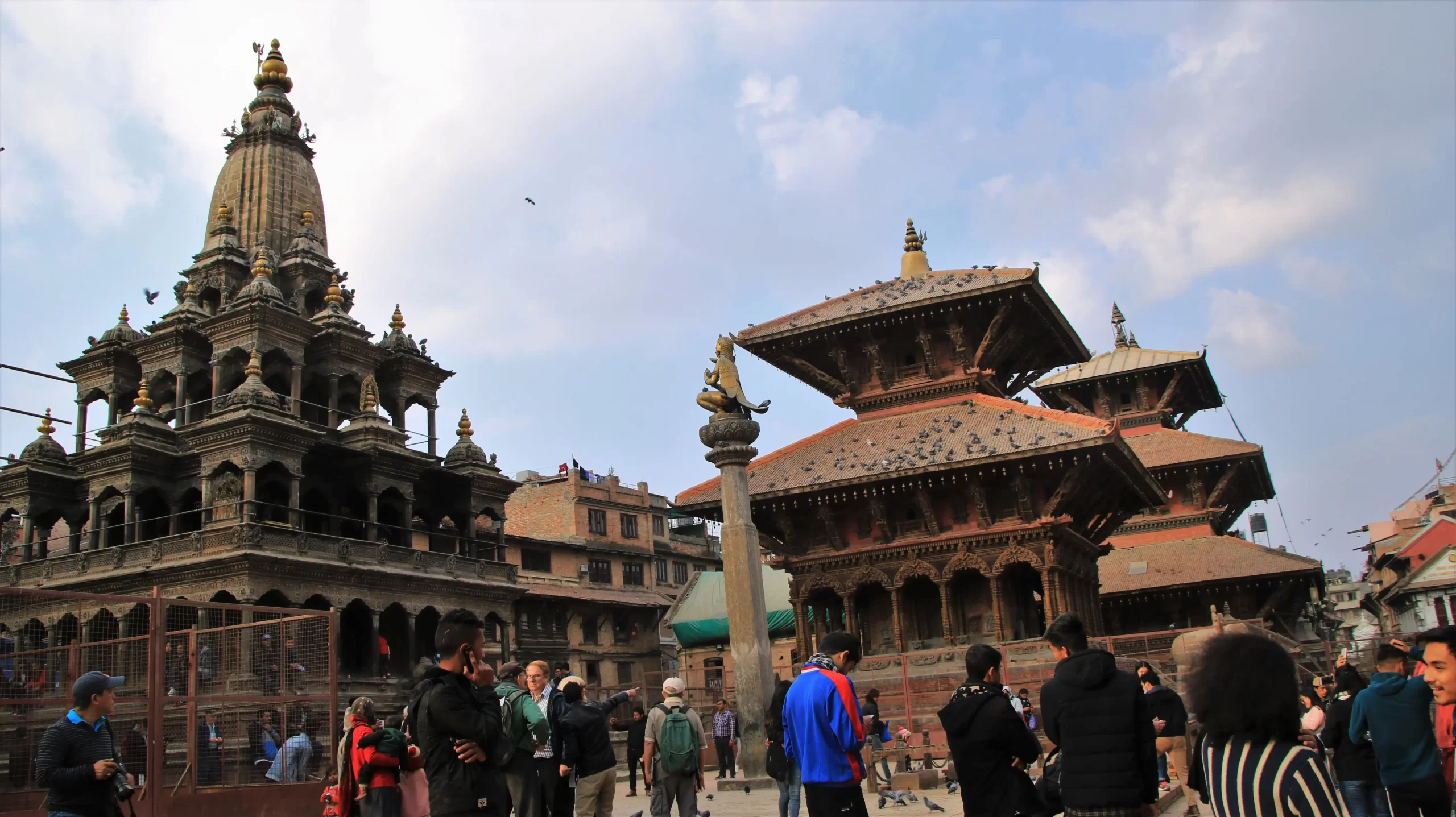
Patan Durbar Square is located right in the center of Lalitpur and houses the ancient Newari architectural work of art. There are three main courtyards in the palace:
Which are known as Mul-Chowk, Sundari-Chowk, and Keshav Narayan Chowks. Mul-Chowk is the oldest one and is at the center of Patan Durbar Square. Several multi-sized and multi-styled temple houses the western part of the complex. The main among these are the Krishna Temple, Bhimsen Temple, and the Golden Temple of Hiranya.
Mul-Chowk (royal court yard and verandah):
One of the famous and largest courtyards among the three main chowks, the Bidya Temple is located at the center of the courtyard and the Taleju temples stand around the courtyard.
Sundari-Chowk:
Sundari-Chowk, located south of the Mul-Chowk with a sunken tank known as Tusha-Hiti- Mul-Chowk with Taleju Temple.
Keshav Narayan Chowks:
Keshav Narayan Chowks on the northern part of Degutale temple is the site of the earliest Malla palace in Patan. The Chowks sit on the older foundations of a Buddhist monastery.
Krishna Temple:
This temple in Patan Durbar Square dedicated to Hindu Lord Krishna was erected in the 17th century, considered to be the first one to be built in Shikara architecture. It commands a vital position around Durbar Square. The elegant Shikara-style temple is ranked as one of the gems of Durbar Square.
The temple is compared with the sacred Mount Meru, which is an abode of the god Shiva according to Hindu scriptures.
Mahaboudha:
The Buddhist temple of Mahaboudha, which is made of clay bricks, lies to the east of Durbar Square. Hundreds of Buddha images are engraved on the bricks. The temple is known for its fine terra cotta work.
Kumbheshwor:
Just at the rim of Durbar Square lies the five-storied pagoda temple of Lord Siva built by King Jayasthiti Malla. Inside the temple premises a natural spring with fast-running waters through an ancient spout.
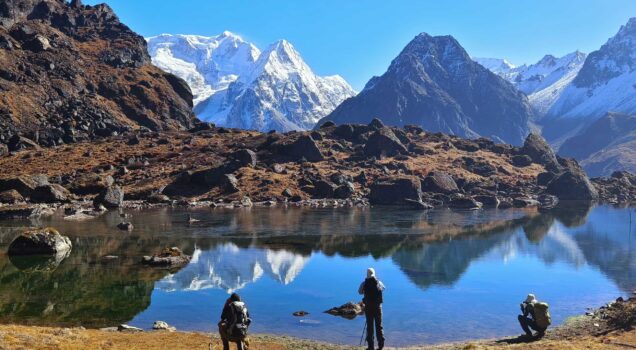
The pure water is believed it flow from the source of the famous glacial and holy Gosainkunda Lake. Located around Langtang Himal of Rasuwa district towards the north and the closest mountain range from the Kathmandu valley.
The golden work on the temple was added later in 1422 A.D. On the festival of Janai Purnima (month of August) as per the Hindu calendar, a ritual bathing and religious fair take place.
Jagat-Narayan Temple:
The Jagat-Narayan temple is a tall Shikara-style temple devoted to Lord Vishnu, red bricks are used for the construction. The temple also holds a fine metal statue of Garuda, Ganesh, and Hanuman, all related to Hindu religion and mythology.
Rudra Varna Maha-Vihar:
This Buddhist monastery holds an amazing collection of images and idols in metal, stone, and wood. Legend holds that the Kings in ancient times were crowned in this monastery. Many of the treasures offered by the people can be seen here even today. Extension of Patan / Lalitpur of great cultural and historic interest and craftsmanship.
The Ashoka Stupas:
The Indian Emperor Ashoka visited Nepal in 250 B.C. Who constructed four ancient stupas around four cardinal corners of Patan / Lalitpur?
Patan Industrial Estate:
Located outside the Patan Durbar Square in a suburb near the Stupa at Lagankhel, an interesting place to visit and shop for souvenirs, where all the handicrafts are hand-made from metal, wood, and stone artwork including carpet, a pashmina shawl is woven here, as Patan / Lalitpur is the city of beauty and arts, it will be an opportunity to observe the work and skill of the craftsman and to purchase some items from this place.
Tibetan Refugee Camp:
Tibetan Refugee camp is located in the south of the Patan area near the only Nepal Zoo, where one can observe the happy-cheerful workers weaving carpets.
This place was established in the early 1970s after the Chinese annexed Tibet where a great number of Tibetans migrated here, and the Nepal Government established this place as a permanent camp or settlement for Tibetan Refugees here you can shop for souvenirs as well.
We value your feedback, feel free to send us if you have any. Like our articles? Here are some of the recommended reading lists.
The World Heritage Sites In Nepal

Quick Inquiry

Talk to an Expert
Mr. Samir Simkhada
Online Now


