
Tiji Festival of Lo-Manthang
Tiji Festival of Lo-Manthang is one of the most spectacular religious and cultural events. One of the main traditional heritage of Upper Mustang falls at the end of spring in May. Where days are much warmer with enough sunshine for views and tours as well as observing the grand Tiji Festival.
The Tiji Festival is held annually with a pomp and colorful ceremony, the colorful religious events last for three days. Where thousands of people from all over Mustang attend, as well as visitors from worldwide to be with the jubilant crowd. Upper Mustang natives follow the same cultures and religion of Tibetan Buddhism similar to its predecessors, across the border.
Upper Mustang, is geographically an extension of the huge South West Plateau of Tibet / China. Much of the country is dry with windswept terrain and landscapes, but beautiful with picturesque landscapes to experience.
At one time Upper Mustang was part of Tibet but became an independent kingdom. The history begins in 1380 AD, when a warrior and followers of Buddhism from South West Tibet established a separate kingdom.
Which was known as Lo and the people were called Lobas, later changed to Mustang with Lo-Manthang as the kingdom. Ame Pal the first Raja / King in 1380 AD defeated his enemies and local warlords.
Then built a great wall around the capital Lo-Manthang to keep the intruders away from his kingdom. The former walled kingdom of Lo Manthang still exists as it has been for hundreds of centuries. As the years passed by, changes have been made with networks of roads and semi-modern facilities, but still retaining its old-time glorious.
A great country and the former forbidden kingdom are worth a visit and to be in the great Tije festival. Visitors are warmly welcomed to take part in the events as well as to experience the culture of the Upper Mustang.
Besides attending and observing the Tiji Festival one can take a tour around the walled kingdom at places of great interest. The former walled kingdom of Lo Manthang takes you back to medieval times, with its old town and cobblestoned streets.
Tiji Festival And History:
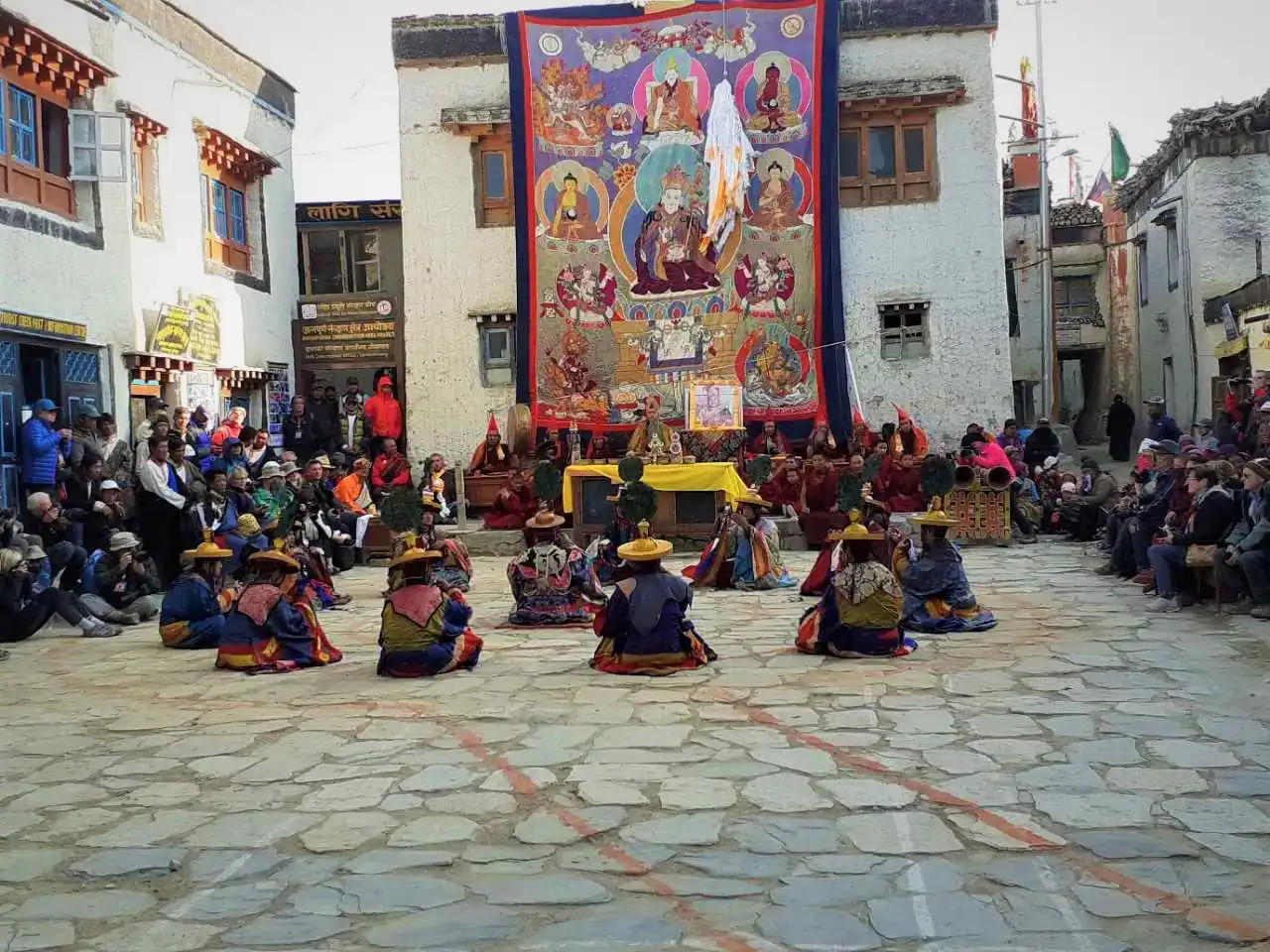
From 1380 AD, the Upper Mustang was established as a separate kingdom by the first warrior king Ame Pal. As the years went by the Tenchi or Tiji ritual was practiced during the rules of Lowo Khenchen. The third son of King Tsangchen Tashi Goen, and a group of people from every village. Monks and priests of Chode Monastery started the Tije Festival, the ritual of chasing devils and evil spirits.
As well as to mark the end of a dry season to welcome the new era with great worship. As well as holding special prayers for a better harvest of buckwheat, barley, and wheat, the main crops are grown on high terrain.
The Tiji Festival ceremony continues for three days to enjoy the lively activities of monks and priests. Dressed in colorful attire dancing with the strong beat of religious music and reforms of the history and stories. Which is the main act of wading demons and evils from the areas of Upper Mustang the land of Lobas.
The Tiji festival of Upper Mustang is one of the most celebrated religious events full of excitement. One of the royal heirs of Ame Pal, raja-king Samdup Rabten of Mustang. Started this festival during the 17th century, inviting nearby kingdoms kings, and royals of other districts to join the Tiji Festival.
The word Tiji is a common name for Tenpa Chirim (bstan pa spyi rim), linked with the most popular Himalayan festivals. The religious festival was introduced during the time of Ama Pal (the first king of Lo). Who was the first ruler of Lo or Mustang followed by Ngorchen Dorje Chang?
The exalted person who brought Buddhism to Mustang. Tenchi, the Vajrakilaya ritual was brought into practice during the reign of Lowo Khenchen. The son of the 3rd independent king of Lo Tsangchen Tashi Goen. This festival is organized by a group of people including mediators or village chiefs from every village and the Monks of Chode Monastery. The festival was held successfully from the time of Ame Pal.
To guard the kingdom of Lo against evils, chasing the demons from the sacred land of Lo Manthang. The festival marks the end of the dry season and prayers for a fruitful harvest.
It is interesting to be part of the Tiji Festival, considered one of the most celebrated festivals around the Himalayas.
For interested visitors, the day’s dates for Tiji Festival 2023 and 2024 will be on the 16th, 17th, and 18th of May 2023. As per Buddhism Lunar calendar was chosen as an auspicious time for the festival.
How To Reach Lo Manthang For Tiji Festival:
There are various ways to reach Jomsom and Lo-Manthang to be in the Tiji Festival. The easiest and fastest means is taking a short flight of 22 minutes to Jomsom town. From Jomsom, either spend overnight or continue the journey by overland on a four-wheeler jeep.
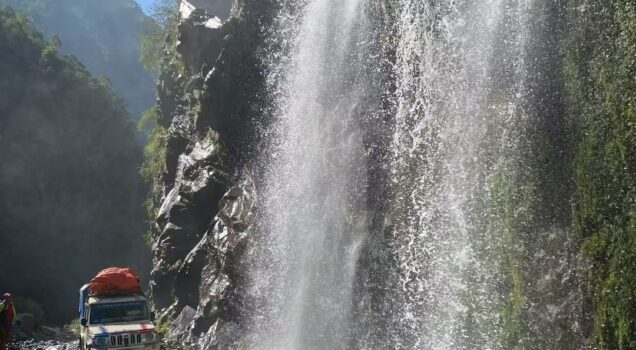
From Jomsom sharing or hiring a jeep for the group for the whole trip, drive leads on muddy dirt tracks. Heading past Kagbeni village, the entrance and exit point of Upper Mustang, where all foreign nationalities require special permits.
Upper Mustang from Kagbeni village onwards is listed as a Restricted Area, which was closed to outside visitors. It was opened in 1992 onwards and still controls the mass flow of travelers with people who can afford special permits.
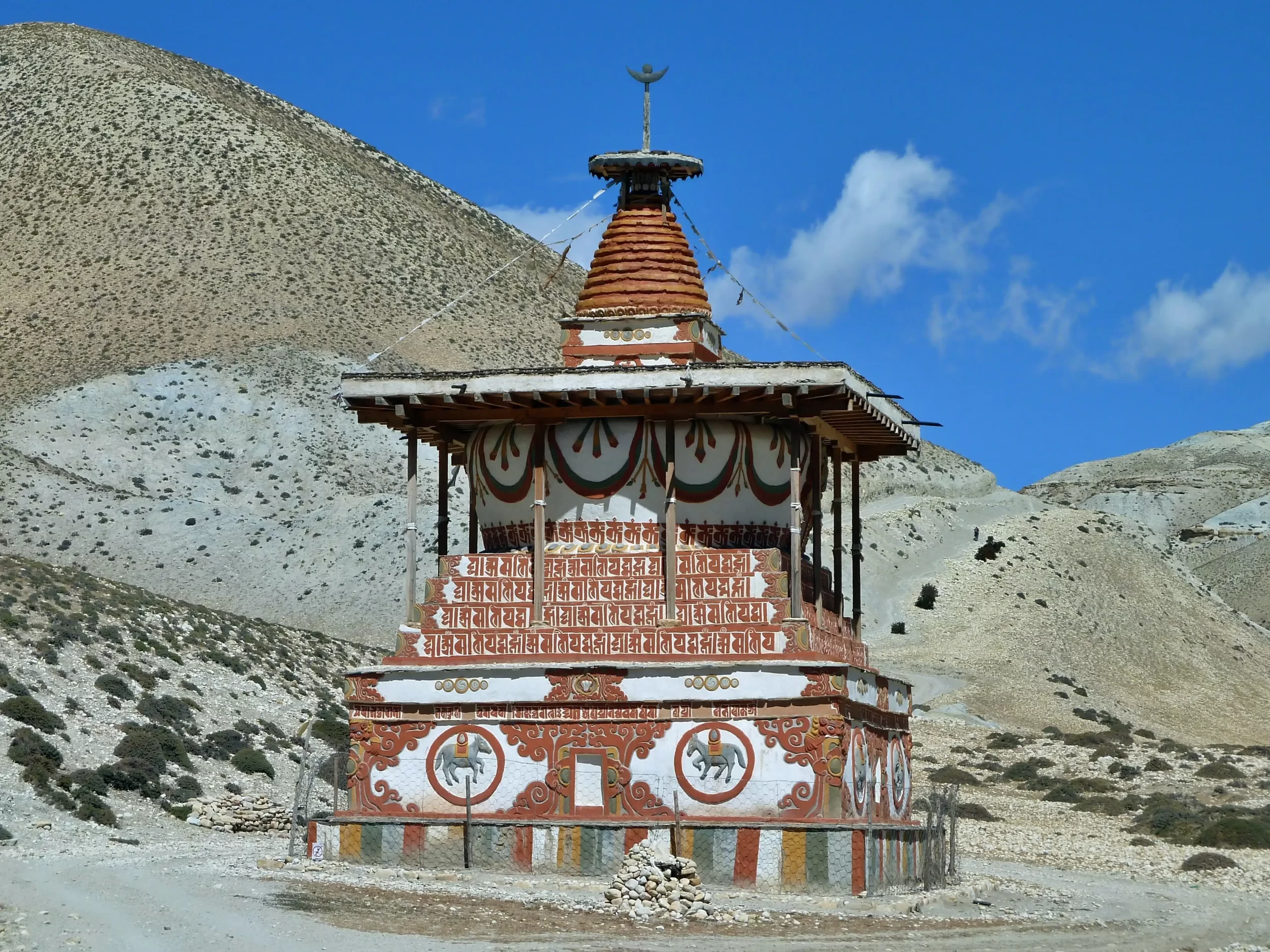
From Kagbeni enter the wild and rugged country of Upper Mustang, but beautiful and picturesque scenery of landscapes. Drive heads beneath a great wall of the canyon and towering windblown cliffs to reach Chuksang / Tsuang at 2,980 m.
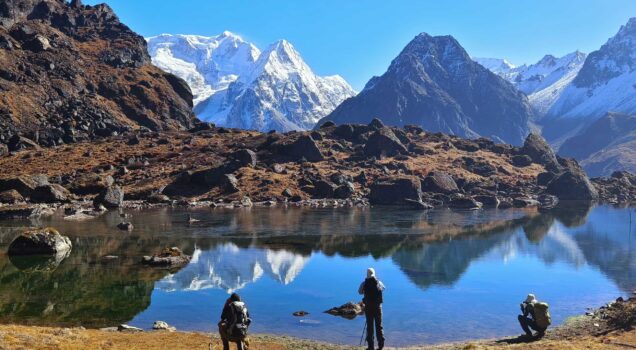
Staying overnight in a local lodge, start the journey driving up to several high passes facing incredible views. Includes scenery vast plain of Mustang with snow-capped peaks of Mustang Himal. Drive leads past a few nice traditional villages with a field of barley and buckets enclosed by a few willow and populous trees.
The second day’s drive reaches Ghami 3,540 m, a lovely village and one of the major settlements of Upper Mustang. Staying overnight in the comfort of a nice homely type lodge or guest house. Next morning short drive to Charang / Tsarang village 3,759 m reaching by lunchtime. Afternoon hike to Ghar Gumba or Lo Gekar Monastery, a nice place surrounded by a big crop field of barley.
On the third day drive to Lo Manthang 3,840 m high, and enter the former forbidden and walled kingdom of Lo-Manthang. Transfer to the best lodges and guest houses and enjoy a short walk around the old streets of Lo-Manthang and witness the preparation of the Tiji Festival.
At Lo Manthang for three overnights to observe the colorful Tiji Festival and local activities. As well tour of famous monasteries and the fort palace of late last raja Jigme Dorji Wanchuk Bista. Rest of the days at Lo Manthang enjoy the Tiji Festival at Choedhe Monastery till the end or closing ceremony of the event.
Return journey on the same way back to Jomsom town. Where one can choose the options of driving or a short flight back to Pokhara.
Distance by road from Pokhara to Lo-Manthang is 237 km. Pokhara to Jomsom 159 k.m. and from Jomsom to Lo-Manthang 59 k.m. / 37 miles. Upper Mustang Trek during the Tiji festival is one of the most popular times to visit, as one is able to witness the colorful Himalayan Bon Buddhism culture up close and personal.
Upcoming Tiji Festival Dates for the years 2024, and 2025 are as follows.
S.No: Tiji Festival Year Dates of Tiji Festival Events
01 Tiji Festival 2024 5th, 6th and 7th May 2024
02 Tiji Festival 2025 24th, 25th and 26th May 2025
Quick Inquiry

Talk to an Expert
Mr. Samir Simkhada
Online Now


