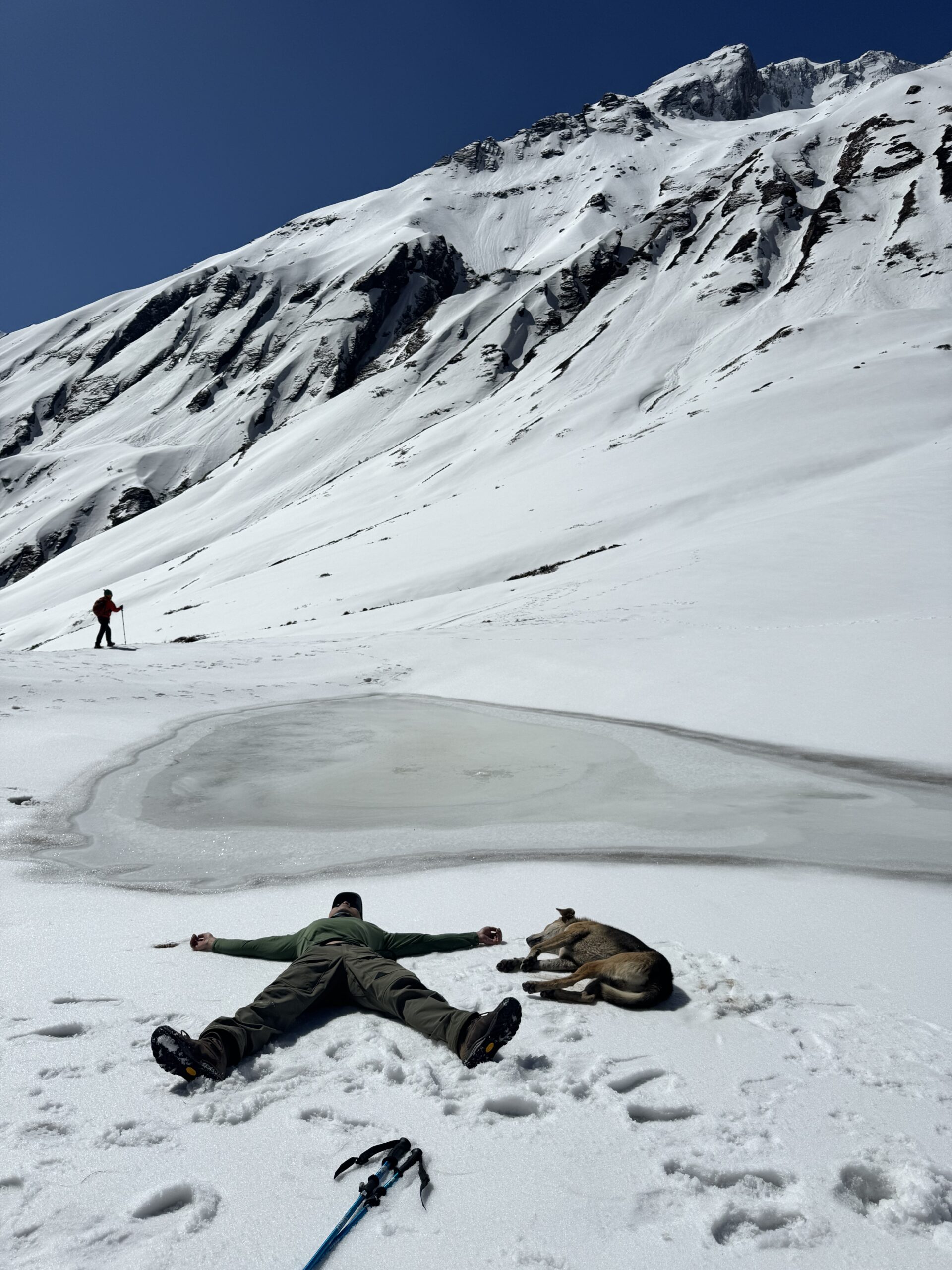
10 Best Winter Treks In Nepal

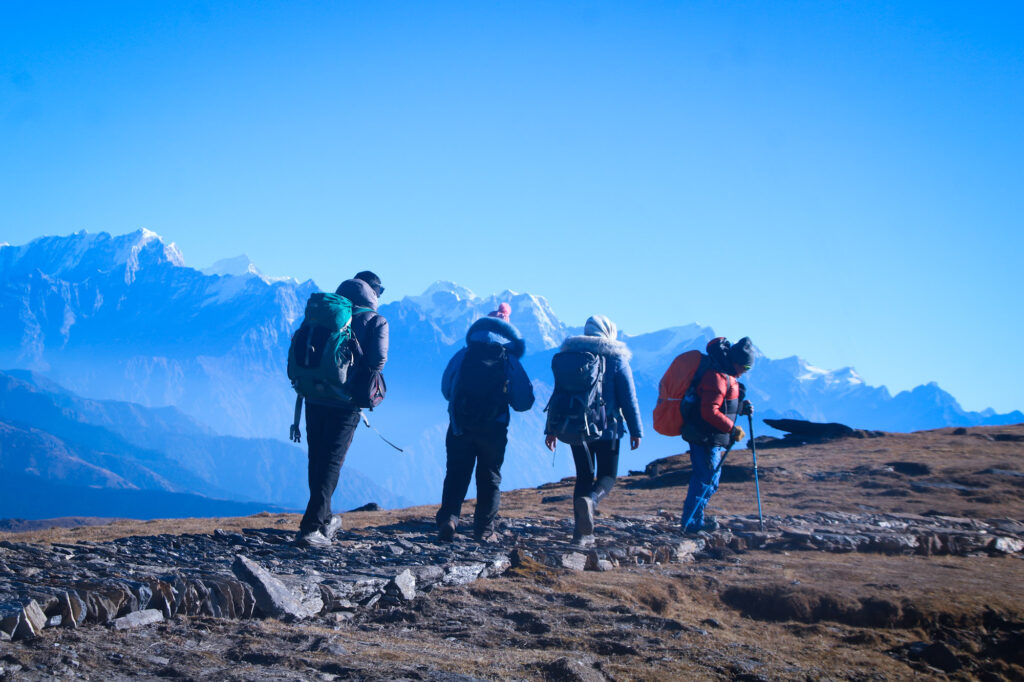
The 10 best winter treks in Nepal are for trekkers and adventurers to enjoy scenic and exciting Himalayan destinations.

Nepal is a unique country with the world’s 8th highest peaks and hundreds of giant mountains. Make Nepal one of the sought-after adventure premier destinations around the Himalayas.
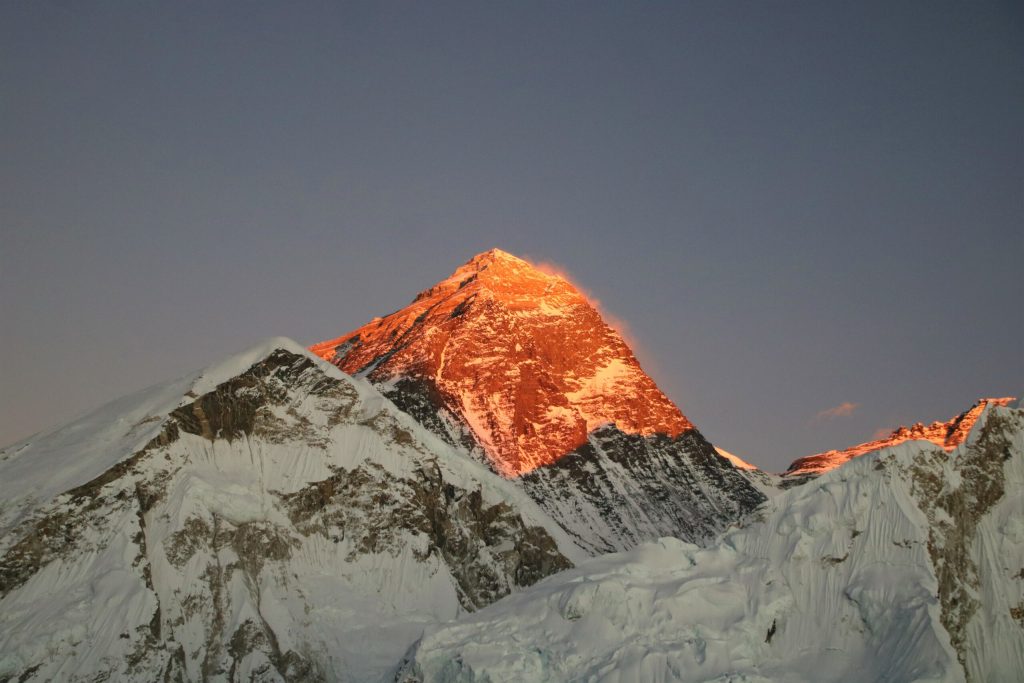
Mount Everest
Mount Everest

The 10 best winter treks in Nepal are for trekkers Nepal is a country of great charm and beauty with a diverse topography of landscapes. From the lower land of Terai, with mid-hills and deep verdant valleys, to the higher mountainous region and the great Himalayas. Nepal is a blessed country with a unique geographical position and altitude variations, where elevation ranges from 60 m above sea level.

Extending to the highest point on earth, the top of Mt. Everest at 8,848.86 m. All within a distance of 150 km, resulting in climatic changes from sub-tropical alpine to Arctic temperatures.

Nepal is a country of various ethnic tribes of people of mixed religions and different cultures from one area to another region. Make Nepal a fascinating country for its picturesque scenery landscapes and Snow Mountains, with an impressive varied heritage and cultures. Including diverse exotic flora and fauna and 2 % of all the flowering plants on earth. As well as 08 % of the birds with more than 857 species, with 4 % of mammals on earth.
The best 10 winter treks are for all types of people and age groups.

The altitude gains slowly and gradually as you walk from one place to another before completing the trek.
Adventure in Nepal is for all seasons, but winter treks are short and exclusive. It leads to exciting walks with fewer groups of trekkers to encounter than in the busy high seasons of spring and autumn.

Vertex Holiday provides the best ten winter treks in Nepal with various destinations around the Himalayas.

Annapurna Region Trek:

01: Annapurna Base Camp  Trek.

The best and shortest 8,000 meters base camp in all the Himalayan ranges, due to its proximity to Pokhara city. An adventure that leads you to the heart of the world’s tenth highest Mt. Annapurna-I (8,091m/26,545 ft.).
Annapurna base camp trek is located within a picturesque sanctuary enclosed by amphitheaters of gigantic peaks of the Annapurna Himalayas.
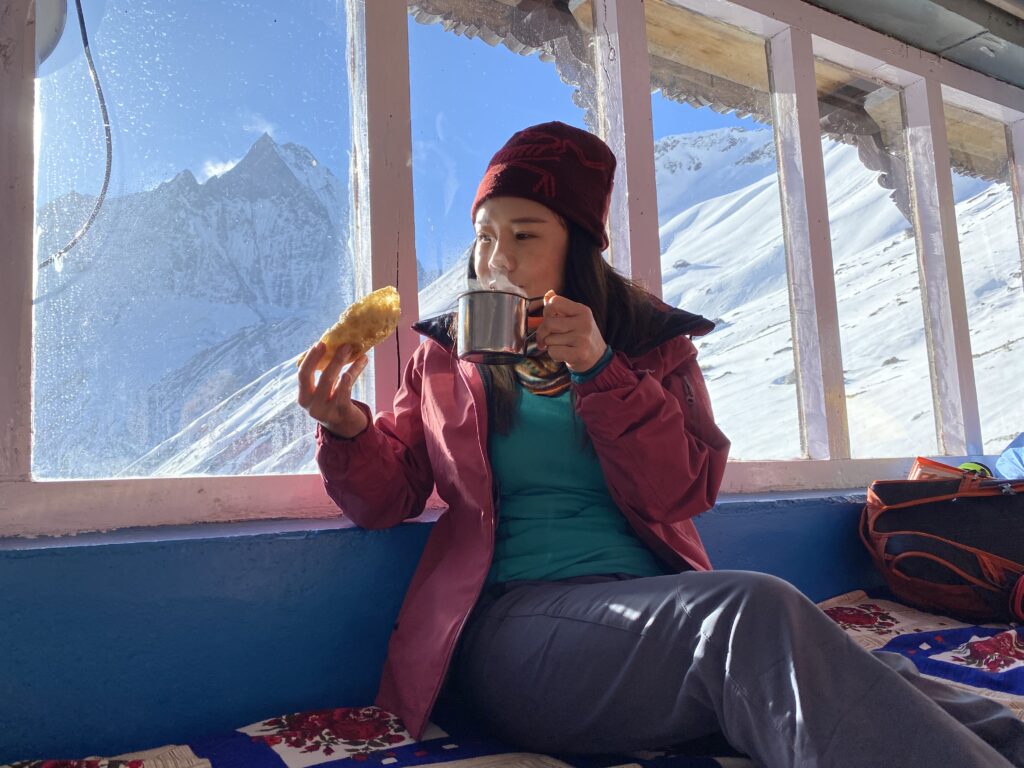
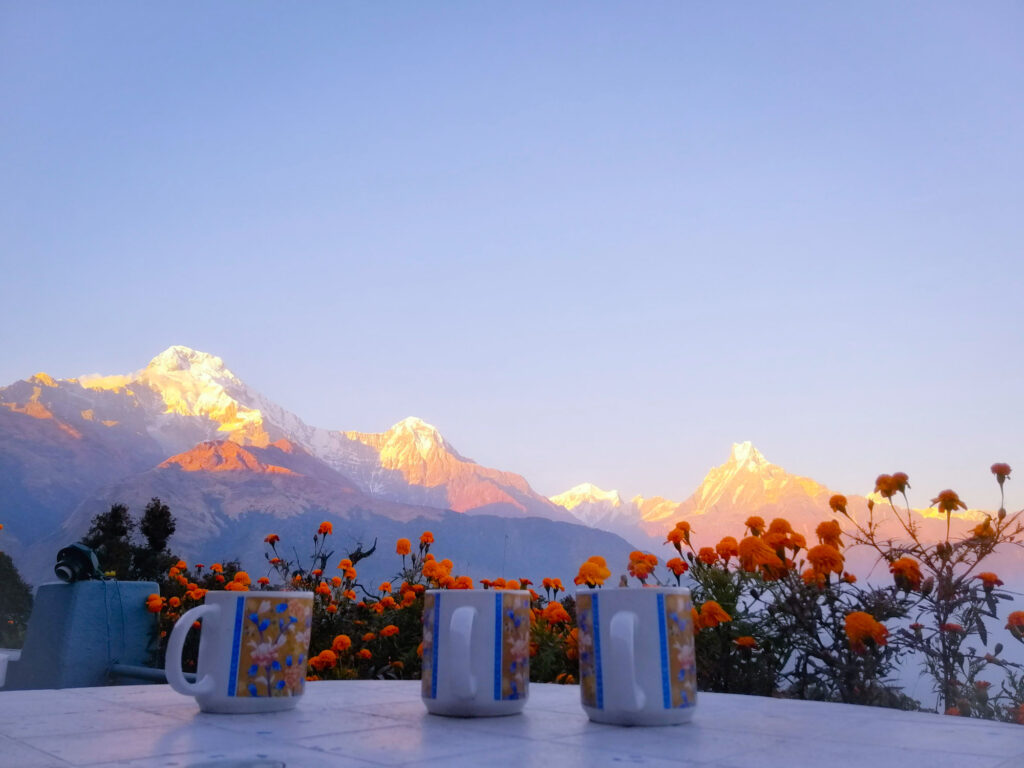
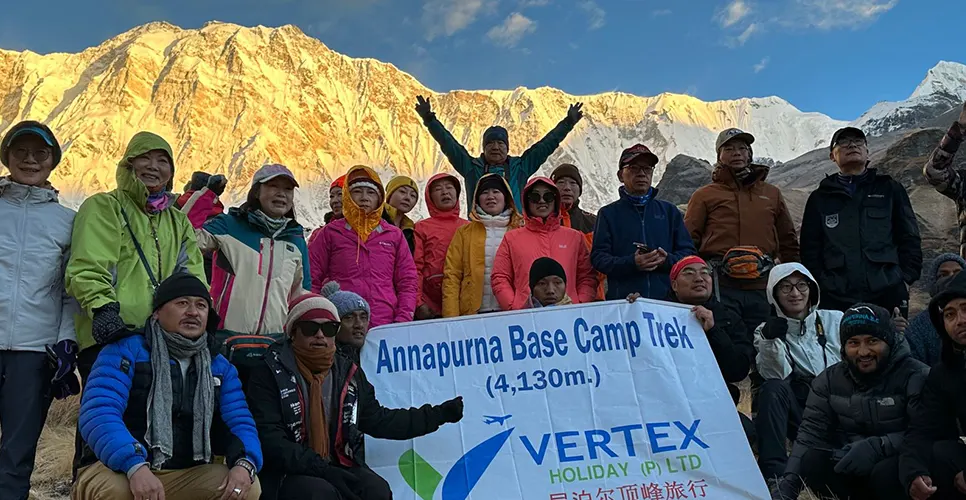
View from Annaprna Base Camp lodge
View from Annapurna Base Camp Lodge

Visitors can enjoy the adventure of the Short Annapurna Base Camp trek within a week or more. The walk leads to ups and downhill through lovely rhododendrons and pines forest, exploring mountain traditional farm villages. The highest spot of the trek is walking to Annapurna Base Camp at 4,130 m /13,550 ft. Starts with short drives from Pokhara, and vice-versa on concluding the treks.

02: Mardi Himal Trek.

Mardi Himal trek, also known as the ‘Other Sanctuary by early pioneers and explorers, due to its close distances. From the original Annapurna Sanctuary, bounded by a deep gorge of the Modi River and high cliff walls. The adventure takes you to Mardi Viewpoint, the highest spot of the trek at 4,500 m/ 14,850 feet.

The Mardi Himal trek is often known as off-the-beaten-tracks, but in present from past few decades, it has become more popular among trekkers. A scenic walk on the high ridges through a lovely forest of rhododendrons and pine trees.

Mardi Himal Trek of 7 days or more as per the itinerary chosen from respected local trekking agencies. Mardi Himal the Other Sanctuary Trek includes drives both ways from Pokhara to Pokhara.

03: Ghorepani Poon Hill Trek.

Ghorepani and Poon Hill trek are the most popular and favored country walks around the southern hills of the Annapurna Himalayan ranges. Due to its charming scenery of surrounding landscapes in the backdrops of towering Dhaulagiri and Annapurna Himalayas.

The Ghorepani  Poon Hill trek is one of the shortest treks around the Annapurna region. As well as with various options of routes to start and end the trekking. But the shortest itinerary of only a minimum of 3-4 days or more, as per the itinerary chosen. The Ghorepani and Poon Hill Trek takes you around the high scenic hills to reach Ghorepani Mountain Village. Located amidst beautiful rhododendrons forest surroundings at the base of Poon Hill.
The next early morning hike of an hour takes you to the top of Poon Hill at 3,210 m/
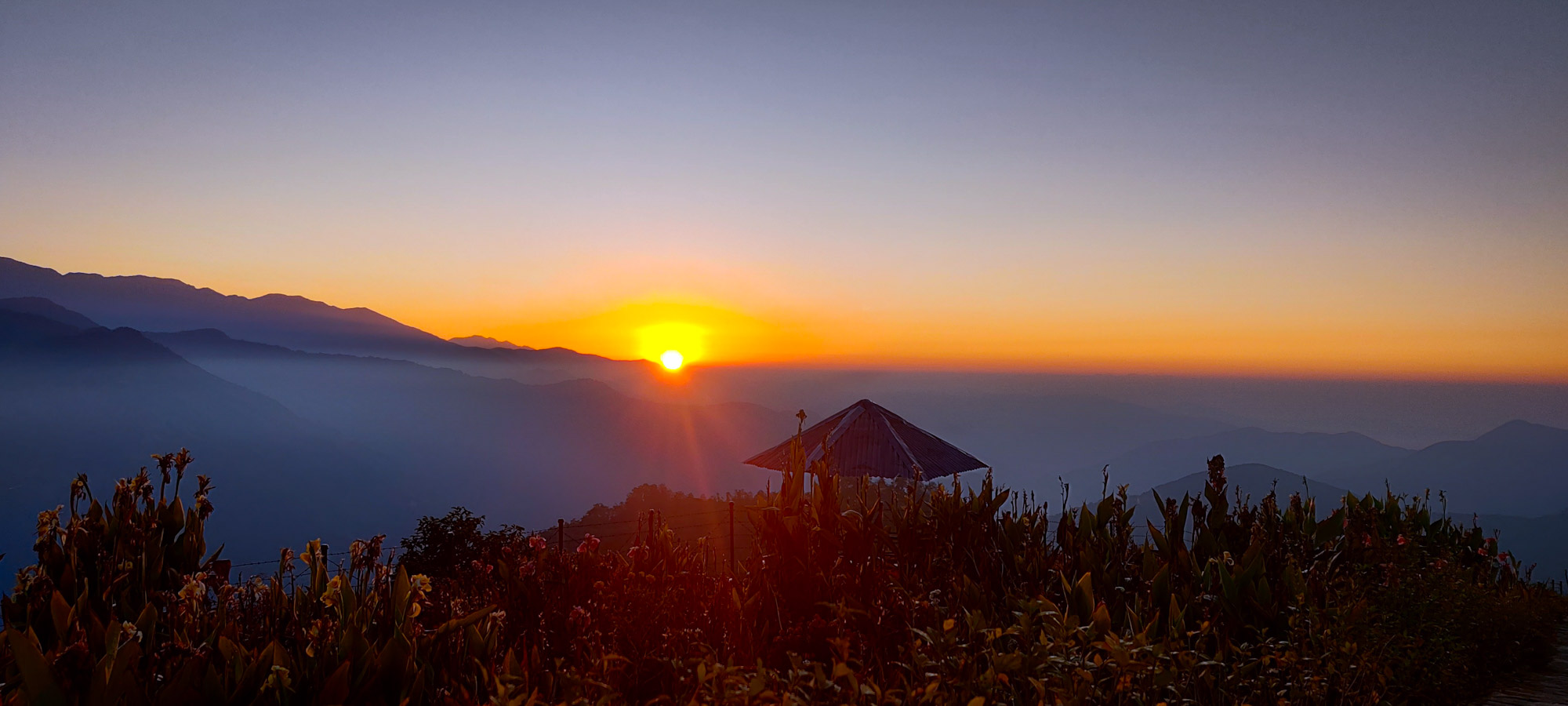
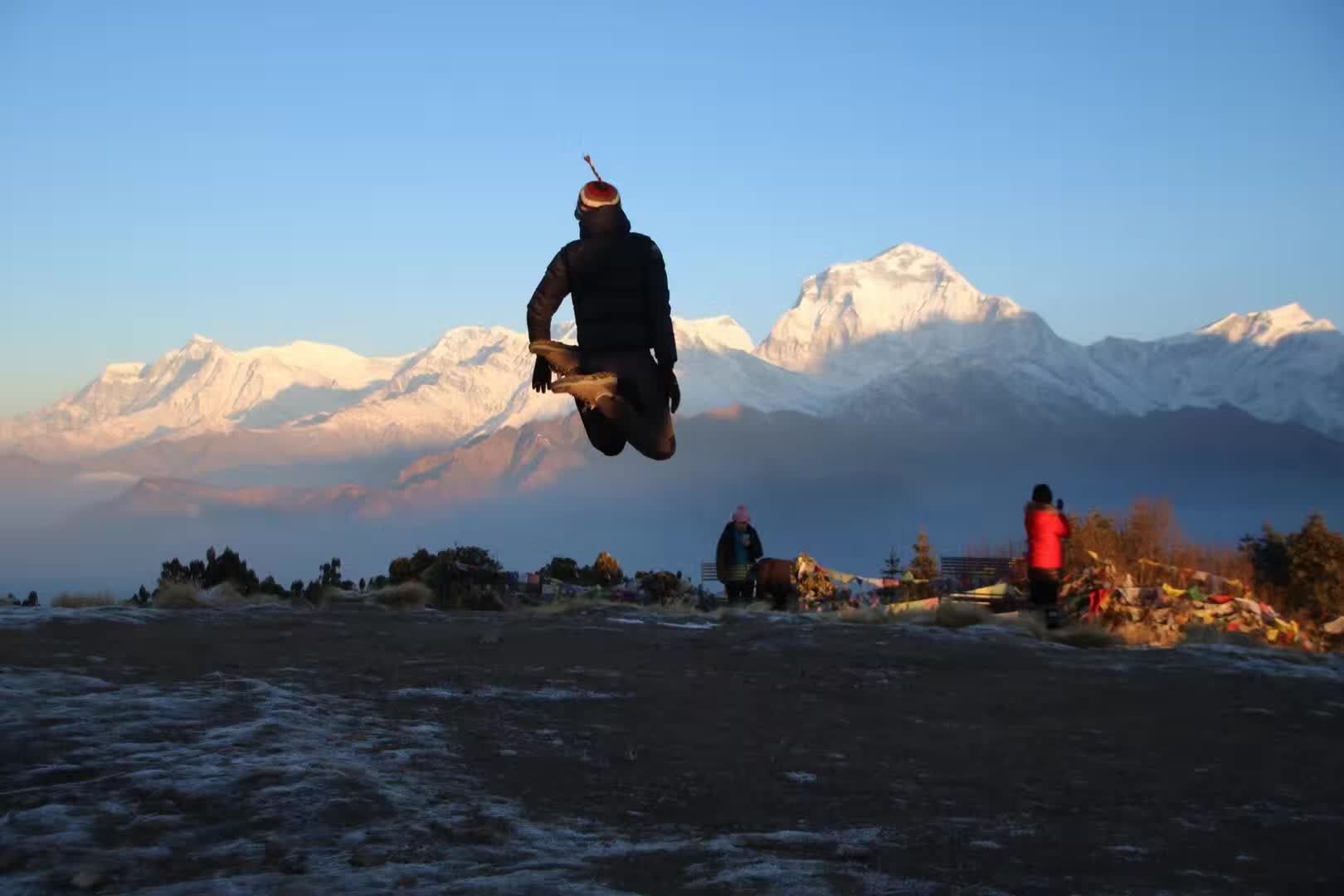
10,531 ft. The highest point of the trekking offers stunning views of sunrise over a chain of Himalayan peaks. The panorama of the Mid-West Himalayas includes the world’s three highest peaks Mt. Dhaulagiri, Mt. Manaslu, and Mt. Annapurna.
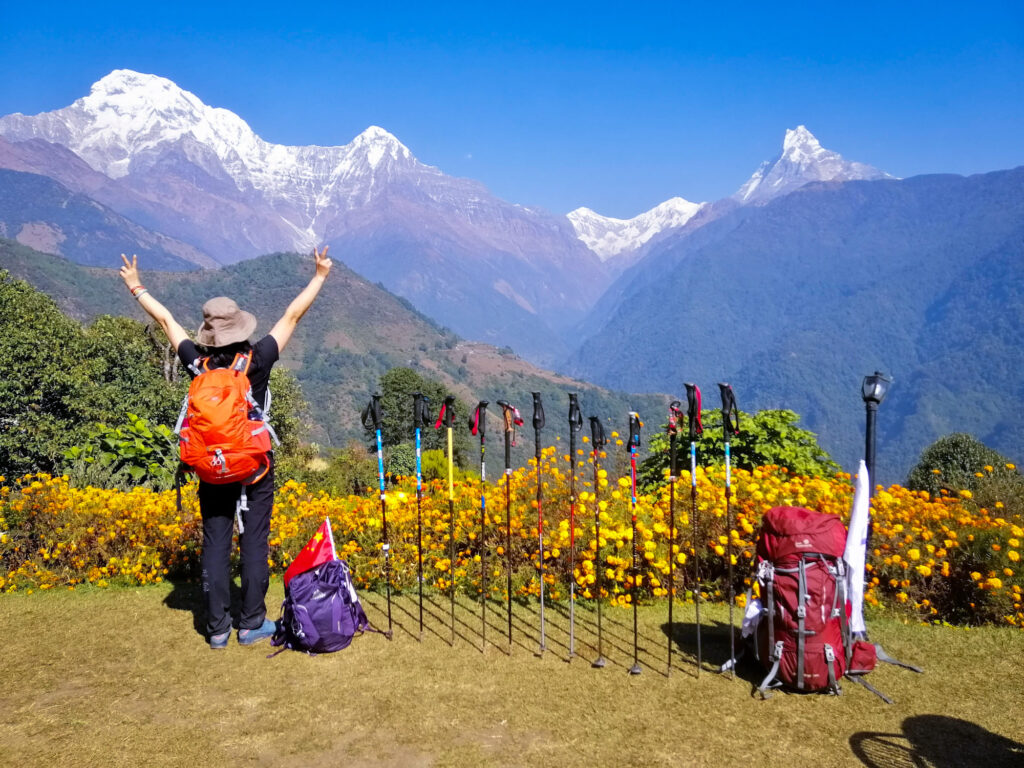
Nepal Tours
Nepal Tours

Includes arrays of snow peaks with majestic Machhapuchare Himal, the famous Fish-Tail Peak, which dominates the southern Annapurna hills and valleys.

04: Annapurna Semi-Circuit Trek.

Annapurna Semi Circuit trek is one of the most popular adventures, the walk follows around the northern massif Annapurna Himalayas.

The journey of more than a week includes rest days in Manang at 3,550 m for acclimatization. Before the big climb to cross over Thorang-La Pass at 5,416 m/
17,769 ft. The highest point of the adventure offers a spectacular panorama of the surrounding towering peaks of Dhaulagiri, Annapurna, and Chulu.

As far as Damodar Himal in the north with Manaslu towards the east horizon, from the pass a long descent. To reach the Mustang area at the holy pilgrimage site of Muktinath, revered as a sacred place with a Hindu Temple. From Muktinath either drive for a few hours or walk to Jomsom Town, located around Kaligandaki River Valley. Jomsom is a big town and headquarters of Mustang district, with a small airport for the short flight to Pokhara.
Annapurna Semi Circuit includes drives from Kathmandu to Dharapani Village at Manang via Bhesishar Town, to start the trek. The ends at Jomsom with a flight to the scenic city of Pokhara.

Everest Region Trek :

01: Everest base camp trek.

The Everest base camp trek is the most popular and favored adventure around the whole Himalayan regions. Where walk takes you to the foot of the world’s highest peak Mt. Everest at base camp. An adventure of 11 to 12 days as per the standard itinerary, includes ample time for rest days. It is important to have extra days at certain heights for acclimatization before reaching Everest Base Camp.

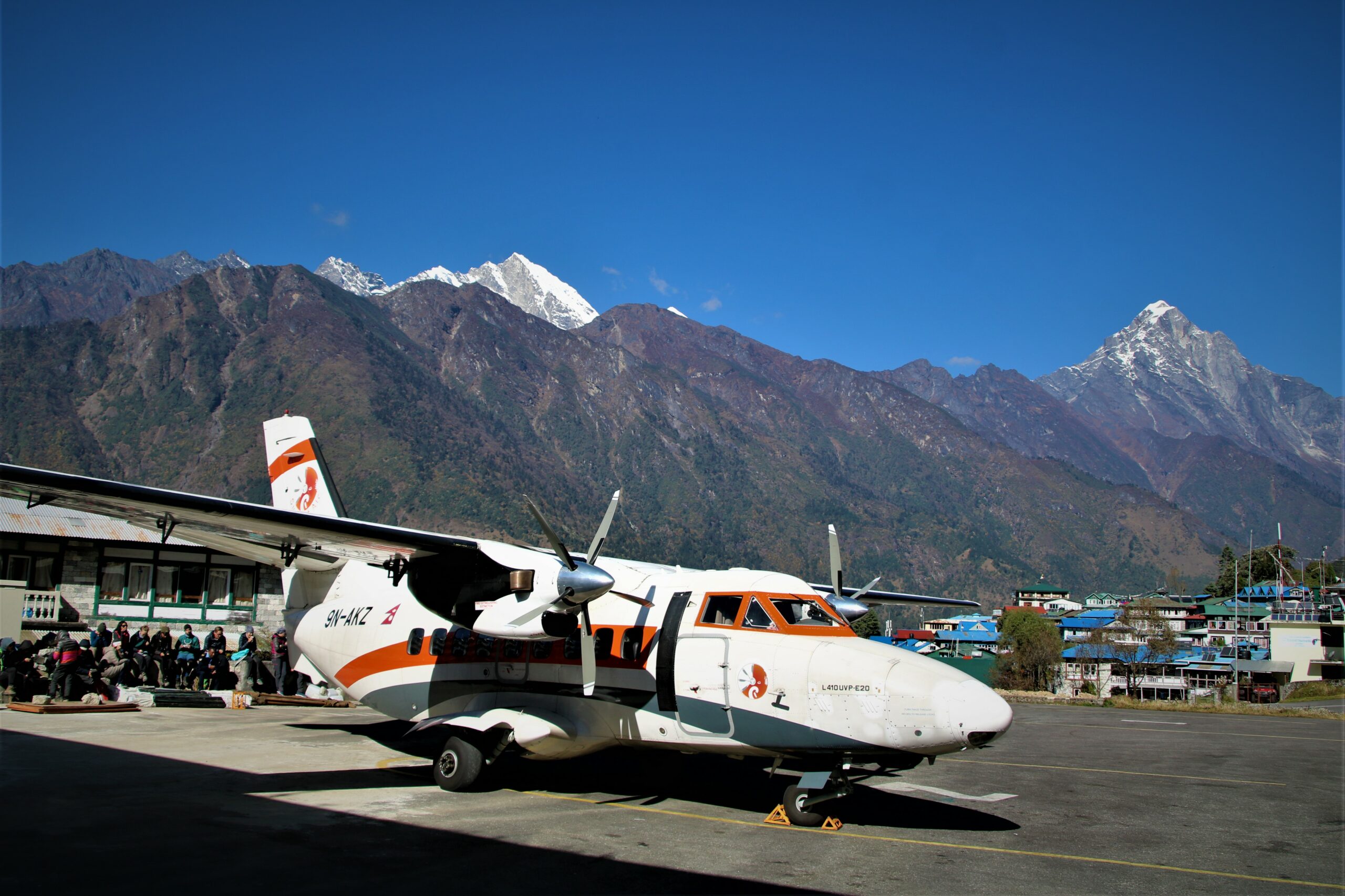
Winter treks in Nepal Everest base camp trek involve a scenic short flight both ways from Kathmandu-Lukla and back to Kathmandu. An exciting walk following through nice traditional Sherpa villages then heading high to the famous Namche Bazaar. The hub of Khumbu Sherpa Villagers, as well as the trekkers, offers various facilities.
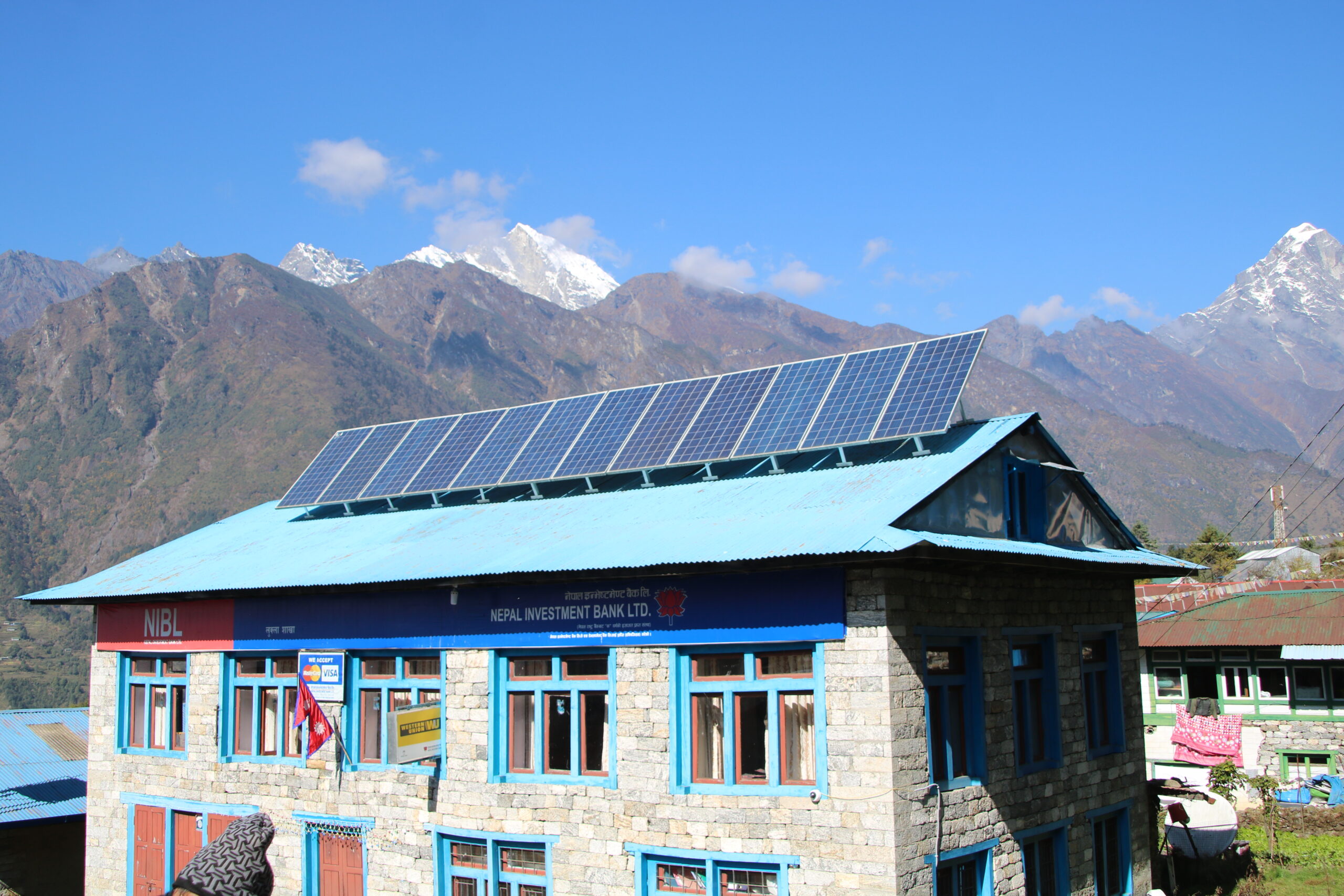
From good lodges, restaurants, shops, and stores with banks, including ATMs, a perfect height for acclimatization day. Spending time in Namche Bazaar the walk follows a higher scenic trail facing the grand vista of Everest, Lhotse, and Ama Dablam.

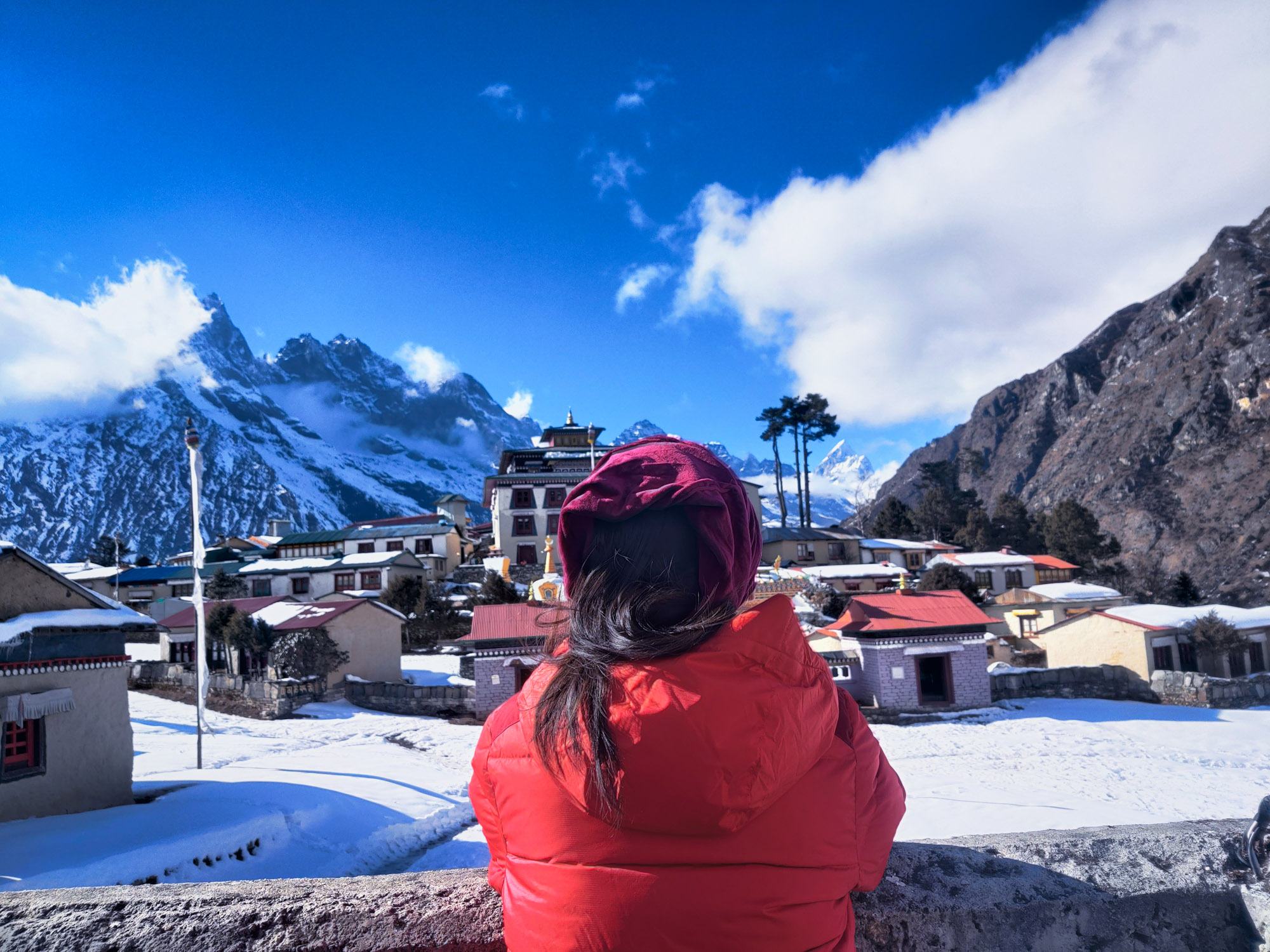
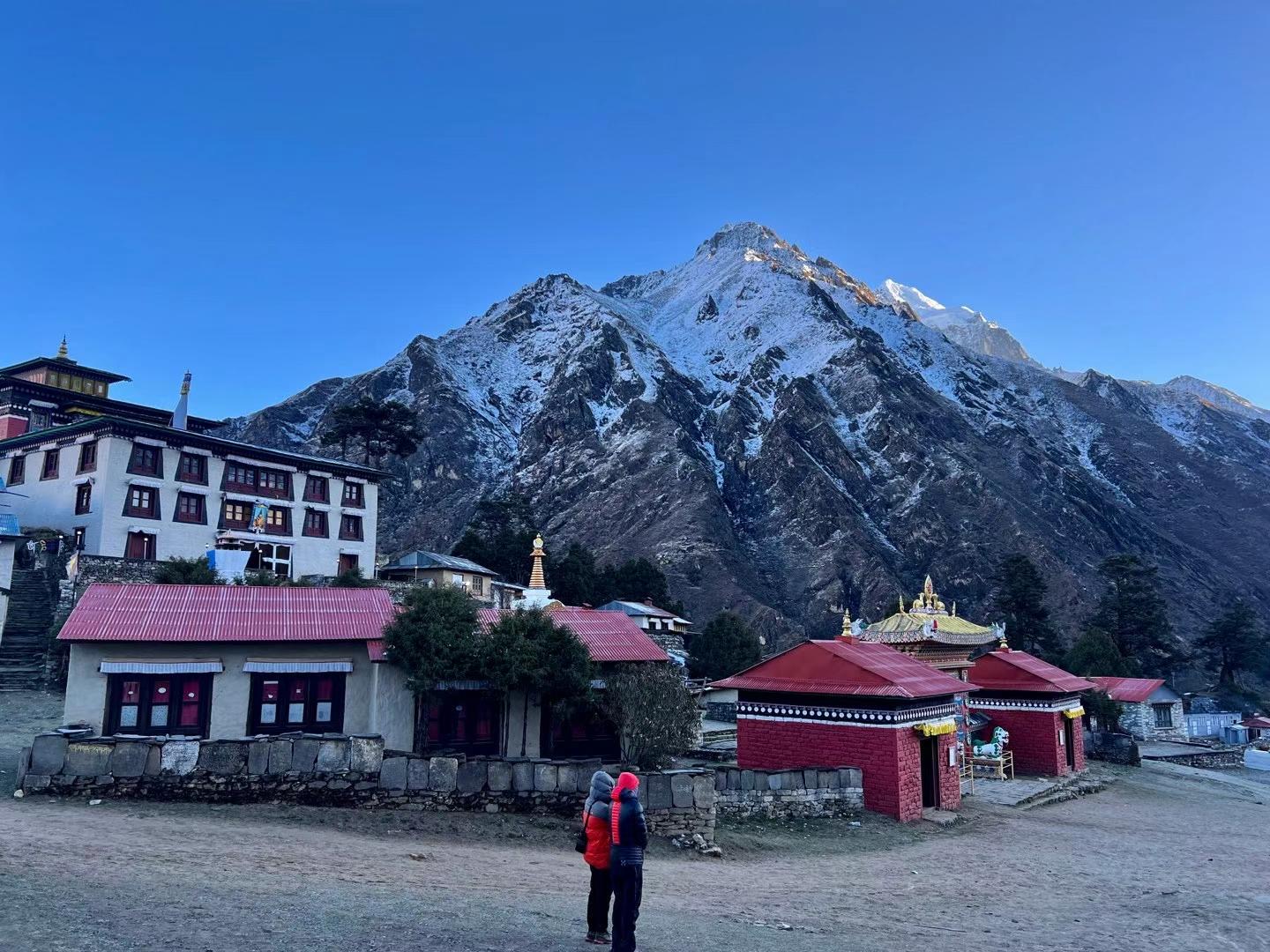
The trail follows uphill through the lovely alpine forest to the beautiful spot of Tengboche and the monastery. Then heading further high, on leaving the green vegetation and trees for sheer mountain wilderness. The walk continues through the Dingboche and Lobuche settlements to reach the Everest base camp.

Everest base camp covered in remorseless fields of moraine, ice, and glaciers at
5,364 m / 17, 598 feet. Standing beneath the towering peaks of Lhotse and Nuptse and massif Khumbu Ice-Fall. After the visit to the Everest base camp trek, an adventure then takes you to the top of Kalapathar the best viewpoints. As you stand on the highest spot of Kalapathar Hill, at 5,643 m /18,514 feet. The most popular and best viewpoints for close views of Mt. Everest with surrounding towering giant snow mountains. After a great experience down to Namche Bazaar and back to Lukla for a flight to Kathmandu.

02: Everest Panorama Trek.

Everest Panorama Trek is a short moderate adventure of a week duration. Involves a panoramic flight of half an hour from Kathmandu to Lukla both ways. The trek follows the same route from Everest base camp to Tengboche Monastery at 3,867m/12,687 feet high.
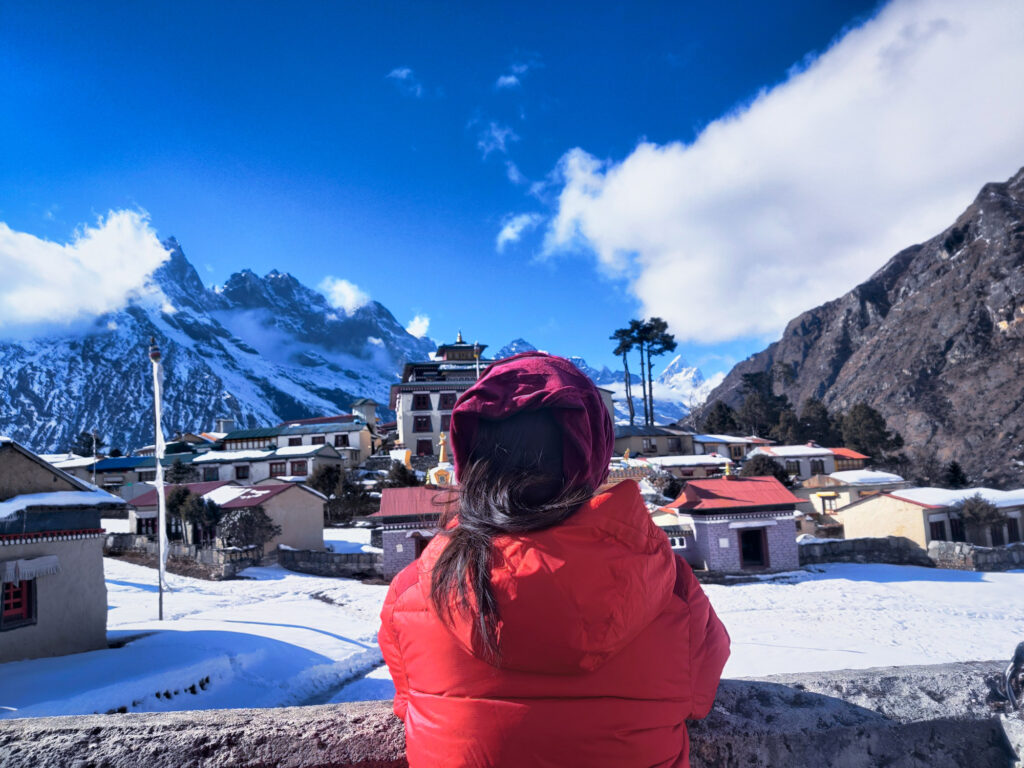
Everest Panorama Trek

winter treks in Nepal An exciting and picturesque spot of Tengboche, located on a small plateau amidst a beautiful forest of rhododendrons, pines, and firs. Great place for a stunning panorama of towering gigantic peaks of Mt. Everest, Lhotse, and Nuptse.Includes magnificent peaks of Ama Dablam, Kangtiga, Thamarsaku, and Kwangde Himal ranges. Tengboche beside its spectacular mountain panorama is also famous for its colorful monastery, and a great Mani Rimdu Festival held annually. From Tengboche back to Lukla follow the downhill trail past Namche Bazaar to reach Lukla. For early morning swift flight to Kathmandu, with grand last panorama of Everest during flights.

03: Pikey Peak Trek.

Pikey peak trek at 4,302 m/14,114 feet high. Located around the district of lower Solu-Khumbu district. The southern hills of the Everest region and home to various mixed tribes of eastern Nepal. The trek to Pikey Viewpoint is also referred to as Pikey Peak trek, a scenic hilltop. One of the best viewpoints around the Himalayas offers more than 360° panorama of the Himalayan peaks with Mt. Everest, Mt. Lhotse, and Mt. Makalu. The views from Pikey ridge top offer stunning sunrise over the chain of snow-capped peaks. From Manaslu, Ganesh, and Langtang Himal towards the west, and Jugal Himal with Gaurishankar and Numbur straight north.
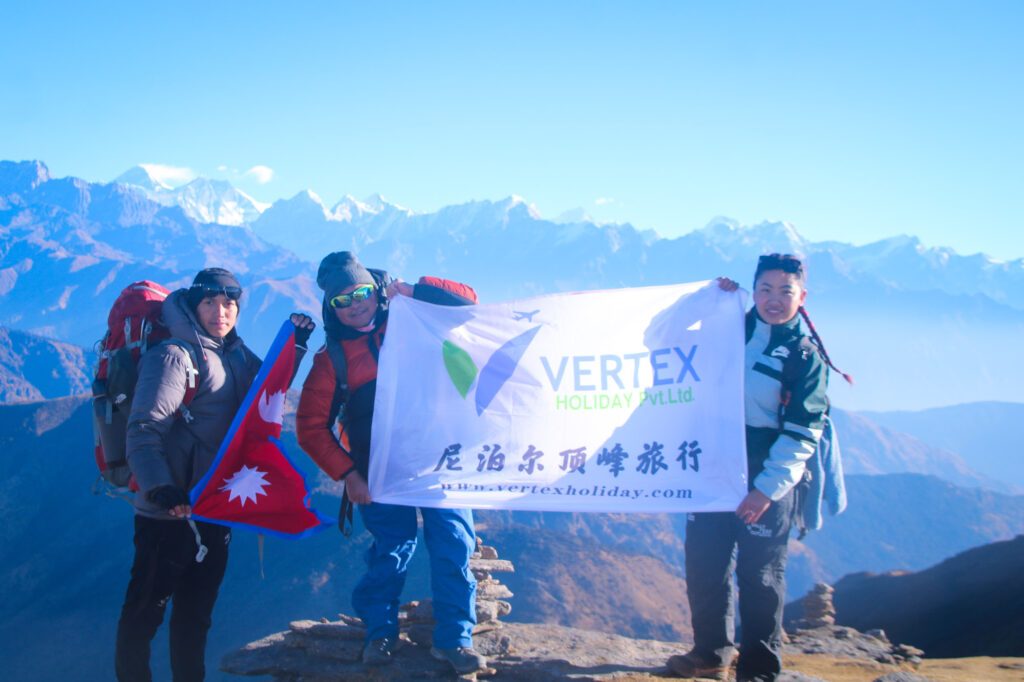
Pikey Peak Trek in Winter

Winter Treks in Nepal pikey peak trek offers Snowcoverd Mountain Views Including Mt. Everest, Lhotse, Nuptse, and Makalu with Kanchenjunga Himal on the far eastern horizon. Pikey Viewpoint Ridge is surrounded by dense forest of tall rhododendrons, oaks, pines, and fir trees.

The Pikey Peak trek was the least visited in the early days. But at present from last few years attracting more trekkers every best season of the year.

Pikey Peak Trek includes an exciting overland journey both ways in the comfort of a 4WD Jeep or similar vehicle.

04: Gokyo Lake & Gokyo Ri Trek.

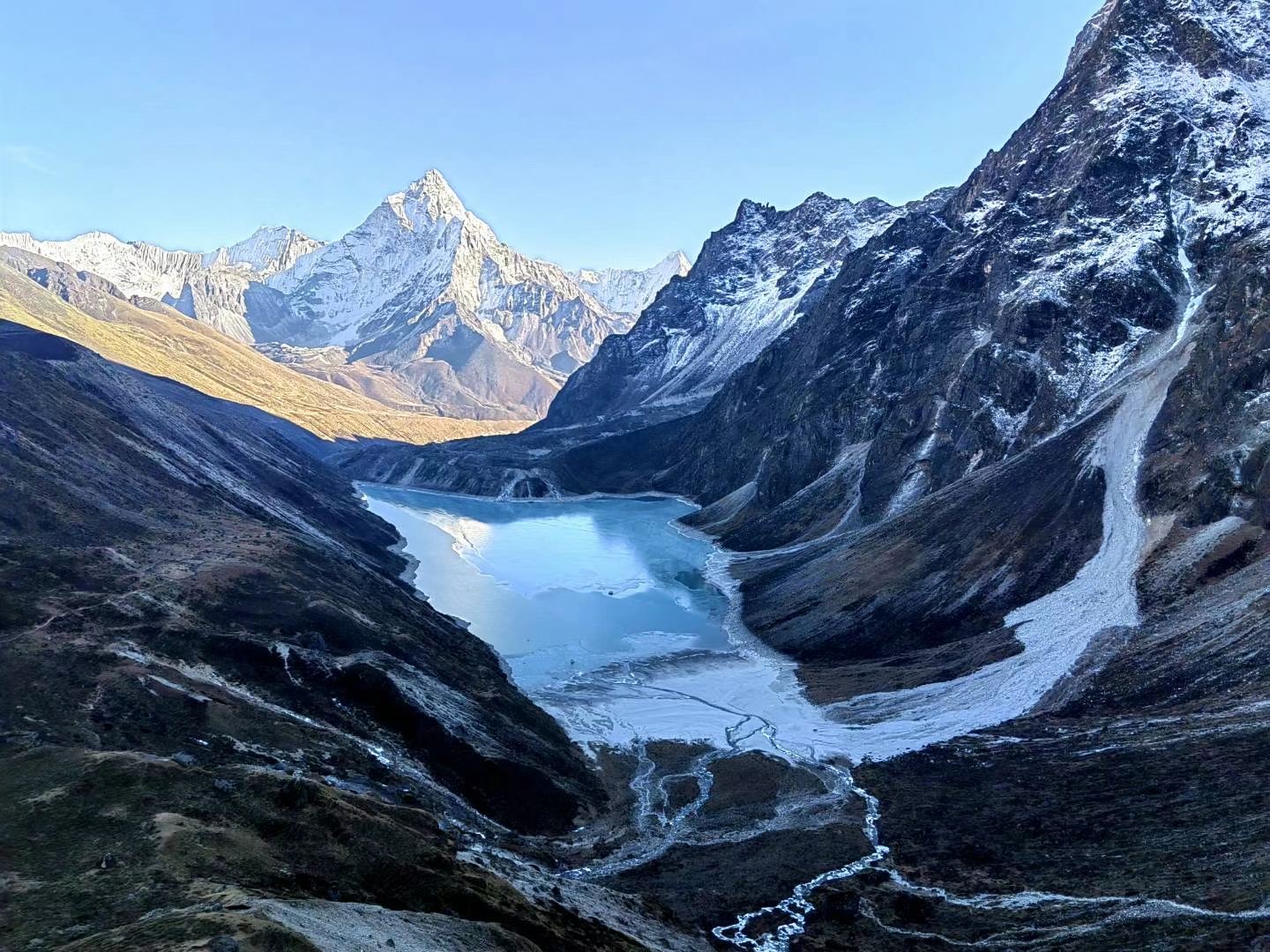
Gokyo Lake & Gokyo Ri Trek is located in one of the picturesque areas around the high Khumbu and Everest regions. The Gokyo Lake & Gokyo Ri Trek of 11 to 12 days, one of the most exciting adventures around the central part of Khumbu. Which is on the midways of the two highest passes of Cho-la and RenjoLa Pass. Gokyo is famous as the valley of lakes, enclosed by towering peaks with mass mountain ranges. Which is also en route to Mt. Cho-Oyu base camp, the world’s 6th highest peak.

Winter trek in Nepal, Gokyo Lake & Gokyo Ri Trek is a beautiful scenery with glacial lakes, it is also famous for its viewpoints. A high scenic ridge Gokyo-Ri 5,357 m/17, 575 feet high, offers a striking sunrise with a panorama of the world’s four highest peaks.

Winter Treks In Nepal Gokyo Lake & Gokyo Ri Trek offers amazing views of Mt. Everest, Mt. Lhotse, and Mt. Makalu with Mt. Cho Oyu, with an array of snow peaks. As well as a panorama of the Gokyo Valley and the lakes with Ngozumpa the longest glaciers in Nepal Himalayas.

Winter Treks in Nepal After an enjoyable moment at Gokyo Valley, enjoy the walk back to Namche Bazaar and down to Lukla.

Langtang Region Trek:

View from Annaprna Base Camp lodge
View from Annapurna Base Camp Lodge

01: Langtang Valley Trek.

Langtang Valley Trek is the third most popular adventure destination around Nepal Himalayas. An enjoyable and exciting trek towards Langtang Valley at the highest spot Kyanjin Gompa. The last lovely settlements and overnight stops for the trekkers at 3,870 m /12,697 feet high. The valley is surrounded by massif mountain ranges of Langtang Himal, the closest mountains to Kathmandu city.

Winter Treks in Nepal Langtang Valley is a short trek of a week duration and includes drives both ways from Kathmandu to Syabrubesi Village. The walk leads through a lovely forest of rhododendrons and pines with some bamboo. As the trek continues reaching the beautiful Langtang Valley above the tree lines. At Kyanjin Gompa have an extra day for an exciting activities hike to the top of Tserko or Kyanjin-Ri.

These two viewpoints Kyanjin-Ri at 4,773 m/15, 655 feet, and Tserko-Ri at 5,033 m/16,500 ft. Both scenic ridges offer a breathtaking panorama of the whole Langtang Himal ranges, as far as Jugal Himal towards the east.
After an enjoyable and exciting at Langtang Valley and Kyanjin Gompa, return journey on the same route to Syabrubesi Village.

02: Langtang Valley and Gosainkunda Trek.

Langtang Valley and Gosainkunda Trek is a combination of the best two scenic areas of the Langtang Himal range. Located in the district of Rasuwa and within Nepal’s first national park around the Himalayan regions. An enjoyable and exciting scenic adventure of moderate grade with a slight touch of altitude gain.

The first part of the trek takes you through lovely dense woodland of tall rhododendrons and pine trees. Then reaching at Kyanjin Gompa a moderate-sized settlement amidst picturesque Lang Valley. A great place for an extra day of hike to high Kyanjin-Ri or Tserko-Ri offers incredible mountain panorama.

Includes all of Langtang and the Central Himalayan range of peaks as far as mountains across the border in Tibet. Also a good climb for acclimatization before heading towards the Gosainkunda area, which is higher than Kyanjin Gompa and Langtang Valley. The next part of the walk leads northeast around the high ridges of Langtang Himal. The walk with stunning views of Manaslu, Ganesh, and Langtang Himal as well as far towards Annapurna Himalayas. The climb leads you to a serene glacial pond of Gosainkunda at 4,381 m / 14,375 feet high.

The Gosainkunda is regarded as the holiest site for Hindu followers, where once a year a religious fair is held. Hindu pilgrims visit for worship, and a prayer as well as a bath in the holy icy pond of Gosainkunda. After visiting both exciting and scenic areas of Langtang Himal return walk downhill to Dhunche. The headquarters town of Rasuwa district and entrance to Langtang National Park. From Dhunche an interesting drive to Kathmandu, after a mesmerizing adventure around Langtang Valley and Gosainkunda Trekking.

This Langtang Valley and Gosainkunda Trek covers 14 to 16 days, one of the best trekking during winter as well as around all seasons.

Why Winter Treks In Nepal:

The 10 Best Winter Treks in Nepal, allows trekkers to enjoy more of the lovely scenery with pleasant trekking. The busy and peak times are spring and autumn seasons with the main flow of trekkers encountering along the trail. In winter times due to the low seasons of tourists in Nepal and around the Himalayas. Which makes the scenario of trekking much different than in other high main seasons.
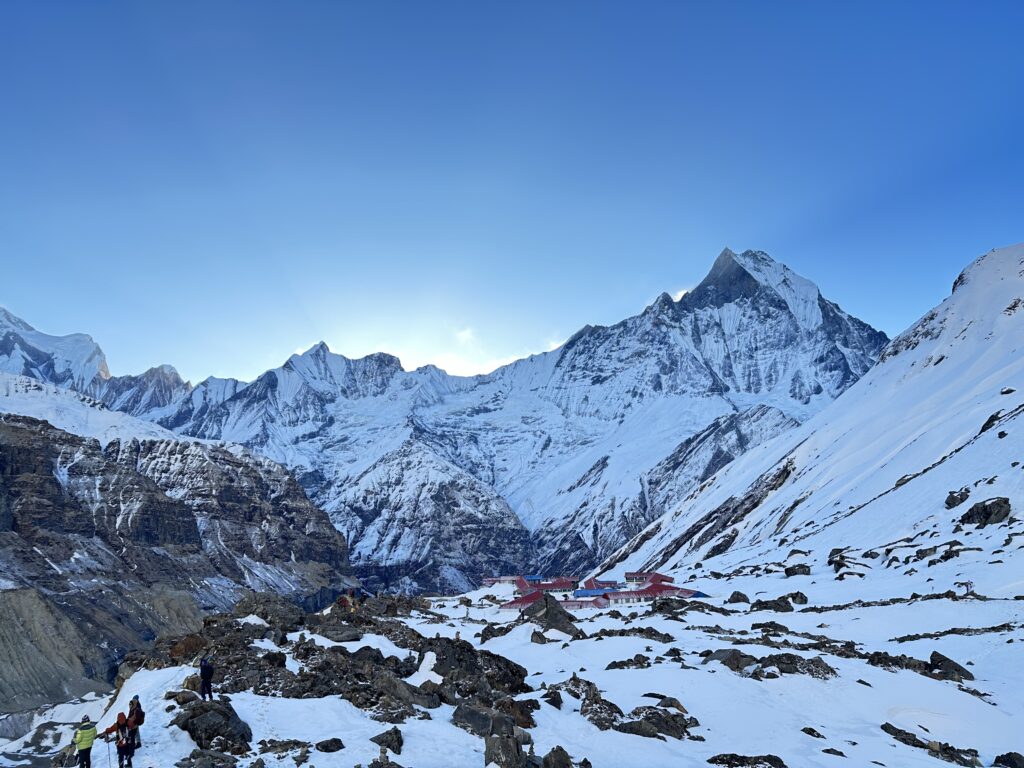
Annapurna base camp view

Winter Treks in Nepal The weather is at its best nice with crystal clear blue sky most days, an enjoyable time. During the winter months of December to February, with less crowd of trekkers, and fewer people to come across. Winter can be the best way to enjoy the adventures around the Nepal Himalayas despite the cold.
However Himalayan region is always cold around all seasons of the year, especially in the morning, late afternoon, and night.

The only difference in winter is as per temperatures and sunlight hours, during winter it is a little more freezing temperatures. During the morning, in the shade, and the night times, days are much shorter as it gets dark by 5:30 p.m. The sunrise is late by 5:30 a.m. or 6 a.m., but an enjoyable season.

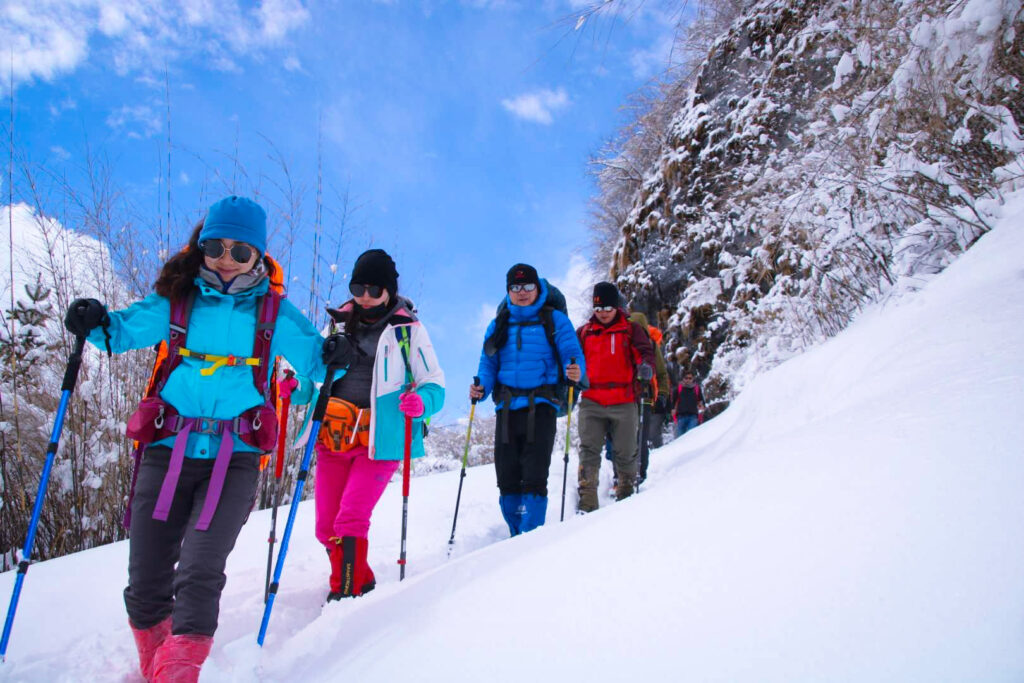
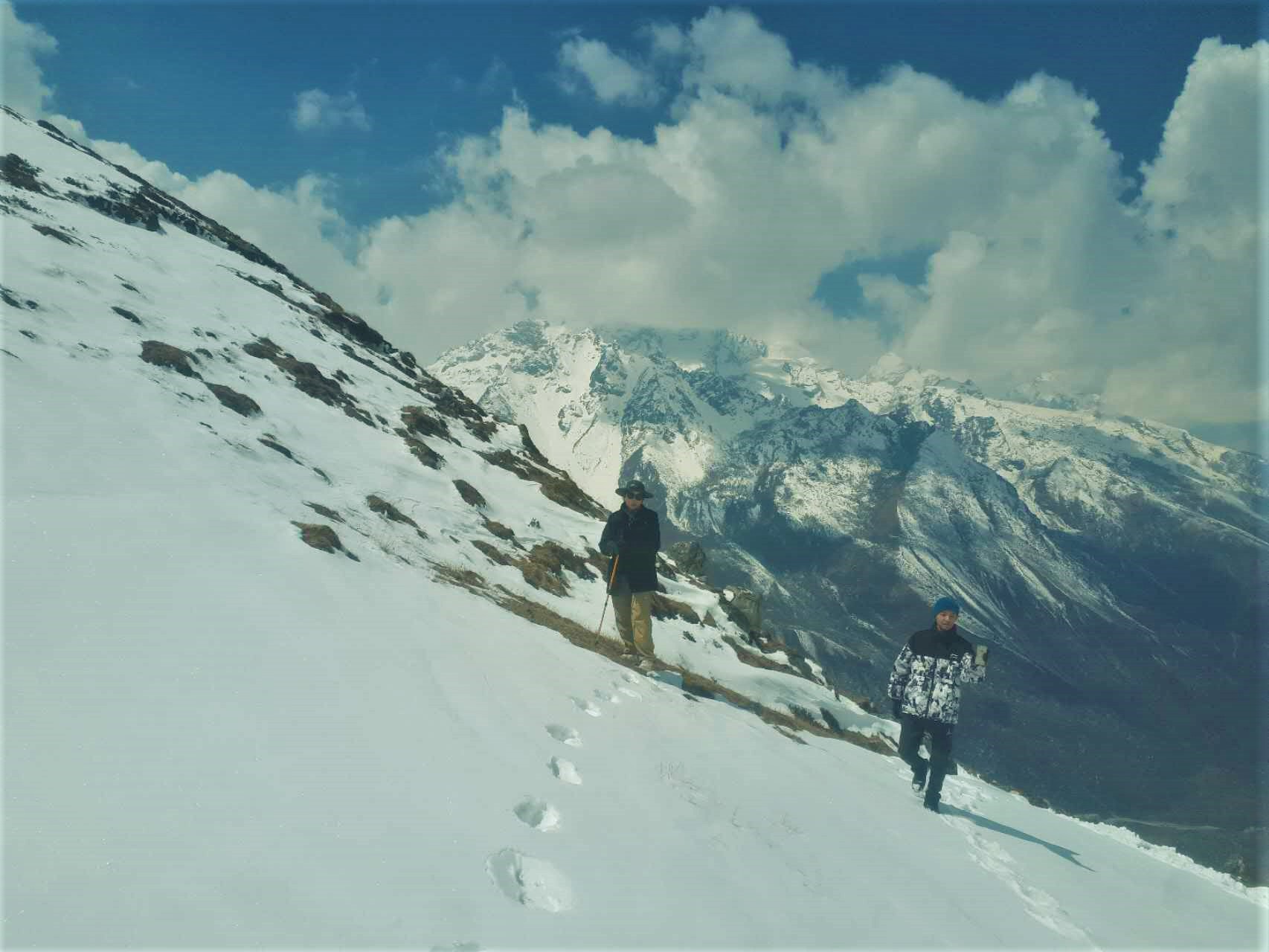
Especially trekkers enjoy snow-covered landscape views during the Winter Treks in Nepal and people who prefer less crowded trekkers enjoy the walks without many visitors to encounter.
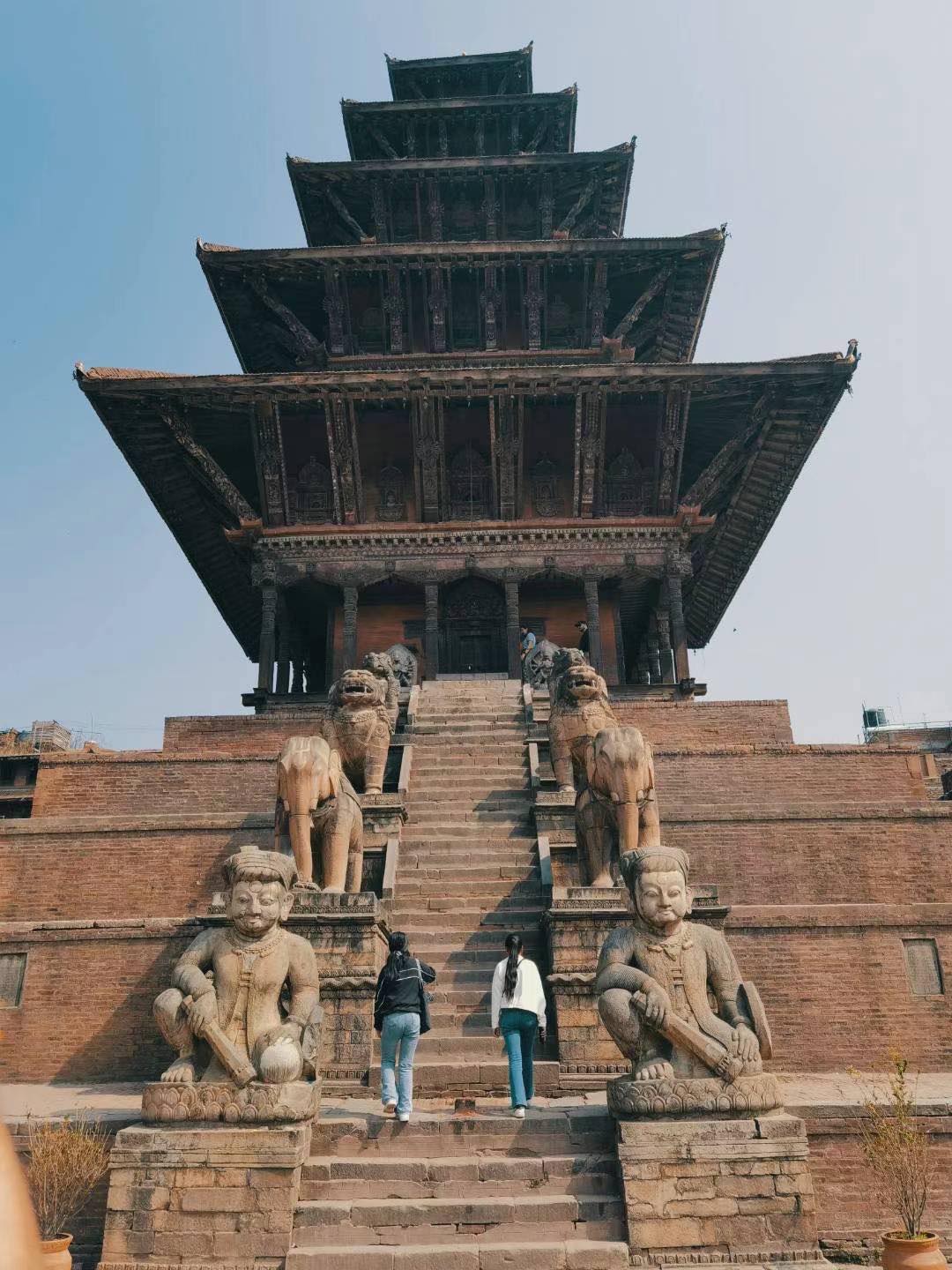
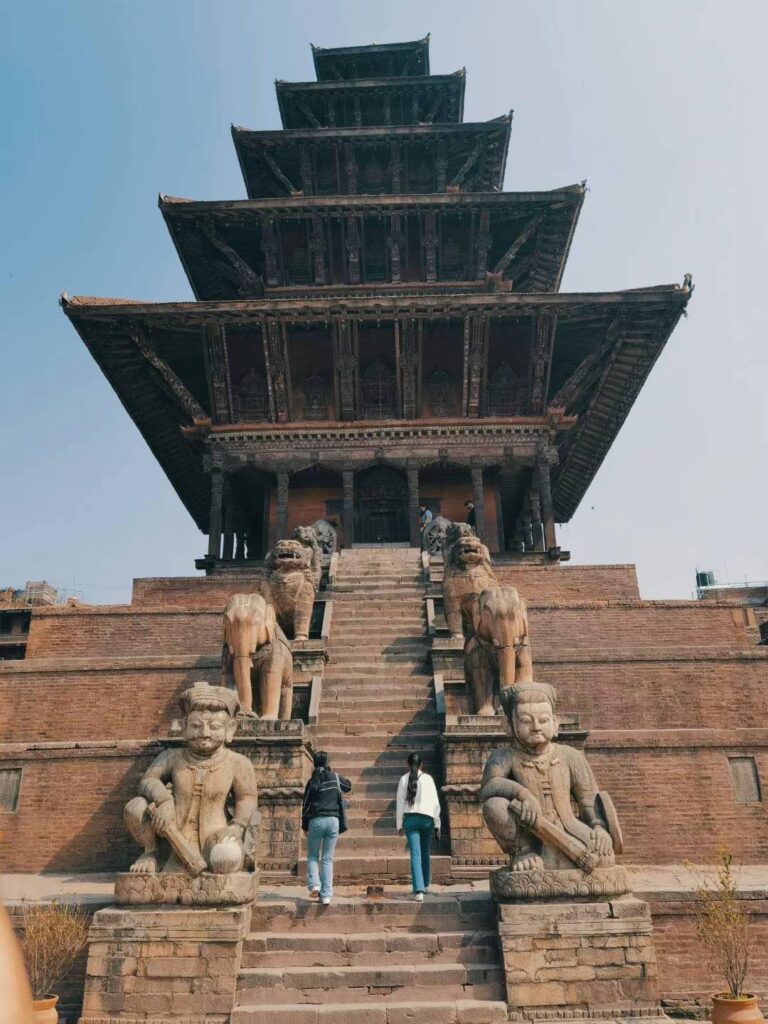
The Nyatapola Temple

‘Nyatapola Temple is the pride and masterpiece landmark of Bhaktapur. The Nyatapola Temple stands in the heart of beautiful old Bhaktapur city, a mere distance from the capital Kathmandu city. Nytapola Temple is one of the charms and beauty and a masterpiece and unique art of architectural craftsmanship. It is a famous landmark of Bhaktapur city and, as well as the country, with magnificent monuments to observe and experience.

 Nytapola Temple
Nyatapola Temple

The Bhaktapur city, also known by its ancient name Bhadgaon, means the city of devotees. At one time, Bhaktapur stood as the capital city of the Kathmandu Valley, although a semi-modern city. But retains its old-time glory of arts, craftsmanship, history, religion, and cultures of bygone days.

Bhaktapur City takes you to the medieval era, and the city itself is a living museum. Around the nooks and corners of Bhaktapur city from narrow alleys to beautiful squares. Visitors come across the shrines, temples, stupas, and lively cultures of the Bhaktapur Newari people.

Nyatapola Temple is the original form of Newari and Nepali architecture with pagoda roofed designs. Which, has flourished from Nepal around all parts of Asia, by the master artist and craftsman called Arniko.
He built the first White Pagoda in Beijing, China during the time of Kublai Khan in 1260 AD. The masterwork of intricate design and Nepali art still exists around the three cities of Kathmandu Valley. Especially, in Bhaktapur city, visitors can enjoy the great works of art, cultures, history, and masterpiece monuments.
Bhaktapur Durbar Square and the royal courtyard are regarded as the best UNESCO Heritage Sites of Nepal. Includes the famous landmark monument the temple of Nytapola dedicated to the Tantric Goddess Sidhhi Lakshmi. The goddess is considered the ancestral deity of former Malla Royals and the deity of the Bhaktapur Newars. Nyatapola Temple,
is located at Taumadhi Square close to the main Bhaktapur famous Durbar Square and the old palace courtyard complex.

The History & Culture Of Nyatapola Temple:

The magnificent Nyatapole is a five-tiered pagoda-roofed temple with pairs of stone images and statues. They each start from the floor amidst Taumadhi Square, with the idol of wrestlers, snow lions, griffins, and garuda. Each image represents the stronger of the strongest, apart from all the goddesses and the deities inside the temple. Symbolize as the supreme and strongest of them all, where visitors can climb up the steps to the main temple.

Nyatapole Temple is the tallest monument in Bhaktapur city and around Nepal. This temple was commissioned by early King Bhupatindra Malla, the construction of which took more than six months to complete. Which was around 1701 to 1702 AD, at 33 meters or 109 feet tall, stands in the heart of Bhaktapur city.

The Bhaktapur at one time stood as a major kingdom within the Kathmandu Valley. Populated by the indigenous Newar tribe, renowned for traditional architects and artisans. The builders of the famous temples, Stupas, monuments, and shrines as well as palaces of Kathmandu.

During the 10th to 16th Century the arts, sculptures, and intricate carvings flourished among the Newar people. Including wood and metal crafts, as well as pottery and paper production to metallurgy. In the last few decades, archaeologists and researchers have been keen and interested in the workmanship of the Nyatapole Temple. It is a great wonder of the crafts and masterpiece architecture of Nytapole Temple during the medieval period.

To Reach Bhaktapur City And Nyatapole Temple:

Bhaktapur the historical name is Bhadgaon, for the local is Khwopa, located east of Kathmandu city and the valley. At 14 km /8.5 miles driving distance takes less than an hour on the main Tibet and Nepal Friendship Highway.
Also called Arniko Highway, the legendary craftsman and artist, was the first Nepali to visit China. Bhaktapur is the smallest city in the country and densely populated surrounded by tiers of rolling green hills. Bhaktapur is at a height of 1,401 m or 4,596 feet high. After a short drive, the route diverts from the main highway heading uphill to enter the city gate of Bhaktapur. Enjoy visiting the masterpiece monuments around the great Durbar Square of Bhaktapur, steeped with historical and religious monuments. Including the palace of 55 windows the Great Golden Gate, after an exciting time walk towards Taumadhi Square.

An interesting short walk around the alley lined with fancy shops and stores then stand beneath the towering Nytapole Temple. Next to the Nyatapole Temple stands Bhairavnath Temple, the Taumadhi small square is full of life and human activities.

Besides Nyatapole Temple Other Places Of Interest Around Bhaktapur:

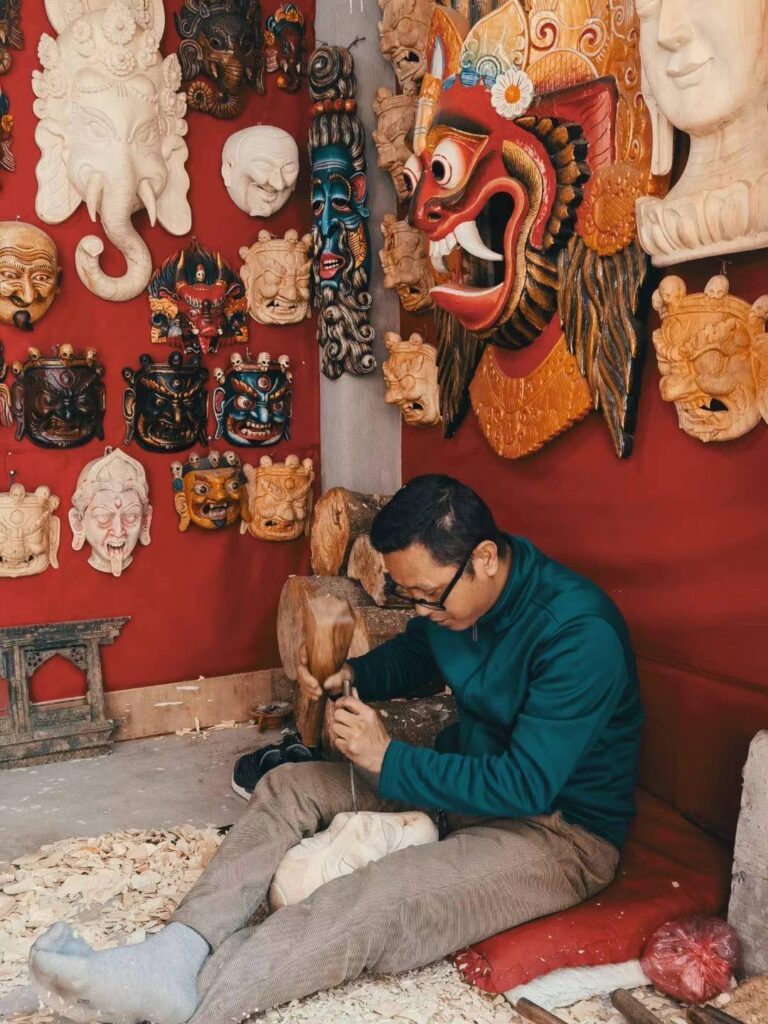
Hnadicraft Around Bhaktapur
Handicraft Around Bhaktapur

Places to visit in Bhaktapur:

  • Bhaktapur Durbar Square:
  • Bhaktapur Nyatapola Temple
  • The Bhaktapur National Art Gallery
  • Dattatraya Square with famous peacock window
  • Pottery Square and market
  • Old Changunarayan Temple.
  • Picturesque Nagarkot hilltop for views

Bhaktapur Durbar Square:

Bhaktapur Durbar Square is Rich in historical monuments, one of the world’s best Nepal heritage sites reflecting the city’s rich culture, art, and architectural design, it is also the central setting of the city for architectural monuments and arts.
Famous golden gate entrance to the main courtyard of the Palace of 55 windows; the gate is regarded as the world’s most beautiful and richly carved specimen of its kind.

Bhaktapur Nyatapola Temple:

One of the highlights of Bhaktapur and the landmark Nytapola Temple is the 5-story temple 30 meters high, the tallest temple in Kathmandu Valley. It was built by King Bhupatindra Malla in 1708 AD. Each of its five terraces holds a pair of figures, starting from bottom wrestlers, elephants, lions, griffins, and goddesses.

The Bhaktapur National Art Gallery:

Located within Bhaktapur Durbar Square treasures rare paintings and manuscripts with painted covers and illustrations are found in this museum. The gallery contains brass, bronze, stone, and wooden images of the medieval art tradition of Nepal. The gallery is closed on Thursdays and public holidays.

Bhairavnath Temple of Bhaktapur:

Originally built as a one-story pagoda during King Jagat Jyoti Malla’s period, later changed into a three-story temple in 1718 A.D. by King Bhupatindra Malla, this temple now stands for its artistic grandeur. Bhairavnath temple is dedicated to Lord Bhairab – the god of Terror.

Dattatraya Temple:

Built-in 1427 AD, the temple is said to have been built from a single tree visit a monastery having exquisitely carved peacock windows located near the temple area.

Pottery Square and market:

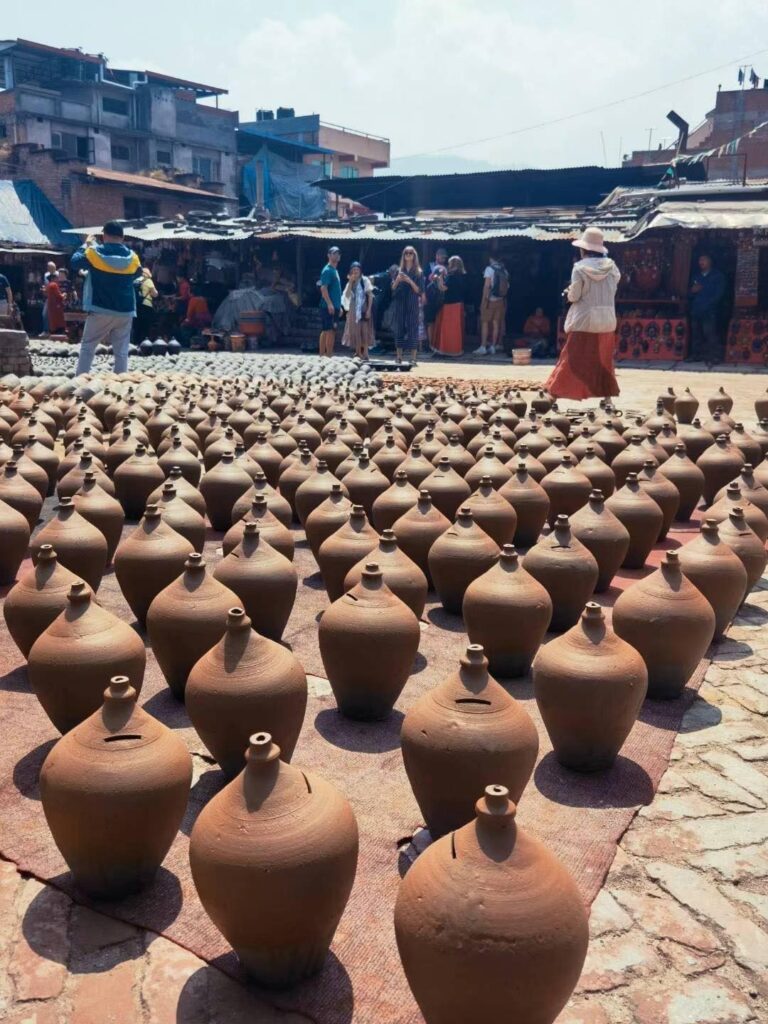
Pottery Square
Pottery Square

Around Bhaktapur, there are two main pottery areas, the first pottery square is at Suryamadhi east of Dattatraya Temple Square, which is the oldest pottery square, another pottery place leads south of the Nyatapola square at Talako’s Potter’s Square walking along interesting markets side streets the pottery is in full blaze, the wide open brick courtyard with a mix of small grey and brownish red clay pots, where each pot is examined by hand before being turned to face the sun at a new angle or dipped into a bucket of colored water. Observe the craftsman on wheels shaping the clay in a finely tuned system of human pottery rotation from past centuries of old tradition.
Top Seven Short Trekking Destination in Nepal

The top seven short trekking destinations in Nepal allow all types of travelers to experience the Himalayan scenic country. It is an ideal and perfect country walk in harmony with pristine natural surroundings within the backdrops of stunning snow-mountain ranges.

As well as trekkers can soak into local impressive cultures, observing rural Nepali’s farm life and activities.

The top short Seven Trekking Destinations in Nepal is especially for travelers with limited holidays. But with great interest in short duration of hiking on the foothills of the Himalayas. It is an enjoyable and exciting walk following the country trail from one lovely village to another nice settlement. In and around the Nepal Himalayas, there are more than hundreds of scenic exotic destinations. Vertex Holidays has chosen the best seven trekking regions where trekkers can enjoy and experience the local cultures. Being in the close shade of the spectacular views of the Himalayas and its dramatic landscapes with towering snow-capped mountain ranges.

The top seven short trekking destinations are an enjoyable moderate adventure. Trekkers can enjoy the walks without the problem of catching HAS or High Altitude Sickness.

The best, Top Seven Short Trekking Destinations are around the Mid-West and Mid-Eastern Nepal Himalayas. Most of the treks involve exciting drives both ways, including short scenic flights as well.

The top seven short trekking are for all age groups, including families with young kids and elderly folks. It will be the best for school and college groups of students to experience a good knowledge. Experience the country’s beautiful geographical landscapes, exotic flora, and fauna, including the ancient cultures.

The Top Seven Short Trekking Routes:

01:The Ghorepani Poon Hill Trek:

Ghorepani Poon Hill Trek

Trek Short Profile:
Mode of Trekking: In the best available Tea-House and Lodges.
Trekking Grade: Moderate with Ups and Downhill walks.
Highest point: On top Poon Hill 3,210 m/10, 531 feet.
Areas of Trekking: Nepal Mid-West, Gandaki Zone, Annapurna Himalayas.
Start and Ending Point: Thirkhedhunga to Ghandruk Village.
Trekking Duration: 02 Nights and 03 Days with drives from Pokhara to Pokhara.

The Ghorepani Poon Hill Trek is one of the most famous and popular short trekking destinations around the Nepal Himalayas.

It is located in Mid-West Nepal, around the high green hills of the massif Annapurna Himalayan range of peaks.
A moderate trek of steep ups and downhill, an adventure of a short duration of 3 to 4 days walks. The trek begins from scenic Pokhara city, a renowned tourist destination, blessed with natural beauty mountains, and lakes.
The Ghorepani and Poon Hill trek follows the ancient Trans Himalayan Salt Trade of Nepal and Tibet. Extend towards Upper Mustang, beyond Ghorepani, where mules and horses laden with goods passed through Ghorepani. Hence the name Ghorepani, the right spot for watering the thirsty horses and mules.

top seven short trekking Ghorepani is a moderate-sized village amidst a beautiful forest of pine and rhododendron trees. Ghorepani’s main charm and attraction is the scenic Poon Hill at 3,210 m /10, 531 feet.

The highest point of this short trek, Ghorepani is 2,885 m high, located beneath Poon Hill. An early morning climb of an hour or more to Poon Hill to catch the first rays of sunrise. As it reflects on a 360° wide panorama, of the world’s three highest mountain ranges. Mt. Dhaulagiri, Mt. Manaslu, and Mt. Annapurna include arrays of peaks with majestic Machhapuchare Himal the famous Fishtail peak.

The charm and beauty of Ghorepani and Poon Hill Trek is its lush rhododendrons forest. Ghorepani is listed as the world’s natural rhododendrons garden, which blooms in springtime from March till May. Ghorepani and Poon Hill Trek is a small circuit of a few day’s treks to and from beautiful Pokhara city.

This moderate-grade short adventure, suitable for all travelers and age groups, can be enjoyed during all seasons. Except for the wet monsoon time of mid-June to August, best in spring, autumn, and winter seasons.

02: Short Annapurna Base Camp Trek:

Short Annapurna Base Camp Trek

Mode of Trekking: In the best available Tea-House and Lodges.
Trekking Grade: Moderate and Adventurous.
Highest point: At Annapurna Base Camp 4,130 meters or 13,550 feet.
Areas of Trekking: Nepal Mid-West, Gandaki Zone, Annapurna Himalayas.
Start and Ending Point: Ghandruk to Chomrong ends at Jhinu Village.
Trekking Duration: 07 Nights and 08 Days with drives from Pokhara to Pokhara.

Short Annapurna Base Camp Trekking is different than other 8,000 meters, the world’s highest mountain base camps. It is due to its proximity to the nearest motorable roadhead, which makes the treks shorter and more enjoyable.

The remarkable feature of the Annapurna Base Camp is following the Modi River, right up to its glacial source. Annapurna Base Camp is an adventure of a week or more, depending upon the itinerary days. But it is one of the best adventures, where all types of people can enjoy and experience, being right on the foot of the world’s tenth highest peak.

Annapurna Base Camp stands in the heart of the renowned Annapurna Sanctuary within amphitheaters of towering snow-capped peaks. Most people are unaware that Mt. Annapurna-I is 8,091 m/26,545 feet high and the world’s 10th highest peak. The first ascent was on June 03rd, 1950, by the French Expedition, three years before the conquest of Mt. Everest in 1953.

The history of mountaineering makes Annapurna Base Camp special and unique, and the trek is much easier and shorter. Annapurna Base Camp is one of the most favorable and enjoyable adventures around the Himalayas.
It is the only base camp trek without worries of getting altitude sickness. Which is the only base camp where trekkers can find the comfort of a mountain lodge. Trekkers can enjoy overnights in a cozy room with fantastic views of towering snow-capped mountain ranges, along with good food.

Annapurna base camp is at 4,130 meters or 13,550 feet high, the trek is for all seasons of the year. Except for the wet monsoon times of mid-June to August, the best seasons are spring and autumn.
03: Mardi Himal Trek:

Mardi Himal Trek
Mardi Himal Trek

Mode of Trekking: In the best available Tea-House and Lodges.
Trekking Grade: Moderate to Adventurous with a touch of altitude.
Highest point: On top of Mardi Viewpoint Hill at 4,500 m/14,850 feet.
Areas of Trekking: Nepal Mid-West, Gandaki Zone, Annapurna Himalayas.
Start and Ending Point: Dhampus to Siding village with the drive to Pokhara.
Trekking Duration: 06 Nights and 07 Days with drives from Pokhara to Pokhara.

Mardi Himal Trek, the area is also known as the Other Sanctuary. It is close towards the main Annapurna Sanctuary separated by the deep gorge of the Modi River. That flows between the high ridges and rocky wall of Mardi Himal and Annapurna Sanctuary.

The Mardi Himal route in the early days, was unknown to many trekkers, but over the last few decades. Mardi Himal has become one of the most popular adventure destinations due to its proximity. From the motorable road, trekkers can drive for a few hours to reach the starting point of the trek.

This wonderful adventure takes about a week to complete the whole trek from the beautiful city of Pokhara.
Mardi Himal Trek follows on a high scenic ridge through lovely serene woods of rhododendrons and pine trees. The walk progresses heading high above the tree lines to reach High Camp at 3,700 m. From the High Camp, a day hike takes you to the highest point of the adventure at Mardi Himal Viewpoint. Located at 4,500 m/14,850 feet high, from the top enjoy the spectacular panorama of surrounding snow peaks of the Annapurna Himalayan ranges.

The Mardi Viewpoint is close, to the staggering Machhapuchare Himal the famous Fish Tail Peak. It is a dominant peak and shadows the southern hills of the massive Annapurna Himalayas, after an exciting moment.
The return journey is on an alternative route to reach the bottom of Mardi Himal high ridges at Siding farm village. An hour’s drive brings you back to scenic and beautiful Pokhara city, after, an enjoyable week’s trek around Mardi Himal pristine wilderness.

04: Khopra Trek:

Khopra Ridge Community Trek
Khopra Trek View

Mode of Trekking: In the best available Tea-House and Lodges.
Trekking Grade: Moderate to Adventurous with the touch of altitude.
Highest point: On top of Khopra Ridge 3,870 m/12,697 feet.
Including Khair Lake 4,247 m/13,934 feet.
Areas of Trekking: Nepal Mid-West, Gandaki Zone, Annapurna Himalayas.
Start and Ending Point: Thirkhedhunga to Ghandruk with a drive to Pokhara.
Trekking Duration: 07 Nights and 08 Days with drives from Pokhara to Pokhara.

Khopra trek takes you to hidden corners of southern Annapurna on the least visited areas by only a few trekkers.

The Khopra Ridge stands high at 3,870 m/12,697 feet high, above the main trail of Ghorepani and Poon Hill. The Khopra Ridge is located between the towering Mt. Dhaulagiri and Annapurna Himalayan range of peaks. It is situated beneath the lofty peak of Annapurna South towards the east and includes views of Tukuche, Nilgiri’s, and Vara Shikar Himal.

This is a perfect trek for people who want to avoid the crowd of trekkers for a few days. This route leads to complete isolation amidst the sheer wilderness of mountains and lush green forests.

Khopra Trek is made accessible by the local villagers who have established teamwork, in taking care of maintaining the trails and building guest houses and lodges for the comfort of trekkers.
Khopra Ridge is also famous for the holy Khair Lake, which is about 5-6 hours walk both ways. Khayar Lake where an annual religious festival is held in the monsoon time of August.

Hundreds of devotees and pilgrims visit for prayer, worship, and bathe in the holy icy pond. The Hindu believes taking a bath in Khair Lake, relinquishes the sins of a hundred lifetimes. Khopra Ridge is an adventure of a week or a little more depending upon the itineraries and fitness of the trekkers.

The walk leads first on the main trail to Ghorepani and Poon Hill to enjoy the stunning sunrises. Includes an array of snow peaks from the east to west horizons of Dhaulagiri, Annapurna, and Manaslu Himalayas.

From Poon Hill and Ghorepani, the route diverts from the main trail, heading towards off-the-beaten-track with a climb to the scenic Khopra trek. Have an extra day for an exciting hike to holy Khair Lake amidst the stunning scenery of snow mountain ranges.

The return walk follows to join the main trail at Tadapani and Ghandruk’s lovely Gurung Village. To complete the adventurous walks, with an interesting drive to beautiful Pokhara city.

The highest point on the Khopra Trek is a day hike to the holy lake of Khair at 4,247 m/13,934 feet. This wonderful adventure is best in the spring and autumn seasons the perfect time with a clear day for views.

05: Everest Panorama Trek:

Everest Panorama Trek

Mode of Trekking: In the best available Lodges.
Trekking Grade: Moderate with a touch of altitude.
Highest point: At Tengboche Monastery 3,867 m/ 12,687 feet high.
Areas of Trekking: Nepal North Mid-East, Khumbu and Everest Region.
Start and Ending Point: Lukla to Lukla Town.
Trekking Duration: 07 Nights and 08 Days with flights from Kathmandu to
Lukla and vice-versa.

Everest Panorama Trek leads to the picturesque location at Tengboche with a majestic Buddhist Monastery. Tengboche is the most famous and popular adventure destination for a week duration.

top seven short trekking Visitors to Nepal, with limited holidays, and dreams to catch a glimpse of the world’s highest peak Mt. Everest. This is the perfect and ideal trek, where altitude gains at a gradual pace, as the adventure progresses on daily walks.
Everest Panorama Trek where all travelers can enjoy this moderate adventure with a slight touch of altitude. The walk follows the scenic trail from the beginning to the end of the trek. This makes Everest Panorama Trek one of the favorites among the wide-world travelers. The high Khumbu region is steeped with glorious scenery to enjoy pleasant walks.

Everest Panorama Trek commences with a short panoramic flight to land at Lukla Town’s Tenzing & Hillary Airport. The walk starts towards the famous Namche Bazaar the first part of the adventure leads on a gradual winding path.
The walk follows past the lovely Sherpa villages of Ghat, Phakding lined with Buddhist prayer walls and monuments. Then enter Sagarmatha National Park designated as a UNESCO World Heritage Site, regarded as one of the world’s highest conservation parks.

The word Sagarmatha is for Mt. Everest in Nepal, and the local native Sherpa calls Chomolungma of the Tibetan language. The trail follows crossing exciting bridges and walking into a serene forest of rhododendrons and pine trees.

On leaving the river bed behind heading for an undulating climb to Namche Bazaar. The hub of Khumbu villagers, where once a week a colorful and busy Saturday market takes place. Namche Bazaar provides facilities of good lodges, hotels, and resorts, including banks, and ATMs with fancy restaurants, shops, and stores.
Namche Bazaar is a perfect spot and the right altitude for trekkers to spend an extra day for acclimatization. As well as explore its scenic viewpoints and the immense cultures of the Sherpa native.

The highlanders of Everest and eastern Himalayas, are known as famous natural mountaineers, and mountain guides. From Namche Bazaar the walk follows a scenic winding trail with short ups and downs. Then the final climb of the adventure leads to the top of a high and picturesque small plateau.
Where, Tengboche and the monastery are located amidst beautiful forest surrounding, encircled by towering snow mountain ranges.

Short trek in Nepal Enjoy the stunning panorama of Everest, Lhotse, and Nuptse with a close look at the magnificent Mt. Ama Dablam. Includes grand views of Kangtiga, Thamarsaku, and Kongde peaks with dramatic landscapes of mountainous terrains.  At Tengboche, a tour of the monastery interior is enriched with ancient artifacts and idols of Buddhist Gurus and saints. Includes a huge statue of Lord Buddha in the main prayer walls adorned with colorful religious art and paintings.

Tengboche is also famous for a religious festival called Mani Rimdu, which falls during the autumn times of October and November. As per the Buddhist Lunar calendar, a vibrant event to observe, Tengboche is located, en route to Everest Base Camp. After an exciting and enjoyable moment at Tengboche on the highest spot of the adventure at 3,867 m/ 12,687 feet. At Tengboche, after a wonderful experience in Tengboche, return journey to Lukla on the same scenic trail, to enjoy the last overnight around Khumbu and Everest region.

06: Pikey Peak Trek:

Pikey Peak Trek
Pikey Peak Trek

Mode of Trekking: In the best available Tea-House and Lodges.
Trekking Grade: Moderate with a touch of high altitude.
Highest point: On top Pikey Peak Viewpoint Hill 4,302 m/14,114 feet.
Areas of Trekking: Nepal North Mid-East, around Solu-Khumbu district.
Start and Ending Point: Dhap to Phaplu with drives both ways.
Trekking Duration: 06 Nights and 07 Days from Kathmandu to Kathmandu.

top seven short trekking Pikey Peak Trek of about a week duration leads around the hidden trails located southern green hills of Everest. This adventure leads to one of the most elusive trekking destinations around the Mid-East Himalayas of Solu-Khumbu district.

Pikey Peak Trek is a moderate-grade adventure with a slight touch of altitude, but one will overcome. All trekkers will be well acclimatized as the walk progresses reaching the highest point at 4,302 m/14,114 feet. On top of Pikey Peak Viewpoint Ridge for glorious sunrise with spectacular panorama of the Himalayan Peaks.
Enjoy the 360° wide range of Himalayan mountains ranges from Ganesh, Langtang, and Jugal Himal with Mt. Everest. As far as Mt. Makalu and Kanchenjunga towards the Far East horizon in the harmony of pristine forest surroundings.

Pikey Peak Trek begins with an exciting long interesting drive to reach the starting point of the trekking. Reaching remote farm towns and villages is one of the best opportunities to observe Nepalese rural farm life and activities.
The trek starts from a small Dhap farm village at 2,413 m high.

Then walks follow towards cooler highest alpine hills covered in lush green forest pines and rhododendrons trees.
The trail leads to pleasant scenic walks with gradual climbs facing grand views of the snow mountain range. To reach an isolated small settlement, where Pikey Peak Base Camp is located at 3,640 m high. Spending overnight in a serene location amidst dense forest, an early morning hike with a climb to Pikey Peak.

It is one of the best viewpoints around the Himalayan region for an exceptional panorama of Mt. Everest. The views extend from the
Far East towards western Himalayan peaks with stunning sunrise, as it reflects on the Snow Mountains. After a refreshing morning glory, the return journey leads to a lovely Junbesi Village, a perfect spot to observe local culture.
The Junbesi village, inhabited by the Sherpa natives, is steeped in traditional customs of Buddhist heritage. From Junbesi, the walk follows a pleasant scenic trail to Phaplu Village to conclude the Pikey Peak trek.

07: Langtang Valley Trek:

Mode of Trekking: In the best available Lodges and Guest House.
Trekking Grade: Moderate walks with a touch of High Altitude.
Highest point: At Kyanjin Gompa 3,870 m / 12,697 feet.
Areas of Trekking: Nepal North Central Himalaya around Langtang Himal.
Rasuwa District.
Start and Ending Point: Syabrubesi to Syabrubesi.
Trekking Duration: 07 Nights and 08 Days with drives both ways

top seven short trekking Langtang Valley Trekking is one of the most popular short adventure destinations of a week duration. Enjoyable and exciting country walks that lead to lovely settlements at Kyanjin Gompa. It is in the heart of picturesque Langtang Valley amidst towering snow peaks that encircle the green valley. Langtang Himal is also the closest mountain range to the capital of Kathmandu city. On a clear day, views of the Langtang Himalayan ranges are seen towards the north of Kathmandu.

top seven short trekking Langtang Valley Trekking leads to moderate walks after an exciting drive from Kathmandu to Syabrubesi Village. Syabrubesi is on the midways of various trekking destinations to Ganesh Himal, Tamang Heritage Trail, and the Tibet border. As well as towards Langtang Valley, the walk commences with a gradual climb through lovely rhododendrons and pine forests.

The trail follows through deep river gorges past serval smaller settlements of Lama Hotel and Langtang Village to Kyanjin Gompa.

The ultimate destination of the Langtang Valley trek is a moderate-sized settlement that offers simple lodge accommodations for trekkers.

top seven short trekking Kyanjin Gompa, the highest overnight spot of the trek, offers a grand vista of Central and Langtang Himal arrays of peaks. Kyanjin Gompa within Langtang Valley is a magnificent place to enjoy an extra day.

On rest day at Kyanjin Gompa, options for short and long hikes and climbs to Kyanjin-Ri. Reaching the height of 4,773 m/15, 655 feet high, or enjoy the long climb to Tserko-Ri. The high ridge of Tserko-Ri stands high at 4,985 m/16,355 feet, these high viewpoints offer a breathtaking panorama of the surrounding giant snow peaks. Includes views of mountains in Tibet, where Langtang Himal forms the boundary of both Nepal and Tibet/China.  After enjoyable moments around Langtang Valley, the return treks lead on the same scenic route to Syabrubesi.
At Syabrubesi, the Langtang Valley Trekking completes and takes an exciting drive back to Kathmandu.

A History Of Religion in Nepal

The history of religion in Nepal dates back to ancient times when Nepal was isolated from the rest of the world. The country remained a mystical haven of the Himalayan high mountains, where sage and hermits visited to meditate. People from the neighboring countries began to migrate to the Himalayas, although the country’s name was unknown.

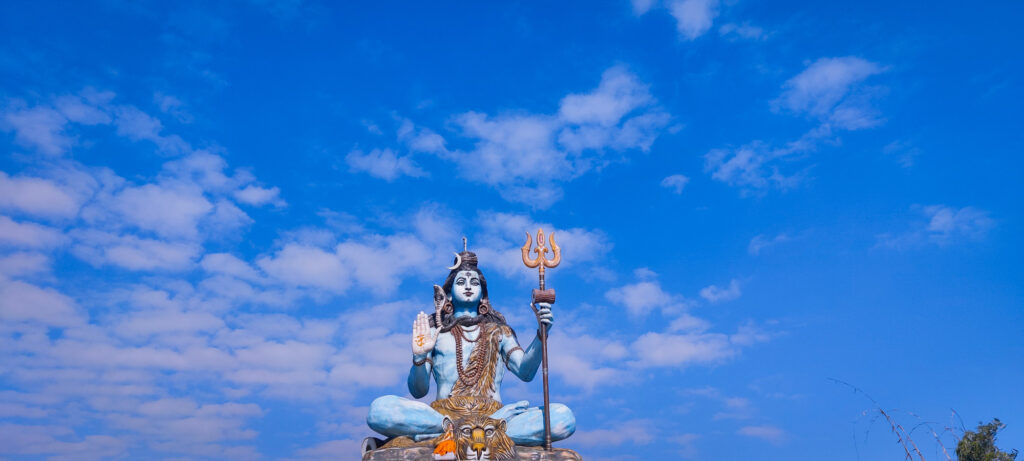
Lord Shiva
Lord Shiva

Every group of tribes who settled far and wide in present Nepal named the land. As per their ethnic tribal language, and for centuries, the country remained with provinces and principalities. Kirat ruled in the east, the Newars in the Kathmandu Valley, while Gurung and Magars occupied the mid-west. The Kirats ruled from 300 BC, and during their reign, emperor Asoka arrived from India to build the pillar at Lumbini in memory of Lord Buddha.

The Kirats, and then followed by the Lichhavi whose descendants today believed, as the Newars of the Kathmandu Valley. During this period, arts and crafts thrived in Nepal, many of the beautiful woodcarvings and sculptures. Which exists today belongs to this era. With the end of the Lichhavi dynasty, the Malla kings came to power in 1200 AD, and they also contributed tremendously to Nepal’s art and culture. However, after almost 600 years of rule, the kings were not united by themselves during the late 18th century. Prithvi Narayan Shah, King of Gorkha (a small kingdom in the mid-west of Nepal) conquered Kathmandu and united Nepal into one kingdom. Recognizing the threat of the British Raj in India, dismissed European missionaries from the country, and for more than a century, Nepal remained in isolation.

During the mid-19th century, Jung Bahadur Rana became Nepal’s first prime minister to wield absolute power.  He set up an oligarchy, and the Shah Kings remained figureheads. The Ranas regime was overthrown in a democratic movement of the early 1950’s.

Today, Nepal enjoys a multi-party democratic system and is a Republic country. Nepal is probably the only country in the world where Hinduism and Buddhism exist in close harmony. Despite the religious and cultural differences. The temples and monasteries stand close to each other.

Nepal with more than 125 ethnic groups and 123 native spoken languages, the cultures and religions are divided. Mostly with the Hindu religion and followed by Buddhism, with other minority religious sects.
Like, the Kirat, Jain, Sikhism, Islam, and Christianity, including a few groups of animists.

01: What is the main religion of Nepal?

More than 81% of Nepalese follow the Hindu religion and culture, similar to their Indian predecessors. The Hindu God Shiva is the Guardian deity of the country. The oldest Hindu temple in Nepal and one of the most holy sites in Hinduism is the Pashupatinath Temple. It is on the bank of the holy Baghmati River, built in the 5th century. The Hinduism majority is due to a large population of Aryan and Dravidian origins. The next main religion, Buddhism, traces back its roots to Lumbini in Nepal, the birthplace of Lord Buddha. They are the clan of the Shakyas caste, who supported the spread of Buddhism in Nepal and neighboring countries and states.

The Kathmandu valley and then Buddhist religion flourished during the reign of Emperor Asoka. By the 18th Century, the king of Gorkha was after the unification of Nepal. From the Shah Dynasty followed Hinduism, and Buddhism existed among smaller tribal groups. The Newars of Kathmandu and highlanders of the Himalayas, the Tamang, Gurung, Thakali, and Sherpa interwoven with the Buddhist religion. As well as other minor tribes of the Nepal Himalayas follow Buddhist principles and cultures. Similar to their Tibetan predecessors across the borders and beyond the Himalayas.

02: Is Nepal A Hindu Country:

The main history of religion in Nepal is Hinduism, practiced by almost 81% of the country. Nepal is the most religious Hindu country in the world, home to most of the important Hindu pilgrimage centers, the main being the world-famous Pashupatinath Temple. The people of Nepal consider Lord Shiva as the guardian deity, while the cow is considered the national animal of Nepal. As per the ratios from the population, of little over 23 million people. More than half of the population practice Hindu religion. Making Nepal almost a Hindu Country. The majority of Hindu Nepali are fighting to make Nepal a Hindu country. However, being a democracy, Nepal is a multi-ethnic, multi-lingual and multi-religious country.

Nepali culture
Nepali culture

The other major religions followed in Nepal are Buddhism, Islam, Kiratism, Christianity, Sikhism, Baha’i, and some minority religions. Yet it is on the pipeline to become Nepal as a Hindu country.

03: Which Is The No. 1 Caste In Nepal?

The country, with more than 23 million people, includes more than 125 different ethnic groups and 123 native spoken languages. But the Khas, known as Bahun (Brahmin), and the Chettries are the majority spread throughout the country. From the east to west, and north towards south, are populated by the Hindu Chettries known as Khas. Chettries ranks as number one due to the population. Then comes the Magar Hill tribes. History of religion in Nepal For the Hindus the language is Nepali, it is the country’s official language. It was originally spoken by the Khas. Traditionally, the Bahun are priests and are better educated than most ethnic groups. In many high places, the important government and educational posts, are dominated by the Bahun and Chettries.

04: What is the percentage of religion in Nepal?

History of religion in Nepal At present, the number over 23 million population in Nepal. The Hindu ranks first at 81.19%, followed by Buddhists at more than 4.39 %, and Muslims at 3.17 %. Kirats of eastern Nepal, an indigenous ethnic tribal religion of 1.76% and Christian at 0.01 %. Includes the Sikhs and Jains, a minority of 0.1 %, as well as fewer atheist minimum groups of tribes.

05: What are the top three religions in Nepal?

According to the History of religion in Nepal, The top three religions are Hinduism 81.9%, with a large population of over 23. 678 hundred thousand. Then next is Buddhism, with 8.2 % of more than 2.394 hundred thousand. Then Islam at 5.02 % with over 1,483 hundred thousand. history of religion in Nepal, as per law for Religious and cultural rights of freedom. Along with the protection of the heritage culture and custom as per religion, as fundamental rights.

Conclusion Of caste and Religion In Nepal:

The inhabitants of the hill flanks that surround Kathmandu Valley and other parts of Nepal from east to mid-west. Extending to the north and south are mostly Tamang, nowadays also known by their family name Lama.
Who make up one of the largest Tibeto-Burman ethnic groups in the Kingdom of Nepal. In the Tibetan language, Tamang means “horse soldier” which provides an idea about their past occupation. Today, they farm and work as mountain guides and porters and are second to Sherpa in mountaineering skills. Tamangs practice Tibetan Lamaism and the Bon religion of pre-Buddhist and have their tribal language. Much similar to the language of the Sherpa and other hill tribes Gurung and Thakali of the northwest.

The Magars of the western and central hills of Nepal. They had their independent kingdoms. Until the 18th century, and were closely associated with the Hindu Indo-Aryans in the west. Much of their cultural practices have been influenced by Chettries, and today it is difficult to make any difference. Like in the housing, dressing, and farming practices of the two. Another ethnic group closely resembling the Magars in many aspects is the Gurung.
They also live in the western and central hills of the country although further to the east. Religion in Nepal Tibeto-Burman stock and practice Tibetan Lamaism, have their tribal language, and the Gurung also practice shamanism. Apart from being farmers and shepherds, many find employment in the British and Indian armies.

Stupa and Culture
Stupa and Culture

The Khas are the Bahun (Brahmin) and Chettries who formed their, kingdoms in the far west. They are Hindus, and the language is Nepali, which is the country’s official language, it was originally spoken, by the Khas. Religion in Nepal Traditionally, the Bahun are priests and are better educated than most ethnic groups. The Chettries have traditionally, been known as warriors. Those living in the higher hills in the far western region lead hard lives because of lack of fertile soil and farming is practiced in the river valleys and on the hill flanks.

Muktinath Temple

Muktinath Temple is the holiest of all pilgrimage sites, especially for the Hindu followers. Thousands of devotees and pilgrims visit all seasons of the year despite the high altitude, cold weather, and dry barren landscapes.

Muktinath Temple is 3,800 m, or 12,467 feet high, in Mustang and Nepal Far North West. It is close to the Annapurna and Dhaulagiri Himalaya and close to the neighboring district of Manang, bounded by the high Thorang-La Pass. Muktinath, its name, comes from the ancient Sanskrit language, which means ‘Liberation’ or to be free from sin or life cycle. It is also known as Mukti Kshetra, which translates to the ‘place of liberation’ or moksha.

Tea House Lodge
Tea House Lodge

Muktinath temple is a site with 106th among the available 108 Divya Desam (premium temples). According to the ancient Hinde Puran or epics, the country faces charming scenery of the Nilgiri peaks. As well as the stunning view of the massive Dhaulagiri Himal and Tukuche peaks with the mountains of Upper Mustang.

Muktinath Temple stands above the village of Pani Pawa, where all lodges and guest houses are by the motorable road. Muktinath Temple also falls on the famous and popular Annapurna Circuit trekking route to Manang via the high Thorang La Pass. It is about a two-hour drive from Jomsom, the main town and headquarters of the Mustang district. Approx. 18 km/11 miles from the village of Rani-Pawa and Muktinath to Jomsom Town.

Travelers can either hike to Muktinath from Jomsom after reaching by a short flight from Pokhara city or by overland journey.

Some pilgrims and travelers enjoy riding horses to reach Muktinath Temple premises. Once inside the serene location of the Muktinath main compound. To reach the temple, a walk for half an hour from the lodge at Pani Pawa village and the roadside.

To reach the Muktinath Temple from the village lodge, a short climb leads on stone steps to the main entrance gate. Located, south of the temple premises. Inside the temple premises, walk through a small garden with a few trees of junipers and willows. Then enters across a huge Buddhist Prayer Wheels and a small monastery. A walk for a few minutes to enter the main temple with the ancient 108 water spouts.

The water originates from the natural spring, considered holy, here people bathe on each spout with cold water. Then walk to the main temple for prayer and worship and get blessed by the Hindu priest. Inside the temple stands a statue of God Muktinath or the Lord Vishnu in various forms and manifestations.

Seasons For Muktinath Tempe:

To visit Muktinath Temple for all seasons, except in the monsoon times of summer. From mid-June to August, it can be wet with rain, but with green surroundings, the flight to Jomsom can get delayed and canceled. Due to heavy monsoon clouds, en route to Jomsom from Pokhara.

The road might get obstructed by frequent landslides and rock falls during the monsoon.  The best times are spring and autumn, including the winter, despite the cold temperatures. Spring from March to May with longer sunlight hours to cover long distances on time before dusk.

The afternoon can be windy around Kaligandaki River Valley between Muktinath and Jomsom. In spring, with cold morning, late afternoon, and shade as well the nighttime. Expect light snowfall sometimes during the springtime. The next best season is autumn/fall from September and lasts till November, one of the best times, around the Himalayas. Most days are fine with clear blue sky for views and to visit Muktinath Temple. But days are short due to limited sunshine hours, and it gets dark from 5:30 p.m. The sunrise is late at 6 a.m. The afternoon can get cloudy sometimes, with chances of snowfall also. Morning, late afternoon, and night are much colder,
but with a clear starry sky during the nighttime.

Muktinath can be visited during winter time from December to February, although it is the coldest season. But with bright sunny days, it gets dark soon with limited sunshine hours and freezing temperatures during morning and night. The Hindu pilgrims visit Muktinath Temple mostly during the auspicious time, as per the Hindu Lunar calendar. The full moon time is considered the auspicious time for worship and religious rites.

The History Of The Muktinath Temple:

The history with religious significance is regarded as sacred by the Sri Vaishnava sect and is the ancient name in Sri Vaishnava literature. From the 10th century, Buddhism was established in 568 BCE (Before Christ emerged). The origin of the holy site is ‘Thiru Saligramam’. Shaligram is known to be the naturally available form of Sriman. Buddhists call it Chumig Gyantse, of Tibetan origin language, which means “Hundred Waters”. For Tibetan Buddhists, Muktinath is a sacred place for the Dakinis. A form of goddesses known as the Sky Dancers, it is one of the 24 Tantric places for early Bon religion pre-Buddhist sects. The belief is that the Idol created in Muktinath is a manifestation of the saint Avalokitesvara, who embodies the compassion of all Buddhahood.
Muktinath history and purity date back to an antiquity of 2,300 years. Both Hindus and Buddhists visit on a holy pilgrimage mission to this sight of natural wonders and powers. Along the way around the Kaligandaki River Valley, pilgrims search for the black glossy fossils.

It is called the Shaligram (ammonite), found in abundance around the banks of Kaligandaki River. Shaligram is associated with Muktinath Temple, the small rounded rocks, but when split open into two parts.
It reveals the imprint of ammonites formed nearly 140 million years ago. Due to the wheel-like shape of a slug, the Shaligram is closely related to the Hindu God Vishnu.

Religion & Importnace:

The temple of Muktinath and its 108 water spouts are also the source of the Kaligandaki River. For the Hindus and Buddhists, the Himalayas are the abodes of holy spirits, God and Goddesses. Most holy pilgrimage sites are around the hidden corners of the massif Himalayan ranges. Muktinath is one of the most important sites for pilgrimage, a place to attain Nirvana. As well as to relinquish and liberate the sins of a hundred lifetimes.

Muktinath, the name comes from Sanskrit, it means ‘Salvation or Liberty’ from birth cycles or bad / evil. It is one of the hidden sacred spots that pilgrims from Nepal and India visit every year in great numbers. Despite the high altitude and Himalayan cold temperatures, visitors can expect snowfall most of the seasons.

At Muktinath Temple and around its holy sites, natural elements are displayed in miraculous form-flickering blue flames. It originates from its natural source of the natural methane gas, which burns on water, stone, and earth. The offering is believed to have been first lit by the Lord Brahma, the Hindu creator of the Universe.

Why The Muktinath Temple A Popular Holy Site In Nepal:

For various reasons, Muktinath Temple is revered as a popular and holy site in Nepal. As well as in the whole Himalayan ranges, that stretch from Afghanistan, Pakistan, India, and Nepal, Bhutan including Tibet, China. Then, it ends in Eastern parts of India around Arunchal Pradesh, close to Myanmar. But most pilgrimage sites are located around Northern India and in Nepal as well in Tibet, China with Mt. Kailash.

Nepal has several holy sites around the high Himalayas, besides Muktinath. The other pilgrimage sites are Damodar Kund and Gosainkunda including Tilicho Lake as well as many other hidden places, of which only a few devotees and pilgrims are aware.

Muktinath Temple is popular during early times, due to its accessibility from Manang, and Pokhara city. As Muktinath is located close en route to the famous Trans Himalayan Trade Routes of Nepal and Tibet, China. Where travelers can enjoy visiting both paying homage to Muktinath Temple en route to their journeys. The main reason is that it is also close to Tilicho Lake and Damodar Kunda, regarded as sacred sites.

Last but not least the areas of Muktinath, situated close to Kagbeni Village and Kaligandaki River Valley. Kagbeni is a Tibetan-style village with a similar culture, located on the ancient Caravan trade route of Nepal and Tibet. Kagbeni is the entrance to Upper Mustang and beyond to Tibet, China borders. Kagbeni means “bolt of the two rivers” and formerly controlled the trade between Nepal & Tibet, once a fortified village. Kagbeni is en route to Muktinath about a few hours hike uphill, the area of Kagbeni is also a holy place. Where Hindus perform their religious rites, perform and offer prayers in memories of the families-relatives and friends departed souls.

Kagbeni in the Hindu Myth story describes the earlier life of Kak Bhushundi, who was a true devotee of Lord Shiva. Reborn as a crow, and came to know about Rama and understood the purpose of Lord Vishnu’s incarnation. Among humans and then composed the great epic Ramayana, the sage-crow came to be as Kak-Bhushundi.

This is why Muktinath Temple is a famous and popular site around the whole Himalayan region. Its past historical stories, fable, and mythological tales make Muktinath an important pilgrimage site. Especially for the Hindu followers, devotees, and pilgrims, at present people can reach by motorable road. As well as flying to Jomsom, with a few hours’ drive to the holy site of Muktinath or Mukti-Chetra.

Accommodation Local Residence Around Muktinath:

The Muktinath Temple stands high above the nearby Rani Pawa Village within the district of Mustang. It is about 2 hours drive from Jomsom, the headquarters town of the district and the gateway to Muktinath. All lodges, restaurants, shops, and stores are in Rani Pawa Village.

Walk in less than half an hour to reach Muktinath from the lodge of Rani Pawa. The village has many good lodges, as it also falls on the main popular Annapurna Circuit trekking routes. During the high times of trekking, this village gets more customers, including pilgrims from Nepal and India. In auspicious times, as per the Hindu calendar, the place is flooded with pilgrims of both Hindu and Buddhist religions.

Rani Pawa Village is on a motorable road with a car park, mostly with a 4WD Jeep or similar available. The lodges are of tourist standard with hotels and guest houses, offering rooms with common or attached toilets and baths. All lodges provide a comprehensive food menu, which is served in a large dining room with Wi-Fi and electricity. The natives of Mustang are of Tibetan origin and follow strong Tibetan Buddhism and similar cultures to their predecessors across the borders. The local people are farmers, raising livestock, trading with Tibet, and running hotels, shops, and restaurants.

Popular Base Camps Trekking Around Nepal Himalayas

Popular Base Camp Trekking in Nepal is the foremost country on this planet for all types of adventures and outdoor sports. Interested adventurers, trekkers, and explorers can enjoy the walks from the popular routes to off-the-beaten trails. Where some of the base camps are well hidden from the main trekking trails within absolute wilderness.

Amazing view near the Annapurna base camp

The country with great dramatic contrast and diversity from the low warm sub-tropical of the Terai belt to cooler alpine hills. Which extends towards a higher mountain range and ends at the arctic zone of snow, ice, and glaciers of the great Himalayas. From the 14th world’s highest peaks, Nepal with the most of 8th highest mountain within the Himalayas. The Himalayan Mountain range stretches from the Far East to the West of the country.

The popular base camp trekking Includes Mt. Everest 8,848.86 m, Mt. Kanchenjunga 8,586 m and Lhotse 8,516 m with Mt. Makalu 8,463 m. The list continues with Mt. Cho Oyu 8,201, Mt. Dhaulagiri 8,167 m, and Mt. Manaslu 8,163 m. The last on the list is Mt. Annapurna-I 8,091 m, the 10th highest and Nepal’s most popular base camp. Besides major world highest peaks base camps, there are other popular base camps below 8,000 meters. Like the famous Ama Dablam, Ganesh, Langtang, and Jugal Himal Base Camps above and under 7,000 meters.
The most popular base camps trek are Everest, Annapurna, Dhaulagiri, Makalu, and Kanchenjunga. The Manaslu and Cho Oyu base camps are off the main routes, trekkers seldom visit except for the mountaineers.

Some major mountains have two base camps, like Kanchenjunga and Annapurna where trekkers can visit in one single journey. Especially on Kanchenjunga, the world’s 3rd highest, the treks include both Kanchenjunga North and South Base Camps. The other interesting to know is that Everest and Lhotse share, the same base camps.

List Of Popular Base Camp Trekking:

01: Annapurna Base Camp:

Annapurna Base Camp
Annapurna Base Camp

The shortest and most scenic Annapurna base camp, often referred to as ABC for short. It is a picturesque spot, unlike all the Himalayan region base camps, due to its proximity. Start and end points of trekking from the nearest motorable road to and from Pokhara.

Trekkers can cover the whole trek from Pokhara to Pokhara within a week. The best about the Annapurna Base Camp is that the trekkers do not have problems with HAS or High Altitude Sickness.

The elevation gains with slow and gradual paces to the highest point at Annapurna Base Camp. It is 4,130 m/13,550 feet, located beneath the towering east face of Mt. Annapurna-I. It is the only base camp around the Himalayas, where trekkers can enjoy the comfort of nice and cozy lodge accommodations.

Annapurna-I is the world’s tenth-highest peak and a massive range of mountain range. It extends as far as Manaslu Himalaya in the east and Mt. Dhaulagiri towards the west.

The Annapurna Base Camp is in the heart of the Sanctuary, around Kaski District and Gandaki Zone, Mid-West Nepal. Mt. Annapurna-I was the first 8,000-meter peak ever climbed in mountaineering history, on June 03rd, 1950. By the French Expeditions, three years before Mt. Everest was summited, on May 29th, 1953. Around the Annapurna Himalayan region and Annapurna Base Camp, trekkers need TIMS (Trekking Information Management Systems) permits.

As well as ACAP (Annapurna Conservation Area Project), entrance fees are obtained by the local trekking agencies in Kathmandu.

02: Everest Base Camp:

Everest Base Camp
Everest Base Camp

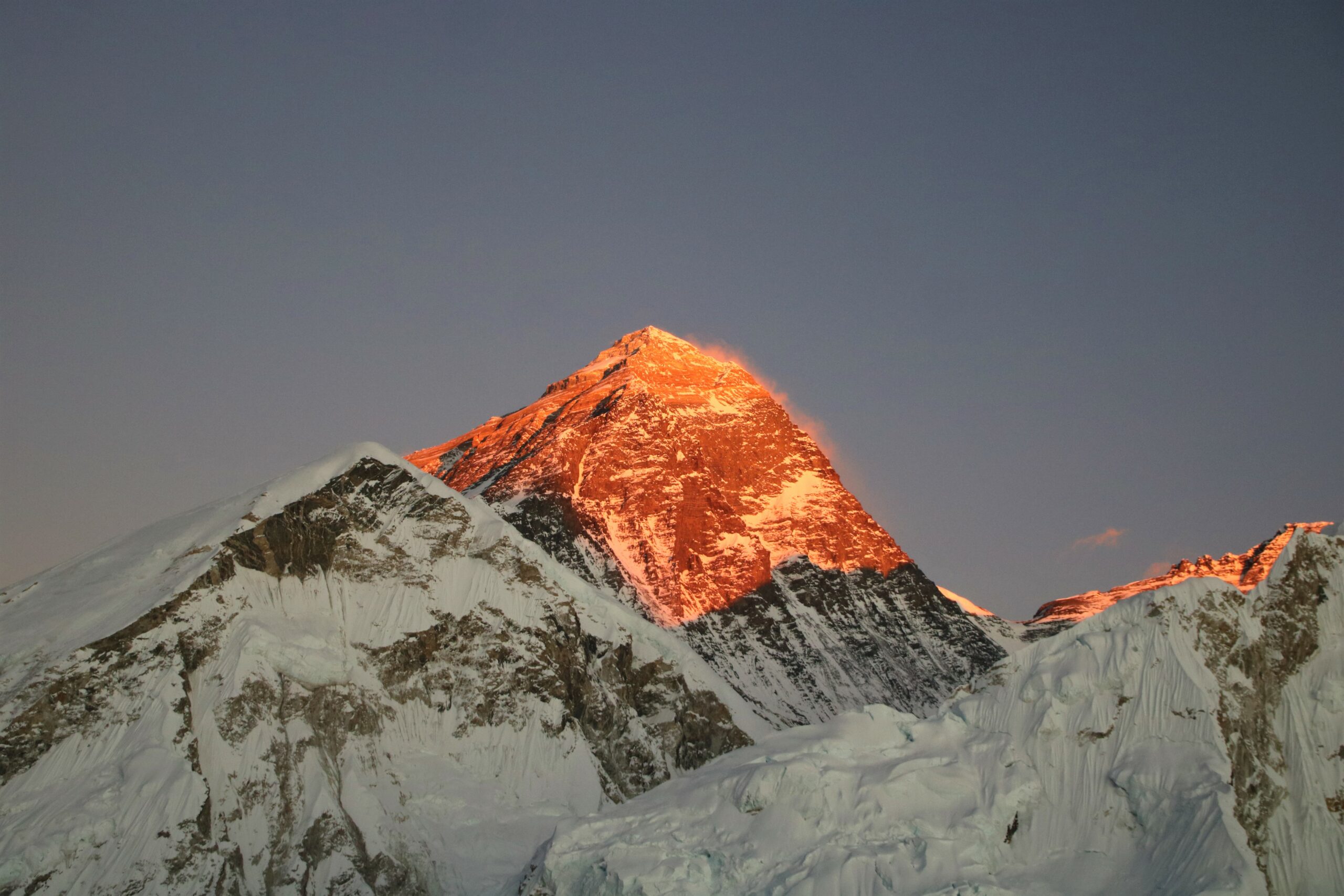
Everest base camp lies beneath the world’s number one Mt. Everest. Everest base camp is the most famous and popular of all the base camps around the Himalayan ranges. It is one of the favorite destinations among all trekkers and mountaineers, a dream destination for millions of travelers and adventurers.

Everest Base Camp is located in the Khumbu district around Nepal North Mid-East, with various routes to reach Everest base camp. The earliest and classic route to Everest base camp was from Jiri, also known as Switzerland of Nepal.

It was the original route to high Khumbu through Solo areas to reach Namche Bazaar and then to Everest Base Camp. Since the airport was built in Lukla, for STOL aircraft the classic trail of Jiri is almost forgotten at present. Most trekkers prefer the shortest way taking the flight from Kathmandu to Lukla Town airport.
Then following the scenic trail towards Everest base camp, it takes about 12 days from Lukla to Lukla. Covering a distance of approx. 130 km or 81 miles, exploring the lovely villages of Phakding, Namche Bazaar, and beautiful Tengboche.

Everest Base Camp Trekking, where all visitors need time to get acclimatized, having extra days at certain heights. As well as to enjoy the surrounding stunning scenery of landscapes and snow-capped peaks.
The route to Everest Base Camp is well maintained with a straightforward route, as well as crossing bridges over glacial rivers. The Everest and high Khumbu region is located within Sagarmatha National Park, the name Sagarmatha for Everest in Nepal. The native Sherpa calls Chomolungma for Everest, from Tibetan origin language. For the trek to Everest Base Camp, the permits are controlled by the Khumbu village community. Includes entrance fee for Sagarmatha National Park, at Lukla or Monjo or from the park entrance post.
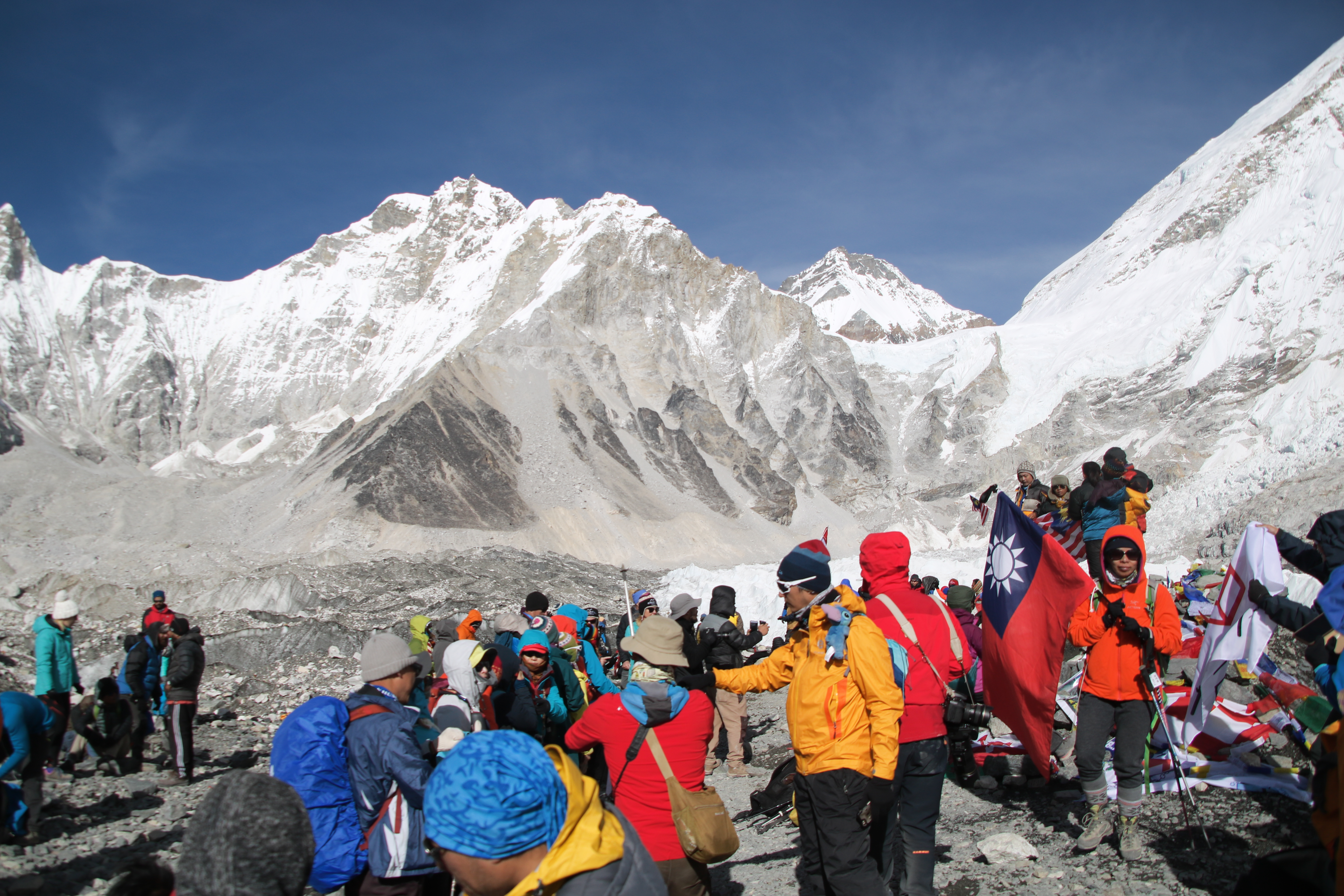
The trek to Everest Base Camp follows on winding scenic trail with constant views of giant snow-capped peaks. From Namche Bazaar onwards views of Mt. Everest are seen most of the time during the walks. Until Everest base camp is reached, where you will stand beneath the towering peaks of Everest, Lhotse, and Nuptse. As well with close views of Khumbu Ice Fall and the glaciers, the base camp is flooded with tented camps. During the peak mountaineering season of spring from March to May, with various camps of different nationalities mountaineering expeditions.

Everest base camp at 5,364 m / 17,599 feet high, the views of Mt. Everest are obstructed by adjoining peaks. For the best closest views of Mt. Everest and surrounding mountains climb up to the high Kalapathar rocky hilltop.

Kalapathar is a high black rocky ridge, close en route to Everest base camp and above Gorakshep.  The highest points of the adventure, at 5,643 m /18,514 feet, offer a spectacular panorama of giant snow peaks. The closest views of Mt. Everest at a mere distance with incredible scenery of towering mountain ranges.

After completing the adventure to Everest base camp and climb of Kalapathar, heading back to Lukla. Then, on a short sweeping flight to Kathmandu, with unparalleled views of the Himalayan peaks.

03: Kanchenjunga Base Camp:

Mt. Kanchenjunga is the world’s 3rd highest peak with a massive range, located in Far Eastern Nepal. Around the district of Taplejung, one of the less visited base camps of Mt. Kanchenjunga. Due to its remote locations and lack of good accommodation and food facilities, then on other popular base camp treks.

Despite the remote country of Kanchenjunga areas, it is one of the most interesting and exciting adventures to experience. Mt. Kanchenjunga the original name is Kanchendzonga, which means mountains with five jewels, referring to its five adjoining peaks. Mt. Kanchenjunga at 8,586 m/ 28,169 feet high, first ascent to the summit of Mt. Kanchenjunga on May 25th, 1955.

Climbed by the British Expeditions, since then the mountain is often climbed by various nationalities mountaineers.
Kanchenjunga with two base camps the North and South Base Camps.

The North Base Camp is higher at 5,150 m/16,896 feet, located at the small settlement of Lhonak and Pang-Pema.
The trek to Kanchenjunga is a full circuit visiting both base camps the south and the north. Where South Base Camp is popular among the mountaineers, due to its accessible route to the summit.

Most mountaineers use the original route for the climb from South Base Camp at Oktang. The treks to Kanchenjunga both base camps, is an adventure of a three-week duration. It involves flights both ways with drives on the hilly rough road to the starting point of the treks. As well as on the way back, on completing the whole Kanchenjunga circuit, trekking to both base camps.

Kanchenjunga Base Camp Trekking is an adventurous walk from mid-hill farm villages to dense lovely forest. Covered in tall rhododendrons, magnolia, oaks, pine, and fir trees, then reaching the arctic zone amidst snow, ice, and glaciers.

A remarkable adventure, where trekkers can enjoy the pristine wilderness, in less visited areas by the main flow of trekkers.

04: Lhotse Base Camp:

Lobuche Base Camp
Lobuche Base Camp

Mt. Lhotse is the world’s 4th highest peak at 8,516 m/27,940 feet. Mt. Lhotse, might not be a famous and popular peak, among the trekkers and mountaineers. But most trekkers are unaware that Mt. Lhotse shares the same base camp as Mt. Everest.

Mt. Lhotse is the adjoining peak of Mt. Everest, it is separated by the South Col. When visiting the Everest base camp, you will be standing at the base of Everest and Lhotse as well.

05: Makalu Base Camp:

Makalu Base Camp is in the district of Sankha Sabha, of Koshi Zone in Nepal Far East, around the Khumbukarna Himalayan range. Mt. Makalu is the world’s 5th highest peak at 8,463 m/27,766 feet high.

The first ascent was on May 15th, 1955, by the French Expeditions, and since then, often visited by mountaineers.
Makalu Base Camp, at 4,870 m/15,978 feet high at the western end of Barun Valley. The trek to Makalu Base Camp involves flights and drives from Tumlingtar to Tumlingtar, a moderate town.

It is the start and ending points of Makalu Base Camp Trekking after flying in from Kathmandu. Then, on the drive for a few hours to the Num Village, the trek leads to several farm villages. From the last Tashi-Gaon village, there are no permanent villages except temporary settlements. The lodges are small and very simple en route to Makalu Base Camp.

Barun Valley and Makalu Base Camp are less ventured by the mass flow of trekkers. Due to its remote location, it leads to a perfect country walk around the mountain wilderness. An adventure starts from low sub-tropical areas to a cooler alpine hill covered in dense pine and rhododendrons forest.

The walk follows to traverse and crossing the small pass of Keke, Shipton, and Tutu-La. The views of the snow-capped mountain remain constant as the walk reaches Makalu Base Camp.

At Makalu Base Camp, stand amidst remorseless fields of moraines filled with ice, snow, and glaciers. Makalu Base Camp is famous for its views of the rare Khansung or East Face of Mt. Everest.

Makalu Base Camps is protected by the Makalu and Barun National Park and Conservation. Makalu Base Camp Trek is of a two-week duration with drives and flights from Num to Tumlingtar and towards Kathmandu.

06: Cho Oyu Base Camp:

Cho Oyu Base Camp
Cho Oyu Base Camp

Mt. Cho Oyu, the world’s 6th highest peak, like Everest, straddles the borders between Nepal and Tibet-China. Mt. Cho Oyu towers high at 8,201 m/26,906 feet and most of the climb is done from Tibet.

The North side of Mt. Cho Oyu is much more accessible to reach the summit than from Nepal. Which is tough, difficult, and technical from Nepal, situated around the high Khumbu at the far end of Gokyo Valley. Mt. Cho Oyu was climbed on October 19th, 1954 from Tibet by the Austrian Expeditions.

Cho Oyu Base Camp in Nepal side is the least visited by mountaineers and trekkers. The mountain is located in the far northwest of the Gokyo Valley close to the 5th and 6th Gokyo lakes. The Cho Oyu Base Camp is at 5,600 m / 18, 372 feet high.
Trekkers on a visit to Gokyo Valley, where only a few groups seldom dare to venture to Cho Oyu Base Camp. Due to its remote and isolated location, the views from Cho Oyu Base Camp offer a magnificent panorama of surrounding high peaks. The views include Mt. Cho Oyu, and Gyachung Kang, with both the north and south face of Mt. Everest.
The walk from Gokyo Lodge around the 3rd lake takes more than 6 hours. Trekkers need to carry tents and sleeping bags, including food for overnight halt. From the main Gokyo areas, there are no lodges and human settlements, which is why most trekkers hike up to 5th Lake only. Due to its long distance as well as the rise in altitude. Interested people can enjoy the trek to Cho Oyu Base Camp of two-week duration hikes from Lukla to Lukla.

07: Dhaulagiri Base Camp:

Mt. Dhaulagiri is the 7th highest peak at 8,167 m high. It is one of the adventurous walks to reach the base camp of Mt. Dhaulagiri.

The treks require more than 12 days to cover the Dhaulagiri Circuit. Includes drives to reach the starting point of the treks around Mygdi District, around the Nepal Far West, of Gandaki Zone, then the treks end at Lower Mustang in Jomsom.

From Jomsom, on a short flight or a long drive to Pokhara, which is the starting and ending points. The trek to Dhaulagiri, camping equipment, and food required to carry for a week.

Dhaulagiri Base Camp

Dhaulagiri Base Camp is 4,740 meters high and situated around the moraine of rocks and glaciers. Right beneath the northwest face of Mt. Dhaulagiri and its massive Ice Fall and glaciers are the source of the Mygdi River.  Although a challenging trek, it leads to an enjoyable and exciting walk on a tranquil path. Away from the mainstream and human habitations and villages for a week till the walks reach Kaligandaki Valley.

The trek takes you from low sub-tropical farm areas and isolated villages, then towards complete mountain wilderness. Walk through a lovely forest amidst dense rhododendrons, oaks, firs, and pine trees. Then, the walk heads beyond the lush green vegetation, entering the wild arctic zone landscapes covered in ice, rocks, and glaciers.

Walk past the glaciated valley to reach Dhaulagiri Base Camp, and cross French Pass to scenic Hidden Valley. From Hidden Valley, the walk leads to traverse the last Thapa or Dhampus to reach charming Marpha Village.
The walk follows to the large town of Jomsom, the headquarters of Mustang district, for an exciting flight back to Pokhara.

08: Manaslu Base Camp:

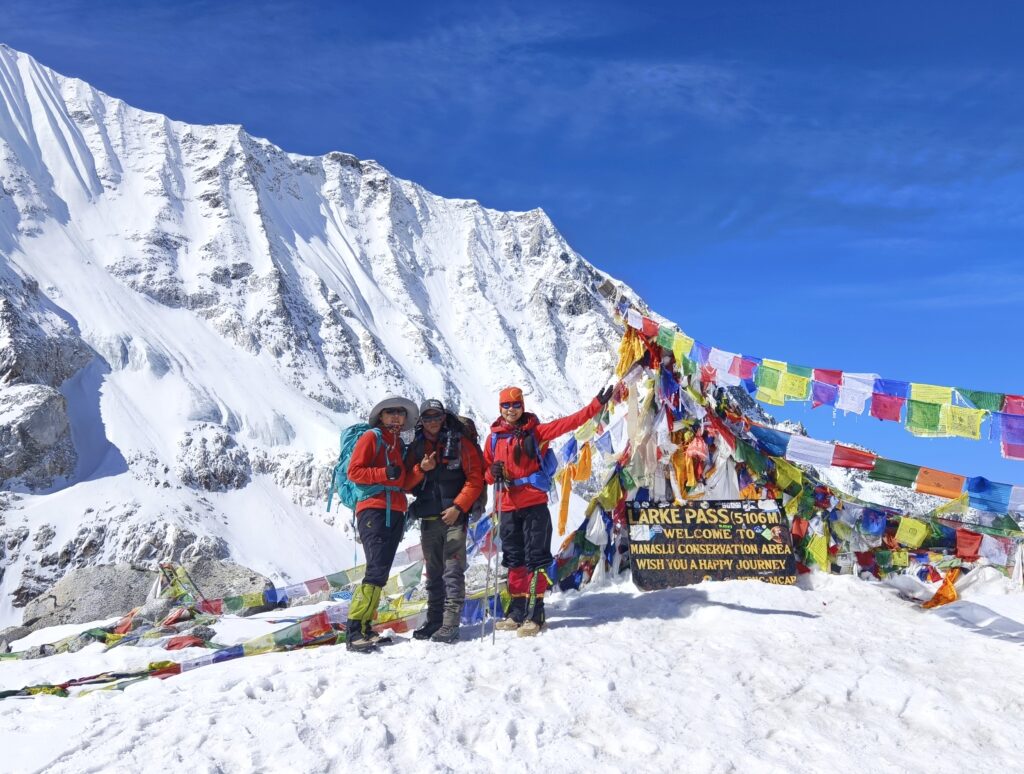
Manaslu Base Camp Larke la pass

Manaslu Base Camp treks take you to the bottom of the world’s 8th-highest Mt. Manaslu. The base camp is at 4,800 m/15,748 feet high, the mountain was first climbed in 1956 by the Japanese Expeditions.

From then on, the mountaineers mostly visit for the summit bid at 8,163 m/26,781 feet high. Manaslu Base Camp is situated far away from the main Manaslu Circuit route. Only a few interested trekkers often visit the Manaslu base camp for a long day hike from Sama Gaon.

The Manaslu base camp is well hidden and away from the main trekking trail. It is visited only by groups of mountaineering expeditions during the best climbing seasons. For the trekkers, it is a long day hike while spending a rest day for acclimatization at Sama Gaon.

Manaslu Base Camp is located on the far corners of Manaslu Valley, close to the beautiful Birendra glacial Lake. Most trekkers on the Manaslu Circuit trekking sometimes visit on rest days up to Birendra Tal/Lake.
From this spot trekkers can enjoy the view of Manaslu Base Camp, the ice falls and glaciers, and the towering peaks of Manaslu.

To enjoy a hike to Manaslu Base Camp, trekkers need to carry tents and food to spend an overnight. The hike takes more than 5-6 hours one way from Sama Gaon. This is why only a few trekkers hardly visit the Manaslu Camp, only if they are involved with the expedition group.

An amazing with beautiful scenery on the walks to Manaslu Base Camp. Trekkers can experience the dramatic contrast of green forest against the white snow-capped peaks. The journey to Manaslu Base Camp with a full circuit takes about two weeks.

It includes drives from Kathmandu to the starting point of the treks and at the end of the adventure, after crossing Larke-La Pass to reach Manang areas at Dharapani Village, and for the drive back to Kathmandu.

The popular base camp trekking Conclusion:

The popular base camps trekking around the Nepal Himalayas are just information for interested adventurers and trekkers. Some of the base camps are highly popular among the trekkers.

Only a few 8,000-meter mountain base camps are rarely visited by trekkers, other than mountaineers. Due to its remote location and lack of accommodation facilities for overnight stops, after the long strenuous walks.

The most popular base camps are Annapurna and Everest base camps, where thousands of trekkers and mountaineers visit every season.

It is due to the facilities, availability of the lodge accommodations, and the good foods to enjoy, with the picturesque mountain views.

Besides Annapurna and Everest, Makalu and Kanchenjunga base camps are gradually getting more visitors over the past few years. As the influx of trekkers has increased, and as well as the local lodge en route to base camps has been built. To cater to the trekkers, with the good foods and warm traditional hospitality.

Mt. Manaslu and Mt. Cho Oyu are the only base camps with the least number of visitors, except for the mountaineering expeditions.

The other base camps, like Dhaulagiri, are getting quite popular, as the Dhaulagiri Circuit trek itinerary includes base camp also. For interested trekkers and adventurers, an opportunity to choose from the popular or enjoy the less ventured base camps treks.

Annapurna base camp trek

The Home of Mount Everest (Solukhumbu)

Solukhumbu District known as home of Mount Everest (8848.86m), the highest mountain in the world where everyone wants to go once in their life which is located in the Heart of the Solukhumbu district of Nepal. The headquarters of Solukhumbu is Salleri. Solukhumbu lies in the eastern part of Nepal. Previously it was known as Sagarmatha Zone but now it is called Pradesh Number 1 (Koshi Pradesh). In Koshi Pradesh, there are 14 districts including Solukhumbu. The total area of Solukhumbu is 3312 square kilometers. In Solukhumbu we can see different ethical groups who have their own different culture, tradition, language, dress, and festivals. The maximum people of in Solukhumbu are Sherpa, Rai, Tamang, Magar, etc.

Solukhumbu
Solukhumbu

Why Solukhumbu  District is counted as the most popular for trekking in the world?

Solukhumbu is the place where Mt. Everest lies. Many people visit Solukhumbu to touch nature and feel the mountain. In Solukhumbu, we can see many Sherpa who strongly help tourists to get to their dream destination.

We can see the mountains, Monastery, and Sagarmatha National Park which is located in Solukhumbu. Sagarmatha National Park is popular for Wildlife example: Jackel, black bear, wolf, snow leopard, musk deer, etc. According to the Nepal Tourism Board, there are 118 species of bird including Impeyan pheasant (Local name: Danphe) Danphe is the national bird of Nepal.

The most popular trekking route in Solukhumbu is Everest Base Camp, Everest three passes, Chola Pass, and Pikey Peak.
Mount Everest is a peak in the Mahalangur Himal sub-ranges of the Himalayas mountain range. It is located between Nepal and Tibet, an autonomous region of China. At 8,848.86 meters (29,032 feet), it is considered the tallest point on Earth. Officially Everest is located at Solukhumbu District of Province No. 1 in Nepal.
The historic, local Tibetan name for Mount Everest is Chomolungma, also spelled Qomolangma, meaning “Goddess Mother of the World. Whereas, The Nepali name for Mount Everest is Sagarmatha, meaning “Goddess of the Sky.

Tenzing Norgay and Edmund Hillary were the first ones to Summit Mount Everest on May 29, 1953. And Pasang Lhamu Sherpa was the first Nepalese Woman to climb Mount Everest in the year 1993.

The base camp for Everest expeditions based out of Nepal is located by Khumbu Glacier, which is rapidly thinning due to global Warming & Climate Change, making it unsafe for climbers. Keeping this in mind, Nepal’s Government has plans to move the base camp to a lower altitude which will make it difficult for the climbers as it may take many more days to reach up there.

At Everest Base Camp, which sits at an altitude of approximately 17,600 feet, the oxygen levels are about 50% less oxygen compared to sea level. The summit of Everest has about 33% less oxygen than the sea level. So, one must carry at least 4 oxygen bottles while Summiting Mt. Everest. By the 21st century, one of the popular oxygen systems on Mount Everest used carbon-fiber reinforced aluminum bottles, with a 3-liter cylinder of oxygen weighing 7 pounds (3.2 kg) when filled up at 3,000 pounds per square inch (210 bar).

Geography of Solukhumbu District:

Chola Lake
Chola Lake

Solukhumbu District lies in the eastern part of Nepal. It is characterized by a diverse topography ranging from lowlands to high mountains. This district is part of Sagarmatha National Park UNESCO World Heritage Site. Solukhumbu is home to Mt Everest and many more mountains including Mt. Lotse, My. Nupte, Mt. Chouyu, Mt. Makalu, and other uncountable mountains below 8000m.
Sagarmatha National Park is a protected area in the Himalayas of northeast Nepal. It was established on July 19, 1976, and is listed on the World Heritage site. It is home to Mount Everest and also contains Dudhkoshi and Bhotekoshi Rivers and Gokyo Lakes. It is home to rare species like the snow leopard, musk deer, and red panda.

Phaplu Airport is situated at Solu Dudhkund Municipality of Solukhumbu District, Province No. 1. The airport is near District Headquarters, Salleri. This airport is the gateway to the Khumbu Trekking Route. The distance between Kathmandu and Solukhumbu is 144 km.
Lukla Airport or Tenzing & Hillary Airport is located Far North Mid-East of Nepal Himalayan region within the Solu-Khumbu district. Approx. 135 kilometers air distance from Kathmandu Tribhuvan Airport, a flight duration of 30 to 35 minutes, and 73 nautical miles. The shortest means is flying to Lukla for the Everest base camp trek and to other various adventure destinations around Khumbu.

There are two ways to reach the district of Solukhumbu: by air and by road.
By Road
Salleri, the Solukhumbu District headquarters, is linked by road. Solukhumbu is accessible by road from Kathmandu, Nepal’s capital. Salleri is about 270 kilometers (170 miles) from Kathmandu.

How to reach Everest base camp by road?

Amadablam
Amadablam

From Kathmandu to Salleri you can take private or local transportation to reach Salleri then change a local jeep to Thamdada.

By Air
In the Solukhumbu district, there are four regional airports. There are several flights and air services to choose from. The four airports in Solukhumbu are:
1) Tenzing-Hillary Airport
2) Syangboche Airport
3) Phaplu Airport
4) Kangeldanga Airport

Solukhumbu is surrounded by numerous rivers, valleys, glaciers, and lakes. Dudh Koshi River originated from the high Mountains.
The largest glacier in the Solukhumbu region is Khumbu Glacier and it is a dangerous area for mountain climbers. It lies around Mt. Everest.
Gokyo Lake is one of the best destinations in Solukhumbu. It is located in Gokyo Valley. It is an outstanding lake in the Khumbu Region.

Trekking Trails In Solukhumbu District:

Solukhumbu is the best part for those people who love adventure, nature, and trekking. You can make unforgettable memories in this region. Once you reach there you visit there again and again.

You enjoy the atmosphere of the mountain in Solukhumbu, no other place beats that feeling. After Everest Base Camp Trek another most popular trekking route is Gokyo Lake Trek which shows the pleasure and peace in your mind.

Everest Three Pass Trek (Chola Pass, Renjo La Pass, and Kongma La Pass) is the most adventurous trek in Khumbu with challenging trekking trails, High mountain passes, and thrilling experiences. You will find many hard challenges but it is worth it according to the feeling you get in high mountains.

Every trekking trail in Solukhumbu gives another level of satisfaction and peace. Each trekking experience is unique in this region which shows the grandeur of the high Himalayas.

Culture & Traditions in the Everest Region

The Everest Region is a world-famous tourist destination. Tourists from all around the world come here to experience the vast mountain range. Similarly, the people and culture of Everest are equally as fascinating as the mountain trails. The majority of people living in the Everest region are Sherpas & Rai.

The Sherpas of Everest are unique. They are mountaineering pioneers. Their culture and lifestyle are also fascinating. Sherpas construct gompas to practice their religious practices. A lot of such monasteries can be found on Nepali mountain trails. The majority of Sherpas are Buddhists. Their main festival is the Loshar festival.

In Solukhumbu Local Sherpa and Rai are well-known as elite mountaineers and local experts. They were useful to early Himalayan explorers. They served as guides at the high altitudes of the region’s peaks and passes. Sherpa and Rai were particularly involved in expeditions to climb Mount Everest.


Trekking in Solukhumbu District

Everest Base Camp Trek

Maximum popular trekking trails are in Solukhumbu:

  1. Everest Base CampTrek
  2. Everest Three Passes Trek(Renjo La Pass, Chola Pass, Kongma la Pass)
  3. Everest base camp Trek with Chola pass
  4. Pikey Peak Trek (Lower Everest)
  5. Dudh Kunda Trek

Lukla Airport The Gateway of Mount Everest

Lukla Airport
Lukla Airport

Lukla Airport The Gateway of Mount Everest is the ‘World’s most amazing and unique airstrip on the lap of the Himalayas’Lukla Airport was named Tenzing & Hillary Airport two decades ago, in tribute to late legendary mountaineers. The first conqueror of Mt. Everest, who stepped on top of the world’s highest peaks on May 29th, 1953.

The British Expedition was led by John Hunt the first British Mountaineering Expedition to Mount Everest. The expedition team had to walk from outside the Kathmandu Valley rim to Everest base camp.

Then it was located at Gorakshep 5,180 m / 16,995 feet, a distance of 4 km. / 2.5 miles; to the present Everest base camp.
It was quite a long journey to reach the world’s highest mountain base camp.

The expedition teams had to spend a few months for acclimatization and preparation before making the summit bid.

Lukla Airport started operating flights in 1971 after it was built in 1964 with the immense support of Sir Edmund Hillary. Then the airport took a new turn having a proper air terminal and properly paved runway in 2001.

The airstrip or runway is 527 m (1,729 feet) × 30 m (98 feet) with an 11.7% gradient. The airport stands at an elevation of 2,845 m / 9,334 feet high in the eastern part of Lukla town.

One of the most unique runways due to its high mountainous terrains, where only smaller aircraft can land and take off. The airport is suitable for smaller planes like STOL (Short Take-off and Landing). At present various domestic airlines operate flights from Kathmandu to Lukla, using smaller aircraft. Likewise, Pilatus Porter, Twin Otter, Dornier, and other similar types of models are safe for mountainous airports like Lukla.

Where is Lukla Airport Located?

Ramechap to Lukla Airport

Lukla Airport or Tenzing & Hillary Airport is located Far North Mid-East of Nepal Himalayan region within the Solu-Khumbu district. Approx. 135 kilometers air distance from Kathmandu Tribhuvan Airport, a flight duration of 30 to 35 minutes, and 73 nautical miles. The shortest means is flying to Lukla for the Everest base camp trek and to other various adventure destinations around Khumbu.

Lukla is about 367 km. / 228 miles road and driving distance, the drive does not reach actually to Lukla. The motorable road has reached as far as Tham-Danda which is about a day’s walk from Tham-Danda to Lukla.

In the early days, trekkers had to drive up to Jiri town and follow the southern region of Everest around Solu. But for the past 4 decades, most trekkers and mountaineers have taken the comfort of flying into Lukla. Which saves much time in a week or less, but quite an interesting walk and drives to reach the Khumbu area.

From Lukla to Everest base camp is approx. 62 k.m. or 38.5 miles one way.
A busy town, is the main gateway for various adventures and treks to the famous Everest base camp.

Why is Lukla Airport famous and popular?

View From Lukla Plane

Lukla is the quickest and most accessible route to reach Everest base camp and other adventurous destinations. Lukla is located around the mid-hills of Mt. Everest with other famous groups of peaks. Lukla with its only airport makes it one of the busiest and most popular spots to reach various higher adventure destinations.

Where thousands of adventurers, trekker, and climbers, as well as mountaineers, starts and end the treks at Lukla. Lukla is the vantage point for all types of adventure activities from trekking and peak climbing to major mountaineering.

Visitors from around the world fly to Lukla which is the only way shortest way to complete one’s dream destinations. Being located in the high Khumbu region where all major peaks and the world’s tallest mountains are situated. Lukla is one of the sought destinations for all types of adventures as well as to explore the local immense Buddhist cultures.

Why is Lukla Airport so dangerous?

Dangerous airport in Nepal
The Dangerous Airport in Nepal

Lukla airport is not as dangerous as people have advertised in guidebooks and travel magazines. Any airport around the mountainous region might seem dangerous to all travelers if it was so dangerous. Why thousands of trekkers, mountaineers, and adventurers, as well as local Sherpa fly to Lukla every season of the year. The word dangerous is quite exaggerated or overstated for Lukla Airport by many Social Media, making it much more dramatic.

Where all airports around the world can be dangerous if it is not handled carefully with various safety precautions. Apart from the airport, some people feel scared of flying even in bigger airplanes like Boeing or Airbus. Lukla Tenzing & Hillary may look dangerous for fresh new travelers due to its small and short runways.

All safety measures are carefully checked and taken care, of during the high peak seasons of spring and autumn. The Lukla Tenzing & Hillary Airport is the busiest air station in Nepal for domestic flights. Where various local airlines operate dozens of flights within a few-hour gap when the day is clear and promising.

It is not the airport that looks dangerous, where the pilot needs to be very experienced to fly and land. Especially in a mountainous zone, as the plane is higher and lower than mid-hills sometimes, the danger is always there.

However, the Nepalese pilot has decades of experience flying throughout the Himalayan terrains and sometimes in between the mountains.

So, Vertex Holiday would like to clarify the confusion and misunderstanding regarding Lukla Tenzing & Hillary Airport being dangerous. It is a safe airport with a short runway, suitable only for smaller aircraft that operate for these types of mountain airports.

How dangerous is Lukla Airport?

Lukla Tenzing & Hillary Airport as stated above is not as dangerous as it seems and looks by outside visitors. The only dangerous situation may occur when flying in bad and unfavorable weather conditions. But the air tower on both ends does not allow this sort of situation to fly in worse weather.

Some airlines’ professional and expert pilots do fly sometimes when the day is overcast, as long the landing visibility is clear. The dangerous word seems quite absurd for Lukla Tenzing & Hillary Airport or any airport around the high Himalayan region. Where all crew members of airlines and Civil Aviation are fully aware of safety and precautionary measures.

In any place around the world, airports can be dangerous if there is a lack of safety measures and negligence; from the airport technician or pilots.

So it is hard and difficult to prove that Lukla Tenzing & Hillary Airport is dangerous. It all depends upon the safety and precautionary measures of both pilot and airport personnel; as well as depending on how old are the aircraft.

Lukla Airport crash History:

It is hard and difficult to put into words the crash history that has taken place at Lukla Airport. But the truth and facts have to be exposed so that visitors can be well prepared, before choosing the holiday.

Mishaps and disasters can happen anytime and in any place around the world but in the case of Lukla Airport. The airport is not dangerous for no reason, in the first place, accidents have occurred in the past few years.

So far plane crash at Lukla airport and surrounding areas have taken a toll of seven fatal incidents; with over 50 passengers and crew members have died.

The reason and problem, due to its high-altitude position, conditions at the airport were quite turbulent. Nearly 50 % of all scheduled afternoon flights are canceled because of poor visibility.

The aircraft that fly to Lukla or any mountainous region can only accommodate smaller turboprops, with 16 passengers. The aircraft models, such as De Havilland DHC-6, Twin Otters, Pilatus PC-6 Porters, Dornier Do-228s, and L-410 Turbo-Lets.

The first crash took place in 1984, and a Royal Nepal Airlines DHC-6 Twin Otter 300 crash-landed. It was not able to be repaired, none of the three crew and passengers were hurt. This was the beginning of a tumultuous history of deadly incidents at Lukla Airport.

Two of the deadliest airplane accident happened at Lukla Airport, in 2008 and 2012. Out of all 19 passengers and crew, only the captain survived.

The other incident occurred on September 28th, 2012. The flight was on its way to Lukla Airport, but it happened near Kathmandu-Tribhuvan Airport. Where all 17 passengers of Sita Air and both pilot and crew members died.

Lukla Tenzing & Hillary Airport to Everest Base Camp trek:
Lukla Village
Around Lukla Airport Village

From Lukla to Everest base camp takes about 11 to 12 days having leisure rest days for acclimatization. Covering 124 km. or 76 miles both ways from Lukla to Lukla, the start and finishing point of the trek.

Trekkers and mountaineers fly to Lukla for various adventure destinations around the high Khumbu of Everest region. The main flow of trekkers makes it to the Everest base camp, which is one of the most popular adventure destinations.

The walk follows the main straightforward route to Everest base camp having several overnight stops at designated places. Following the standard itinerary and guidelines, the trek leads to Phakding village, and then to the famous Namche Bazaar.

Most trekkers spend a few overnights at Namche Bazaar for acclimatization at the height of 3,440 m / 11, 286 feet. From Namche Bazaar walk continues to Tengboche or Deboche the main overnight halts amidst beautiful scenery of snow-capped peaks. Tengboche one of the highlights of the trek, is located en route to Everest base camp a great place with a majestic monastery.

Trek then leads beyond Pangboche village to Dingboche or Pheriche, slowly the adventure leads higher to Lobuche. From Lobuche to Gorakshep, and then to Everest base camp, located at 5,364 m / 17, 598 feet. Then heading back to Gorakshep for an overnight stop, the next morning a steep climb up to Kalapathar rocky hill. A famous and best viewpoint at 5,643 m / 18, 514 feet high for a close look at Mt. Everest. As well as for grand views of adjoining surrounding giant peaks.

Mount Everest
Mount Everest 8848.86M

On completing the major highlights of the adventure return journey back to Lukla for a sweeping short flight to Kathmandu.

Food Guide for Everest Base Camp Trekking

Food Guide for Everest Base Camp Trekking provides travelers and adventurers with the most exciting information. Where every trekker is unknown and aware of the great varieties of food available around the close shadow of Mt. Everest in Nepal.

Everest Base Camp
Everest Base Camp

Thousands of trekkers, adventurers, and mountaineers have ventured to the world’s highest Mt. Everest base camp Trek. The flow of visitors has increased over the past decades from the 1960s to the present 21st Century. In the early days, trekkers had to spend overnights in tented camping where all foods had to be carried from Kathmandu.

The mass flow of trekkers and adventurers made this destination one of the top adventure destinations. The number of guest houses and lodges has mushroomed over the past thirty years at designated villages for overnight stops.

Where there were no places for trekkers to stay, temporary settlements were established by the local villagers. Making the best accommodation and food available for trekkers’ comfort, providing a simple local food menu.

Over the years most simple and basic lodges, were replaced by posh guest houses and resorts in major places. Offering travelers the most luxury and comfortable accommodation with a compressive food menu and other best facilities.

However, at present trekkers can find various types of lodges, accommodation, and food, from budget, standard to luxury class.

Vertex Holiday welcomes all wide-world visitors to taste and experience, the local and international cuisines en-route Everest base camp.

Food to refresh trekkers en route to Everest Base Camp:

Trekkers will be surprised to find great food varieties nearly in all lodges from simple to standard lodges. From the start to the end of trekking at Lukla, where all lodge restaurants serve the best nourishing foods.

The trek begins and completes at Lukla town, with only the closest airport of Khumbu to Everest base camp. Trekkers can enjoy the walk from one traditional Sherpa village to another, not missing delightful places for lunch and dinner.

Where all lodges, inns, and guest houses have fancy, cozy restaurants serving a full food menu. The most common food available and most fulfilling is the traditional and famous, popular Nepal Dal Bhat.

Most trekkers and visitors to Nepal must have known or heard of this national meal. All restaurants en route serve Dal Bhat with various seasonal vegetables mild curry and light spices.

Trekkers might have experienced various café, eateries, and international standard restaurants in Kathmandu, as well as around tourist places of Nepal.

Food Guide for Everest Base Camp Trek, Most tourist areas around Nepal are a paradise for visitors where one can find various types of foods. From continental, and oriental to local foods with a blend of Indian, Chinese, and Tibetan flavors including excellent bakery products.

Trekkers might expect the same standard of food on treks to Everest Base Camp, where visitors will be surprised. Finding a grand long list of food menus in some of the best posh hotels and lodge restaurants. The best food on route Everest base camp is available in Lukla, Phakding, and Namche Bazaar as well as in Tengboche.

Food Guide for Everest Base Camp Trek, From Namche Bazaar and Tengboche onwards are just temporary settlements with several good lodges and restaurants. After Tengboche and Pangboche due to the high altitude and harsh cold weather, the food menu is limited.

Food Guide for Everest Base Camp Trek However, trekkers can take delight, whatever is listed on the menu, some lodge restaurants do have bakery items as well. All meals are served hygienically and well-cooked to consume as per one’s choice and options.

Trekking Agency In Nepal

Most food menu list includes Breakfast, Lunch, and Dinner with snacks, refreshments, and appetizers.

Breakfast:

Food Guide for Everest Base Camp Trek, Simple and common items in Western breakfast are oats porridge, cornflakes, muesli, or granules, served with cold or hot milk. The breakfast is followed with a main course like toast, pancakes, and eggs of variation likewise; boiled, omelet of variation including scrambled. Includes hot and cold refreshments like juice, tea, coffee, and hot chocolate. Some luxury hotels and resorts also serve sausages, bacon, hash browns, and crepes with some roasted fresh tomato.

Lunch Menu:

Food Guide for Everest Base Camp Trek, Most trekkers have heavy breakfast, skip lunch, or just have refreshing stops for cold or hot drinks. Normally trekkers are on the move to care for lunch, however, trekkers can have the option of a quick lunch. To add energy for afternoon walks to designated overnight stops.
The lunch menu normally serves famous Nepali Dal / Bhat with mild vegetable curry and spicy pickles. Usually most trekkers fancy light lunches like plain local bread or chapatti (unleavened dry Indian-style bread). Where one can add jam, butter, or honey, other main lunch courses are fried rice, and fried veg/egg noodles.
Includes noodle soup, Tibetan Bread (deep-fried wheat), fried potato and eggs are also popular items for lunch.

Trekkers prefer light lunch before starting the last hour of afternoon walks to their respective destinations.

Afternoon Tea / Refreshments:

Food Guide for Everest Base Camp Trek, Once trekkers reach their overnight halts with options of various standard lodges, one can enjoy brief refreshments. Every lodge and resort provides a big dining hall mostly decorated with local Sherpa cultural arts and design.

All dining with central heating systems to keep the room warm and cozy with light music. Dining is the main meeting place for all trekkers to share ideas and make friends with different nationalities.

The Dinner Menu Main Course or La’ Carte’ basis:

Food Guide for Everest Base Camp Trek, Like in all hotels and lodge restaurants, most places en route to Everest base camp serve similar types of food menus. The dining area is the liveliest place to interact with other travelers as well as local guides.

Dinner normally starts as per the time chosen and is ordered on arrival at respective lodges / Tea Houses.

The dinner includes various flavor types of soups as per one’s choice, followed by bread, popcorn, or papad (light thin snacks). Then follow the meals of your choice either set meals of Nepali Dal Bhat (boiled/steamed rice). The Dal is a lentil bean soup with a spicy flavor that can be brown, yellow, or black lentil.
The Dal Bhat includes mild spicy flavored vegetable/meat curry, the vegetables depend upon the season. The meat variation can be Buff (Buffalo) or Chicken pork and yak meats are quite rare around the Khumbu region.

The Dal Bhat is the most common and basic meal found all over Nepal, an important basic diet of all Nepalese. The other favorite meals include Mo-Mo (meat or vegetable stuffed Dumpling), famous and popular all around towns and cities in Nepal. The second most popular food and snack of all Nepali, Mo-Mo a Tibetan name for Dumpling with a choice of spicy sauce.

Food Guide for Everest Base Camp Trek, Besides the Nepali main course of Dal Bhat or Mo-Mo, one can enjoy Indian and Chinese cuisines. As well as Continental meals of mashed potato, fried or roasted chicken, and other dishes, like Pizza, Spaghetti, or pasta. The restaurant does provide desserts canned fruits, and custard as well as some bakeries’ products like cakes or pastries.

Enjoying the main dinner course of meals can conclude the night by having a warm cup of hot chocolate or coffee.

Healthy food in Everest base camp trek:

Food Guide for Everest Base Camp Trek, Every trekker needs to be physically fit, as well as with sound medical background. So that one can enjoy and have delightful moments overlooking views and enjoying the local culture and foods.

The most important is staying healthy and fit throughout the trip, and taking care of oneself. Choosing the right choice of foods, and making sure it is hygienically prepared and served on the table.

Besides healthy food, to stay fit must be aware of high altitude sickness or AMS (Acute Mountain Sickness). Taking care and precautions against AMS, trekkers will have an enjoyable time with pleasant scenic walks.

At higher altitudes to be fit, trekkers need to consume much fluid taking plenty of safe water to drink. Besides safe boiled and filtered drinking water, trekkers can take hot soup, light green tea, or other healthy fluids.

Reaching higher elevations like at Namche Bazaar which is above 3,440 m or nearly 12,000 feet high. Trekkers can feel the altitude and thin air, one needs to take things slowly and drink much fluid.

The important thing to know about being healthy and fit on treks to Everest Base Camp is avoiding meat products. Meats are scarce around the Khumbu region, as the Sherpa of Everest interwoven with strong Buddhism, the killing of animals is prohibited.

The Sherpa does not raise livestock except for Yaks and a few cattle to use for farm work. From Namche Bazaar onwards killing is not allowed and that is why once a week Saturday Market is held. Where lower villages of Solu bring the meat products, after butchering before reaching Namche Bazaar.

Food Guide for Everest Base Camp Trek, Trekkers can find meat items on the menu list, but one needs to be careful due to hygiene reasons. Some meats can be very stale, even though the area is cold but not safe to consume meats. The best is to have meat products on the return journey back to Lukla, the other important things to know. Most menus mention Yak Steak, but can be a Buff meat instead of Yak. Buff is common and easily available from the Saturday market, whereas Yak meat is available sometimes. Yak meat is scarce, the Sherpa enjoys Yak meat, only if it accidentally dies from falling off the cliffs. Yak meat is very rare, as the Khumbu Sherpa do not butcher the animals; the only meat available is from the Saturday market.

So when you order a meat product like Yak / Buff Steak make sure it is safe and hygienic. Besides meat products, all food on the trek to Everest Base Camp is safe to consume. However, due to high altitude, some people might lose appetite, which is a slight symptom of AMS. In this case, one can order light food like soup which is much easier to take than solid food. When one is not feeling well in high altitude areas, but going down your appetite will be back again.

The cost of food on route Everest Base Camp Trekking:

Food guide for Everest base camp trek

The cost of food varies from one lodge restaurant to another, the more you reach higher, the more costly it becomes. Where all food items and fuels are transported by porters, mules, and yaks, from Lukla airport to various higher destinations.

Normally the cost comes on average of US$ 5-10 for breakfast. For lunch depending upon the choice of minimum US$ 5 to maximum US$ 10.
Dinner comes from US$ 8 to US$ 15 as per the food and standard of lodges and restaurants. On average US$ 20 to US$ 25 per person for food each day, where room accommodation is at an extra cost of US$ 10 to US$ 20.

Besides main meals breakfast, lunch, and dinner one will be spending on refreshments like drinking water, and soft drinks. Where beer and hard drinks are quite expensive also, not good while going up. Better to enjoy hard drinks and beer on the way down to Lukla, after completing the trek to Everest base camp.

Trekking in Nepal for Beginners

Trekking in Nepal for Beginners, Vertex Holiday offers a wide range of exciting adventure destinations for all types of interested visitors. Nepal is a great country for boundless adventure and outdoor activities, the most popular is trekking and hiking. Where one can enjoy for a day or more a weeklong scenic and cultural country walks. All trekking destinations provide enjoyable and scenic walks with ever-constant views of snow-clad peaks towards the north.

sunrise view from Ghale Gaun

Besides exciting hikes, the walk offers dramatic scenery of the country’s landscapes and beautiful terrains. The trail follows through lovely dense woods lined with tall rhododendrons, oaks, pines, and fir trees. An enjoyable walk through nice country villages adorned with age-old traditional cultures and farm activities.

Trekking in Nepal for Beginners is a perfect way to enjoy country walks, suitable for all age groups. From families with young children to elderly people, as well as for corporate executives; where one can experience the fresh, cool Himalayan environment.

Vertex Holiday provides excellent holiday destinations around the Himalayan foothills and mid-hills, overlooking panoramic Himalayan views throughout the walks. Nepal is a country of many ups and downhill with few gradual trails to enjoy. But at the end, where all feel glad to complete the walks, after an enjoyable, short moderate trek in Nepal. The treks in Nepal for beginners are perfect and altitude friendly, where one can feel safe from high altitude sickness.

Trekking Destination in Nepal for beginners:

Chisapani to Nagarkot Treks:

Trekking in Nepal for Beginners Chisapani to Nagarkot Trek is a short moderate walk within the green hills of the Kathmandu valley rim. An exciting trek of just two days starts from a city suburb at Sundarijal, a farm town. The trail climbs towards the beautiful waterfront of Sundarijal as the name means, located amidst lovely cool forest surroundings.

Uphill continues through dense woods reaching atop a lovely ridge of Chisapani at 2,195 m / 7,201 feet high. A wonderful spot where one can enjoy spectacular panoramic views of Himalayan snow peaks, along with stunning sunrise and sunsets. After 3-4 hours of good walking overnight at Chisapani in the comfort of a local nice lodge. The next morning enjoy the brilliant sunrise with a chain of snow-capped peaks, then continue walking, following a high ridge. The trail leads to pleasant ups and downhill with constant views of the Himalayan mountain range.
They complete the trek reaching Nagarkot Hill, situated at 2,175 m / 7,136 feet high. Nagarkot is the most popular holiday destination for Kathmandu city folks as well as for foreign visitors. The Hill Town of Nagarkot offers breathtaking views of sunrise and sunsets over the panorama of Himalayan peaks.

Trekking in Nepal for Beginners Nagarkot offers a wide range of overnight comfort from budget and standard to luxury hotels and resorts. Next morning enjoy the sweeping panorama of the Himalayan range of peaks with striking sunrise. From Nagarkot after a delightful morning drive back to Kathmandu at a distance of 27 km / 16 miles.

Extension Options:
Interested people can extend the hike for a day more to Changunaryan Town and the ancient temple. As well as a trek for 5-6 hours to old Dhulikhel town and drive back to Kathmandu.

Ghorepani Poon Hill Trek:

Trekking in Nepal for Beginners Ghorepani Poon Hill Trek is one of the most visited and popular trekking destinations for all beginners. As well as hard-core trekkers and adventures due to easy accessibility from Pokhara city. Located Nepal Mid-West Nepal around the Annapurna Himalaya range, a wonderful area for a few-day scenic treks.

poonhill
poonhill viewpoint

Ghorepani Poon Hill Trek takes you on beautiful walks covering a short circuit of 2-3 days or more. Depending upon the trekkers’ choice as per one’s time frame, a lovely walk through lovely mountain villages. As the walk progresses the trail follows a lovely forested path lined with tall rhododendrons and pine trees.

Then finally reaching Ghorepani village located at 2, 2,885 m / 9, 465 feet, at the base of Poon Hill. Ghorepani with many good lodges for overnight halt-facing views of the Dhaulagiri and Annapurna Himalayas. Next morning an hour climb to Poon Hill at 3,210 m / 10, 531 feet high. From Poon Hill enjoy the glorious morning views of a stunning sunrise over three world’s highest mountain ranges.
The views include Mt. Dhaulagiri, Mt. Manaslu, and Annapurna Himalayan range with majestic Mt. Machhapuchare the famed Fish-Tail peak.

From Poon Hill, an alternative route takes you back to Pokhara, after walking up and down to lovely Ghandruk village. Where the trek ends, then take a few hours of exciting drive to beautiful Pokhara city.

Trekking in Nepal for Beginners Panchase Hill Trek:

Trekking in Nepal for Beginners Panchase Hill Trek is a beautiful, scenic destination, located on the western mid-hills from Pokhara city and its serene lake. A perfect and ideal country walk on the rolling green hills above Pokhara Valley and Phewa Lake.
Various routes to enjoy this wonderful walk to Panchase Hill, where the trail leads on the high ridge. The path follows through a number of farm villages of Phumdi, Bhumdi to reach Panchase Bhanjyang at 2,100 m high.

The next morning a climb for two hours reaches you on top of Panchase Hill at 2,500 m / 8,202 feet. The highest point of the trek and enjoy the spectacular panorama of the world’s three highest Mountain ranges. Namely Mt. Dhaulagiri, Mt. Manaslu, and Mt. Annapurna with towering Mt. Machhapuchare the famous Fish Tail peak. The view includes a series of snow-capped peaks with dramatic landscape scenery along with brilliant sun-rise.

The return route to Pokhara with various options, one can extend for a few days more or just descend towards; the western end of Phewa Lake. Then take a drive or walk back to your hotel in Pokhara by the Phewa Lakeside.

Trekking in Nepal for Beginners Langtang Valley Trek:

Trekking in Nepal for Beginners Langtang Valley Trek offers amazing scenery and country walks around Central Himalaya amidst beautiful Langtang Himal. A moderate trek takes you to the highest point for an overnight stop at Kyanjin Gompa. Located at 3, 800 m / 12, 467 feet within picturesque Langtang Valley surrounded by tiers of towering snow peaks. Energetic people can reach higher on top of Kyanjin-Ri at 4,850 m / 15, 912 feet. As well as climbing to Tserko-Ri at 5,033 m / 16,512 feet, these highest viewpoints offer a breathtaking mountain panorama.

Kyajin Ri
Kyajin Ri

An adventure of a week involves drives both ways to and from Kathmandu-Syabrubesi the starting and ending point of trekking. Langtang Valley Trek although it leads to a touch high altitude, trekkers will have no problem of altitude sickness. As the route leads to gradual ups having time to get acclimatized on overnight stops before reaching the final destination.

Langtang Valley Trek is situated within Langtang National Park, the first mountainous park ever established in the Nepal Himalayas. The area is enriched with exotic flora and fauna, home to various endangered mammals such as snow leopards and Red Panda. Trekking in Nepal For Beginners every route Walk leads to beautiful rhododendrons and pine forests, in springtime, the area is lively with wildflowers in bloom.

Trekking in Nepal for Beginners Everest Panorama Trek:

Trekking in Nepal for Beginners Everest Panorama Trek, one of the most scenic and picturesque trekking, an adventure of a week duration. Which involves a short scenic flight to and from Kathmandu and Lukla, where the walk begins and ends at Lukla town.
A moderate adventure leads through lovely traditional Sherpa villages adorned with many prayer monuments and follows the Dudh-Koshi River.

The trail leads to Sagarmatha National Park, which is designated in World Heritage Sites, the name Sagarmatha for Mt. Everest. The walk leads to lovely woods of tall rhododendrons, pines, and silver fir to reach the famous Namche Bazaar.
It is the major hub for Khumbu villagers and trekkers an interesting town and the perfect place for acclimatization. From Namche walk leads on a scenic wide trail with ever-present views of Mt. Everest, Lhotse, and Ama Dablam. The climb takes you to the top of Tengboche and the monastery at 3,867 m / 12, 687 feet high.

One of the most famous viewpoints for Everest panorama with a series of snow-capped peaks that surround the lovely Tengboche. An amazing place to experience along with glorious views, trekkers can enjoy a tour of the monastery.
Where one can observe age-old heritage of great cultural and religious interest, truly a blessed spot. Tengboche is also famous for a great religious festival called Mani Rimdu, which takes place in the autumn time of mid-October.

Best seasons for trekking in Nepal for Beginners:

The trekking destinations that we have lined above are moderate treks, which do not involve high passes or problems of altitude. These moderate trekking can be visited in all seasons of the year, except monsoon wet times of July and August. However, the best time is spring from March to May, when days are quite long with full of sunshine. Can get cold in the morning, late afternoon, and nighttime, with chances of light showers and snowfall sometimes.

Sherpa porter
Sherpa porter

Trekking in Nepal For Beginners, The next best season for trekking in Nepal is autumn/fall starts in September and ends in November. Most days are clear with sunshine, but can be very cold from afternoon, and night till morning time. Chances of snow on higher elevations above 2,500 m high, but days are crystal clear for views and walks.

Trekking in Nepal for Beginners, Interested people can venture during the winter times of December to February when most days are fine and clear. But chances of snowfall sometimes around higher altitudes can be cold morning, late afternoon, and nighttime.