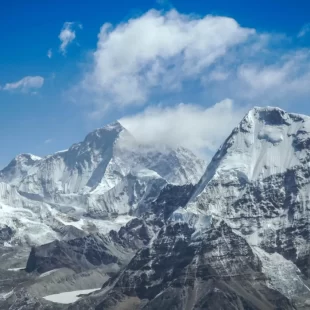
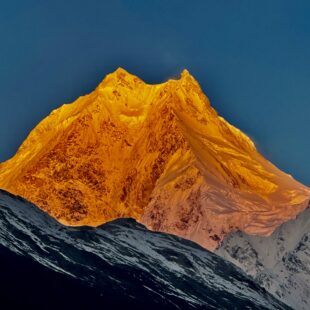
Mt. Everest Expedition via South Col, the world’s highest peak straddles the border between Nepal and Tibet / China. The North Col of Mt. Everest is situated within the Rongbuk areas of South East Tibet / China.
The South side known as Col is located around the high Khumbu valley towards Nepal’s North Mid-Eastern Himalayas.
Enjoy the Everest Expedition adventure with Vertex Adventure to follow the footsteps of legendary mountaineers Tenzing & Hillary. They are the first to reach on top of the world’s highest Mt. Everest on May 29th, 1953.
The Mountaineering adventure trend continues till the present, where thousands of climbers from all over the world have reached the summit. Interested people can join us for the classic adventure climb with us, the main purpose of climbing Mt. Everest. It is to feel and experience being on the rooftop of the world, facing a jaw-dropping panorama of the Himalayan range of peaks. Truly an adventure of a lifetime despite the risk of traversing over the most difficult section of the climb.
Is crossing over Khumbu Ice Fall, to reach higher Camp II-III to IV, where the final summit bid takes place. For the climb, five camps are required including base camp. The last final Camp IV is located near South Col, on the route of Mt. Lhotse and Mt. Everest summit.
Mt. Everest Expedition via South Col requires more than a month or more, and good logistic support is important. All Mountaineering Expedition requires the best supporting and well-organized team of staff and guides to make the expedition a great success.
The height of Mt. Everest is revised from December 2019 at present stands at 8,848.86 m or 29, 031 feet. The new measurement declared by both sides of the Governments Nepal and China, makes extra few meters to challenge.
The climb of Mt. Everest and preparation begins at Kathmandu, and then flying to Lukla. The aerial distance from Kathmandu to Mt. Everest is approx. 163 km and 100 miles. From Lukla, the walk begins to Everest base camp to cover a distance of 65 km or 40 miles. A scenic and pleasant walk leads through several lovely Ghat, Phakding, and Monjo villages to enter Sagarmatha National Park.
Sagarmatha is a name for Everest in Nepal, and the Sherpa calls as Chomolungma of Tibetan origin language. Both languages mean a Great Ocean of Mothers, the park listed in World Heritage Sites.
Slowly the trail takes you uphill to the famous Namche Bazaar, the capital of Khumbu Sherpa. Namche Bazaar is an enjoyable place for an extra day of rest, as well as for acclimatization and exploring its scenic viewpoints. From Namche Bazaar adventure continues on the scenic trail to reach the beautiful Tengboche Monastery. An interesting religious place to visit and get blessed for a safe and successful climb.
On leaving behind the trees and lush vegetation, and then enter a wild barren mountainous country. The walk proceeds through Dingboche and Lobuche to Gorakshep, the last settlement before Everest base camp.
The trail follows towards rocky areas and moraines till the walk ends on reaching Everest base camp. The camp will be set on top of rocky and ice on available flat space to establish the base camp. From here the real action begins for a daring and dramatic adventure to the top of the world’s number one peak.
From the base adding more than five camps to reach the summit of Mt. Everest is an activity of ferrying loads. As well as setting and storing gear and foods on respective higher camps and then waiting for the right clear weather. To reach on top of Mt. Everest from the last camp, enjoying the spectacular views of surrounding giant peaks. On feeling in high spirits standing on rooftops of the world, a descent is hard and tough as an ascent.
As well as taking the time and carrying the remaining gear from each camp back to Base Camp. An enjoyable moment after packing and clearing the camps, leaving nothing but only the footprints. Then back to Lukla for the last overnight before reaching Kathmandu. After an overwhelming experience and adventure on Everest Expedition via South Col.
Detail Itinerary of Mt. Everest Expedition via south col
On arrival at Kathmandu Tribhuvan International Airport, our guide and staff receives you. A short transfer to your hotels in the heart of Kathmandu city.
On checking into lovely rooms, after getting refreshed our guide will briefs providing information for Everest Expeditions. As well as of the hotels, lodge while trekking and camping on climb. Includes other useful information with welcome dinner.
Car 30m
Accommodation 5 star Hotel
Meals Dinner
Altitude 1300m
A spare and reserved four days for the trek and climb preparation and collecting permits and other documents required for the expeditions.
The rest of the group can enjoy booking a sightseeing tour around world heritage sites within Kathmandu visiting Old Durbar (palace) Square, and the ancient stupa of Swayambhunath, after a tour head back to the hotel with preparations for Everest Expeditions and trek to base camp.
Second day in Kathmandu optional tour and expeditions preparations and group briefing from our head guide and group leader. On this day complete all formal documentation for Everest Expeditions and all should complete packing for the next morning’s flight to Lukla.
Accommodation 5 Star Hotel
Meals Breakfast
Altitude 1300m
Morning transfer to Kathmandu domestic air-terminal for early flight to Lukla, as time to board in a small aircraft. The plane heads east facing superb panorama of Himalaya range of peaks with Mt. Everest, then landing at Lukla airport.
A moderate town, where walk starts heading down to Dudh Koshi River valley through several Sherpa villages. Festooned with prayer flags, Buddhist monument and prayer wall then reaching our first overnight stop at Phakding village.
Multiple Driving / Flight/ walking
Accommodation Tea House
Meals B/L/D
Altitude 2846m
Today’s walk to Namche Bazaar, morning having nice breakfast the trail leads up and down to Benkar village. Cross over a long bridge to Monjo village to enter Sagarmatha National Park, as walk leads to cross another bridge.
Then reaching Jorsalle for lunch stop, the last village before Namche Bazaar, afternoon walk following a river bed. As climb starts on crossing the last high bridge, an exciting long winding uphill within forested path to Namche Bazaar. On reaching Namche transfer to a nice lovely lodge for overnight stops, facing views of Kwangde and Tharmasarku peaks.
Walking 6 hrs
Accommodation Tea House
Meals B/L/D
Altitude 3440m
A perfect place and right altitude for rest day as well for acclimatization, morning take a short hike. The top of Namche high ridge offers grand views of Mt. Everest, Lhotse and Nuptse with Ama Dablam. Includes series of peaks, visit the park museum nearby, an interesting place to get information of the Khumbu areas.
For energetic people, enjoy few hours steep climb up to Everest View Hotel for glorious view of Mt. Everest. The first deluxe and luxury hotel of Khumbu and Everest region at 3,880 m high. Afternoon relax or take a stroll around the streets of Namche Bazaar lined with shops and many nice restaurants.
Walking 6 hrs
Accommodation Tea House
Meals B/L/D
Altitude 3440m
Adventure continues on leaving Namche Bazaar towards our destinations, morning walk on scenic wide path. Overlooking views of giant snow peaks as walk leads into lovely forest and down to Phunki Tenga near Imjatse River.
A small place popular for lunch and refreshing stops, afternoon few hours climb up to Tengboche and the monastery. One of the best beautiful spot for a short moderate trek, where one can enjoy panorama of Everest. Includes view of towering snow-clad peaks at close distance in the harmony of beautiful forest surroundings.
At Tengboche after checking into a nice rooms facing views of peaks, with time for short tour of the monastery. Observe the monastery interior and main prayer large hall adorned with tall statues of Buddha with various saints and Gurus.
Walking 5 hrs
Accommodation Tea House
Meals B/L/D
Altitude 3867m
After a wonderful stop at Tengboche with glorious morning views of Mt. Everest and majestic Ama Dablam. Walk down to Imjatse River and cross a bridge from here tree lines stops for short alpine bush and shrubs.
A slow gradual climb leads to Pangboche village, the last permanent settlement on route Everest base camp. From Pangboche walk up to Somare for possible lunch stop with close views of staggering Ama Dablam peak.
Afternoon walk leads on gentle uphill path, can be quite windy walking on exposed terrain. A short down to a river, then climb to Imjatse valley where Dingboche is situated, beneath North Face of Am Dablam
Walking 5 hrs
Accommodation Tea House
Meals B/L/D
Altitude 4410m
Enjoy an extra two days at Dingboche, a lovely location amidst high mountain range that encloses the Imjatse valley. A nice hike to Nakarjung hill above Dingboche offers sweeping panorama of surrounding snow mountain range.
Includes superb view of famous Island Peak with Mt. Makalu in the east direction with array of giant peaks. Afternoon at leisure to explore around Dingboche a moderate settlement with number of good lodges.
Walking 4 hrs
Accommodation Tea House
Meals B/L/D
Altitude 4410m
Having an enjoyable rest at Dingboche, adventure continues with short steep up and then on gentle uphill to Thugla. A small spot with few tea-houses and lodges, where route from Pheriche and Dingboche meets. A possible lunch stop, afternoon a steep haul up to Thugla ridge top, and then on gradual pleasant to Lobuche. Located on west end of a wide valley with several good lodges with grand views of Nuptse peak.
Walking 5 hrs
Accommodation Tea House
Meals B/L/D
Altitude 4960m
Morning starts heading towards our main destination to Everest Base Camp, walk for few hours with short steep climb in between over glacier and moraine, reaching Gorakshep, beneath Mt. Pumori and Kalapathar. Interested people can enjoy a side trip with steep climb for few hour on top of Kalapathar Hill.
A popular and famous scenic view-point for closest look of Mt. Everest at a mere distance. After the climb of Kalapathar with exciting panorama of surrounding giant peaks. From Gorakshep continue walks to Everest Base Camp, on reaching base camp. The tents will be there already set by our advance team of staff, as well stored the climbing equipment. Including most foods for the climb, after lunch rest and enjoy the view of notorious Khumbu Ice Fall and glaciers.
Walking 7 hrs
Accommodation Tea House
Meals B/L/D
Altitude 5170m
Today after collecting all needful climbing gears from the porters and Yaks, getting busy sorting out the equipment’s and planning. As well having practice climb before heading for the big climb to the summit of Everest.
Full three days collecting and sorting out the gear and foods for further high camps, as well having rest, enjoy practice climb using the climbing gear.
A final meeting from the Leader and the guide, information of climb and obstacles to encounter, as well for safe descent.
Walking 3 hrs
Accommodation Tent
Meals B/L/D
Altitude 5364m
We have reserved 30 full days for the final ascent of Mt. Everest
We have reserved 30 full days for the final ascent of the Mt. Everest summit. As well as preparation for the great climb, due to some technical difficulties at the massive tumbling boulders of Khumbu Ice Falls.
Preparation and the climb of Mt. Everest in 20 days:
The Base Camp:
The Base Camp is used mainly for climbers to get their bearings and acclimatize; most will spend a couple of weeks here before their first ascent to Camp 1. Base Camp sits at an elevation of 5,364 m or 17, 598.43 feet high.
Camp I: This is the first camp that climbers have to reach after ascending the Khumbu Icefall. It is at 6,065. 52 m or 19,900 feet.
Camp II: Also known as Camp ABC (Advanced Base Camp), this is technically the second camp that climbers reach after climbing through the Western Cwm. At the height of 6, 400. 8 m or 21,000 feet.
Camp III:
The second to last camp before the final summit push is where climbers have to face some technically challenging sections. Climbers will need to ascend via the fixed rope that’s attached to a ledge on the Lhotse face; before climbing another 5,500 m or 1,640 feet to reach the final camp before the summit.
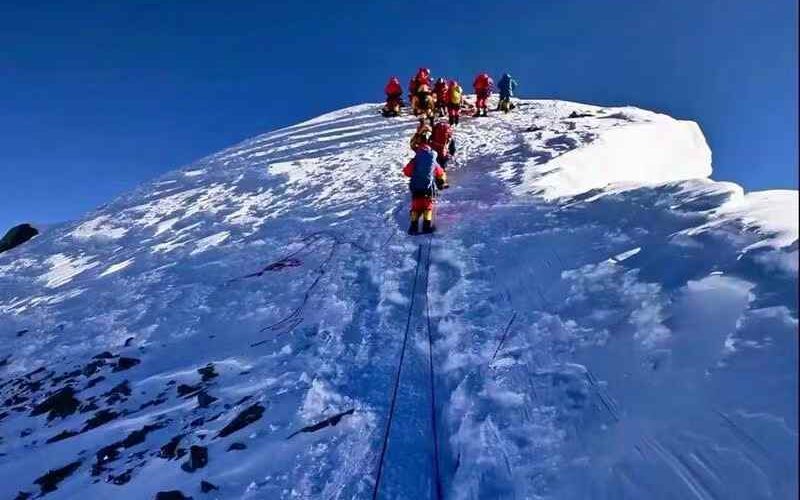
Camp IV and to the summit: At 8412.48 m or 27,600 feet, climbers will begin the final push to the summit, starting at the ‘Balcony.’ At the snow dome ridge, climbers will then spend the next 10-12 hours (starting at midnight) climbing to the summit.
Walking 7 hrs
Accommodation Tent
Meals B/L/D
Altitude 5363 to 6413m
This day all climbing member and guide, including staff should reach at base camp, to assist packing equipment’s and checking each member health condition after the great dramatic climb of Mt. Everest.
Walking 6 hrs
Accommodation Tent
Meals B/L/D
Altitude 8848 to 5364m
Start packing the climbing gears and disposing garbage at proper sites, where SPPC (Sagarmatha Pollution Control) will check the camp and depose the litter to take away from the base camp to disposal sites or back to Kathmandu.
Accommodation Tent
Meals B/L/D
Altitude 5364m
This morning after a successful triumph of world’s highest peaks, return journey to Gorakshep and then walk to Thugla. From here on downhill to Pheriche, walk across a windy valley, after a nice pleasant walk reach Pheriche for overnight stop. Pheriche with many good lodges and a health post run by HRA (Himalayan Rescue Association).
Walking 5 hrs
Accommodation Tea House
Meals B/L/D
Altitude 4240m
Return journey much easier losing heights every hours, walking downhill with few long ups to Tengboche for possible lunch stop. After a good rest at Tengboche, head downhill to Imjatse River, and then steep climb for an hour to Sanasa village. From here on gradual path with short ups and downs to Namche Bazaar for overnight stop.
Walking 7 hrs
Accommodation Tea House
Meals B/L/D
Altitude 3440m
A leisure morning with short and last trek to Lukla to reach on time organizing a party among crews and fellow members. Start the walk following a pleasant trail past Ghat and Choplung villages. As climb leads for an hour reaching the famous gate of Lukla, a short walk to your lodge close to the Lukla Airport. Reaching by lunch time, as well for last night dinner and celebrating the success of Mt. Everest climb enjoy the party among fellow climbers and staff.
Walking 8 hrs
Accommodation Tea House
Meals B/L/D
Altitude 2660m
From Lukla taking an early morning flight back to Kathmandu or land at Manthali town airport in Ramechap district. After a short sweeping flight and great landing, transfer to our vehicles for exciting drive to Kathmandu and check into respective hotels with rest of the day free at leisure.
Multiple Flight / Driving
Accommodation 5 Star Hotel
Meals Breakfast
Altitude 1300m
A spare days in Kathmandu in case of flight delay and cancellation due to unfavorable bad weather which might occur, as the Himalayan weather can be unpredictable sometimes if all goes well have a free day or sightseeing tour of Kathmandu-Patan and Bhaktapur. Having another party after completing the successful Mt. Everest Expeditions, on these days the leader and guide will hand over the expedition reports. To Nepal Government Tourism department, evening enjoy the farewell group dinner.
Accommodation 5 Star Hotel
Meals Breakfast
Altitude 1300m
Last day in the country full of amazing adventures with high Himalayan peaks, after a wonderful experience; with fond memories of Everest Expedition.
Vertex Holiday staff transfer you from the hotel to airport as per your international flight time for your final departure homeward bound or to respective destination.
Car 30m
Meals Breakfast
Includes/Excludes
What's Included?
Arrival & Departure: During Nepal All Arrival and Departure Transfer from the airport to the hotel and vice-versa.
Kathmandu Room : 4 Night Twin sharing rooms at 5 stars Hotel in Kathmandu on Bed / Breakfast basis.
Domestic flights : Kathmandu / Lukla / Kathmandu.
Accomodation & Food: Full board trekking on a lodge basis till Lobuche includes B-L-D with twin sharing room basis & Base Camp 3 Times (Breakfast, Launch & Dinner)
Permit :Applicable Climbing Royalty fee and National Park permits.
Oxygen (02); 5 Oxygen Bottle (4ltr) for Climbers and 3 Oxygen for supporting Sherpa Guide
Back Up Oxygen : Back up Oxygen Cylinder, mask, and regulator (with appropriate charge).
Walkie Talkie & SatelitePhone: Walkie-talkie Satellite Phone for communicating from Base Camp to Mountain and Mountain to Base Camp for all members and staff including permit.
Internet Service : At Base camp available internet ( Subject to Extra chrage)
Medical Kits, ropes, and oxygen for staff and guides only.
What's Excluded?
Personal Medical / Travel Insurance.
International Airfare
Single room supplement in Kathmandu Hotel and on trekking in local lodges at extra cost.
Personal expenses Satelite phone calling bill, laundry, tipping, soft/hard drinks, and extra meals on treks.
Emergency evacuation by any means of transportation or using a helicopter service.
Camping Services including tents and food above Camp-II on own arrangement.
Early return from expedition due to personal reasons or problems as well being sick etc. The money will not be refunded by the company for all expenses to borne by oneself.
trekking and climbing gear including sleeping bags, down jackets
Tipping of trekking/camping staff, cooks, kitchen staff, and porters and of climbing guides.
Essential Information - Mt. Everest Expedition via south col
Everest Expedition Preparation:
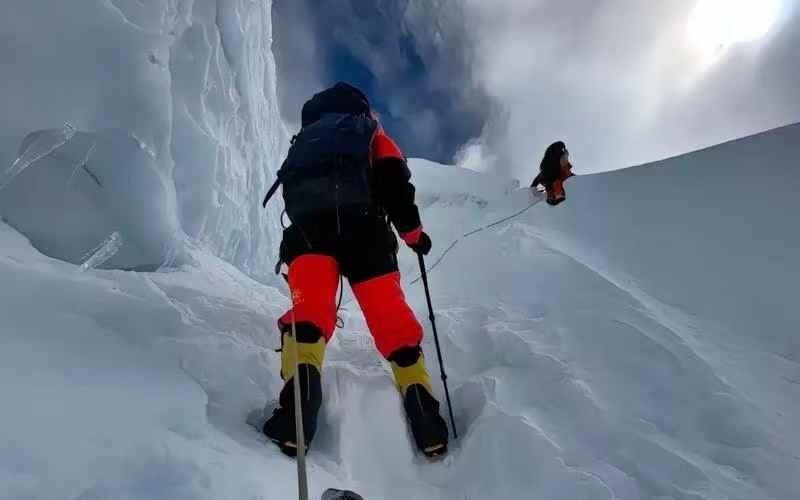
For Everest Expedition Spending a few days at base camp above 5,364 m, then sorting out gear and food. Then carrying loads of less than 20 kgs to Camp-I, II, and III to IV and V. The technical difficulty is going through the Khumbu Icefall, where safety measures are taken care of by the crew.
The climbs require a minimum of five camps with base camp with the last Camp IV. Makes the expeditions a great success with safe climbing to reach the summit within 30 days, starting from base camp. The last Camp IV close at South Col ridge that connects to Mt. Lhotse.
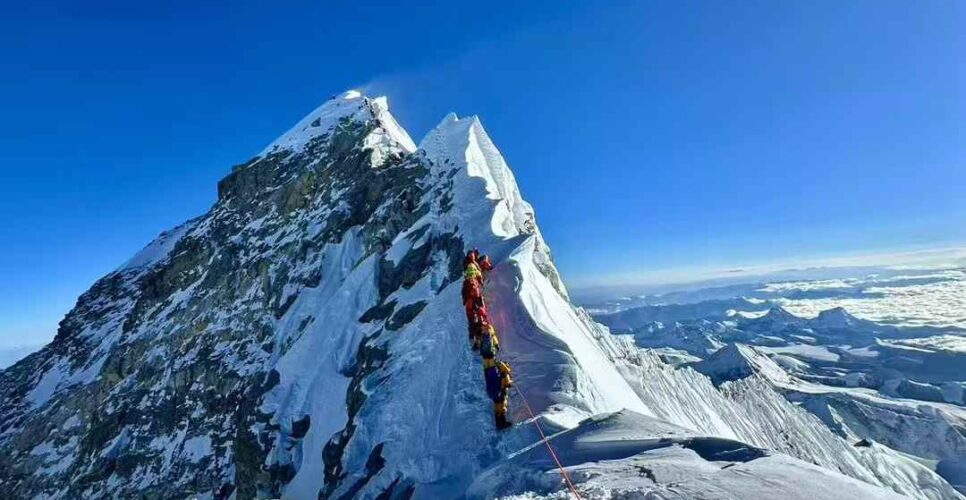
The final climb leads to cross the last section on Hillary’s step to reach the top summit. The Hillary Step is a technical section of this climb beside Khumbu Ice Falls. The climb from the South Col route is technically more straightforward than the North Col (Tibet side), except for Khumbu Ice Falls.
As soon the weather is favorable, then start for the final bid to the top of Mt. Everest summit. After a strenuous effort and having a tough time climbing to each camp and then on top. Rewards with amazing panoramic scenery on both sides of Mt. Everest. Overlooking the Tibet plateau on the North and the South on the Nepali side. After a wonderful memorable experience descent leads back safely to base camp, spending a few overnights on previous camps en route base camp.
Short outline itinerary a Glimpse of Everest Expedition:
Day 01: Arrival in Kathmandu and transfer to hotel Day 02 to 05: In Kathmandu preparations for Mt. Everest with optional tour. Day 06: Fly to Lukla 2,830 m & trek to Phakding 2,640 m – 04 hrs. Day 07: Trek to Namche Bazaar 3,440 m – 05 hrs. Day 08: Rest day at Namche Bazaar for acclimatization and excursion. Day 09: Trek to Tengboche 3,867 m- 05 hrs. Day 10: Trek to Dingboche 4,410 m -05 hrs. Day 11-12: At Dingboche for rest and acclimatization and short walks. Day 13: Trek to Lobuche 4,930 m – 05 hrs. Day 14: Trek to Gorakshep 5,170 m and climb to Kalapathar walk to Everest Base Camp 5,364 m – 07 hrs. Day 15-16-17: At base camp acclimatization and preparations. Day 18-47: (30 days) Ascent of Mount Everest and withdrawal to Base Camp. Day 48 to 50: 3 days to return all team members to re-group at Base Camp. Day 51-52: Cleaning up the base camp and packing for the return journey. Day 53: Trek to Pheriche 4,240 m – 05 hrs. Day 54: Trek to Namche Bazaar – 07 hrs. Day 55: Trek to Lukla – 04 hrs. Day 56: Fly back to Kathmandu and transfer to hotels. Day 57-59: In Kathmandu handing reports to the concerned Government Tourism Department. Day 60: International departure for home ward bound.
Please Note:
The above itinerary is just a guideline on the climb it may take more or less time. Depends entirely on weather conditions and with a mass flow of climbers using the same route to the summit. The itinerary days as predicted for 20 days may take longer. In this case, our group leader and head guide will adjust and maintain the itineraries. Although it can take longer than the total days of 42 / 43 days, in this situation an extra charge will be added.
Expedition -Equipment List For Everest Expedition:
Ruck Sack 1
Head Light (Torch) 1
Koflach / One Sport Boot 1
Gaiter 1 Pair
Socks 15 Pairs or more.
Sun Glass 1 as well as spare snow/sun goggles.
Water Bottle & Thermos 1 or 2 Ltr.
Swiss Knife 1
Gloves Down & other for Climbing (5 – 6 Pairs)
Down Suit 1 Set
Gortex Suit 1 Set
Crampons 1 Pair + 1 Pair spare
Karabiner 4-5 Pcs (lockable & without lock)
Jumar 1 Pcs
Down Ripling (Descender) 1 Pcs (Air ring)
Cap 1 for Climbing & 1 for Summit
Ceiling 1 Pcs.
Inner clothing Trousers & Vests Batteries For Sherpa & members as well Oxygen, Regulator & Masks.
Most Asked Questions by Travellers
In the Nepal Himalayas, there are two types of mountaineering expeditions, below 6,500 m it is known as trekking peaks. Which is a smaller-scale mountaineering expedition of alpine-style climbing for a day or more to two days.
The major mountaineering expeditions involve above 6,500 m, 7000, and 8,000 meters peaks. Large-scale and full-fledged mountaineering expeditions require a minimum of a week to a maximum of 2-3 weeks. To reach the summit of designated peaks and back to base camp. As well the Climbing and Royalty Fees are different for all peaks depending upon elevation wise.
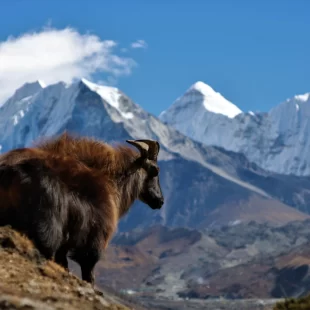
For Everest and other mountains around Khumbu areas Yaks and Zhopkyo, a mixed breed and mules are used depending upon the region of expeditions.
For Everest expeditions yaks and Zhopkyo, including porter, are used to carry loads to respective base camps.
Nepal has four main seasons, spring from March to May, and summer/monsoon starts from June to August. Includes autumn/fall begins from September to November with the winter season starting from December to February.
The best times for mountaineering expeditions are spring and autumn as well as the high times for trekking and other adventures.
Depending upon the peaks from above 6,500 m to 8,000 m, a group of maximum 12 climbers. Can share the climbing permits as per rules of Nepal Tourism Department. The fees for climbing major peaks vary according to the heights of mountains, as well for sharing basis.
Depending upon the region of the mountain chosen for the climb, most peaks above 7,000 m and 8,000 m. Are located around mainstream trekking areas, for Everest, using standard lodges throughout the trek. Rooms are neat and clean with large warm dining having fireplaces, but most places with common baths and toilets. Where one needs to pay to use a hot shower at extra cost. On leaving the main trail, villages, and human settlements overnight in tented camping till the climb is completed.
Yes, on route treks where one can charge their electronic items like laptop, cell and etc. Paying an extra cost per hour per item. Most lodges run electricity either by normal hydro or solar power. But on leaving the villages and temporary settlements with lodges, there will be no facilities. Except if the expeditions have their own generators for the camping.
All food prepared by the lodge is hygienic and good, and you can order from the long list of menus. From continental, Chinese, Indian, Tibetan, and Nepalese foods, but for larger groups it is best to have set meals. Which will save time and fuel energy, the set meals will have variations from Nepalese, Indian, and continental foods.
The company does provide portable oxygen cylinders or small light canisters and Gamow Bags for high-altitude trekking and climbing peaks. But for major and smaller expeditions the climber will be responsible for the oxygen cylinders.
As per the norms and rules of the expeditions depending on includes and excludes from the trip cost.
Minimum 18 years old and maximum 70 years of age, depending on whether one can get medical insurance. In some special conditions above 70 years old has reached the summit of Mt. Everest. Elderly climbers require more guides to look after them from the base camp onwards.
Each and every mountaineering expedition is responsible, for booking for the climb from Nepal’s South side. Garbage deposit is paid by the expeditions for all from trekking peaks to major mountaineering expeditions. Which is refundable on showing the receipt issued by SPCC (Sagarmatha Pollution Control Committee). The base camp and higher camps on route to the summit, where all waste and garbage should be brought. At the base camp for proper disposal and to hand over to SPCC.