Best Short Trek In Nepal That Can Be Done Within 7 Days

Best short trek in Nepal that can be done within 7 days; the country offers many different regions, where one can enjoy it. Nepal is an amazing country full of natural wonders from the low land of warm Terai to cooler mid-hills. Extends towards higher rolling green hills to the mountainous terrain of the arctic zone with the world’s highest peaks.
Best short trek in nepal
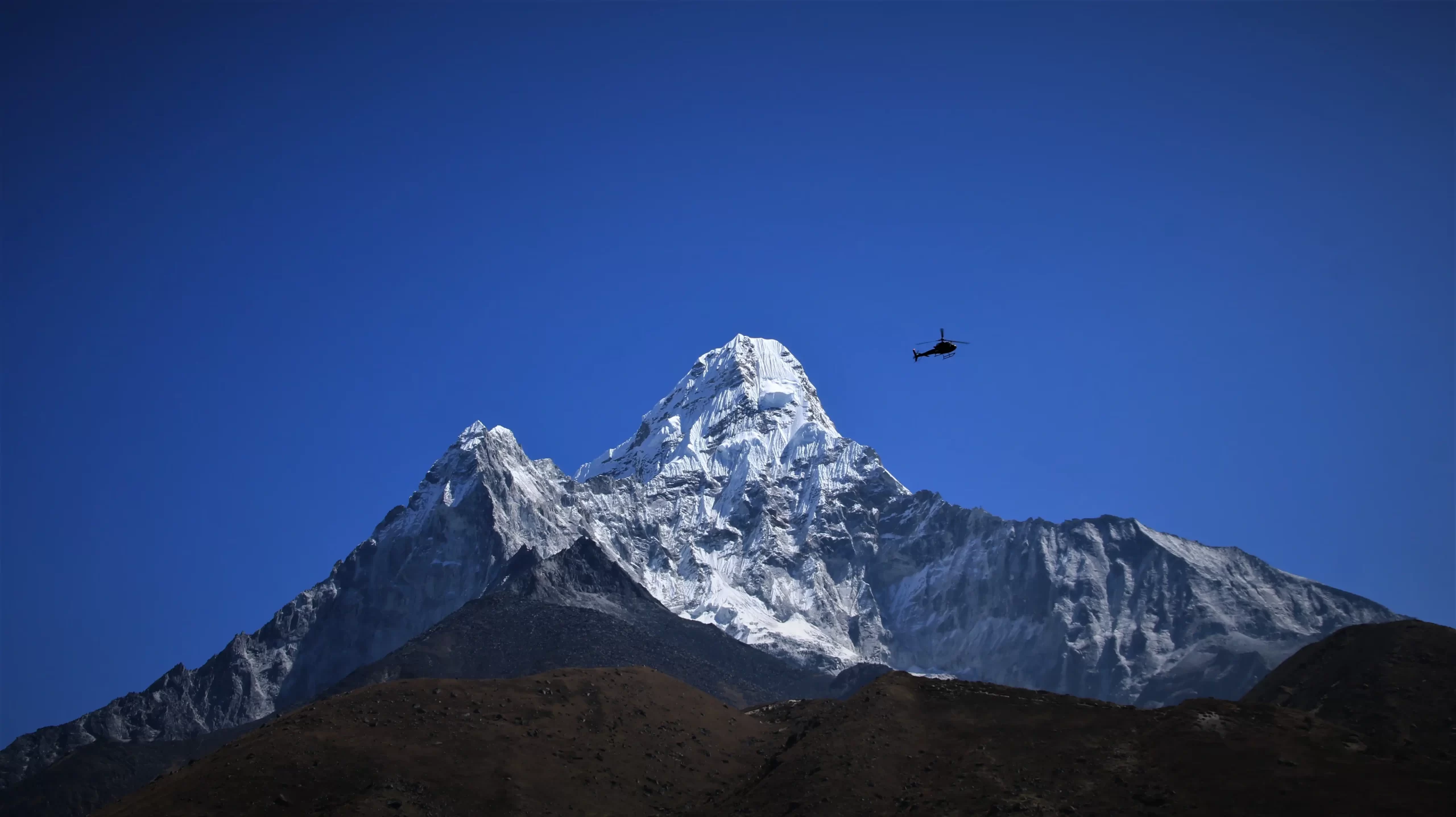
Mt. Amadablam

Nepal is a country with the world’s highest mountains and beautiful dramatic diverse landscapes; making it one of the premier grounds for all types of adventure activities.

Best short trek in Nepal The major influx of visitors in Nepal is for trekking around various Himalayan exotic destinations. Trekkers can choose various options from moderate to adventurous walks of a few days to a week or more. From Nepal Far East to Western Himalayas and around the Mid-Central remote Himalayas of Manaslu and Annapurna region.

Best short trek in Nepal that can be done within 7 days, with many places and regions to choose from. Likewise, Everest, Annapurna, and Langtang Himalayas are the best areas for short pleasant country walks. All short trekking of a week duration does not involve high passes nor the problem of getting high altitude sickness.

Best short trek in Nepal for 7 days, which all types of people can enjoy from families, and school/college groups to corporate executives.

Following moderate best destinations to choose from, for a week of trekking.

01: Langtang Valley Trekking:

Best short trek in Nepal Langtang valley is the closest and most beautiful mountain destination to the capital city of Kathmandu. Involves interesting drives both ways before and after the trek around Langtang valley within the Central Himalayas of Langtang Himal.

Langtang Valley treks take you to the beautiful settlement of Kyanjin Gompa, at 3,870 m / 12, 697 feet high. The walk starts from a nice Tamang village of Syabrubesi, then climbs gradually up to enter the river gorge. Covered in a dense forest of tall rhododendron, hemlock, pine, and fir trees with bamboo thickets.

Which makes it an ideal habitat for many different mountain wildlife like the endangered and elusive Red Panda and rare snow leopard. A haven during springtime, when wildflowers are in sessional bloom, especially the rhododendron of various species brightens the hills. An exciting walk amidst enchanting woodland then walks through Langtang village, as the gorge opens into a wide scenic valley.

Reaching Langtang valley enclosed by white snow peaks and rocky towering mountains, a fabulous to spend overnight in Kyanjin Gompa. Enjoy the grand vista in the harmony of Tamang traditional hospitality, and then on the return trek downhill to Syabrubesi. After a wonderful experience around the Langtang Himal range and within the picturesque green Langtang valley, drive back to Kathmandu.

02: Everest Panorama Trekking:

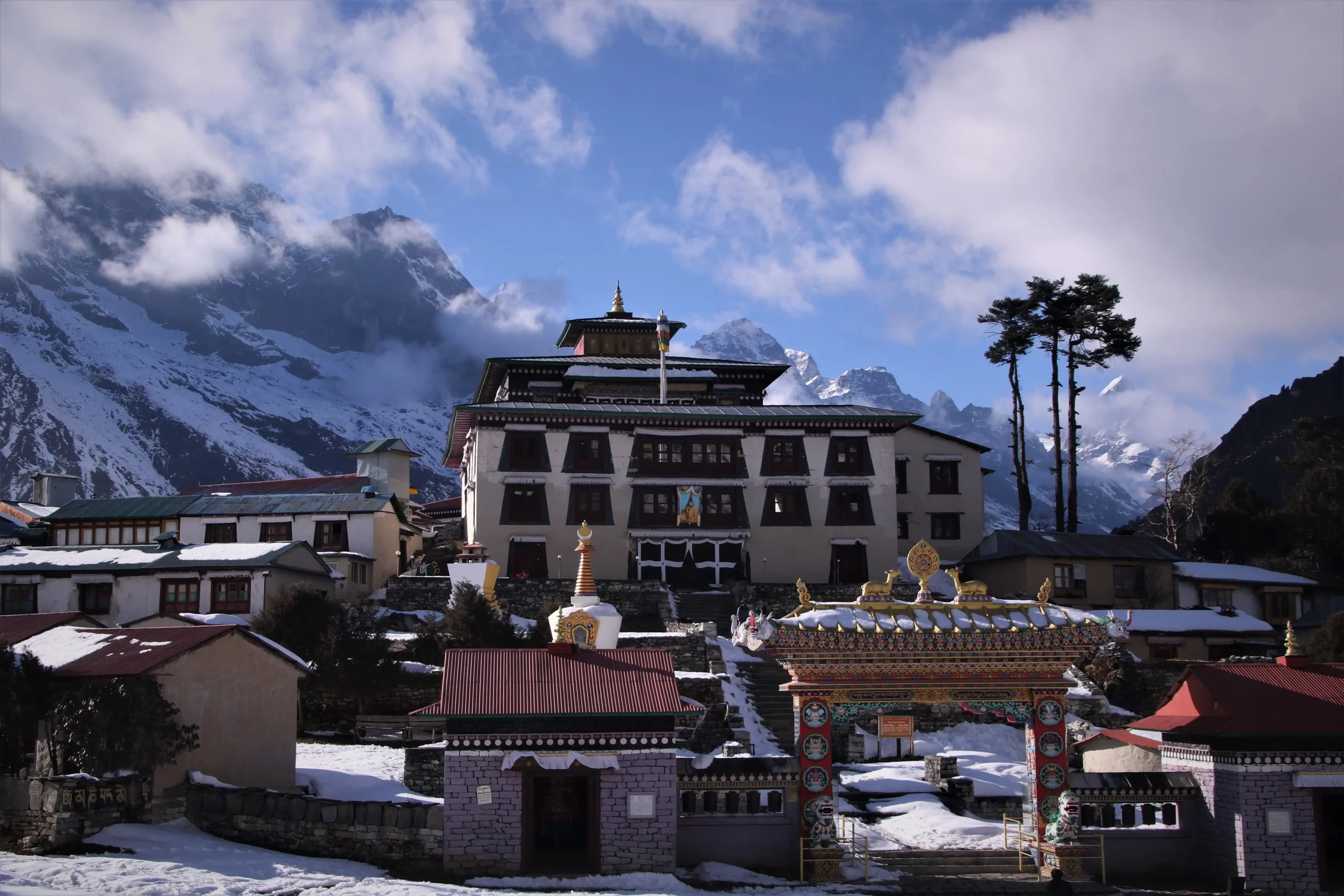
Best short trek in Nepal A wonderful and worth a visit to the high Namche Bazaar and beautiful Tengboche Monastery, facing a superb panorama of Everest. Everest panorama trek of 7 days from the start and ending point at Lukla, after a sweeping flight from Kathmandu.

Walk follows on a gradual moderate trail, and then up to the famous Namche Bazaar at 3,440 m high. Spending an extra day in Namche Bazaar for acclimatization and exploration to witness local culture and viewpoints. The adventure continues heading uphill to Tengboche and the monastery, located amidst high snow peaks with views of Mt. Everest. One of the best picturesque spots around the Himalayas with a colorful majestic monastery in the backdrop of Mt. Everest.

After an exciting and picturesque moment return journey to Lukla via Namche Bazaar for a panoramic flight back to Kathmandu.

Annapurna Base Camp Trek
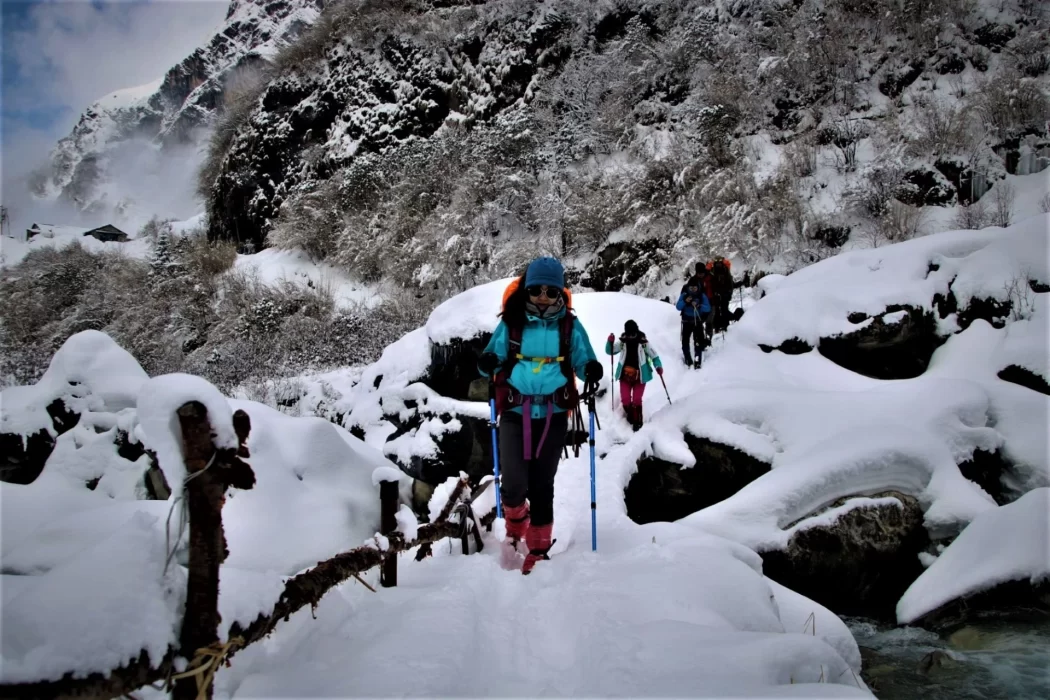
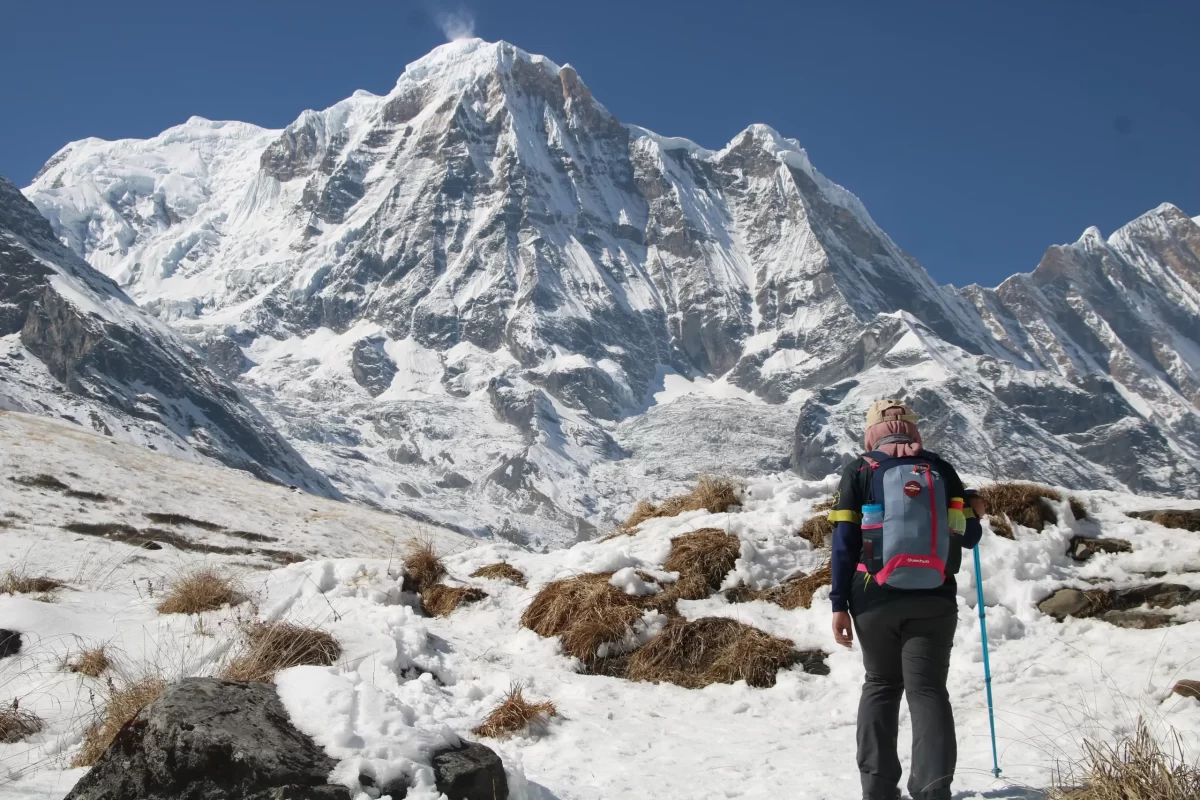
Hiking on the snowy trail to Annapurna Base Camp

03: Annapurna Panorama Trekking:

Best short trek in Nepal A short moderate trek to high scenic Ghorepani and Poon Hill at 3,210 m / 10,531 feet high. A popular and famous country walks around the southern hills of massif Annapurna Himalayas for a short and scenic adventure. Starts from beautiful Pokhara city blessed with the natural beauty of snow-capped peaks, rolling green hills, and serene lakes. Taking a drive towards the west reaching the nice village of Bhirethati to begin the trek heading uphill to Ghorepani village. Walk amidst enchanting woods of rhododendron and pine trees with constant views of Annapurna Himalayan peaks. Spend overnight in the cooler hill village at Ghorepani, and next early morning hike to Poon Hill. From the top of Poon Hill enjoy stunning sunrise views that reflect over a chain of Himalayan snow peaks.

A great vista facing the world’s three highest mountain ranges from Dhaulagiri, Annapurna to Manaslu Himal, includes majestic Machhapuchare Himal. After a glorious morning trek continues from Ghorepani to Ghandruk village and then down and up to Landruk. Finally, the walk completes reaching Dhampus village, located on a high ridge facing the grand panorama of the Annapurna Himalaya range. From Dhampus a short drive to Pokhara, after a marvelous country walks on the hills of Annapurna Himalayas.

04: Panchase Hill Panoroma:

Panchase Hill Panorama is a lovely and interesting walk, around the scenic rolling green hills of the Annapurna Himalayas. The trek begins from various starting points, but the most straightforward route is taking a boat ride. Across the calm Phewa Lake, and then climb to a lovely ridge top at Buddhist Peace Stupa.

Where the walk follows along the ridge line facing the spectacular panorama of the Annapurna, Dhaulagiri, and Manaslu Himalayan range. The trek passes through the nice farm village of Pumdi and uphill to Bhumdi village, as the air gets much cooler.

From Bhumdi village morning walk leads through a lovely cool forest of pines and rhododendron trees. As climb leads into a dense forest and lovely field of green meadows and pastureland to reach Panchase Bhanjyang. Located on the foot of high scenic Panchase Hill our target for next early morning.

After an overnight in a small nice local lodge, enjoy the morning hike of a few hours to Panchase Hill. At a height of 2,500 m / 8,202 feet, offers tremendous views of surrounding dramatic landscapes scenery. Enjoy the striking sunrise with a panorama of the Himalayan peaks of Mt. Dhaulagiri, Annapurna as far as the Manaslu Himal range. The return route with several options to choose from as your time allows, walk down to Bhadaure village. Then trek towards Bhirethati to Ghandruk villages and then end the walk at Landruk village. Where one can complete the walk by taking a drive back to Pokhara. After an enjoyable and marvelous short adventure of 7 days around Panchase and Annapurna High Hills.
Annapurna Base Camp Trek In March

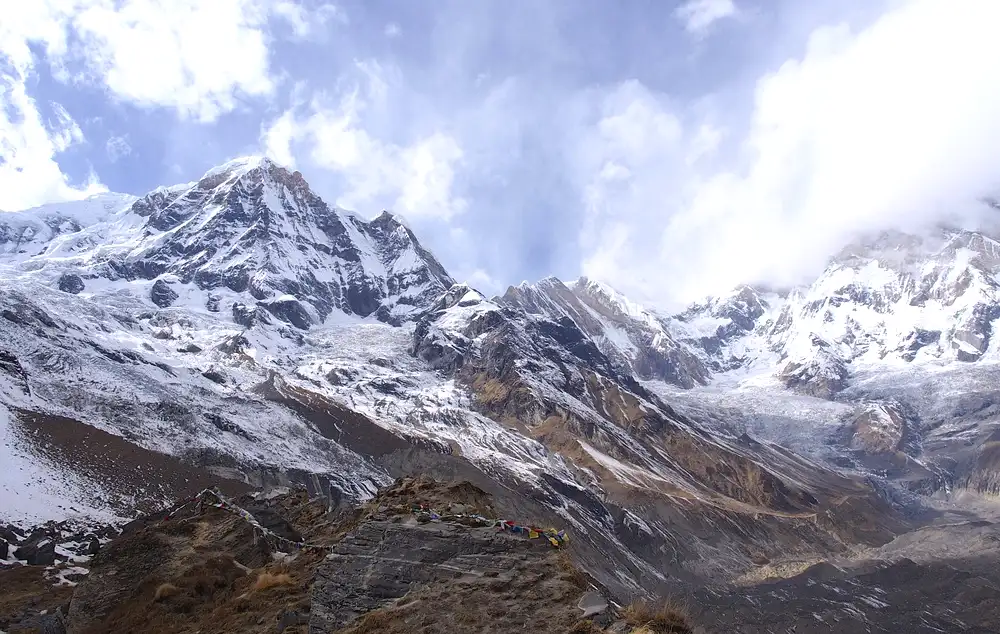
Annapurna base camp trek in March is one of the best seasons to enjoy pleasant country walks. When days are fine and crystal clear for views and scenic walks to the base camp of Annapurna Himalayas. Takes you right to the heart of the massif Annapurna range of towering peaks that surrounds the picturesque Annapurna Sanctuary.

Annapurna base camp trek in March is also a high and peak time for trekking and various adventures. However, cold mornings, as well in shady areas, and late afternoon till night time.

Annapurna Base Camp Trek in March
Hiking on the snowy trail to Annapurna Base Camp

Can expect chances of snowfall during the early springtime of March. The rolling green hills will be alive and bright with wildflowers blooming seasons that last till May. Especially the rhododendron flowers of different colors and species, from tall trees to dwarf bushes, known as Azalea. Includes other rare species of flowers found only in the Himalayas, like the blue poppy. Also called Meconopsis, Baileyi, or Himalayan Blue Poppies are delightful to see and take pictures of flora that abounds.

March is the month of the spring season, which falls in early spring from the post-winter times around the Himalayas. The young green plants and buds appear after the cold winter months; this is the time. When colorful birds and wild bees, and butterflies are actively flying over the natural garden that Mother Nature has created.

Annapurna Base Camp Trek In March The weather is mild, with enough sunny days, making the days much longer than in autumn and winter times. Making the trekkers enjoy covering much distance from one designated destination to another overnight halt.
The southern hills and valleys of the Annapurna Himalaya range get many moistures with enough rainfall also. This is why the Annapurna Himalayan hills are always fresh and green with dense mixed vegetation.

From the rainforest to coniferous and deciduous tree lines, an amazing country. Where lush green forest extends towards the arctic zone of ice, snow, and glaciers, the villages are much more active with farming and planting new crops to yield more harvest.

Exciting things to know why the name Annapurna for the massive mountains range:

Most great streams make big rivers fed by the glaciers of the massive Himalayan Mountains range. Likewise, Annapurna Himalaya and its group of snow peaks glaciers make the stream later join into a big river.

The network of rivers is very important to ecosystems as well as for mankind, as the glaciers feed the rivers. Eventually, it irrigates the vast crops and farm fields to yield good harvests and hence the name Annapurna. The provider of enough crops as ‘Anna’ means crops and ‘Purna’ for enough. The rightful, appropriate, and meaningful label for a perfect mountain range is Annapurna Himalayas.

Most trekkers and adventures around the world might be unaware that the first 8,000 meters peak ever climbed; in the history of mountaineering is Mt. Annapurna-I. It was conquered by the French Expedition way back in 1950, three years ahead, Mt. Everest was conquered. By Tenzing and Hillary on May 29th, 1953, Mt. Annapurna with a great classic history of mountaineering adventure. Mt. Annapurna Himalaya range holds a special place for all adventure lovers as well as trekkers.

Annapurna Base Camp Trek In March The area of the beautiful Annapurna Sanctuary and base camp was discovered by early pioneers and explorers in the mid-1960. The travelers were astonished and amazed at being in a place like heaven on earth, then christened the name Sanctuary. Meaning heavenly place amidst great holy mountain spirits, in the early days before western found the region of inner Annapurna Himalayas.

The Gurung native of Annapurna Himalayan southern range often ventured hunting for wild animals, like mountain goats and Himalayan Thar. As the flow of trekkers increases, at present, Annapurna Base Camp is one of the most sought adventure destinations.

Why enjoy the trek to Annapurna Base Camp in March:

Short Annapurna Base Camp Trek
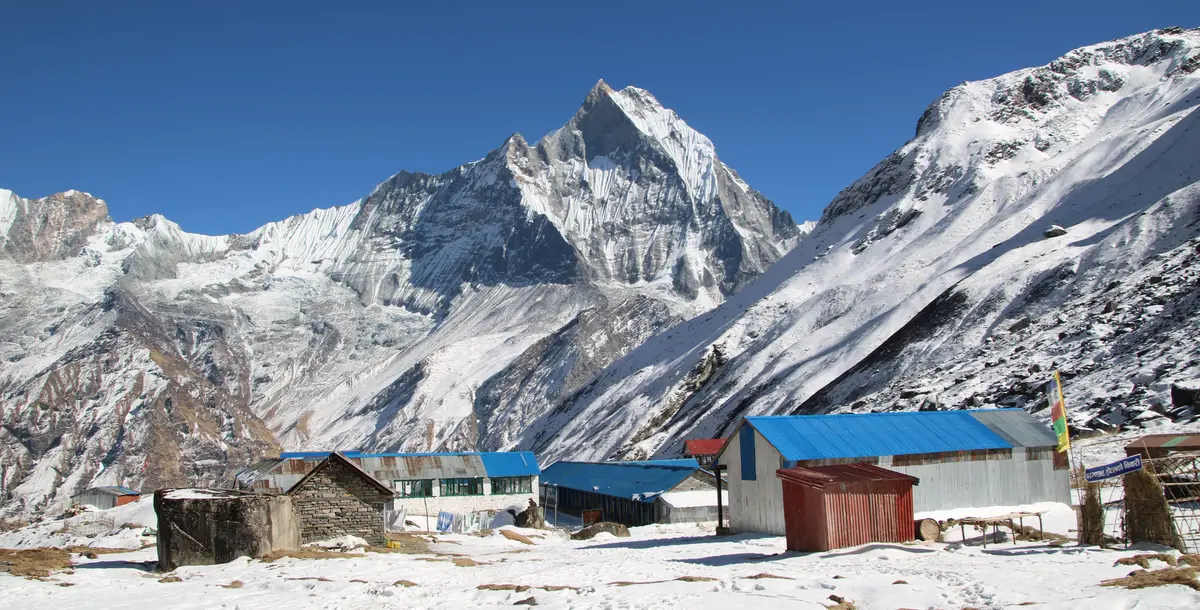
View of Annapurna Base Camp with Mount Fishtail

Annapurna Base Camp is the most scenic and shortest trek around the whole Himalayan region.

Where one can trek for a week or more, the most exciting and interesting of Annapurna base camp is that the trekkers enjoy the walks without any hassle of catching high altitude sickness or AMS (Acute Mountain Sickness).

The trek reaches 4,130 m / 13,550 feet high at Annapurna Base Camp.
Starting the walk from low as 1,000 m from scenic Pokhara city and beyond, where elevation gains at a gradual pace. Trekkers get well acclimatized, staying from one designated place to another throughout the walk to Annapurna Base Camp. The walking grade to Annapurna Base Camp and the sanctuary is moderate to adventurous and includes steep ups and downhill.

One of the most fascinating treks in all Himalayas, where the trek leads from low, warm sub-tropical to cooler hills, then ends at the arctic zone covered in ice, snow, and glaciers.

Various routes to enjoy Annapurna Base Camp in March:

The main starting and ending point of most treks around the Annapurna Himalayas is the scenic city of Pokhara.

Annapurna base camp trek starting and finishing points depend upon one interest and time duration. Trekkers can enjoy the Ghorepani Poon Hill trek around the southern scenic hills of Annapurna Himalaya.

Extending the walks joining Chomrong, the last permanent village on route Annapurna Base Camp. Which is the main village to Annapurna base camp and back to end the trek with drives to Pokhara.

The shortest route of a week is starting from Jhinu village to Chomrong and then trekking towards Annapurna Base Camp. Return journey on the same route to Chomrong and Jhinu, the village with natural hot springs to enjoy after the treks.

The other trail to choose is drive up the Ghandruk, one of the largest villages around the Annapurna region. As the walk continues, walk to Annapurna base camp, reaching Chomrong, and then on the main trail to ABC and down at Jhinu village.

The other alternative is either to start or include on the way back to Pokhara is on the trail from Dhampus. A village a mere distance drive from Pokhara, walk on the high ridges facing constant views of Annapurna Himalayas. Walking for a few days, then climbing to Chomrong village from Landruk, and then on the main route to Annapurna Base Camp.

Most of the trail and route to choose for the Annapurna Base Camp trek is perfect in March. Days are longer due to sunlight hours, as well the beginning of the spring season makes the walk lively and enjoyable.

Everest Base Camp Trek In March

Everest base camp trek in March is a perfect time to choose a wonderful high-altitude walk during the mid-spring of March. An enjoyable trek after a post-winter and at the beginning of the fresh spring season.Where hills and valleys are alive with greenery, as the young buds of wildflowers appear to the sunlight of early spring.

Everest base camp trek in March, although the trek can be done throughout the year, except during the wet monsoon times of mid-June to August.

The other preferable and favored time is in autumn/fall from September to November months. But trekking in March to Everest base camp or any of the Himalayan regions has its special charm and beauty.

Where days are much longer, and the sunlight appears in the early morning till its sets in the late afternoon time. It makes the walk enjoyable, covering the long distance to designated overnight stops, as well as the clear views of snow-capped peaks. Truly a blessed time of the year, with fresh, lively vegetation that springs up in the glory of March month. A refreshing season during March, when trekkers and mountaineering expedition gets active for various adventures, as well as big climb.

Everest Base Camp Trek in March
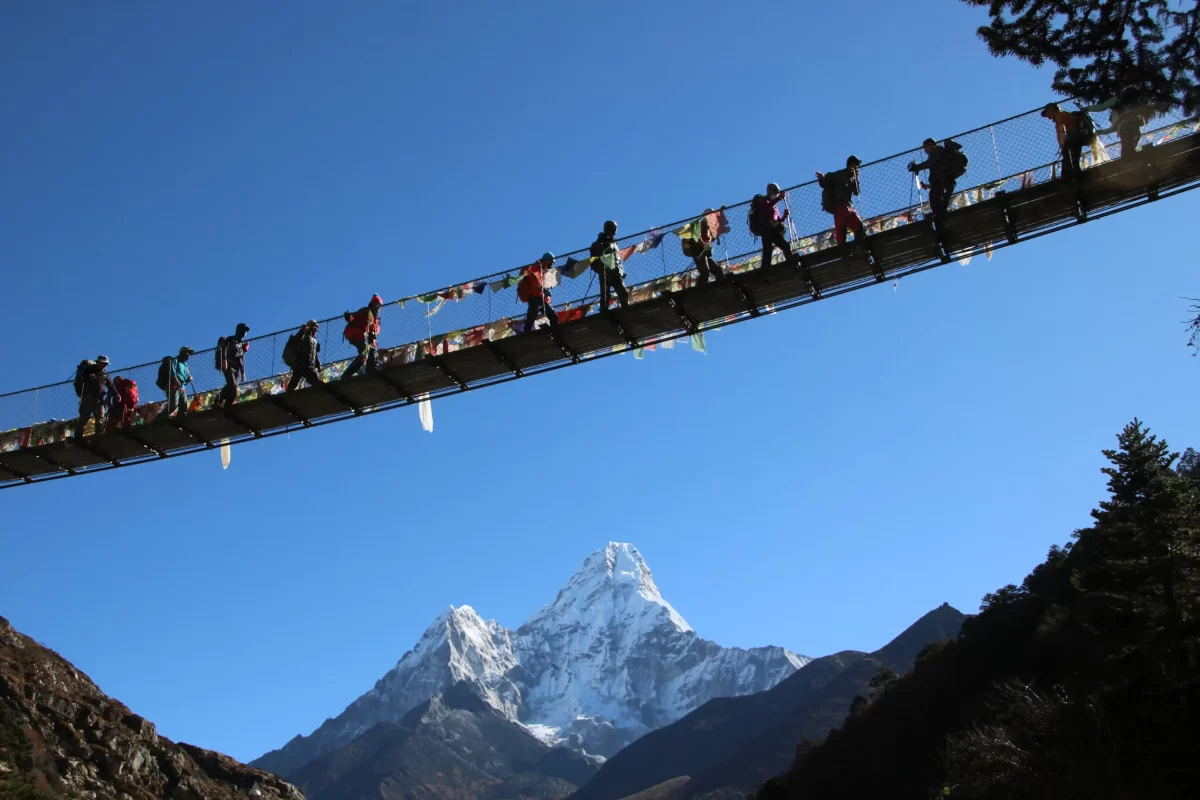
Mt Amadablam with a suspension bridge

March is probably the best month to enjoy, as well for local villagers getting busy in their farm fields. Planting fresh new crops sibling for a good harvest to come, and domesticated cattle can graze on the fresh meadows.

Not only for domestic animals and local villagers, but March is also the best time for wild animals and bird’s life. Where all can enjoy when the fresh green vegetation that comes alive after the cold winter months.
Certainly, a time to rejoice with clear mornings and evenings most of the days in March.

The Trekking Routes And Trails In March:

Everest base camp trek in March The first thing is the clear fine weather to fly in at Lukla’s Tenzing & Hillary Airport. Where March is the best month for small aircraft to fly around mountainous destinations like Lukla at 2,820 m high.

March is one of the right and favorable months for pilots to fly in a clear Himalayan blue sky. During air-borne, passengers can enjoy the best views of the Himalayan range of peaks, including Mt. Everest.

On landing at Lukla’s unique airstrip, the walk starts after getting refreshed and organized; the walk is enjoyable, facing grand scenery. Throughout the walk, the views of the Snow Mountains remain constant; however, can get a cloudy afternoon with a chill wind. But the night sky is bright with stars, and you will be warm in the comfort of nice cozy local lodges.

The trekking routes are well maintained, walking through nice, lovely villages adorned with the traditional heritage of age-old cultures. One can notice how lively the villagers are with their farm activities in the fresh spring season and month of March. The whole active scenario of the villages can be seen till the last village of Pangboche. The walk takes you to a lovely forested trail lined with tall rhododendron and pine trees. Reaching the high Namche Bazaar, having a rest day to support acclimatization as well as a scenic hike around the best viewpoints.

From Namche, climb up to Tengboche Monastery, and enjoy the forest surrounding bright and lively with wildflowers in bloom. At Tengboche facing, grand clear views of Mt. Everest and adjoining snow-capped peaks encircle the lovely scenic spot.

Around Tengboche and the monastery, bright and lively with magnolia and rhododendron flowers of different colors. Makes the Tengboche area a natural garden with various species of colorful flowers in seasonal bloom.

Enjoy the tour of the monastery of great religious and cultural interest of Buddhism, in the backdrop of Mt. Everest. The tree lines and green vegetation fades as the trail leads higher mountainous terrain into an exposed valley of Imjatse. Enjoying another free day at Dingboche for excellent views of towering giant mountains. Then heading higher into a dry, arid country, reaching the foot of Mt. Everest. Observe the exciting activities of the Everest expedition’s members, although the climb is planned for April and May.

The preparations take place from March, setting tents and storing gear for the climb at base camp. A great thrill to witness the movement of climbers from various nations within the remorseless fields of ice and glaciers.

After a great amazing walk to Everest base camp, the next early morning, a strenuous climb leads you to the top of Kalapathar. A famous and popular best viewpoint for a breathtaking panorama of Snow Mountains with Mt. Everest at a close distance.

Everest base camp trek in March Where March is the perfect month to catch clear views of the surrounding high peaks and Mt. Everest, the return journey leads downhill to Namche Bazaar and at Lukla for the last overnight stop, around scenic Khumbu and Everest region.

Temperatures, And Weather On Everest Base Camp In March: °

March is one of the best and right times for trekking, the beginning of the spring season with the main flow of trekkers. The temperatures vary altitude-wise, above 2,800 m to 3,500 m, and the daytime is fine with sunshine. Morning, in the shade, and late afternoon till night can be cold; the temperatures drop to -5° or + 5 Celsius.

Everest Base Camp Trek with Cho La Pass
Everest View

Daytime of 15° to 20° in exposed areas, the sun can be brilliant with strong UV (Ultra Violet) lights. Due to less oxygen and thin air, where all trekkers need sun glass, full-sleeved tops, and sunblocks. Chances of snowfall sometimes around the high altitude above 3,000 m or below. The afternoon wind-chill factor brings extra cold around the high elevation and exposed areas.

Highest above from Dingboche onwards to Lobuche and Everest base camp, the morning is pleasant with enough sunlight. The afternoon wind brings many cold and freezing temperatures, during night time and early morning before the sun comes. The temperatures can fall below -10° or more, and the daytime maximum is + 25 Celsius in direct sunlight.

It can get quite chilly while in the shade, and as soon the sun gets blocked by the clouds. Whatever the temperatures, March is a delightful time for Everest base camp trekking as well around the Himalayas.

How safe is Nepal for Travel in 2025 full updates

About How safe is Nepal for Travel in 2025 full updates

Nepal for travel is one of the best countries in the world for safe travel apart from natural calamities. This can happen anytime, anyplace but Nepal so far has been a secure place, without any hassle or problem. Where visitors can travel freely on their own, greeted by friendly Nepalese from cities, and towns to remote rural mountain villages. Nepal is a premier country for adventure tourism, where visitors can enjoy boundless exciting adventurous activities or simply relax. Nepal has always been a safe country to travel to due to the warm and friendly hospitality of the local people.

Where every guest comes as a tourist and leaves the country as a good friend and part of the Nepalese family. Travelers in Nepal have never been disappointed with the services and facilities provided by the concerned companies booked.

The Nepali people are quite different, as well the country’s cultures and traditional way of life. Nepalese are born to serve all guests, whether domestic or foreign travelers and everyone is equally treated.

Even during the difficult times, when the 2015 earthquake shook most of Nepal, the areas were still safe for travel. As well on Covid-19 epidemic times, Nepal was safe and more secure than the rest of the neighboring countries. Where a minimum number of people were affected by Covid, although foreign visitors decreased.

How safe is Nepal for Travel
On the way to EBC

Nepal for travel After a year when Covid disappeared from the country, tourism rose unexpectedly back to normal. The travelers found as the safest country to be in and to travel anywhere around Nepal. The reason the country is a favorite place to visit is due to the wonders of the Himalayas and its warm-hearted people.

The safest country in the world, although small but of great diversity in landscapes, and different tribes with immense cultures. Nepal with world’s highest mountain range with the 8th tallest peaks of above 8,000 m high.

From 2025 Onwards Great Wonderful Destinations For Travel:

The tourist sector is the main source and economy of the country, as well for millions of Nepalese. Which directly or indirectly affects the lives of Nepali people from the tourism industry that links to hotels, and restaurants. Including local products and handicrafts as well various items that visitors are interested in, visiting world heritage sites to outdoor activities.

Nepal is well prepared to receive and attract as many visitors providing excellent facilities around cities to the remote Himalayan countryside.

From 2023 onwards, the Infrastructure of Nepal, from basic facilities and system of serving the visitors and local community. Has developed, which includes mass transit and telecommunications networks as well with better public sectors.

Boosting more tourism arrivals, providing the best conveyance that the country can offer to make the visitors stay longer. Besides, the Government sectors offer various infrastructures to increase the arrival of foreign travelers.

The Nepalese are well aware of taking care of travelers offering the best services in every way. Making the guest time in Nepal more enjoyable with delightful moments, providing a wide range of boundless holiday destinations.

The country is also opening a few new areas, that were well hidden from the outside world, and are now it’s opened. Where all travelers can venture and explore the raw new terrain blessed with the natural beauty of the pristine wilderness.

An Amazing Country For Travelers With Various Places To Visit:

Nepal is an amazing country, where visitors can take delight and enjoy various types of adventure or leisure exciting tours. The country’s main flow of tourism is adventure tourism like trekking, peak climbing, and mountaineering.

Including Mountain Biking, White-Water rafting as well other different adventure sports activities to name a few. Likewise, the popular thrill of Paragliding, Bungee Jumping, Zip-Liner / Flyer, Ultra-Light Flight, Hot Air Ballooning, or cannoning the waterfalls. For every type of person’s interest, there are different ways to enjoy holidays in Nepal, like the wildlife safari. Where visitors can enjoy riding on elephant backs on the lookout for wild mammals and exotic bird life.

How safe is Nepal for Travel
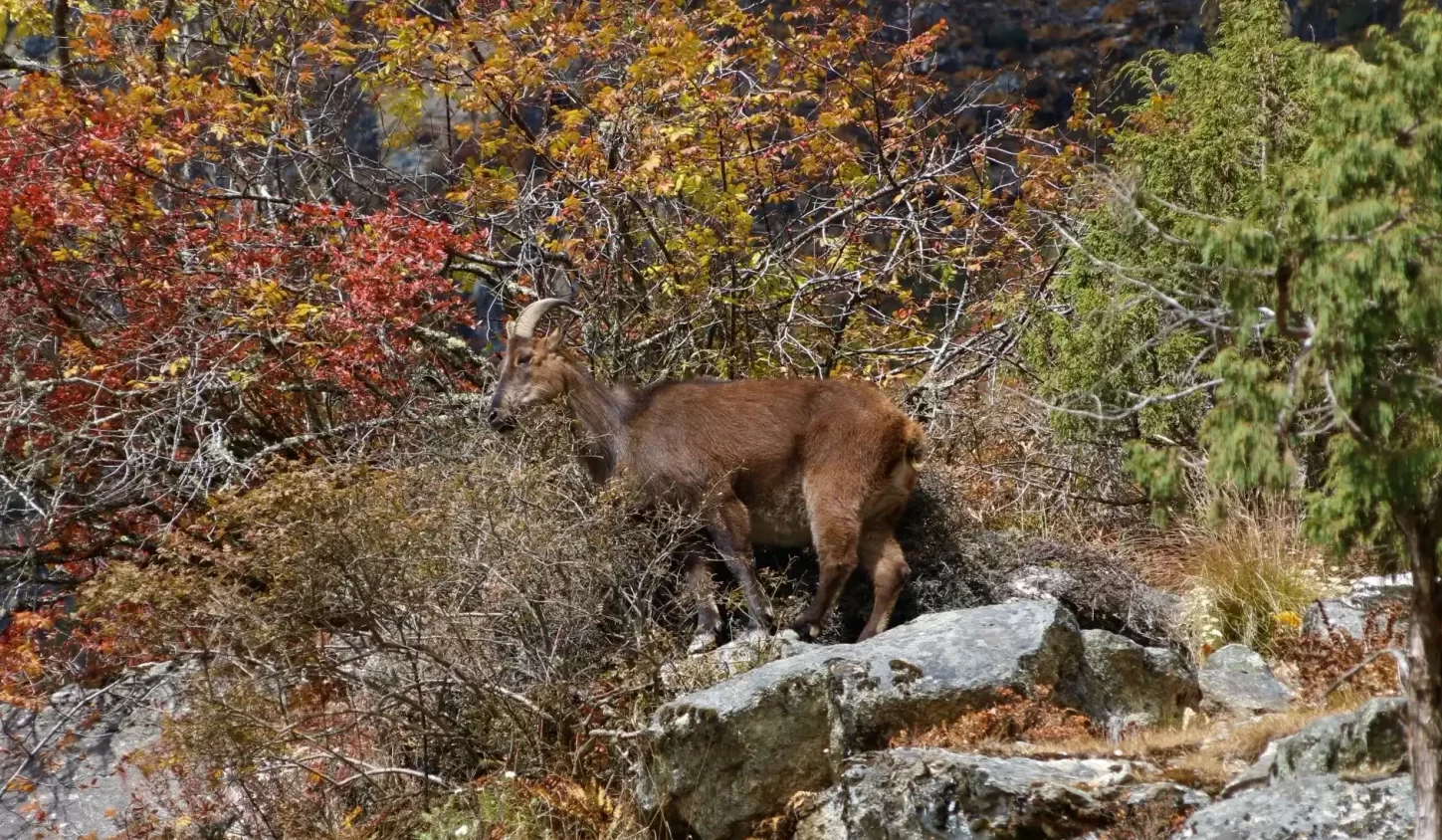
A Jharal in Sagarmatha National Park

Jungle Safari is around several nice national parks, the most famous is Chitwan National Park and the Bardiya National Parks. Chitwan is listed as Asia’s best national park as well as designated among world heritage sites.

Enjoy the serene dense tropical of low land to the high cooler hills of Langtang, Manaslu, Annapurna, and Everest. Having a choice of comforts from the budget, standard to luxury lodge accommodations within the backdrop of towering snow-capped peaks.

From 2023 onwards, travelers will enjoy all types of comfort of great delights visiting amazing places around Nepal Himalayas. Visitors with limited holidays can also have the opportunity to get closer to the Himalayan chain of mountains.

As well as having the best views of Mt. Everest by taking a regular Mountain or Everest flight of an hour. Interested people can also take a chopper joy ride having scenic and incredible moments, flying to the Everest region.

Overlooking the world’s number one Mt. Everest at a near distance, encircled by giant towering peaks.

Various ways to enjoy holidays in Nepal from 2023 onwards, from moderate, adventurous to challenging adventures. People who just want a relaxing vacation can experience the taste of the Nepal Himalayas and its cultures.

Just stay in a mountain lodge and resort in the harmony of serene surrounding with amazing scenery of the Himalayas.

Nepal offers more than one can expect from nature hikes, high-altitude trekking, or just spending a few days at Home-Stay. An enjoyable holiday for all age groups, where one can mix with the locals, and be part of local cultures.

Nepal For Travel All Seasons To Enjoy Scenic & Cultural Destination:

Nepal for Travel all seasons to enjoy scenic & cultural exotic destinations, with four main seasons of the year. Namely, spring starts from March to May, and summer/monsoon wet months from June to August. Autumn begins from September to November and winter from December to February.

The most preferred times are spring and autumn seasons when days are mostly clear for views and scenic walks. Interested people can also do short hikes and treks during the winter times of the Christmas and New Year Holidays. Visiting beautiful high hills and catching stunning sunrise and sunset views over a chain of Himalayan peaks.

This makes Nepal a safe wonderland that one can visit in 2023 in all seasons for amazing holiday destinations.

World’s Top 10 Himalayan Holidays

World’s top 10 Himalayan Holidays, especially around the high hills and mountains of Nepal Himalayas. Where one can enjoy and relax in the close harmony of the Himalayan range of snow-capped peaks. Nearly all Himalayan Holidays destination offers great comfort for travelers’ sojourn, the hill stations with basic, standard to luxury lodges.

Himalayan Holidays
Trekking to Annapurna Base Camp

An enjoyable vacation to choose from the world’s top ten Himalayan Holidays, facing the astounding Himalayan panorama of massif peaks range. As well as immerse within the harmony of local immense and impressive cultures, as it were from early bygone days. An ever-enchanting holiday destination to visit around the high scenic green of Nepal Himalayas dotted with lovely farm villages.

World’s top Ten Himalayan Holidays for all types of travelers from a family with young children, and school/college groups. Including elderly people and corporate executives, where one can get refreshed with cool mountain air.

Travelers in search of exotic destinations for the best Himalayan Holidays will find it all here in amazing Nepal. The country is blessed with the natural beauty of high Himalayan peaks with the world’s highest mountains, historical sites, and colorful cultures. Truly the right places to visit and enjoy leisure holidays with an adventure, for a few days hiking or trekking.

01: Kathmandu Valley Three Cities:

Kathmandu Valley and the three cities are enjoyable places to enjoy a leisurely exciting tour around world heritage sites. The Kathmandu valley with three main cities, which forms the districts, likewise Kathmandu, Patan / Lalitpur, and Bhaktapur. All these cities, although semi-modern retains their old-time glories of ancient monuments, palaces, and beautiful royal courtyards.

Besides a tour of these charming old heritage sites, one can enjoy being away from bustling city life. Heading towards its hill stations staying in mountain resorts in the close harmony of natural green environment.

02: Nagarkot Hill Station:

A great way to enjoy the excitement on the Hill Station at Nagarkot, which is above 2,100 m high. A splendid place for a few days’ holiday in the backdrop of close mountain views of Himalayan peaks. A scenic hill amidst a lovely forest of tall pines and rhododendron trees, staying in the comfort of nice Mountain Resorts.

Nagarkot is a favorite gateway to tranquility from the busy city life for local and foreign visitors. Famous for stunning sunrise and sunset views over an array of Himalayan peaks as far as Mt. Everest.

03: Everest View Hotel:

An unforgettable picturesque spot to experience views of Mt. Everest in the comfort of a Luxury Mountain Resort. At a height of 3,880 m high, located on a high scenic ridge top; covered in lovely woods of tall rhododendron and pine trees. Travelers can reach taking a short scenic flight to Lukla and walk for two days past the famous Namche Bazaar.

The other alternative taking a panoramic helicopter flight to Everest View Hotel. Listed as the world’s highest deluxe hotel, with the close backdrop of Mt. Everest and majestic Ama Dablam.

04: Scenic Pokhara City:

Just 220 km. distance from Kathmandu of a 5-6 hour drive. The shortest way to reach Pokhara taking a short scenic flight of 30 minutes. Pokhara is an amazing charming city blessed with the natural beauty of high staggering peaks of the massif Annapurna Himalayas. Pokhara is the gateway to various adventure destinations around the high hills of Annapurna a great place for varieties of Adventure Sports.

Namely hiking, trekking, peak climbing mountaineering, paragliding, zip-line to Bungee Jumping, and Rafting including Ultra-Light flight. One can enjoy relaxing and marveling at the views of the Annapurna Himalayas with the majestic Machhapuchare Himal, the famed Fish-Tail peak. Enjoy the leisure holidays boating the serene Phewa or Begnas Lakes. A great scenic place for all kinds of holidays in the comfort of nice hotels and resorts.

05: Jomsom And Lower Mustang:

Jomsom is located in Mustang also the headquarters town of the whole Mustang district, close to the shelf of Kaligandaki River. Jomsom is a large town with an amazing airport, where one enjoys a short panoramic flight from scenic Pokhara city. Jomsom is situated on the ancient Trans Himalaya Salt Trade Route of Nepal / India and Tibet / China. Where caravan laden in mules and yaks with goods from both sides of the border passes through Jomsom. Jomsom and lower Mustang are famous for delicious apples. Visitors can enjoy a tour of the holy Muktinath Temple and the lovely villages of Kagbeni and Marpha. Just relax overlooking views of Dhaulagiri and Nilgiris peaks in the comfort of nice lovely lodges and resorts.

06: Ilam And Sandakphu Hill:

Ilam town and Sandakphu Hill are located in Nepal’s Far Eastern Himalayas in the close shadow of the world’s 3rd highest Mt. Kanchenjunga. Ilam town besides its stunning views and scenery is also famous for its vast Tea-Gardens and other farm products.

A scenic flight takes you to land on the low-land of the Terai belt, during an air-borne fantastic panorama of Himalayan peaks. An exciting drive to the cooler green hill at Ilam town surrounded by terraces of tea bushes.

While at Ilam enjoy a drive to the high hill of Sandakphu at 3,636 m facing the grand vista of the world’s highest peaks. Includes Mt. Everest,

Mt. Kanchenjunga, Mt. Lhotse, and Mt. Makalu with a range of snow-capped mountains.

07: Himalayan Holidays  Trek To Langtang Valley:

The other great place around Nepal Himalaya is a short trek of a week duration to the picturesque Langtang valley trek. The closest Himalayan range from the capital Kathmandu, an exciting drive reaches to the hill town of Syabrubesi.

From the Tamang town and villages heading high towards beautiful Langtang Valley at Kyanjin Gompa. A scenic spot enclosed by an array of peaks, an enjoyable and exciting short moderate adventure.

08: Trek To Tengboche Monastery:

A great exciting and scenic walk is around the closed shadow of the world’s highest Mt. Everest. A swift short panoramic flight takes you to Lukla’s Tenzing & Hillary Airport, where the walk starts to Tengboche Monastery. An adventure around high Khumbu green hills with constant views of giant towering peaks.

The walk leads to the famous Namche Bazaar, and then to beautiful Tengboche and its impressive monastery. Where trekkers can enjoy the grand vista of Mt. Everest with adjoining high peaks around the lovely spot at Tengboche.

09: Trek To Ghorepani And Poon Hill:

Short and scenic country walks to high Ghorepani and the famous viewpoint at Poon Hill. One of the most popular and favorite adventure destinations around the southern hills of Annapurna Himalayas. The trek starts and ends at beautiful Pokhara city, a drive leads to begin the walk towards high green hills.

Reaching lovely Ghorepani village, situated at the base of Poon Hill, an early morning hike to Poon Hill. Rewards with a stunning sunrise over a chain of Himalayan peaks, including the Dhaulagiri, Annapurna, and Manaslu ranges. Return route on an alternative scenic route back to Pokhara after 3-4 days exciting short adventure to Poon Hill.

10: Journey To Rara Lake:

One of the most beautiful and picturesque places to visit is Rara Lake, the largest lake in Nepal. Located far north-western Himalayas, the walk leads to pristine woodlands after flying into the nearest airport in Talcha, from Kathmandu and Nepalgunj. Where one can experience heaven on earth standing amidst the stunning scenery of Rara Lake surrounded by green rolling hills. An ever-exciting Himalayan destination for moderate adventure holidays within a tranquil environment.

The World Heritage Sites In Nepal

The World Heritage Sites in Nepal are in four zones of the country, starting from three cities of Kathmandu valley. Namely the commercial hub and capital of Nepal, Kathmandu city and its adjoining cities Patan / Lalitpur and Bhaktapur.

World Heritage Sites in Nepal
Temples at Kathmandu Durbar Square

The world heritage sites extend to the low sub-tropical Terai belt, where the dense green jungle is located. The famous Chitwan National Park, listed as a world heritage site in 1984, the park was established in 1973. Regarded as Asia’s best park for wildlife safari and jungle activities in the deep jungle of Chitwan National Park.

Next to Chitwan within the same Terai region is Lumbini, the official birthplace of Lord Buddha. Popularly known as ‘The Light of Asia’. Lumbini was listed as UNESCO World Heritage Site in 1997; due to its unique Universal value and importance.

The other place of great interest to visit is Sagarmatha National Park, located in Nepal’s Far North Mid-East around Solu-Khumbu. On route to the famous Everest Base Camp, the park was designated as UNESCO World Heritage Site in 1979.

Kathmandu city is a lively semi-modern city with three main districts within the valley Patan / Lalitpur and Bhaktapur. Although metropolitan and sub-metropolitan cities, but retaining the glorious ancient eras of more than 3,000 years old history. Blessed with an ancient palace, royal courtyard, temples, and monasteries, the only country in the world. Where both old religions, Hinduism and Buddhism, exist together in perfect harmony within a friendly environment.

Most UNICEF (United Nations Educational, Scientific and Cultural Organization) in Nepal have situated within the Kathmandu valley three cities. Likewise, Kathmandu, Patan / Lalitpur, and Bhaktapur, and their outskirts, include several important sites that travelers can visit.

For outside visitors, Nepal is a country with a high Himalayan Mountain range and the world’s highest peak Mt. Everest. Where local cultures and custom is equally fascinating to observe and to be part of it, especially in colorful festivals.
The World Heritage Sites In Nepal:

The World Heritage Sites  Kathmandu Durbar Square and old palace:

Amid the city stands the old Durbar Square, an ancient monument with masterpiece works of art. Steeped with temples, an old public meeting place, and a beautiful royal courtyard. An amazing spot to experience the local cultures that exist in modern times and witness the intricately carved designs.

Kathmandu Durbar square is a masterpiece of architecture with pagoda roofed buildings, visitors are unaware that the pagoda roof origin flourished in Nepal, which spread around the whole of Asia, having a different touch of style in China and Korea as far as Japan.

The World Heritage Sites The Swayambhunath Stupa:

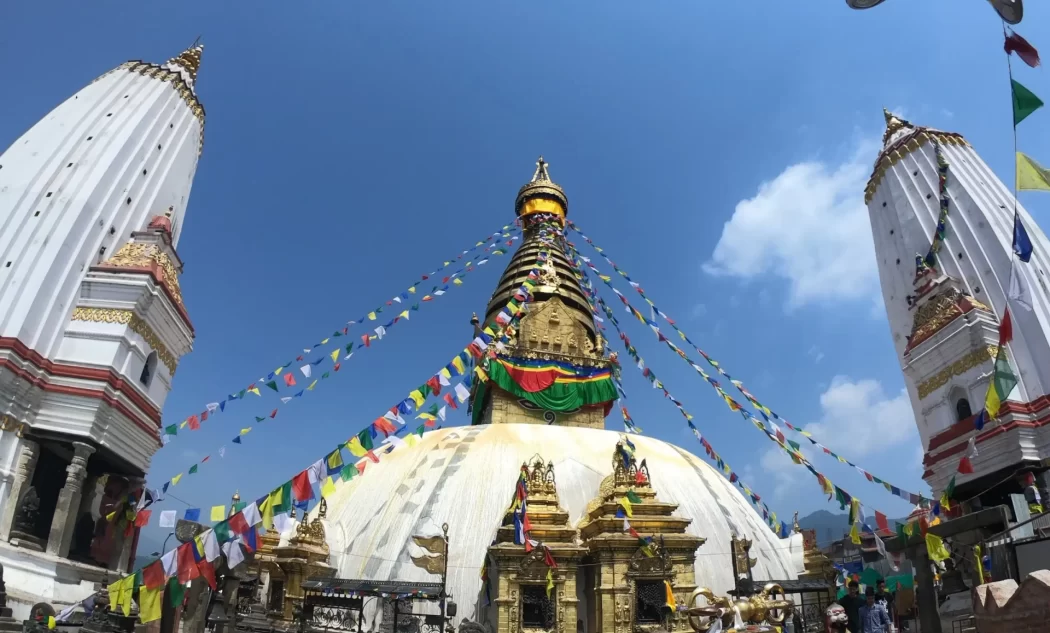
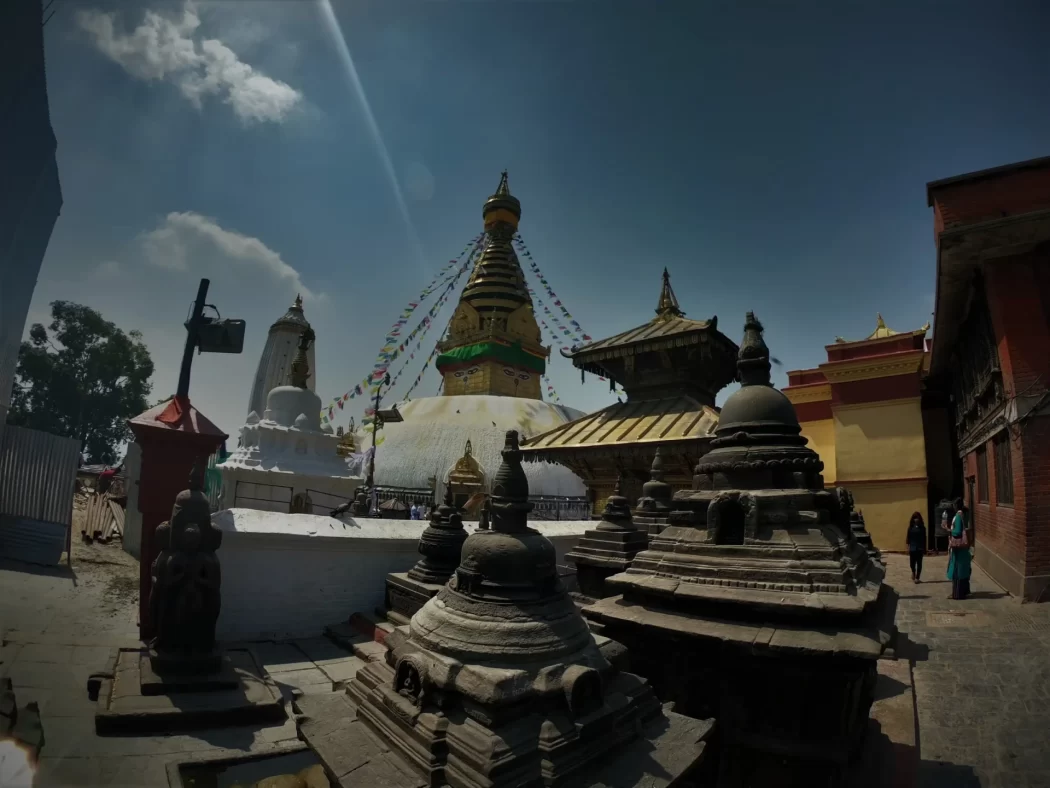
Swayambhunath Stupa is Located on a hillock west of Kathmandu city outskirt, the hill is covered in a small, lush forest. Where great numbers of Rhesus monkey dwells, hence the name Monkey Temple for Swayambhunath. One of the famous landmarks of Kathmandu and Nepal, with a history of more than 2,500 years old. Swayambhunath is well preserved and has great work craftsmanship skills.

Although Buddhist monuments, all religions enjoy visiting Swayambhunath, which offers grand views of Kathmandu city and the valley.

The Bouddhanath Stupa:

The Bouddhanath stupa is located east of Kathmandu city, the largest in Nepal and probably in the whole of Asia where Buddhism religion exists. Considered to be the holiest Tibetan Buddhist site outside of Tibet, the surrounding area is a hub of Tibetan life.

Hence it is called ‘Little Tibet’ due to its similar culture to its Tibetan predecessor, a must-visited destination in Kathmandu.

The World Heritage Sites  The Pashupatinath Temple:

Pashupatinath Temple is situated east of Kathmandu city close to Bouddhanath in the north, one of the holiest Hindu sites. Located on the banks of the Bagmati River that runs through Kathmandu and divides the boundary with Patan / Lalitpur.

It is always abuzz with pilgrims and hermits called sadhus, Hindu holy men, and a great place of worship. Once a year the great religious event is held in February as per the Hindu calendar called Shiva Ratri.

In the celebration of Lord Shiva’s birth anniversary, thousands of devotees, and pilgrims from India and Nepal visit on this grand day.

World Heritage Sites The Patan Durbar Square:

The Patan Durbar Square located in the district of Lalitpur is the name for a city of fine arts and crafts. Truly a lovely place to visit and experience the work of magnificent and masterpiece intricate carving on doors and windows.

The Patan Durbar Square, situated amidst the busy bazaar of Lalitpur full of life with exciting local activities. The Patan Durbar Square is steeped with the historical Royal Palace and religious temples and ancient monuments.

The World Heritage Sites Bhaktapur Durbar Square:

Bhaktapur Durbar Square is considered the best among all Royal Courtyards in Nepal, as listed in UNESCO World Heritage Sites. Just a mere driving distance from Kathmandu and Lalitpur cities of 15 km. or 9 miles. An amazing city, where visitors can experience a medieval period-era environment, as soon as entering the old city.

Bhaktapur city itself is a living museum, with ancient buildings and monuments backdrop, truly worth visiting while in Nepal.

Changunarayan Temple:

Changunarayan Temple, located within the district of Bhaktapur a short drive from Kathmandu, leads you above Kathmandu valley. One of the least-visited of all of Kathmandu Valley’s heritage sites is the two-storied temple of Lord Vishnu.
Changunarayan Temple is the oldest temple in Nepal and represents a turning point in the country’s architecture and culture.

Situated on a high hill within the tranquil surrounding of lovely woods of pines and the small farm town of Changunarayan.

World Heritage Sites beyond Kathmandu valley:

An interesting place that UNESCO has designated as World Heritage Site beyond Kathmandu valley. Most heritage sites cover ancient historical, cultural, and religious areas, but it has added natural wonders. Like Chitwan National Park and Sagarmatha National Park, a great diversity of landscapes from low sub-tropical to the high Himalayan region.

An amazing World Heritage Site the Royal Chitwan National Park, is famous for a wildlife safari in the dense deep Chitwan jungle.

Where the climate is warm with sub-tropical temperatures, an ideal habitat for endangered mammals and exotic bird life. Chitwan is home to the famous Royal Bengal Tiger and One Horned Rhinoceros, including other various species of animals and bird life.

Similarly, Sagarmatha National Park is located amidst the world’s highest Mt. Everest, and other famous giant peaks. Sagarmatha a name for Everest in Nepal, means a great mother, situated in Nepal Far North Mid-East. One of the most visited parks due to its famous and popular trekking and various adventure destinations.

Most Popular Monasteries In Nepal

Most popular Monasteries in Nepal, a blessed country steeped with historical sites and ancient monuments. From the low land of Terai to mid-hills, verdant valleys towards the mountainous region around the high Himalayan belt.

A fascinating country to visit and explore, where Hindu and Buddhism religions exist side by side in perfect harmony. Nepal, especially the Kathmandu valley is also known as the city of thousands of gods.

Monasteries in Nepal
Tengboche Monastery

One can notice around the streets of Kathmandu, Patan/ Lalitpur, and Bhaktapur cities, coming across shrines and monuments. Besides numerous countless shrines, monuments, and religious sites of both Hinduism and Buddhism, these cities are famous for magnificent monasteries. Not only within the cities, and towns, but one can visit far beyond towards Everest region, where famed monasteries are located.

Most Popular Monasteries in Nepal, are within Kathmandu cities and in the higher mountainous areas, where most Buddhism followers are settled.

Monasteries normally are huge buildings of Buddhism religions complexes, where monks and priests spend most of their life. Engaging in various activities services of religious rituals, prayers, and worship, as well as the learning place for young monks. In Nepal, every town, city, and major village has monasteries, where a mass flow of strong Buddhist people lives.

It is the center where major religious festivals and events are held, as well as for pilgrims to pay homage. The most popular monasteries in Nepal, apart from religious practice, it is also a place for learning the art of Buddhism.

Most Popular Monasteries In Nepal And Around Kathmandu Cities:

Swambhunath Stupa And Monastery:

Swayambhunath  Stupa is famous for its huge dome stupa, which also has a monastery within its religious premises. An ancient religious monument was built atop a hill of the valley, west of Kathmandu city. The Tibetan name for Swayambhunath and the site means ‘Sublime Trees’, for the many varieties of trees found around. Shingkun or Swayambhunath the name also refers to the Tamang language meaning ‘self-sprung’; as Tamang is the earliest tribe to settle around the hills of Kathmandu valley rim.

Although the monastery was built later, the stupa is the landmark of Kathmandu and Nepal, dating back to 460 A.D. It is one of the most important centers of Buddhism with 2500 years old history.

Two options to reach the hill of Swayambhunath complex, taking the eastern side from the main gate. A steep climb of less than an hour to the top, the other easier route drive near the base of Swayambhunath.

A short up to the top of the Swayambhunath complex, after walking around the Stupa and visit of the monastery. Enjoy the panorama of Kathmandu valley and the city, on a clear day views of snow peaks, can be seen.

Bouddhanath Stupa And Monasteries:

Bouddhanath Stupa, a huge dome stupa known as Chorten, situated northeast of Kathmandu city, is one of the country’s pride and charm.

The area is also known as ‘Little Tibet’ due to Tibetan origin people living around this holy and beautiful area. A three wide tiers Stupa, one of the largest in Asia surrounded by colorful markets and impressive monasteries. It is one of the most popular and famous Buddhist sites in Nepal and it’s worth a visit.

The White Gompa / Monastery:

The White Gompa is a beautiful majestic monastery, the Gompa is called for a religious gathering and to get blessed. Where a priest often resides, the White Gompa is located close to the ridges of Swambhunath Stupa stands.

The White Monastery is one of the most popular monasteries, located on the city outskirts of Kathmandu. It is also known as Seto Gompa for white in Nepali, as well called Druk Amitabh Mountain. It is one of the most beautiful masterpieces of arts and crafts adorned with Tibetan Buddhism murals, statues, and paintings. Related to Buddhist teachings, in vivid colors, a tour of the monastery takes you into a serene and peaceful harmony. Within the sound of monks and priests chanting prayers with a pleasant aroma of incense.

Where interested visitors can practice meditation and learn Buddhism the way of normal and peaceful living.

The Kopan Gompa / Monastery:

Located Mid-North from the Kathmandu city suburb close to the famous Bouddhanath Stupa, perched on a high green hill. Overlooking grand views of Kathmandu city, a great exciting place to visit to explore Buddhism religion and its impressive cultures.

The Kopan Gompa is the center and foundation to preserve the Mahayana Tradition of Tibetan Buddhism. The Kopan Monastery is a place to practice and study Mahayana Buddhism, based on the Tibetan Gelugpa sect. Following the lineage founder of Gelugpa by Tsong Khapa of Tibet, also known as Thubten Yeshe or Lama Zopa Rinpoche. The monastery was built in 1969 on top of Kopan Hill above the valley floor; where one can practice meditation which started from 1971 onward.

Most Popular Monasteries In Nepal:

Most popular Monasteries in Nepal, a blessed country steeped with historical sites and ancient monuments.Apart from the Kathmandu valley three cities, there are a few interesting and important monasteries beyond the capital. Most other monasteries are located within the Kathmandu valley suburb or in the high mountainous region of the great Himalayas.

The important and popular monastery within Kathmandu valley outskirt is Pharping, where 7th Century Saint Padmasambhava, or Guru Rinpoche; meditated on his way to Tibet. The other famous and popular is Namobuddha, situated east of the valley outskirt of a few hour drive. Where future Matriya Buddha offered his flesh to the hungry feeble lioness and her cubs.

Interested people can visit the famous monastery en route to Everest Base Camp at Tengboche. Which is at a height of 3,867 m / 12,687 feet high, located on a picturesque backdrop of Mt. Everest.

At the Tengboche visit, the monastery interior and main prayer large hall were adorned with tall statues of Buddha. Includes idols of various saints and Gurus facing panoramic views of surrounding giant snow peaks.

Tengboche Monastery, located in Nepal North Mid-East around the district of Solu-Khumbu, where walks and short involves. Flying from Kathmandu to famous Lukla town Tenzing & Hillary Airport and then trekking high up to famed Namche Bazaar. After Namche Bazaar a day walk and climb to Tengboche Monastery, where once a year a colorful Mani Rimdu is held.

Most popular Monasteries in Nepal, a blessed country steeped with historical sites and ancient monuments.The other important and popular Buddhism site and monastery one can visit is Lumbini, the birthplace of Lord Buddha. Located in Far Mid-West Nepal around the low warm Terai belt, an interesting historical and religious site. Where Lord Buddha was born and bred before he reached Nirvana and Buddhahood.
Around the birthplace of Lord Buddha, there are many beautiful monasteries to explore and observe.

Pashupatinath Temple

The Pashupatinath Temple, located in Kathmandu, Nepal, is one of the most sacred Hindu temples dedicated to Lord Shiva. It is often regarded as complementary to the Kedarnath Temple in Uttarakhand, India, as both are considered vital in the worship of Lord Shiva. Pilgrims often visit both sites as part of their spiritual journey. Pashupatinath, situated on the banks of the Bagmati River, holds great religious significance for followers of Hinduism, with rituals such as cremation ceremonies and the daily evening aarati being integral to the temple’s religious life.

The holy temple of Pashupatinath is just 5 km distance from the main Kathmandu city towards the east. A large complex in Nepal extends on both sides from the holy Bagmati River with an area of 0.64 hectares.

Pashupatinath Temple

The premises include 518 small shrines, temples, and monuments with a small lovely woodland. Where Rhesus monkeys make their home can be seen all around the temple areas in search of food.

The Pashupatinath temple dedicated to lord Shiva houses two tiered golden roofs and four cardinal silver doors. One of the most magnificent and superb architecture and the oldest Hindu temple in Kathmandu city.

Where a large number of people and pilgrims come together for a holy pilgrimage on the day of Maha Shivaratri. Held during February as per the Hindu Lunar calendar, the birth anniversary of Lord Shiva.

Pashupatinath Temple’s existence is not known when the temple was built, but according to Nepal Mahatmaya and Himvatkhanda. The deity became popular and famous as Pashupatinath and is recorded as early as the 400 Century back.
Pashupatinath Temple was designated a UNESCO World Heritage Site in 1979 as one of the important holy pilgrimages of Hindu sites.

The temple is popular as a sacred site for Hindu devotees all around the world, located in a town called Gaushala of Kathmandu.

Belief to the Hindu religion, Pashupatinath is considered the protector of the universe and the patron deity of Nepalese people. Where every morning and evening time prayer and worship take place, called Pujas, at the main temple compound. The Temple premises more than 3,200 statues, each depicting a different god and goddess.

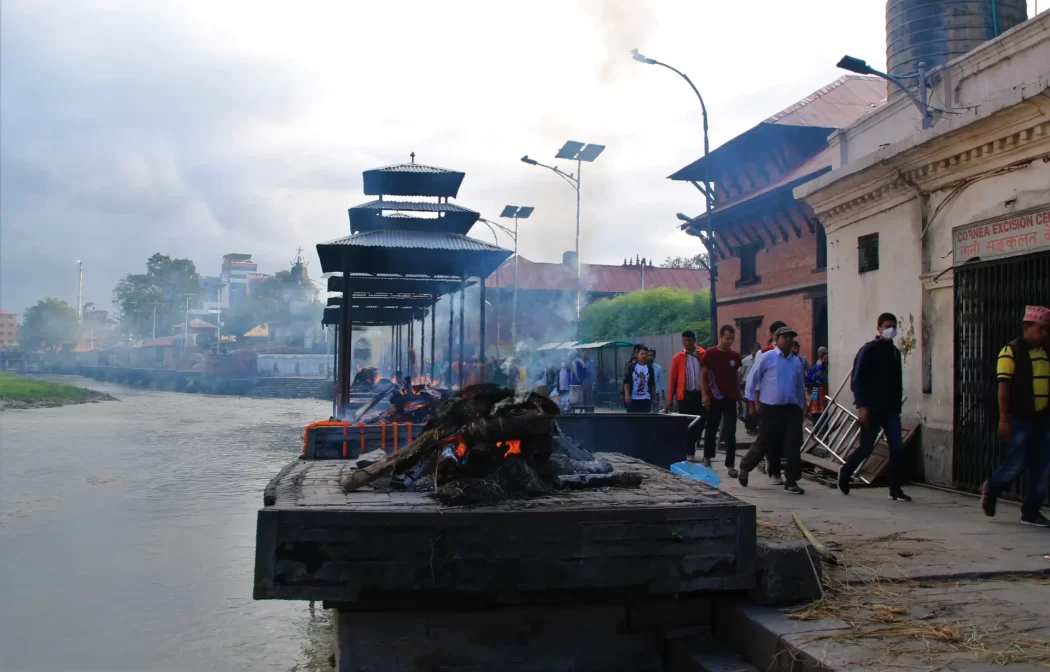
The Pashupatinath Temple and the Bagmati River bank with series of a funeral pyres where human deceased are cremated also.

Although non-Hindu people are not allowed entrance to the main temple areas but can observe the devotees’ religious activities. From the other side of the river, a small area is reserved for visitors. Where one can get wonderful views of the temple and the pilgrims in worship.

YouTube video

The Festival Of Maha Shivaratri:

The festival of Maha Shivaratri usually takes place during the cold month of February, when thousands of devotees, pilgrims, Sadhu’s hermits, and Yogis pay homage on this day annually.

In large mass numbers, followers of Lord Shiva visit from all parts of India and Nepal. Within the town and cities as well as in villages people stay for late nights. Lighting a bonfire to keep them awake all night long, as well as enjoying in a merry mood. Where Sadhu, the hermit or sage, and some Hindus celebrate consuming toxic herbs like bhang or Ganja / Marijuana.

The Bhang and Ganja are also mixed with sweet refreshments and sweets to make the event lively and spectacular. Singing and dancing the whole night in Maha Shivaratri, where most women stay fasting for the longevity of their husbands. As well the devotees and pilgrims take a dip and bathe in the holy Bagmati River to wash the sins of a lifetime.

The legend describes Maha Shivaratri marking the occasion when Shiva first performed the Tandava Nritya, a form of dance. To create primordial, preservation, and destruction. It was through this dance of devotion that Lord Shiva saved the world from destruction.

It is celebrated as the union of Shiva and Shakti, in which masculine and feminine energies balance the world. For all Hindus with their immense culture, marks the remembrance of ‘overcoming darkness and ignorance in life’.

Pashupatinath Temple
Crematorium at Pashupatinath Temple

History Of Pashupatinath Temple:

Although the written fact is still unknown it is believed that the temple was built by Lichavi king Supuspa Dev. Who ruled the Kathmandu valley and the cities way back in 464 till 505 A.D. As per the record from saint Gopal Vamshavali’s book, which is the oldest account or journal.

The other story and myth describe that it was constructed as a simple temple in the image of a linga (phallus). But history shows it was way back before the Lichavi king built and added more with gold gilt roofing.

From then on different rulers like Malla kings ruled the country from 1578 until 1620 A.D. Added and remodeled the temple to its present shape, with many statues and smaller shrines around the temple complex.

Whatever the history and legend or belief, Pashupatinath Temple is regarded as the most sacred and important pilgrimage destination; for all wide-world Hindu followers.

The Prayer Activities And Worship In Pashupatinath Temple:

Apart from the main major festivals of Maha Shivaratri and related occasions related to Lord Shiva and his consort Parvati. Daily Morning Prayer and worship are held, as well in the evening time, including Bhajan a Hindu religion Hymns and Recitation.

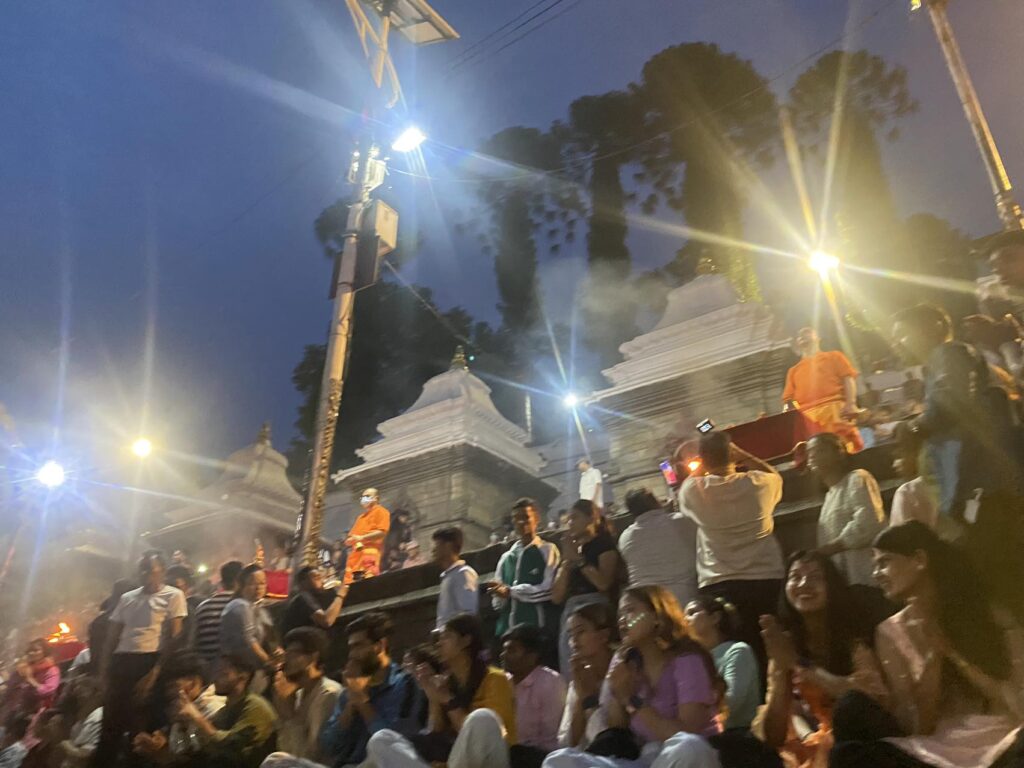
Aarati at Pashupatinath Temple

Devotees and worshippers from India and all parts of Nepal make a once-in-a-lifetime visiting Pashupatinath Temple. The area outside the temple is lined with shops and stalls selling items and offerings like incense and flowers.

A long queue can be seen every morning outside the temple to get a blessing from the main priest. During the main holy time, one can notice more than hundreds of followers that stay in the queue for long hours.

Especially on Saturday, which is also a public holiday in Nepal, great numbers of people are seen. Just to get a glimpse of Lord Shiva Phallus which is the symbol and sign of Lord Shiva. As well as the power and energy for all human beings, and word ‘Pashu-Pati’ means the lord of mammals. Which is mainly worshipped in Nepal and India, Pashu is for animals, and Pati is the supreme one.

It is also the national deity of the country, where cows and ox are regarded as holy animals.

Main Attractions of Pashupatinath Temple:

Main Pashupatinath Temple (Pagoda Style): The two-tiered golden roof and silver doors of the main temple house the sacred four-faced Shiva Lingam, representing different aspects of Shiva. Only practicing Hindus are permitted inside the main temple, but visitors can observe the exterior and the rituals from across the Bagmati River.

Bagmati River and Arya Ghat: The Bagmati River, considered holy, flows alongside the temple. Arya Ghat is a significant cremation site where Hindu funeral rites are performed. Observing these ceremonies offers a profound insight into Hindu beliefs about life and death, though visitors should do so respectfully and from a distance.

Guheswori Temple: Located near the main complex, this temple is dedicated to Parvati, Shiva’s consort, and is one of the Shakti Peeths, highly revered sites for Shakti worship.

Pandra Shivalaya (15 Shrines): A collection of 15 small Shiva shrines built in the 19th century, each with its own unique lingam, adding to the spiritual diversity of the complex.

Gorakhnath Temple: Dedicated to the sage Gorakhnath, a prominent figure in the Nath tradition of Hinduism. Vatsala Devi Temple: Another important temple within the complex, dedicated to the goddess Vatsala Devi.

Kirateshwar Mahadev Temple: Situated on the opposite bank of the Bagmati River, this temple is believed to be where Lord Shiva appeared as a Kirata (hunter).

Deer Park Mrigasthali: A serene area within the complex where deer roam freely, believed to be the spot where Shiva transformed into a deer.

Evening Aarati: The daily evening aarati (fire ritual) performed on the banks of the Bagmati River is a captivating and spiritually uplifting experience, open to all visitors, Aarati Time evening 6 to 8 o’clock.

Travel Guide for Pahupatinath Temple:

To make the most of a visit to Pashupatinath Temple, consider the following:

Pashupatinath Temple Opening Hours: The temple complex is generally open from 4:00 AM to 9:00 PM, but the main temple’s inner sanctum has specific opening hours for devotees, typically from 4:00 AM to 12:00 PM and 5:00 PM to 7:00 PM.

Entry Fee: There is 1,000 NRS entry fee for foreign nationals to access the outer complex, which contributes to the temple’s maintenance and development. Nepali and Indian citizens are exempt from this fee.

Dress Code Visiting Pashupatinath Temple: Travelers are advised to dress modestly, covering their shoulders and knees, as a sign of respect for the sacred site.

Photography around Pashupatinath Temple: Photography is generally restricted inside the main temple and at the cremation ghats out of respect for the rituals and privacy of the families. However, photography is usually permitted in other parts of the complex.

Best Time to Visit Pashupatinath Temple: The early morning or late afternoon are ideal times to visit to witness the rituals and avoid the midday heat. The evening aarati is a must-see experience.

Getting Pashupatinath Temple: Pashupatinath Temple is easily accessible by taxi or public transportation from various parts of Kathmandu. It is located approximately 5 to 7 kilometers east of Kathmandu city center.

Respectful Conduct: Visitors should maintain a respectful demeanor, avoid loud conversations, and be mindful of ongoing religious ceremonies. Guides: Hiring a local guide can enhance the experience by providing historical context, explaining rituals, and navigating the complex.

How To Reach Pashupatinath Temple:

The Temple of Pashupatinath is within easy reach and accessible from all directions from Kathmandu city. There are two main entrances one is a regular mostly used by Hindu pilgrims and locals. The other way is from close to the main road near a bridge that is en route to the airport.

Night View Of Pashupatinath Temple

Seen from the road, where vehicles are not allowed, walking for a short while, where the entrance ticket counter is situated. Most foreign visitors used the south route rather than the main entrance from the west. As non-Hindu are not allowed in the main entrance of the temple compound. Using the opposite side of the river to observe the temples and the devotees in worship and prayers.


Swayambhunath Stupa / Monkey Temple

Swayambhunath Stupa is one of the oldest Buddhist monuments in Nepal, as well as a famous landmark of the country. This is one of the world’s most glorious Buddhist stupas. It is believed this famed landmark existed for more than 2500 years old, for most visitors, it is known as the “Monkey Temple”. The stupa forms the main structure amidst the whole premises. It is constructed of a solid hemisphere of bricks and clay that supports a lofty conical dome-shaped spire.

Swayambhunath Stupa
Swayambhunath Stupa

It is capped by a pinnacle of copper gilt, and painted on the four cardinal sides of the spire; are the all-seeing eyes of Lord Buddha. Situated about 3 km. west of Kathmandu city, the whole Stupa and its interesting compound are located on a hillock. The lower side of the hill is covered in lush green vegetation and tall tree lines. Which is at 7 meters above the Kathmandu valley floor, the Stupa and its surroundings are a mosaic of monuments. Includes Chaitiya or Stupas and pagodas temples with a monastery treasures a tall bronze statue of Maître the future Buddha. An interesting place to visit is the monastery interior to observe the monks and priests in religious activities and prayers.

One can relax with the sound of monks, and priests chanting mantras/prayers with the rhythms of drums, cymbals, and trumpets. Inside the monastery, the main assembly prayer hall is adorned with large statues of Lord Buddha and important famous saints and gurus. Visitors can watch silently and feel the serene environment and take a short circuit of the monastery interior.

While visiting or paying homage to the saint and lord of Buddhism, various people from all walks of life; visit the Swayambhunath Stupa and its temples from all parts of Nepal, India as well as foreign tourists.

The most visited people are Buddhist pilgrims and devotees from all across South East Asia. A great spot for panoramic views of Kathmandu city and the valley, surrounded by tiers of green rolling hills.

On a clear fine morning and mid-afternoon, one can catch the views of the snow-capped peaks of Ganesh, Langtang Himal. As far as Jugal Himal in the North East direction, with a great contrast of white peaks against green hills.

The Swayambhunath Stupa and whole complex are also popularly named the ‘Monkey Temple’. Due to a large number of Rhesus monkeys that reside in the nearby thin forest, and dwell around Swayambhunath premises.

The name Monkey Temple is much easier and simple for outside visitors rather than pronouncing the word Swayambhunath.

The History And Belief Of Swayambhunath:

The history and beliefs of Swayambhunath are much older than the actual hemisphere dome stupa and monuments. The story and belief are based on King Manadeva of the 13th century, and way back to 460 A.D. King Manadeva built the large dome Stupa or Chaitiya, to mark the holy spot as an important center of Buddhism.

The other legend believes at one time Swayambhu existed naturally out of a Lotus flower. Which bloomed in the middle of a lake that once was Kathmandu valley, before it was drained. By the sword of an angel and saint Manjushree, who came from China, Tibet with the purpose to release the water to make a valley, where people could settle on the fertile land?

Swayambhunath then became an ancient religious complex atop a hill from the Kathmandu Valley floor. The Tamang ancient tribe migrated from Inner Mongolia and Tibet and named the site ‘Shingkun’ means ‘Sublime Trees’. Related to many varieties of trees that flourished Swayambhu hill which also means ‘self-sprung’.
The history and many old beliefs and legends are mentioned of Swayambhunath and its great Chaitiya.

The official name has come to be known as Swayambhunath Stupa, it was recorded in the first place; as Singru-Vihare-Caitya-Bhatjarika.

Swayambhunath Stupa
Swayambhunath Stupa

The Fact Of Swayambhunath:

The Lord Buddha is painted in orange, white, blue, and black around the four cardinal directions. The center of the eyes and marked as the nose is a divine figure, which resembles a symbol of a question mark.

Represents and signifies Buddha’s as from the old Vedic, making it different from other gods. The mystical eyes as eternal watchfulness over the people of the universe activities, on the top below the spire, are the thirteen cardinal steps to Nirvana.

On top of a spire stands an umbrella that represents the stages to Heaven. The lower part of the Stupa with 211 prayer wheels surrounds the whole monument. Which is a religious instrument for chanting prayer as the pilgrims and devotees spin the wheel in a clockwise direction.

The prayers that people chant hold the holy Mantras “Om Mani Padme Hun” which means ‘Hail the Jewel in a Lotus’. The Buddhism pilgrimage has been based as early as when humans settled in the Kathmandu valley. The oldest mythology belief mentions the holy site by the great Buddhist monk and architect. Who built this big dome of a Stupa known as Chaitiya, the early king Brishadev of the Lichavi era had accepted the Buddhist religion.

How To Reach Swayambhunath Stupa:

To reach Swayambhunath from Kathmandu city one can take a cab for less than half an hour’s drive, with two options. The main entrance gate is on the east side of Swayambhunath Hilltop, a long steep climb on steps. Brings you to the complex of Swayambhunath in front of a big Dorje or Vajra. Resembles as a power like a Thunderbolt or Lightening, important religious items of the priest on prayers ceremony.

The next easy route is driving on the western side of Swayambhunath reaching a car park. Located close to the main entrance an easy walk on a wide path to the top of Swayambhunath premises.

Other than Nepal citizen, where visitors needs entrance tickets of NRS 200 per person. The price can differ every season of the year without prior notice; where your guide will be aware of the new fee price.

Seasons To Visit Swayambhunath Stupa:

Nepal for all seasons of the year-round, having four main seasons. Namely, spring from March to May, summer / Monsoon starts from June to August and autumn/fall. Starting from September to November and the winter months of December to February.

Travelers can visit within these seasons of the year except the summer/monsoon wet rainy months of mid-June to August. The rest of the seasons are mild with enough sunshine days for views and pleasant tours.

The 10 Interesting Facts About Nepal

The 10 interesting facts about Nepal that all visitors and travelers should know before or after being in the country. However, are many than tens amazing and unique things to witness and observe around Nepal.

Where visitors will be fascinated with hundreds of various sites and cultural activities of Nepal and the Nepalese. Probably the only country in this world where all major religious sects of people live in close peaceful harmony. Where one can visit exciting and interesting temples and monasteries located close near to each other.

A country of wonders from its natural surroundings of high green hills with the world’s highest peaks. Including the lively, colorful cultures of the Nepalese celebrating religious and traditions almost throughout the year round.

Visitors will be amazed and surprised by the warm hospitality of the Nepalese, which is part of the traditional heritage. Nepal is a unique place on earth where dense tropical forest extends towards the cold arctic mountains of the Himalayas.

Where one can explore from mainstream trails to remote hidden corners of the Himalayas, far from the maddening crowd of modern civilization.
Completely different from the rest of the world, that makes Nepal one of the most sought destinations for all types of holidays.

Nepal Himalayas
Nepal Himalayas

The Ten Interesting Facts About Nepal:

01: The Himalayan country tucked in between the great countries of Tibet, China in the North, bounded by the Himalayan range. The country with many borders to enter Tibet / China from Far West to the Far East, including from North Mid-West.

The southern lowland country known as the Terai belt stretches the borders with India from South, East to West. Namely, the closest Indian states close to Nepal are Bihar, Bengal, UP (Utter Pradesh), and Sikkim in the Far East.

Most of Nepal’s high Himalayan country serves as the famous Trans Himalayan Salt Trade Route between Nepal and Tibet. Where yaks and mule caravans laden with goods passed through from the mid hills to the high country of Tibet and Nepal.

02: Nepal is known as the country of the high Himalayan mountain range. Where 8th out of the world’s 14th highest above 8,000 meters peaks is located in Nepal. Which forms the natural boundary between Nepal and Tibet around the northern ends of the country.

Nepal with world’s 8th tallest peak, namely Mt. Everest, 8,848.86 m,
Mt. Kanchenjunga 8,586 m, Mt. Lhotse 8,516 m. Includes Mt. Makalu
8,463 m, Mt. Cho-Oyu at 8,201 m, Mt. Dhaulagiri at 8,167 m, and
Mt. Manaslu at 8,163 m; with Mt. Annapurna-I at 8,091 m. As well, more than 1,310 over 6,000 m and 7,000 m peaks are located within Nepal, some borders with Tibet/China.

03: Nepal is famous for mountaineering expeditions as well as trekking adventures, considered the world’s best country for adventure activities.

The main flow of foreign visitors is for trekking and mountaineering from above 8,000 m to below 6,000 m peaks.

Besides major mountaineering with various trekking peaks, Nepal offers hundreds of trekking destinations, from moderate and adventurous to challenging.

Where one can enjoy a few days of a hike to a week or more trekking for over a month from the popular main trail. As well as walking away from the beaten tracks around the hidden corners of the high Himalayan wilderness.

Trekkers can find the comfort of various types of lodge accommodations from budget to deluxe standard. Trekkers can also enjoy tented camping on remote corners of the Himalayas around the Far East to the western end of the country.

04: The country of most UNESCO World Heritage Sites, from old monuments and ancient palaces to natural wonders. The first natural world heritage site on Nepal’s list is Sagarmatha National Park. Followed by Chitwan National Park and Lumbini, the birthplace of Lord Buddha, which includes various temples, Stupas, and Palaces. Most areas with world sites in Nepal are within Kathmandu valley’s three cities. Kathmandu with old Durbar Squares steeped with ancient Malla and Shah Dynasty palaces, the old Swayambhunath Stupa, and Pashupatinath Temple.

Extends to Bouddhanath huge, Asia’s biggest dome stupa, as well as Patan Durbar Square and its famous temples. Including the medieval city of Bhaktapur’s beautiful palace courtyards and high terra-cotta temples, as well as the ancient Changunarayan Temple

05: Nepal is one of the world’s richest countries due to its great bio-diversity with unique geographical position and altitude variation. The elevation of the country ranges from 60 m above to the highest point on earth, Mt. Everest. Which is all within a distance of 150 km, resulting in great climatic changes from Sub-tropical-alpine to Arctic cold.

06: Nepal-occupying only 0.03% of the earth, is home to 2 % of all the flowering plants in the world. 8 % of the world’s population of birds (more than 857 species); 4 % of mammals on earth. 11 of the world’s 15 families of butterflies (more than 500 species); 600 indigenous plant families; 319 species of exotic orchids.

07: Amazing Nepal with only 147 181 sq. km. areas for more than 23 million population. Mostly concentrated in the capital Kathmandu, also the major commercial of the country. Nepali is the official and national language, however
the travel-trade people understand and speak English, as well.

After diminish of the royal Shah Regime, the country at present Republic with Multi-Party Democracy System. Nepal has more than 60 ethnic tribal groups with 70 native spoken languages.

08: Nepal is a premier country for all types of adventure sports, where travelers in Nepal can enjoy various outdoor sports activities. From Paragliding, Bungee Jumping, and cannoning the waterfalls to pleasant Ultra-Light flights and Zip-Liner, including scenic and whiter water rafting. Interested people can enjoy riding on a mountain bike, riding from the main trail to single tracks. The best way to explore Nepal’s rural farms and towns and to observe the in-depth of the country.

09: Mountain Resorts and Home-Stay is another best to enjoy exciting holidays in Nepal with the scenic backdrop of Himalayan peaks. Around Nepal’s high hills and mountain ranges, Mountain Resorts and Home-Stay program has flourished.

Where visitors can soak into local cultures and traditions, staying in the comfort of a Home-Stay run by the village communities.

10: Last but not least, visitors with leisure time in Nepal having short holiday duration can enjoy taking a Mountain Flight. Operates every morning in good seasons of the year, a breathtaking experience with grand views of Mt. Everest. The other good option is joining the Everest tour on a helicopter that flies and lands close to Mt. Everest. An exciting thrill and the best way to get close to the Himalayan range of peaks and Mt. Everest.