Bhaktapur Durbar Square

Bhaktapur Durbar Square is another great beautiful city within Kathmandu Valley, after Kathmandu and Patan / Lalitpur cities. Located east of Kathmandu city suburb at a distance of 15 km or 9 miles, less than an hour’s drive.

Bhaktapur is one the most magnificent city after its adjoining cities of Kathmandu and Patan. At one time, it was the capital of Kathmandu Valley during the Malla kingdom of the 12th Century till the 15th Century. Bhaktapur’s greatest monuments were built during the time of the Malla kingdom period, where visitors can enjoy its old-time glories of religious, cultural, and historical heritage.

The city’s old name Bhadgaon later changed to Bhaktapur, which means city of devotees. But for the local Newar native, the indigenous tribe of Kathmandu valley, calls Khwopa. A marvelous place to visit and explore the fine ancient arts of religious values and fabulous cultural traditions. It’s architectural masterpieces and ancient sculptures, where one feels the city as an open live museum.

It is famous as the city of gods, with every alley and street lined with shrines and idols of Hindu gods and goddesses.

YouTube video

Entering Bhaktapur Durbar Square takes you back into a medieval period era of bygone times. UNESCO has listed it as one of the most beautiful World Heritage Sites, which you can experience on a tour of Bhaktapur.

Besides its amazing and beautiful Royal Courtyard and masterpiece monuments, Bhaktapur is famous for the special quality of yogurt or curd. It is called ‘Juju Dhau,’ also known as ‘King of Curds,’ processed from fresh buffalo milk, which is served in a small clay pot, one of the favorites among Nepalese, as well for visitors.

Other products are handicrafts from clays and loom as well as wooden and metal carvings that can be bought from nearby shops. Bhaktapur, although developing into a metropolitan city like its neighboring Kathmandu and Patan cities, retains its old-time glories where visitors can walk around nooks and corners and alleys lined with old brick-paved roads.
The heritage and culture are vivid, which is one of the must-visit cities while visiting Nepal.
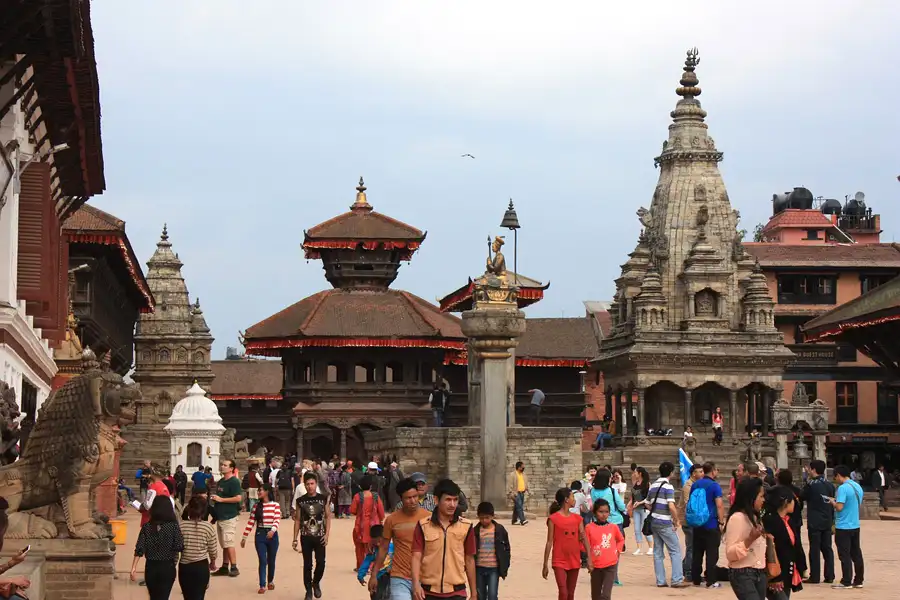
Bhaktapur Durbar Square

Places to visit in Bhaktapur:

The Bhaktapur Durbar Square:
Bhaktapur Durbar Square is one of the best world heritage sites of Nepal, it reflects the city’s rich culture, art, and architectural design. It is also the central setting of the city for architectural monuments and arts with pagoda-roofed buildings. One of the original architecture that Nepal has provided to the world flourished around Southeast Asia and China.

The main entrance is the golden gate to the main courtyard of the old building of 55 windows palace. The Golden Gate is regarded as the world’s most beautiful and richly carved specimen of its kind.

Bhaktapur Nytapola Temple:

Just a few minutes from the Golden Gate and 55 windows palace stands the Nytapola Temple, which is 30 meters tall. The tallest temple around the Kathmandu valley was built by King Bhupindra Malla in 1708 AD.

A magnificent monument of a temple, each of its five terraces holds a pair of stone figures. Starting from the bottom are wrestlers, elephants, lions, griffins, and goddesses on both sides of the steps to the temple’s main shrine.

An exciting place to experience the local activities and devotees moving from one place to another.

The Bhaktapur National Art Gallery:

Located within the Bhaktapur Durbar Square. Observe the rare paintings and ancient manuscripts with painted covers and illustrations, the finest treasures of Bhaktapur and Nepal. Inside the art gallery, which is a small museum, contains brass, bronze, stone, and wooden images. The gallery is explored by tourists for the medieval art tradition of Nepal, closed on Thursdays and public holidays.

Bhairavnath Temple of Bhaktapur:

Built as a one-story pagoda during the reign of King Jagat Jyoti Malla.
Later on, changed into a three-story temple in 1718 A.D. by King Bhupindra Malla.

This temple now stands for its artistic grandeur. The Bhairavnath temple is dedicated to Lord Bhairab, the god of Terror.

Dattatreya Temple:

Dattatreya Temple, built in 1427 AD, the temple is said to have been built from the wood of a single tree. A Monastery having exquisitely carved peacock windows is located near the temple square.
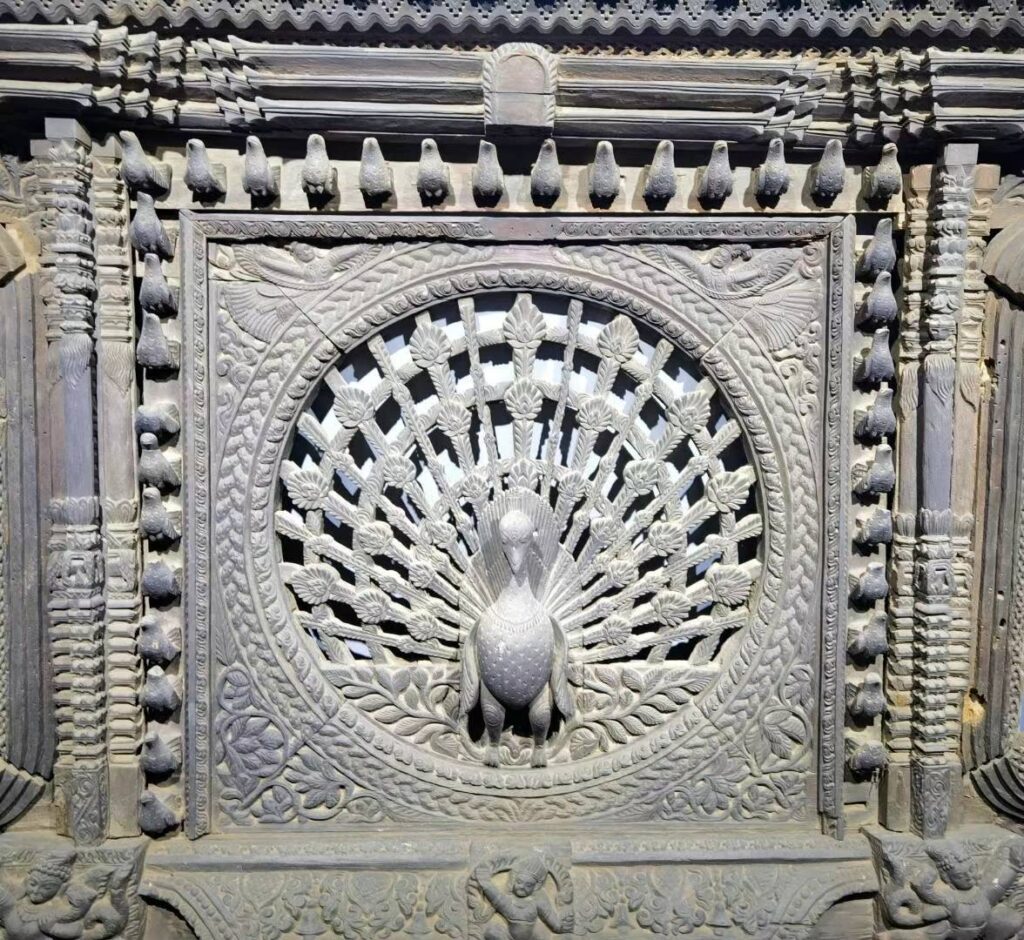
Peacock Of Window
Peacock Of Window

Pottery Square and market:

Around Bhaktapur, two main pottery areas exist. The first pottery square is at Suryamadhi, east of the Dattarya Temple Square.

The oldest pottery place, another pottery place, leads south from the Nytapola square at Talako’s Potter’s Square. Visitors can observe the craftsman on wheels shaping the clay in a finely tuned system of human pottery rotation. The craft from the past centuries of old traditional heritage and tradition continues in Bhaktapur.

Extension tour beyond Bhaktapur Durbar Square:

After a wonderful time sightseeing tour of Bhaktapur city and Durbar Square, from the main heritage sites, the next exciting tour leads with a short drive to the old town of Changu-Narayan and its ancient Temple.

Old Changu-Narayan Temple:

The oldest and ancient temple of Nepal, the Changu Narayan, is located on a high hilltop, also called Changu or Dolagiri. The temple area is surrounded by a forest of champak trees and a small Changu village which is north of Bhaktapur.

Changu Narayan Temple is dedicated to the Hindu god Lord Vishnu; this temple is considered the oldest one in Nepal. The pagoda-style temple has several masterpieces of the 5th to 12th century of excellent Nepalese art.

According to legends, Changu Narayan temple existed as early as 325 A.D. in the time of King Lichavi King Hari Datta Verma, and it is one of Nepal’s richest structures historically as well as artistically. On the grounds, there is a stone pillar inscription of great importance recording the military exploits of King Man Deva, who reigned from 496 A.D. to 524 A.D. The first epigraphic evidence of Nepalese history was found in the temple premises during the reign of the Lichavi King Manadeva, dating back to 464 A.D.

Proving that the temple was already established as a sacred site in the 3rd century A.D. It is the earliest inscription known in Nepal.

Enjoy a fabulous time around Bhaktapur within the city area as well as on the outskirts, then end the day with a drive back to Kathmandu.

After a most fascinating and memorable visit to Bhaktapur City and Bhaktapur Durbar Square.
25 Things You Need To Know When In Nepal

25 Things you need to know when in Nepal will allow foreign visitors to Nepal to get prepared. As well as being aware of the country’s culture, customs, heritage and ancient history, including its exotic flora and fauna. Including its beautiful dramatic landscapes with the world’s highest Himalayan range of peaks and the Nepalese renowned warm hospitality. Makes Nepal different and unique from other countries in this world, although a small country blessed by beautiful Mother Nature.

There are more and various things to know about the country besides only twenty-five. Nepal is an amazing country, tucked in between India and China, a landlocked nation; that provides countless scenic to cultural destinations for enthusiastic travelers. The country of variation from low-warm Terai of semi-tropical climate to cooler alpine hills extends to a higher cold mountainous zone.

From deep, dense green jungles, where the elusive Royal Bengal Tiger roams, to Yak & Yeti trails around the high Himalayas. Such a vast difference in just 150 km. Driving distance makes Nepal an amazing place on earth.

Things to know about Nepal

Makes Nepal one of the most sought countries on this planet, and visitors can enjoy a wide range of options to choose from.

Nepal at a glance:
Area of 147 181 sq. km, Geography, between China to the north and India in the South, East, and West. The capital is Kathmandu, as well as the major commercial hub of the country. Nepal with over 23 population, and the major language and mother tongue are Nepali, spoken across the country.

The present political System is the Republic of Nepal, with a Multi-Party Democracy after the king and royals were abolished. Became democratic on May 28th, 2008, after Shah Regime ruled the country for more than 240 years of monarchy.

25 Things you need to know when in Nepal, as follows:

01: Country of the world’s highest peaks and mountain range:

First of all, a country with the world’s highest, Mt. Everest, the height of
Mt. Everest was slightly overgrown. Recorded officially in 2020 at 8,848.86 m
/ 29, 031. 69 feet, from a previous height of 8,848 / 29,028 feet.

02: Nepal with most world’s highest peaks:

Nepal captures the world’s eighth highest above 8,000 meters, peaks out of 14 major mountains. Namely, 1st highest Mt. Everest, 3rd Mt. Kanchenjunga, 4th
Mt. Lhotse, and the 5th Mt. Makalu with 6th Mt. Cho-Oyu. Includes the 7th
Mt. Dhaulagiri, 8th Mt. Manaslu, and the 10th Mt. Annapurna, with more hundreds of above 6,000 m and 7,000 m peaks.

03: Country of wide-range of Adventure Sports Activities:

Nepal is a premier country for all types of adventure sports for various
outdoor activities, like Para-Gliding, Sky Dive, and Zip-Liner.

Includes Ultra-Light Flights, with the world’s 2nd highest Bungee Jumping, waterfall cannoning, rock, and ice climbing. As well as Mountain biking on main trails and off the beaten paths, double or on single tracks.

04: Nepal holds the world’s highest marathon:

World’s highest Everest Marathon takes place every year on May 29th
marking the anniversary of Mt. Everest’s first ascent.
Which was conquered by the late Tenzing & Hillary on May 29th, 1953.

05: XTRI / Extreme Triathlon:

World toughest, highest, and most extreme XTRI Triathlon, which takes place every year in May. The first ever XTRI Triathlon in Asia started on May 7th, 2022, and was held in Pokhara around Annapurna Himalaya region.

06: Boundless Trekking Destination:

Nepal is a country with boundless trekking destinations; the main flow of tourism in Nepal is trekking. Where thousands of trekkers visit Nepal at the best time of the year in every season for trekking; Nepal and its wide Himalayan range offer various trekking routes from the Far East to the West. The most popular are Annapurna, Everest, and Langtang Himal region as well Manaslu areas with Upper Mustang.

07: Mountaineering and Peak Climbing:

Mountaineering expeditions and peak climbing is other big attraction for adventurers and mountaineers. The high Himalayan peaks provide excellent mountaineering adventure from high 8,000 m and 7,000 m to below 6,000 m peaks.

08: White Water Rafting and Scenic Floats:

Nepal with wide networks of Himalayan glacial rivers, where interested adventurous or beginners can enjoy rafting thrills. From White-Water to Scenic floats on various glacial rivers of Nepal.

09: Kayaking the rivers and lakes of Nepal Himalayas:

Besides rafting, one can enjoy the exciting thrill of kayaking the Himalayan various glacial rivers and huge lakes of Nepal.

10: Hiking for a day or more:

Travelers can enjoy a day hike or more for a few days in the close harmony of pristine natural green surroundings. As well as walking with great panoramic views of the Himalayan range of peaks.

11: Home Stay around Heritage villages:

Travelers can enjoy staying around hill villages, soaking into the beautiful scenery of Himalayan peaks, and staying in a local village where most villages in Nepal’s remote areas provide the comfort of Home Stay comfort for visitors.

12: Wildlife Safari:

Nepal is an amazing country, from the high Himalayas to the low foothill and flat land of the Terai sub-tropical climate. Where one can enjoy an exciting wildlife safari riding on an elephant on the lookout for endangered wild animals and exotic bird life.

13: Nepal with world’s famous national parks:
Nepal with many national parks and conservation and wildlife reserves, and travelers can explore from the high Himalayan Mountains. As well as low land of the Terai belt of Chitwan and Bardiya National Parks with Koshi Wild-life Reserves.

14: Botanical Tour:

Nepal is a paradise for nature lovers, occupying only 0.03% of the earth and is home to 2 % of all the flowering plants in the world, 8 % of the world’s population of birds (more than 857 species), 4 % of mammals on earth; 11 of the world’s 15 families of butterflies (more than 500 species); 600 indigenous plant families; 319 species of exotic orchids.

15: Mountain & Monasteries:

Trekkers, explorers, and religious people interested in Buddhism, religion, and cultures can enjoy visiting the high mountainous villages.

The famous monasteries of Tengboche are located around Everest, as well around Upper Mustang and Manang areas.

16: Pilgrimage Tour:

Nepal with wide places for Pilgrimage tours from the cities of Kathmandu, Patan / Lalitpur, and Bhaktapur. For both Hindu and Buddhism followers, the country with many famous temples and monasteries for pilgrimage visits.

17: Lumbini birth place of Lord Buddha.

The country where Lord Buddha, the Light of Asia, was born in Nepal’s Lumbini zone of Rupendehi district. Located Far South Mid-West.

18: Buddhist Circuit Tour:

Buddhist followers can follow the path of Buddha from the birthplace of Lumbini. Where visit takes you to the historical place of Buddha’s mother and across the border in India. Visiting Sarnath and Varanasi, Boudha Gaya, where Lord Buddha meditates to reach Nirvana, the place of first preaching.

19: Hindu Pilgrimage to Janakpur:

Janakpur city, located around the Mid-South of Nepal, is the official birthplace and home of Sita, the consort of Lord Rama. A famous temple and palace square of Janakpurdam, where Hindu followers can visit the Maithili city. Having an ancient history of Hindu religion Sita and Lord Ram.

20: Kathmandu city and World Heritage Sites:

Kathmandu is famous not only as the capital city but for its ancient historical monuments of both Hindu and Buddhism religions. Enjoy an exciting tour of an old palace and royal courtyard, visiting the old Swayambhunath Stupa of more than 2,500 years old Buddhist monument. Hindu Pashupatinath Temple and large Dome Stupa of Bouddhanath.

21: Patan Durbar Square:

Another famous city within Kathmandu is Patan or Lalitpur, known as the city of fine arts and crafts. The area offers an interesting tour of its Palace and Royal Courtyard, along with famous Buddhist and Hindu Temples.

22: Bhaktapur Durbar Square:

One of the finest old cities of Bhaktapur is steeped with an ancient religious monument and old historical buildings. Entering Bhaktapur takes you back to the medieval period era; the whole city and palace square is a living museum.

23: Everest Mountain Flight:

While visiting Nepal, not to be missed Everest Mountain Flight if you are not trekking to the Everest region, the Mountain Flight operates every day in the best seasons of the year when days are clear for Himalayan mountain views and of Mt. Everest, an exciting hour or less flight.

24: Helicopter Tour to various mountain destinations:

Nepal, with various private Helicopter companies, offers a day or longer tour in the comfort of a spacious Helicopter. Travelers who are not interested in trekking and other adventures can take a swift flight to various mountain destinations.
Enjoy the flight to Everest, Annapurna, or Langtang valley in the close harmony of towering Himalayan peaks.

25: Festivals and cultures of Nepal:

Nepal is a country of both ancient Hindu and Buddhism religions, where one can enjoy and observe the colorful festivals of Nepali. The main festivals are Dashain falls in October and Diwali at the end of October or November, including the color festival of Holi, which takes place in February. Nepal with many festivals around each season of the year. In the Himalayas, the most famous is the Mani Rimdu festival of Everest at Tengboche and the Tiji events of Upper Mustang.

Nepal Restricted Area Trekking Permits

About Restricted Area Trekking Permits Of Nepal:

‘The forbidden region of Nepal Himalaya opened for visitors with a special permit Nepal Restricted Area Trekking Permits apply for visitors entering the region once forbidden territory, which was opened just a few decades ago, where interested trekkers can now visit.

A few places around the high Himalayas region are reserved by the Nepal Government Tourism Department as Restricted Areas of Nepal. Trekkers require a special permit to enter the restricted area opened in the past few years.

The restricted and forbidden region of Nepal Himalayas remained mystical and curious as a Shangri-La. Slowly the Government lifted the ban on restricted areas as probationary measures and exposed them to the world. Where keen and interested travelers can now visit the new, raw country untouched by the main flow of trekkers.

Although it is now open for the past few decades, the Nepal Government still holds the areas as restricted, controlling the influx of mass travelers.

The restricted and once-forbidden country remains as pristine as it was in the past centuries. The area is exciting and worth a visit to experience the wild country and observe the immense local cultures.

Nepal and the Himalayas region offer more than 7 Restricted Areas at present, located around remote areas. Trekkers and adventurers can explore the hidden pockets of the least visited region of Nepal.

The restricted areas are listed as follows Upper Mustang, Nar & Phu, Upper Manaslu, and Tsum Valley. Includes Upper & Lower Dolpo with Limi Valley. Some of these areas are gaining much popularity, like Upper Mustang, Manaslu Circuit, Tsum Valley, and Nar-Phu, in recent decades.

As for Upper and Lower Dolpo, including Humla, Limi Valley gets few groups of visitors due to its remote location.

Trekkers can now have the option to explore these exotic destinations around the far corners of the Nepal Himalayas.

The most popular among restricted areas are Upper Mustang, Manaslu Circuit & Larke-La Pass, and Nar-Phu. Whereas Tsum valley does get few foreign visitors in good seasons of the year due to its remoteness and isolation.

Some of the restricted areas like Upper Mustang, where one can reach, take an exciting overland journey on local four-wheelers. Enjoying the comfort of a motorable road, facing outmost views of dramatic landscapes with an array of high snow-capped peaks.

For other remote restricted areas, trekkers have to spend overnights in tents and have meals served by camping cooks. In the most popular restricted area, trekkers can spend the overnights in the comfort of excellent local lodges and guest houses.

Around the far wild-west to Humla and Limi valley, including Upper and Lower Dolpo, requires camping equipment and food to carry.

Trekking Restricted Areas around Nepal Himalayas, where all visitors have to join with proper and reliable local trekking companies. Where solo or individual travelers are not allowed, requires a minimum of 2 people for the forbidden and restricted areas, where all the necessary documents and permits will be issued by your local agents, like Vertex Holiday.

Needful Paper Works And Documents Requirements:

All Restricted Areas require visitors to obtain special permits listed by the Nepal Government Tourism Department.

Once booked with Vertex Holiday for the chosen trips, one must send full details of one passport. The passport should not expire six months before expiry dates and includes present passport-size photos.

The local company applies to the concerned department for special permit approval; then, it receives it after showing your original passports. The fees differ for special permits as per seasonal wise, from spring, summer/monsoon, autumn, and winter.

The Fees For Special Permits, Seasonal, And Area-Wise:

For Upper Mustang: Special permit: At the cost of US $ 500 per person for ten days and US $ 50 for an extra day. The special permit applies from Kagbeni village, the entry point for the Upper Mustang Trek. Which ends back at Kagbeni village, besides a special permit, requires ACAP (Annapurna Conservation Area Project), which costs NRS 3000 for foreigners and NRS 1000 for SAARC countries. (South Asian Association for Regional Cooperation).

For Upper Dolpo: US$ 500 per person for the first 10 Days and US$ 50 per person after Ten days till the trek ends as per the itinerary days. Includes Shey-Phoksundo National Park fees approx. US$ 28 per person.

For Lower Dolpo: US$ 20 per person for a week and an extra US$ 5 per person after a week till the trek ends as per itinerary days. Includes Shey-Phoksundo National Park at the cost of US $ 28 per person.

For Upper Manaslu and Circuit Trek: Autumn/fall season starting from September to November per week per person US$ 70. After seven days per day per person, US$ 10. Winter time of December till spring, and summer to August.

Manaslu Circuit Trek costs US$ 50 per week per person. After seven days per day per person, US$ 7 or equivalent convertible in foreign currency. MCA & ACAP (Manaslu / Annapurna Conservation Area Project) fees of approx. US$ 28 + US$ 28. = US$ 56 per person.

For Tsum Valley Trek: From Autumn/fall, the beginning of September to November, US $ 40 per person for a week, and USD 7 per person per day till the trek ends at Jagat village, the entry and exit point of Upper Manaslu & Tsum Valley. Includes MCA (Manaslu Conservation Area) fees of approx. US$ 28 per person.

For Nar & Phu Trek: The special permit cost of US$ 100 per week/person and the extra US$ $ 10 per day per person until the lower Manang areas are reached.

Extra fees for ACAP (Annapurna Conservation Area Project), which cost

NRS 3000 for foreigners and NRS 1000 for SAARC countries. (South Asian Association for Regional Cooperation).

For Humla & Limi Valley Trek: US$ 50 per person for a week duration and then the extra US $ 10 per person / per day till the walk reaches Simikot. Away from restricted areas.

The above Restricted Area unique and national parks and conservation may change till further notice. From respective Nepal government tourism department.

The Special Permits Fees According To Season Wise:

Some special permit fees are required season-wise, like around Upper Manaslu and Tsum Valley. Most treks around Nepal Himalayas get a mass flow of trekkers during the high times of spring and autumn/fall.

Spring begins from March to May, and autumn/fall starts in September till November. Spring is the high season and a favorable time for most trekkers, where days are bright and the full sun shines. The walk is pleasant with a clear blue sky, can get overcast in the afternoon with clouds and rain.

You can expect snowfall sometimes around higher altitudes. This is when wildflowers are in seasonal bloom, especially the rhododendrons, the national flower of Nepal.

Much colder morning and late afternoon till night and is shades, away from sunlight. Days are much longer due to enough sun lights from early 6 a.m. till late 5 p.m. The next best season is autumn/fall begins from post-monsoon times September to November. Days are fine with crystal clear blue sky, bright sunny days for walks, and enjoying grand mountain views. But days are short due to the sunlight hours of autumn and pre-winter times. You can expect snowfall around higher altitudes above 2,500 m high. Much colder morning till the sun hits the designated areas. The rest of the days are fine and sunny but cold afternoon and nighttime.

The wind-chill factor adds extra cold temperatures around higher areas with a clear, bright, and starry night sky.

Why Choose Restricted Areas Of The Nepal Himalayas?

Most trekkers who have visited Nepal have popular mainstream trekking areas, like Annapurna, Everest, and Langtang. Trekkers and adventurers are always searching for new, fresh, and raw areas for trekking in solitude.

Where most restricted areas of Nepal Himalayas fulfill the trekkers’ dreams, as the region offers complete mountain wilderness. Trekking in tranquil surroundings away from the main flow of trekkers and human habitation or villages.

For some days, walk in sheer isolation in the harmony of beautiful pictures of natural surroundings. Enjoying the adventure in the comfort of tented camping due to the nature of several trekking destinations. Spending overnights in tents, where foods are served from a separate unit of the kitchen department of cook and kitchen staff.

Most wilderness trekking is done carrying camping gear and food, like around the remote region of Upper and Lower Dolpo. Including Humla & Limi valley, where lodges are unavailable at many places due to a lack of foreign visitors.

Tented camping is also a classic and original way of trekking and enjoying adventures. It will be like a small-scale expedition backed by porters or mules and yaks as pack animals.

Carrying all necessary camping equipment, like two men’s tents, small foam mattresses, and large dining tents per group size.

Includes toilets and kitchen tents. Shower tents are available sometimes on request. All camping meals are cooked hygienically by not using firewood but in kerosene or cooking gas. This is to maintain Eco-Trekking and Responsible Tourism.

Restricted Area Trekking the Nepal Himalayas is undoubtedly an enjoyable and exciting adventure of a lifetime experience.

How Difficult Is Mera Peak Climbing, Everything About You Should Know?

 How Difficult is Mera Peak Climbing:

‘Adventure to the summit of one of Nepal’s highest trekking peaks’ The difficulty of Mera Peak Climbing, which all trekkers and adventurers should know before daring this exciting adventure.

Mera Peak towers high at 6,476 m / 21,247 feet and is one of the highest trekking peaks in the Nepal Himalayas. Nepal’s highest is Chulu East Peak, 6,584 m / 21,727 feet. It is located around Manang valley, north of the Annapurna Himalaya range.

How difficult is Mera Peak climbing
View from Mera Peak while descending

Mera Peak Climb is also a famous trekking peak to climb due to its simple and ordinary grade of F. Which means ‘Facial Easy’ as per French & Swiss Alpine Climbing Classification Systems, a straightforward climb of less technical effort.

At present, the climb of Mera Peak is listed as PD’ Per-Difficile’. Due to the movement and change of glaciers, which occurs quite frequently around the Himalayas. However, it is still considered one of the less challenging peaks to climb.

The only most challenging section is the rapid gain in elevation due to thin air and high altitude. The walk to Mera Base Camp or Khare at 5 050 m high is equally challenging. Especially on the 2nd day after walking from Lukla and Chutanga with a steep climb to the top of Kalo Himal, also called Naulekh.

They are crossing over Zatwar-La and Zatwarla-Og at 4,700 m high, facing jaw-dropping views of Dudh Koshi River valley. As well as Lukla town and the airport with stunning Kongde-Ri and Dudh-Kunda peaks. The Zwar-La and Naulekh divide the boundary of the Dudh Koshi and Hinku valleys of the Khumbu and Everest regions. After crossing over the high ridges of Kalo-Himal, the rest of the walk is on a pleasant trail from Thuli Kharka. An excellent trek into beautiful woods of rhododendron, pines, firs, and oaks with juniper, firs, and birch trees.

The walk leads around cattle herder temporary summer shelters of stone huts, reaching an exciting place in Gondaishung. A Buddhist shrine, at one time a small monastery or Gompa, has a history of more than two hundred old. Where in the early days a refuge and a retreat for priests, monks, and nuns as a meditation or hermitage place.

Just close to this sacred place is Tangnak, an area with a few simple tea houses serving as lodges and shops. Most climbers and trekkers route to Mera Peak and beyond Honku valley spend an extra rest day.

A perfect height and spot for acclimatization before heading to a higher elevation, where one can enjoy short hikes to viewpoints. From Tangnak, the trail follows east, as tree lines and vegetation disappear for arid and barren arctic landscapes.

Walk lead on a rough vague path close to Charpatte Tal (four-sided, square glacial lake). The trail follows over boulders and moraine to the base of Mera Peak, the starting point of the great adventure.

The Climb To The Summit Of Mera Peak:

The climb of Mera Peak summit, compared to other Nepal trekking peaks, is quite relatively easy. A few years back, the grade of the climbing route was just ‘F’ “Facial Easy,” a straightforward climb with strenuous uphill.

But the changes and movements of glaciers and avalanches have created a few notches, making it slightly technical where the grade at present is listed as PD ‘Per Difficile,’ which means walking on ice, glaciers, and snow. Facing extreme tiredness as altitude gains climbing to the top on one of the highest trekking peaks of Nepal Himalayas.

Mera Peak is an ideal and perfect mountain for all interested trekkers and adventurers, where one does need basic training skills. The local expert guides will hold a practice day and provide short exercises on ice and rocks. Includes use of climbing gears where required, from crampons, ice-axe, and abseiling to fixing ropes.

However, much of the climbing equipment, like in other technical climb peaks, is not needed. But always good to know where, when, and how to use it for safe, successful climbs and descent.

The climb is always best to add an extra High Camp or Advance Camp to make the rise more accessible. As well easier and shorter, the rise begins as early as possible, carrying packed light lunch for the day’s activities.

Following the expert guide on a snowy slope, we have a short refreshing stop from being breathless. The last big push leads to a quick technical effort, standing on top of the Mera Peak summit. Feel the spirit of victory overlooking the grand spectacular panorama of the world’s highest peaks facing Mt. Everest, Lhotse, and Cho-Oyu. The view extends as far as Makalu and Kanchenjunga towards the east direction, including Ama Dablam and Baruntse Himal.

After a successful feat, with safe descent to base camp and onward journey to Lukla, one the same scenic route.

The Best Seasons For Mera Peak Climbing:

The best season for the Mera Peak climb is spring begins from March to May, a day with bright sunshine hours. The days are longer due to sunlight hours, making the walk pleasant, covering long distances in good time. Where wildflowers are in seasonal bloom, they can get overcast with clouds in the late afternoon.

Chance of rains and snowfall around higher elevations sometimes, morning and night time is much cold. The wind-chill factor adds extra colder nights also.

The next best time is autumn/fall starting from September to November:

Most days are fine with crystal clear blue sky for scenic walks and views, but cold morning and night time. Chances of snowfall sometimes, with clear starry nights, and days are shorter due to sunlight hours.

Besides spring and autumn, in the last few decades, trekkers and climbers have been interested in winter climbs. Few trekkers venture for the climb of Mera Peak in winter times of the Christmas and New Year holidays also.

Needful Things In Preparation For Mera Peak Climbing:

Mera Peak climbing is the least technical effort, and all beginners and veteran climbers can venture for Mera Peak climb. One of the most stunning trekking peaks and the highest in Nepal Himalayas to enjoy the skill of basic mountaineering.

For Mera Peak, climbers do not need professional mountaineering skills.

But it will be an advantage to have some mountaineering knowledge and skills.

As long as people are physically fit and in good health can join Mera Peak Climbing and trekking. The rest of the climbing routine will be done by the guides, who are experts in mountaineering having long-time experience.

The first step is booking with the right reliable trekking companies in Nepal and the best seasons. As well as acquiring details and complete information regarding the treks and climbing of Mera Peak.

Getting ready with needful trekking and climbing gear before departure from home country. If it is too much to carry the trekking and climbing equipment, one can hire or buy it in Kathmandu also.

Mera Peak climbers need to book well in advance with the local companies in Kathmandu. The local agencies require to obtain climbing permits as well as Sagarmatha National Park permits. As well as other necessary arrangements like hotel accommodation in Kathmandu and domestic flight tickets to and from Lukla.

What To Expect On The Trek And While Climbing To Mera Peak:

Mera Peak is located on a hidden Hinku valley away from main trails and villages, and towns. It is entirely off the beaten tracks, far from significant trekking routes, and few small settlements exist. The only tea-house or lodge accommodation is almost nil, except Thaknag or Khare, available in good seasons of the year.

The trek and Mera Peak climbing require total camping gear overnights in a tented camp. Local companies will organize all camping with a separate unit of kitchen department with cook and kitchen staff. All the camping and climbing equipment is carried by the strong porters from Lukla and back.

The meals are served by the camping kitchen cook, having varieties of cuisines to satisfy the delights of all climbers.

On the trek, due to the location of Mera Peak around Hinku valley, recharging electronic gadgets are not available. A few places like Tangnak may have solar power, where one can recharge by paying extra fees per item.

The best is to carry a portable solar power, which can be hung outside the backpack. Then charge it at the end of the day upon reaching designated camping spots. The only place for charging with proper hydroelectricity is Lukla on the way back before flying to Kathmandu.

Trekking & Climbing Gear To Carry:

Trekking Gear:

Trekking Boots: Well-fitting and comfortable to walk.
Trainers / Sport Shoes: After the day, walks to use in camp.
Light Weight Trousers: For warmer lower areas.

Fiber Pile Jackets:
Shorts or Skirts (for ladies):
Light Cotton Trousers:
Breeches /Track Suit Bottoms /Ultra Fleece Trousers:
Duvet / Down Jackets: (Down feathers or synthetic (required in autumn/winter and early springtime)
Wool Balaclava, Wool Mitts: (required in autumn/winter and early springtime)
Waterproofs: Jacket and trousers

Sun Hats:
Scarf: Silk/Nylon, helpful in keeping the sun off the back of your neck
Sunglasses / Goggles: Essential to get a pair that cuts out 100% UV rays
Sun Screen Cream: High protection factor [20 or higher] or high
altitude glacier cream due to thin air the
U/V is stronger in the sun.
Lip Slave/ Labisan: Protection for the lips with a sunscreen
Water Bottle: 1-liter metal to keep warm while at night time.

TOILETRIES:

Head Torches: Petzel (recommended) -spare batteries and bulbs
Small Knife: Swiss army style – has many uses
NOTEBOOK/DIARY/PENS
Small Padlock: Useful for locking your kit/duffel bag
Money Belts

OPTIONAL:
Camera Gear
WALKING STICKS / POLES: Useful for crossing rivers and snow and ice areas.

Standard and Basic Trekking Peak climbing equipment list:

Plastic Boots, a pair
Crampons a pair
Ice Axe one
Harness one
Carabineer or Karabiner, two each
Snow Gaiters, a pair
Snow / Sun Glass one each
Warm Gloves, a pair
Wind Proof Jacket & Trousers a set each
Down sleeping bags, one each with an inner liner
Ski Pole (optional) one each

The local company will provide needed like Main Ropes 200 m (50 m per person) as per the peak chosen and Snow Bar 2 / 4 pieces depending upon group size. Most trekking and climbing gear can be bought and hired in Kathmandu before the trek departs.

Why is Everest Region called heaven on earth?

Have you ever seen the absolute heaven on earth? Here is a short description of discovering real nature around the Everest region of Nepal, which will make you feel like absolute heaven on earth.

The Everest region, located in the Solukhumbu district of Nepal, is also known as heaven on earth, one of the most beautiful places in the world.

Heaven on Earth
On the way to EBC

This region is enriched with diverse climates, vegetation, monasteries, stupas, and Himalayan cultures, as well as the world’s highest mountains and peaks.

The dense forest of Alpine and Rhododendrons surrounding the Everest region has some rare and endangered animals like Himalayan Thars, Musk Deer, Snow Leopard, and Red Pandas, along with various species of birds like Bearded Vultures and many others species of birds.

Out of the 14 world’s highest mountains above 8000, 4 are in the Everest region of Nepal, which can be seen easily without attempting to climb it. The world’s highest mountains include Mt. Everest, 8,848.86 meters (29,031.7 ft), and The world’s fourth highest, Mt. Lhotse, 27,940 feet (8,516 meters). The world’s fifth highest, Mt. Makalu, 8,481 m (27,825 ft), and the world’s sixth highest, Mt. Cho Oyu, 8,188 m (26,864 ft), along with the other smaller mountains are also considered equally important and beautiful.

The magical activity is shown by the beautiful clouds as it plays and roams at the top of Everest and Lhotse and sometimes run through the Makalu and Cho Oyu. By observing these fantastic views, trekkers can feel like heaven on earth.

Trekkers can observe the whitish clouds playing hide and seek above the mountains like magic shown by nature. One can feel that this is a living heaven in the Everest region of Nepal.

During sunset, Travelers feel that while it is light on the top of Mt. Everest, it has already started getting dark on the earth.

A trekker can feel the Everest region as a paradise after observing the different mountain views shining into gold and silver color.

The panoramic mountain view with a beautiful lake and clean glaciers makes this area feel like adding fragrance to gold.

Most people belong to Sherpa and Rai communities. These people are famous worldwide for climbing and Expedition. Sherpa people play an essential role in making foreigners succeed in reaching the top of the mountains.

While walking on the trails of the Everest region, ancient Buddhist carvings on the stone catches the curiosity of travelers. This region is famous for Himalayan Buddhism as well as there Historical stupa and monastery.

There are various trekking routes in the Everest region. Travelers can choose the trail according to their strengths and ability. Mt. Everest panorama trek is the easiest route, situated at 3863 meters (12700 feet), and is considered a suitable route for people with less ability to trek high altitudes.

This trek offers a panoramic view of the world’s highest peaks, mt: Everest, Mt. Lhotse, Mt. Amadablam, and the old biggest monstery.

Everest Base Camp Trek lies at an altitude of 5,364m above sea level. It is one of the most popular and dream destinations for travelers, located in the Khumbu Everest region, which is visited by millions of people every year.

The Everest Three High Passes Trek route is the higher altitude trail preferred for adventurous tourists to explore the fantastic view from Kongma La Pass, 5,460 meters. Cho La Pass, 5,413 meters, and Renjo la Pass, 5,364 meters.

Everest Base Camp Trek with Chola pass also plays an important role. This trail offers a scenic view of Gokyo valley, Gokyo lake, Gokyo Ri, Everest Base Camp, Kala Patthar, Chola pass, and others.

Gokyo valley and Gokyo Ri Trek offer amazing scenes around the Everest region. Iceland peak climbing, Mera peak climbing, and Louche east peak climbing are popular destinations for climbers interested in climbing minor peaks in this region.

Every year millions of people from all over the world dream of climbing the world’s highest peaks, Mt. Everest, Mt. Lhotse, Mt. Makalu, and other beautiful mountains. The Everest region is considered the most important for climbers to fulfill their dreams.

The Geographical features of the Everest region are a gift of nature every day. While traveling around these beautiful places, people feel like heaven on earth.

10 Best Place To Visit In Everest Three High Passes Trek

10 Best Place To Visit In Everest Three High Passes Trek Overview

Everest Three High Passes
Hiking in Everest Region

Everest three high passes trek is one of the countless viewpoints in the Everest region that takes you on the most thrilling journey, which is especially for those trekkers who want to experience adventuring and a challenging trip around Nepal. This trek is much more difficult but makes your struggling efforts worthwhile by taking you to the cold climatic viewpoint of seeing eye-catching snow-capped high altitudes.

Everest three high passes trek lies at the Sagarmatha National Park, which is listed as a world heritage site by UNESCO and also known as the homeland of spotting rare and endangered species of 118 birds, rare animals like Musk Deer, Snow Leopard, Red Pandas, and Himalayan Black Bear. This park covers an area of about 1148 sq. km.

Everest three high passes trail offers a close view of the world’s highest peaks, Mt.Everest, Mt Lhotse, Mt. Mkalau, Mt.Cho Oyu, and other small peaks, including religious aspects of Sherpa culture, spotting monasteries and glacial lake can be the best exciting and overwhelming journey on Everest Region.

Everest region is a paradise for trekkers and mountaineers to explore scenic natural views. Every place has an equally eye-catching view. Besides them, here are some of the ten best places to visit on Everest three high passes trek;

Namche Bazaar:

Namche Bazar is the most famous living heaven in the Everest region of Nepal, which is known as the gateway to the world’s highest peak Mount Everest. It is located at an altitude of 3440m above sea level.

It is located on the northeastern side of Nepal in the Solukhumbu district. Namche Bazaar lies at the heart of province No.1 in the Khumbu region of Pasanglhamu rural municipality.

Namche Bazaar is well-known as the best trading place to get all the essential trekking gear and pieces of equipment, food products, hotels, and restaurants. Namche Bazar has many lodges and guest houses with excellent sanitation, which will fulfill the guest’s requirements with appropriate accommodations, food menus, and proper guidance.

The beautiful and colorful town of Namche Bazaar is enriched with Buddhist and indigenous Sherpa culture. Despite having natural views, cultural aspects, and a Sherpa museum, Namche Bazar has innocent locals who believe their guests to be the living god. They heartily welcome their guests with fine hospitality and respect.

Everest View Hotel:

Everest View Hotel is the world’s most famous hotel in the Everest region, which offers perfect services for travelers on an eye-catching viewpoint of Mt. Everest, Mt. Lhotse, Mt. Amadablam, and other peaks.

It is listed on the Guinness Book of World Records for situating on the world’s highest place of about 13000ft. This highly praised hotel is also mentioned in the world heritage sites by UNESCO and is still featured among thousands of guidebooks with a high popularity of name and fame.

Many trekkers from Namche Bazaar choose to go to the Everest view hotel in the morning time to maintain altitude sickness.

Hotel Everest View was built with the main purpose of providing the perfect experience of enjoying 360-degree views of Mount Everest and other Mountain ranges from every door to the windows of rooms.

The fine structure of the hotel was designed by Japanese architecture, Yoshinobu Kumagaya. It was completed with the mutual coordination and cooperation of the local Sherpa residents.

Tengboche Monastery:

Tengboche Monastery is one of the most famous monasteries in Nepal, which is also well known as Dawa Choling Gompa. It is located in the Khumjung in the Khumbu region of eastern Nepal. This place offers visitors a spectacular panoramic view of snow-capped mountains like Mt. Everest, Mt. Ama Dablam, and Mt. Lhotse.

This place is situated at the top of the hill, surrounded by a dense forest of pines and colorful vegetation.

Every October, Tengboche Monastery hosts the colorful festival of Mani Rimdu, which is celebrated by Buddhist people by dancing and singing the songs and music played by the Lama and Guru with their instruments.

During the Mani Rimdu festival, the local peoples offer their visitors or guests to participate in their festivals. Tengboche has a few lodges and guest houses of great hospitality in its village and also has many camping sites where a visitor can build their camps and enjoy nature.

Kong Ma La Pass:

Kong Ma La Pass, situated at 5540m above sea level, is an exciting but challenging pass compared to others in the high-altitude of Everest region. This pass will take you to the foot of the world’s highest peak Mount Lhotse.

This pass offers travelers spectacular views of Mountain ranges like Mt. Lhotse, Mt. Makalu, Mt. Amadablam, and other peaks with a beautiful glacial lake.

Kong Ma La pass goes through the beautiful small village of Dingboche and the Chhukung valley.

Various praying flags and chortens of great spirituality and purity can be spotted while crossing the Kong Ma La.

Everest Base Camp:

The world’s highest mountain, South Everest Base Camp, with an altitude of 5,364m from sea level, is a popular worldwide destination for trekkers and is located in the Everest Himalayan region of Nepal.

Everest base camp lies in the Sagarmatha National Park, which is listed as a World Heritage Site by UNESCO and offers to explore the world’s tallest snow-capped mountain peak Mount Everest and many other peaks with many scenic views of the Khumbu glacier, diverse plant life, and wildlife.

Trekkers and mountaineers can enjoy an attractive and impressive hike around the alpine topography of snow-capped mountains and ice.

Everest Three High Passes
Sunset at Everest

Kala Patthar View Point:

Kala Patthar is the highest destination for panoramic and close views of the world’s highest peak Mt. Everest and many other peaks on the Everest three high passes trek.

Kala Patthar lies at an altitude of 5,555m above sea level, which is the best place for seeing the sunrise and sunset views. It is the closest site to the Everest base camp, lying at the southern ridge of Mt.Pulmori of the Mahalnagur Himalayas.

Kala Patthar is a viewpoint with no lodges that can be reached within two-three hours from Gorakshep, the last stop for Kala Patthar and Everest base camp.

Scenic Gokyo Valley:

Scenic Gokyo valley, located in the Everest Region of Nepal in the Solukhumbu district, has the best eye-catching views of its surroundings. This valley lies at an elevation of 4,750m which offers stunning views of snow-capped mountains.

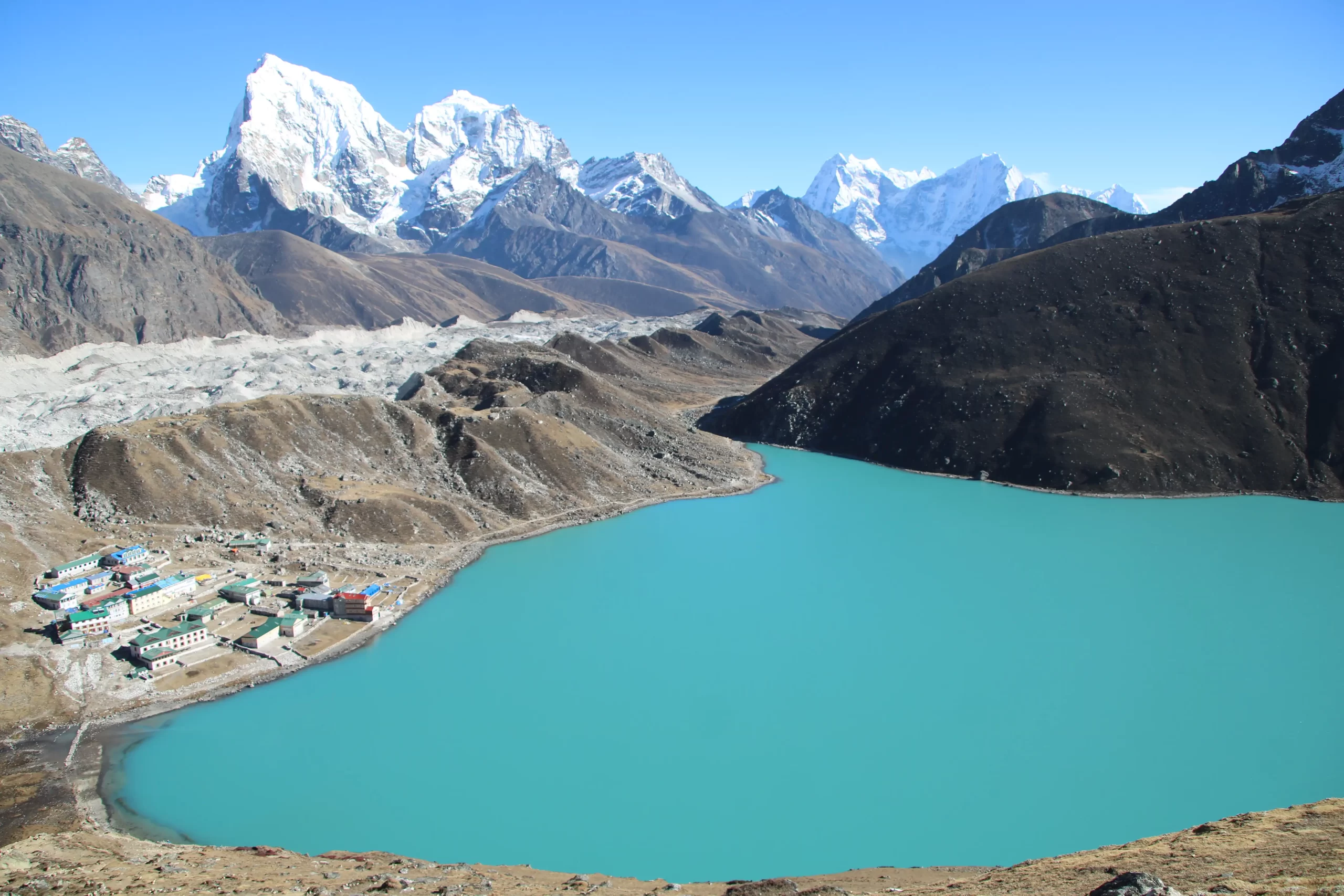
Gokyo valley offers a less crowded and peaceful environment with a beautiful glacial lake beside the valley. The valley is the leading destination for traveling up to the summit of Gokyo Ri and Renjo La Pass.

There are lots of guest houses and lodges which will welcome their guests with warm- hospitality and offers their guests proper food items and accommodations according to the needs of their guests.

Gokyo valley not only offers natural views, but this valley is also enriched by local people of great hospitality, religious aspects, and cultural vistas of Hindus and Buddhists.

Everest Three High Passes
Gokyo Lake

Cho La Pass:

Chola Pass is the most popular high pass among Nepal’s three high passes trek. This exciting route lies at 5420m above sea level in the Solukhumbu District of Nepal.

Cho La pass is quite challenging because of unstable glaciers, so one must need special trekking equipment from the concerned authority for a safe and comfortable journey.

The paradise place, Cho La Pass, offers perfect panoramic views of snow-capped mountains like Mt. Cho Oyu ( 8,201 meters), Mt. Everest (8,848 meters), and other peaks. This heavenly land on the earth also rewards trekkers with the fantastic reflection of mountains above the surface of a glacial lake.

Gokyo Ri:

Gokyo Ri is the ideal place in the Everest region on the western side of the Ngozumpa glacier, also known as the most prominent Himalayan glacier in Nepal.

Gokyo Ri, located at an altitude of 5,357m, is well-known as the best scenic spot in the Khumbu region. This scenic route has 19 freshwater lakes and a small beautiful Gokyo village at the base of Gokyo Ri. This place offers magnificent close views of peaks like Mt. Everest, Mt. Lhotse, Mt. Makalu, and Mt. Cho Oyu, which are above 8,000 meters. It is the most beautiful destination for trekkers around the globe because of the eye-catching scene of Gokyo Lake, Ngozumpa glacier, and 360-degree Mountain views.

Renjo La Pass:

Renjo La pass is located at an altitude of 5,360m in the Everest region of Nepal, which offers a majestic landscape view of Mount Everest, Mt. Lhotse, and Mt. Makalu from the top of Renjo La Pass.

Renjo La Pass is among one the three high passes of the Everest region that goes crossing Gokyo Lake. After crossing from Renjo La, travelers can explore various religious peoples of indigenous Sherpa and Rai, having unique lifestyles. Most of the World’s highest peak climbers, Sherpa people, live in this area.

This trekking route is well enriched by both Hindu and Buddhist historical places. Besides, the ideal time to visit the Renjo La Pass trek is from march-to May and September to November because, during this season, there are lesser trekkers, and the climate is quite soothing and pleasant. The weathers in these months are relatively stable, and you can explore the great charms of Renjo La Pass without facing any issues.

Everest Three High Passes is one of the most challenging trekking trips in the Everest region and is popular among adventure seekers looking for a once-in-a-lifetime worth of memories. Vertex Holiday with years of experience in adventure tourism may be just the right partner for you to explore the beauty of the Himalayas, just let us know your preference.

The Best Time for Manaslu Circuit Trekking

 best time for Manaslu Circuit Trekking
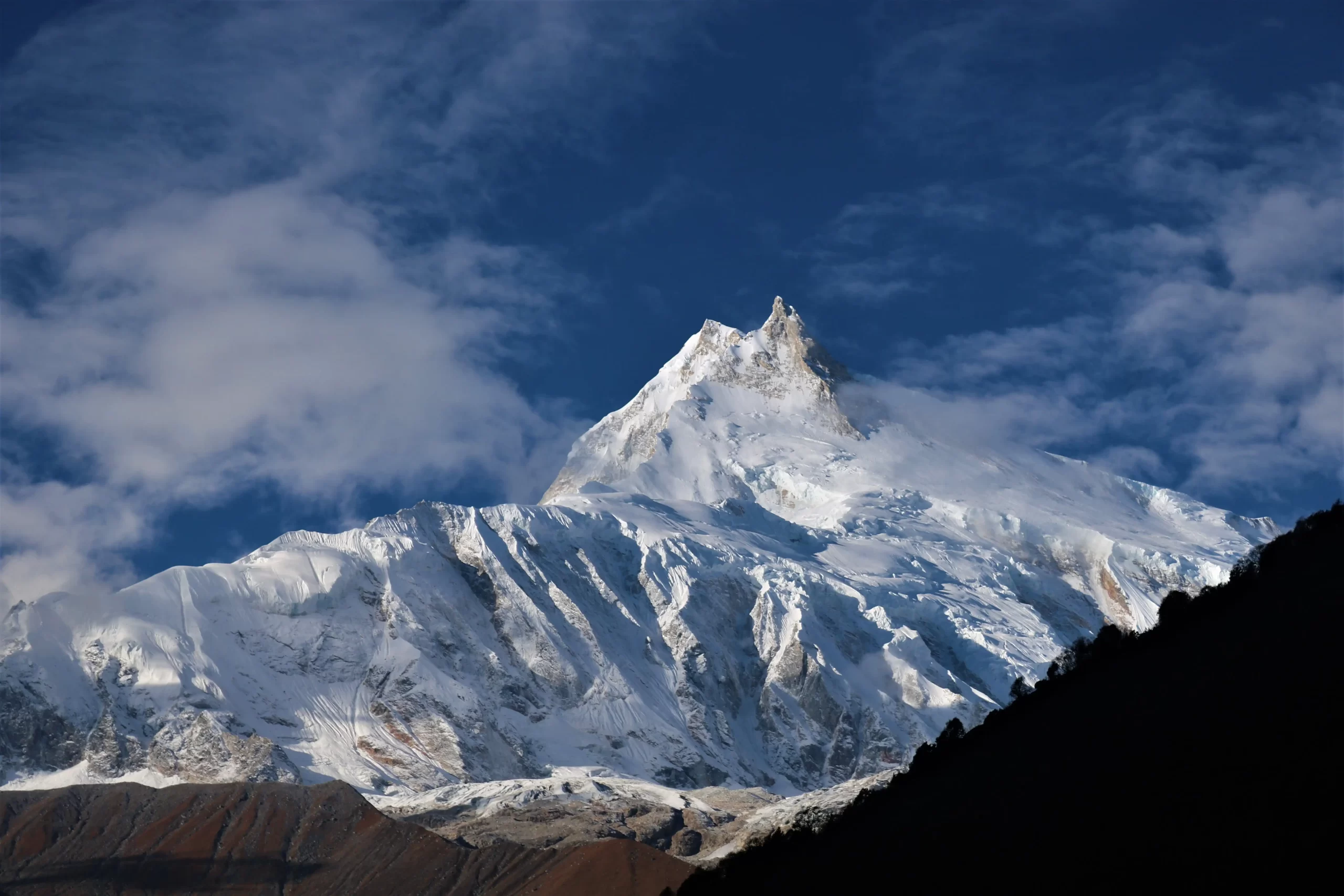
Mount Manaslu

An adventure around the world’s 8th highest peaks and its mountain range.’ The best time for Manaslu Circuit Trekking is in the spring season, which begins in March and ends in May. Early March can be quite cold from post-winter. However, it will be best to start the trek in the middle of March or April and May, when days are much longer due to enough sunlight hours. At the same time, one can cover long-distance walks reaching designated overnight destinations in good times of late afternoon or evening.

Spring times are lively when mid-green hills are covered in the dense coniferous forest lined with pines, oaks, firs, and rhododendrons.

Enjoying the walk with wildflowers in seasonal bloom, especially the rhododendron of various species from tall trees to a bush. As well, different vivid colors and hues make the trek so special during the great times of the spring season.

Spring  season is the best time for Manaslu Circuit Trekking:

In spring, the sun rises before 6 a.m. having sunny days quite longer till late afternoon or evening time. A perfect season where most days are clear for excellent views of snow-clad peaks as well as enjoying pleasant walks.

A lovely time as well as a peak, high season for the Manaslu circuit trek and other various adventures around the Himalayas. Where the hills are much green with tall trees and lush vegetation, with long sunny days.

A great time to choose the Manaslu Circuit trek, where the weather will be at its best. However, it can be much colder in the morning, late afternoon till night, around a higher altitude above 1,800 m.

In the lower farm areas from Arughat and before Jagat, the temperatures will be very warm throughout the day. Having a minimum of 10° to 15° Celsius and a maximum of 25° and above 30° Celsius degrees of sub-tropical climate.

As you reach 1 300 m to 2, 000 m higher, where the climate gets much cooler.

Minimum of 05° to 12° Celsius and a maximum of 15° to 20° Celsius, and much cold in the shades. From Namrung onwards, the temperatures remain the same till Lo and Sama Gaon are above 3,000 m to 3,500 m high. But it can be much brighter sunlight with strong UV due to the high altitude around exposed areas.

Where air gets thinner and oxygen level drops require strong sunblocks and long sleeve shirts, jackets, sunglass, and hats. Covering well to avoid sunlight with strong UV, the afternoon can be quite windy around Upper Manaslu valley.

After Sama-Gaon village onwards to Larke Phedi at Dharmasala, the base of Larke-La Pass, the temperatures remain almost the same during the day, but much cold morning and night time, as well in shades. Chances of snowfall sometimes, even at the best time of the year, on the climb to Larke-La pass.

The highest point of the trek is at 5,106 m, with cold and freezing temperatures during the early morning. As the sun hits, the area gets much warmer till you reach the other end of the pass at Bumthang. Reaching around the district of Manang, where climate and temperatures remain constant.

Minimum of 05° to 12° Celsius and a maximum of 15° to 20° Celsius towards Dharapani village. The finishing point of the trek is where you will enjoy the exciting long drive to Kathmandu of some 7 hours.

Autumn/fall is the best season for Manaslu Circuit Trekking:

The next best season is autumn/fall, one of the peak and high times for trekking around the Himalayas. As well for Manaslu Circuit trekking is a wonderful and most favored season by most trekkers and adventurers.

In Autumn or fall, the climate is pleasant after the end of summer and monsoon wet times. Starts from September to November, when days are fine and crystal clear with blue sky for views and pleasant walks.

Starting from lower altitudes where temperatures get a minimum of 05° to 12° Celsius and a maximum of 15° to 20° Celsius. Which makes the walk enjoyable, with cooler in the shades, from high above Namrung to Sama-Gaon and Samdo villages. The temperatures drop from 0° to -05° Celsius in the morning and nighttime, but with a starry clear night sky. But from late morning till late afternoon, the temperatures reach a maximum of 15° to 20° Celsius.

Where the wind-chill factor adds extra cold during the afternoon till evening time, chances of snowfall sometimes.

But gets warm as you start the walk and climb to the high Larke-La Pass, and the climate will be the same. On reaching Dharapani village at the end of the walk around the Manang district after crossing the high Larke-La Pass.

Important to know the right seasons of time for Manaslu Circuit Trekking, a Restricted Area in Nepal. Where special permits are required to enter Upper Manaslu areas from the village of Jagat onwards.

The other thing to know is that from mid-November onwards till early March, most lodges will be closed for winter. Where all villagers from Namrung, Lo-Gaon, Sama-Gaon, and Samdo will migrate to low, warm areas to escape the winter cold

Langtang Valley Trek-The Ultimate Guideline

Langtang Valley Trek-The Ultimate Guideline Overviews:

‘An adventure of moderate grade to picturesque Langtang Valley’ Langtang Valley Trek is located around Central Himalayas within the Langtang Himal range, between massif Ganesh and Jugal Himal. As well close to some high mountains across the border of Tibet, the closest mountainous region to the capital Kathmandu.

Langtang Valley Trek-The Ultimate Guideline
Porters approaching Buddhist Stupa with Langtang Mountains

Langtang Valley Trekking is one of the beautiful and picturesque regions surrounded by an array of towering snow-capped peaks.

The Langtang Valley is Nepal’s third most popular adventure destination among trekkers and adventurers. The Langtang region offers a wide range of exciting areas for all types of adventures. From leisure country and cultural walks to adventurous and adrenaline thrills with ever-present breathtaking views of the giant mountain range.

Langtang Valley Trek is a wonderful way to enjoy a week-long holiday or for more days where one can spend overnights in the comfort of a nice lodge in the harmony of warm traditional hospitality.

The trek takes you to high hills and a deep river gorge covered in the dense woodland of tall tree lines. A lovely walk amidst enchanting rhododendron, pines, oaks, and fir trees with some bamboo. The forest makes an excellent home for wildlife like the elusive Red Panda, often seen on treks to Langtang valley.

Besides the wonderful scenery of surrounding beautiful landscapes, the local culture is equally fascinating and impressive, interwoven with Buddhism heritage.

The walk begins on leaving the Syabrubesi village, after an interesting drive from Kathmandu reaching Dhunche town. The headquarters of Rasuwa district and the entrance of Langtang National Park, the first mountainous park of Nepal.

Established in 1976 and enriched with exotic flora and fauna, it covers an area of 1,710 sq. km. The park extends as far as the border of Nepal and Tibet / China in the north.

Langtang Valley Trekking leads to Lama Hotel and Langtang village, then reaches beautiful Langtang valley, where lovely Kyanjin is located. Kyanjin is a nice settlement at 3,749 m / 12,371 feet high. Situated in the heart of Langtang valley with many good lodges provides a comprehensive delightful food menu.

A great scenic spot Kyanjin is within beautiful Langtang Valley, enclosed by a series of high ridges and snow-capped peaks.

Kyanjin with various exciting high places to explore around Langtang Valley, and most trekkers enjoy the hike up to Tsego-Ri or Kyanjin-Ri. Which is above 4,700 m high and offers a grand vista of Ghengu Liru or Langtang-II at 6,571 m / 21,560 feet.

Enjoy the closest views of Langtang Lirung, 7,425 m / 23,765 feet, and Kim Shun, 6,745 m / 22,137 feet. Includes Shalbachum 6,918 m / 22, 699 feet in the south direction. Views of Chimsedang ridge with Naya-Kanga peaks 5,846 m or Ganjala Himal with Gangchenpo and Tillman’s beautiful Fluted Peak.

The view continues towards Jugal Himal in the east with the towering peaks of Dorje Lakpa at 6,966 m. A great wonderful trek to scenic Langtang Valley, where all types of people and age groups can enjoy.

Langtang Valley Trekking Difficulty:

Langtang Valley Trekking difficulty, to enjoy the walk where trekkers should be physically fit and in sound health. The trek to Langtang Valley is not as difficult as it looks; it also depends upon the itinerary days. Choosing a flexible program for Langtang Valley will be an enjoyable adventure holiday for all types of visitors.

Most itineraries with 7 nights and 8 days from Syabrubesi to Syabrubesi starting and ending point of Langtang valley treks. The trek leads to moderate walks with a slight touch of high altitude, but the elevation gains at a gradual pace.

The safe and enjoyable walks, although it involves a few steep climbs up, take slow with enough rest. Will overcome the difficulty, as well as have frequent stops to take pictures and enjoy the surrounding views.

Maximum 6 hours and a minimum of 3-4 hours walks, the longest treks on a return journey from Kyanjin to Lama Hotel. Which is a normal distance of walks around the Himalayas.

Langtang Valley Trek 10 days:

The Langtang Valley Trek Ten Days itinerary will be the best way to enjoy having a few flexible days. It will be much more enjoyable trekking to Langtang Valley, as well as spending more time at Kyanjin around scenic Langtang Valley.

Allows more days to enjoy the wonderful scenery as well as to explore and observe the local culture of immense interest. The Langtang valley treks of ten days can cover areas of the Langtang Himal region instead of ending at Syabrubesi.

Trekkers can have an excellent time without walking on the same route on the return trek from Lama Hotel. One can reach Thulo Syabru and Sing Gompa and then downhill to Dhunche town for the last overnight halt. From Dhunche, drive back to Kathmandu after spending 9 nights and 10 days treks on Langtang Valley and beyond.

Langtang Valley trekking routes:

Various trekking routes depending upon itinerary days, are the most common and straightforward way. Taking a drive from Kathmandu towards Syabrubesi village, the start and end point of Langtang Valley of a week duration. The trek leads to an uphill climb through a lovely forested path entering a river gorge to Lama Hotel. Spending overnight at Lama Hotel, the route leads to a slow climb towards Langtang village for an overnight stop.

From Langtang village, a short steep climb and then on a gradual path reaching a wide exposed Langtang valley. Having an overnight halt at Kyanjin, a moderate size settlement with many nice lodges. Normally trekkers spend an extra day and overnight exploring its hidden beautiful areas. To get excellent views of the massive Langtang Himal and adjoining mountain range. After a great enjoyable walk downhill, back to Syabrubesi village for the last overnight stop, before driving to Kathmandu.

People with more time can enjoy walking on an alternative route, up to lovely Thulo Syabru and Sing Gompa villages. Allows trekkers to experience more of the Langtang Himal region and the local culture, along with spectacular views of snow peaks.

The trek leads you down to Dhunche town for the last overnight halt before heading back to Kathmandu. Adventurous trekkers have more time can enjoy the walk to the high Gosainkund holy pond. From the Gosainkund crossing, a high east Laurabinaya-La or Gosainkunda passes at 4,609 m high. Where walk leads to the Helambu area and then towards the northeastern valley rim of Kathmandu.

Langtang Valley trek distance:

Langtang Valley trekking distance is a maximum of 6-7 hours of walking and a minimum of 3-4 hours. The longest will be on the return walk from Kyanjin to Lama Hotel.

However, the total distance is 65 km or 40 miles from Syabrubesi to Syabrubesi. A straightforward walk can complete in six days to and from Syabrubesi and Kyanjin around Langtang Valley.

The driving distance from Kathmandu to Syabrubesi town-village is 140 km. on Pasang Lhamu Highway. It takes about 5-6 hours, depending upon the types of vehicles, from local buses, private cars, and coaches to four-wheels.

Langtang Valley trek cost:

The cost for Langtang valley entirely depends on the trip packages as well as the minimum and the maximum number of trekkers.

When booked for a single person with a local trekking agency in Kathmandu can cost from US$ 650 to US$ 700. For 7 / 8 days trekking.

Accompanied by a licensed guide with a porter, includes all necessary permits and national park fees. As well wages and food for guide and porter with accommodation allowance.

In a group of a minimum of 3-6 people, the cost will be slightly lower, from US$ 560 to US$ 675 per person. As the vehicle and guide, the porter’s wages will be shared among the group price.

For trekkers willing to trek on their own without joining the company and not using a guide or porter. The cost comes down to about US$ 20 -30 per day for meals and accommodation. The extra cost will be obtaining TIMS (Trekking Information Management System) and Langtang National Park entrance fees.

Which comes to about US$ 30 to 40 per person, excluding transportation to and from Kathmandu-Syabrubesi.

Langtang Valley trek best season:

Nepal has four main seasons namely spring, summer/monsoon autumn/fall, and winter. The best season for Langtang Valley and around the Himalayas is from spring and autumn/fall.

Spring begins from March to May, a lively time for walks around the hills and valley of Langtang Himal. The day is bright and sunny most days. However, it can get overcast in the late afternoon. Chances of light showers and snowfall around higher areas from 3,000 m above. Cold in the morning and late afternoon till night time, warm during day time with clear views of mountains.

Springtime is when wildflowers are in seasonal bloom, especially the rhododendron flowers of various species, from trees to bushes. The next best season for the Langtang Valley trek is autumn/fall; most days are crystal clear for views and walks.

But cold with freezing temperatures in the morning, late afternoon, and night altitude-wise. You can expect snowfall sometimes above 2,500 m above. The autumn season is best but with shorter days due to sunlight hours.

Spring and autumn are the best time for the Langtang valley trek for people who are interested in trekking during winter time. From December to February, during Christmas and New Year holidays, we can trek to Langtang Valley. The weather will be fine on most days. However, the days are short as the sunrise is late.

The sunset is earlier than 5:30 p.m. It will be much colder with freezing temperatures early morning, late afternoon, and nighttime. It can get snowed in sometimes, but still, the day is crystal clear most of the time.

The Best Enjoyable Way to Everest Base Camp Trekking

The Best Enjoyable Way to Everest Base Camp Trekking Overview

‘all can easily enjoy and conquer the high altitude trek to Everest base camp’ Going through the text and guidelines will certainly help and supports you in overcoming the difficulties during Everest Base Camp Trekking. Especially walking on high altitude terrain, with many risks of catching high altitude sickness or AMS (Acute Mountain Sickness).

Everest Base Camp Trekking
On the way to EBC

To enjoy the best of Everest Base Camp Trekking or any other high-altitude Everest Region trekking adventure, one can overcome and conquer. Depending upon one physical fitness and sound health, as well as choosing the right types of itinerary days. Which should be quite flexible, with enough space for acclimatization and as well to explore the surrounding beautiful scenic areas.

Everest Base Camp Trekking, in general, with a standard program itinerary of a maximum duration of 12 nights and 13 days. Starting and ending at Lukla town after flying in from Kathmandu 35 minute scenic flight.

At present, some trekking companies offer Everest Base Camp Trekking in the shortest time, less than 12 days. While some provide more than two weekdays also. People with limited time might choose the shortest, quickest expressway to Everest base camp and back to Lukla.

Where only a few travelers can make it, and that is one in ten people. It also depends upon the size of a trekking group, where some might be slow, and others can walk faster. Reaching an overnight stop on time at designated villages and lodges route to Everest Base Camp.

Trekkers should be aware that they will be trekking at an average altitude from 3,000 to above 4,000 m high. The steep, steady climb on higher terrain makes you breathless and might lead to AMS minor or severe symptoms.

All can avoid being safe and responsible trekkers by choosing the standard days of the Everest Base Camp Trek itinerary. Having enough flexible hours of walking as well as acclimatization days is suitable for all people and age groups.

How To Conquer and Enjoy The Best Way To Everest Base Camp:

The main and easy way to conquer and enjoy the best way to Everest Base Camp. It is the right and best season of the year for trekking and planning itinerary days. Making it more accessible and flexible as per one interest having more time to explore as well for acclimatization.

The route is the same for all whether taking the fastest and quickest way or the longer days. The quickest, fastest way is for people of less budget for the treks, as well for athletic people. Trying his / her endurance and ability to cover the trek in the shortest time proves one strength and stamina.

But on average, travelers take the trip to Everest base camp or any other high-altitude destinations with much time. The Everest base camp route is straightforward for all types of people and age groups.

The only difference is how he/she uses the walking days with the best, safe way to Everest base camp.

Experience Companies and expert guides like Vertex Holiday provide standard and general itinerary days. The only difficulty in deciding is after reaching a higher elevation like Namche Bazaar at 3,440 m high, where some people might catch slight symptoms of AMS, light, severe, or not at all.

The safe and right way to enjoy the adventure is walking at an easy leisurely pace. Take the whole trip as a journey and not as a destination. Enjoying and having leisurely short rest and observing the local culture and way of traditional village life.

There are various ways to enjoy and take delight in walks, from scenic views of surrounding landscapes and snow peaks. As well as exploring the villages on the route and interacting with the locals or taking memorable pictures.

Finally, the walk takes you up some steep sections to Namche Bazaar heed slowly, taking a leisurely pace. Stopping for a while, where needed, from getting breathless, this way, like the saying ‘slow and steady wins the race’. On reaching Namche Bazaar, have two overnights at the same altitude, and on a rest day, take a short hike.

Walking ups at higher elevations and sleeping or taking a rest at low heights is the best way to get acclimatized. But don’t ever do it and stress yourself; the other way to fight altitude is to drink enough fluids. Like safe, clean water, plain hot drinks like green, lemon, and ginger light tea, having rest taking things slowly.

How To Enjoy And Be Safe On The High Scenic Trail To Everest Base Camp:

At Namche Bazaar after a pleasant rest day, as well as getting acclimatized.

The walk leads to a much higher altitude on a scenic trail with a climb to Tengboche, gaining more than 400 m heights. There are two places to spend overnight at Tengboche, either staying in a lodge close to the monastery area.

The other options walk down to Deboche, a settlement with a few nice lodges amidst the forest surrounding facing Mt. Everest.

From Tengboche on the high trail to Pangboche at 3,900 m and then to Dingboche settlement, located in Imjatse valley. Dingboche, at above 4,340 m high, is another best place for a short hike uphill for proper acclimatization.

After Dingboche on higher terrain to Lobuche, a small settlement with several fine lodges at 4,940 m high, enjoy an overnight at Lobuche and continue walking towards the main destination reaching Everest base camp, after a short rest at Gorakshep.

Gorakshep at 5,180 m high, situated below Mt. Pumori and Kalapathar rocky hill, either stay at Gorakshep or continue walking.

For people with more days, best to spend overnight at Gorakshep for overnight, which was also an earlier Everest base camp. Nevertheless, carry on trekking from Gorakshep for a few hours’ walk to Everest Base Camp at the height of 5,364 m.

Gaining about 200 m in elevation after days of acclimatization at Namche and Dingboche. One should be well acclimatized and fit to tackle the altitude to enjoy the stupendous dramatic scenery at Everest base camp.

On achieving the goal and target of the adventure, options for an exciting climb to the top of Kalapathar Hill. Which is the highest point of the adventure at 5,643 m / 18,514 feet high. Rewards stunning panorama of surrounding giant peaks with closest views of Mt. Everest at a close distance.

Return Journey To Lukla After  Enjoyable Moments At Everest Base Camp Trekking:

After completing all major highlights, downhill to Namche and back to Lukla, feeling in great spirits. To achieve the goal and wonderful experience, follow  Everest Base Camp Trek important information.

The Everest Three Passes Trek a High-Altitude Adventure

The Everest Three Passes Trek a High-Altitude Adventure Overview

The Everest Three Passes Trek is a High Altitude Adventure around Khumbu valley in the close shadow of Mt. Everest. Truly a mind-blowing experience traversing from one scenic valley to another in picturesque areas of high Khumbu terrain.

Three passes trek clockwise high passes trail include Kongma-La 5,535 m / 18, 160 m. Cho-La Pass 5, 420 m / 17, 782 feet, and Renjo-La 5,360 m / 17, 585 feet. As well as a side trip to Everest Base Camp, 5,364 m / 17, 598 feet with a climb to the highest point. On top, Kalapathar at above 5,643 m / 18,514 feet high.

The highest of all three passes is Kongma-La, located above Imjatse valley and towards Lobuche and Everest Base Camp; travelers can find an Everest three passes trek map before traveling to understand.

The Everest three Passes Trek a High Altitude Adventure, with two choices of options, either starting first from Thame village. Located west end of Khumbu and Namche Bazaar, close on route to Rolwaling Valley via the high Tashi-Labtsa-La pass.

Crossing first over Renjo-La to Gokyo Valley and its turquoise-colored glacial lakes close to Nepal’s longest Ngozumba glacier. From Gokyo valley onto Cho-La pass, reaching the main trail of Everest base camp. Where adventure leads to traverse over the last third pass of the Kongma-La pass, reaching Chukung or Dingboche around Imjatse valley.

The Everest Three Passes Trek is a High Altitude Adventure
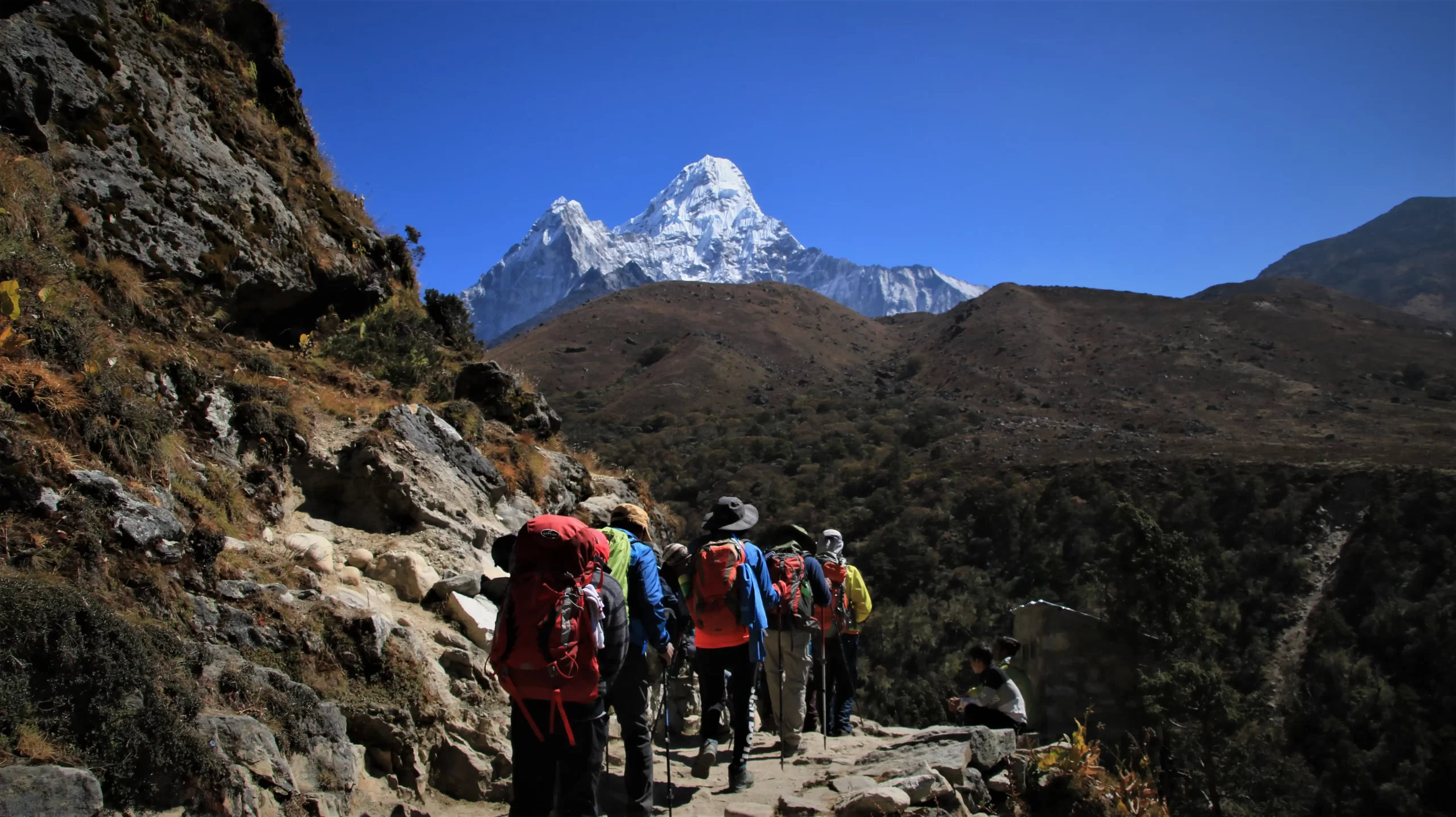
Mount Amadablam

Whichever route to follow the trail diverts from the famous Namche Bazaar as well ending at Lukla via Namche Bazaar.

The other option on the Everest Three Passes Trek a high-altitude adventure one can skip the Everest base camp. As well as the Kalapathar rocky hill climb, making the trekking itinerary a few days shorter.

The delight and charm of the Everest Three-pass trek are testing and challenging your endurance and physical abilities. Where most days lead to longer hours of walking of more than 7 to 8 hours crossing each high pass. Depending upon the trail and snow conditions, at higher altitudes, snowfalls are normal at any time of the season.

The Route To Everest Three Passes Trekking:

At first, the walk starts on gradual main trails from Lukla town after flying in from Kathmandu, on a small aircraft. The route follows through the nice lovely Sherpa villages of Ghat and Phakding, the path adorned with Buddhist monuments. Like prayer walls and rows of spinning wheels and interesting carving on rock walls, as the walk enters Sagarmatha National Park.

From the park entrance, walk on Dudh Koshi River valley, after crossing a high last bridge, on an undulating uphill. Reaching the famed Namche Bazaar, the main hub and capital of Khumbu Sherpa are the highlanders of Everest.

Namche Bazaar is an ideal and perfect spot for rest days to support acclimatization at 3,440 m high. Offers several short hikes around the viewpoints for the grand scenery of Mt. Everest and adjoining peaks.

After Namche, for a pleasant rest day in the comfort of a nice lodge and enjoy a wide list of food menus. Options to choose from the start with Three High Passes crossing from Thame village, which is west of Namche Bazaar.

The most popular and favorable route to the Three High Passes is from Dingboche and Chukung, located in Imjatse valley.

As it allows much better exercise for acclimatization and is close to Everest Base Camp and Kalapathar Hill. Walk from Namche on the main scenic trail facing glorious views of Mt. Everest, Lhotse, and Ama Dablam. A short downhill with a few hours’ climb leads to the top of Tengboche, a beautiful picturesque spot with an impressive monastery.

Enjoy the panorama of Everest and surrounding high snow peaks and the last green forest for several days. From Tengboche onwards, within sheer mountain wilderness of arid and barren rocky terrain with ice and snow.

Visit the monastery of great religious and cultural interest, as well as get blessed for a successful adventure crossing three passes.

On leaving Tengboche, down to a river and above on gradually up to Pangboche.

The last permanent village on the route before reaching Thame after crossing the last Renjo-La pass. Other places on the route are temporary settlements catering to the needs of trekkers providing good lodge accommodations and nice food.

After Pangboche, a slow, gradual climb to enter a beautiful scenic Imjatse valley, where Dingboche is located. Spending a day rest and then walking to the end of Imjatse valley, facing tremendous views of Ama Dablam, Island Peak, and Lhotse with Mt. Makalu. A short interesting walk to Chukung, the starting point of the first pass to cross Kongma-La.

The Adventure Over Three High Passes Of Everest:

Spending overnights at Chukung with time to enjoy the close towering peaks, starting walk early morning heading above Imjatse valley.

The faint path enters a gully walking on a rocky trail as a steep climb reaches on top of Kongma-La. The highest pass of the adventure, marked with a rock cairn and prayer flags, walks down to cross the Khumbu glacier. Then climb to a moraine and descend to Lobuche, a nice settlement with several fine lodges.

From Lobuche, options for a side trip to Everest base camp and climb of Kalapathar rocky hill. As per the itinerary days with more time, enjoy the walk to Everest base camp. As well as climb to the highest point of the trek on top of Kalapathar, which offers a breathtaking panorama of surrounding giant peaks. Facing the closest views of Mt. Everest at a close distance, then walk downhill on leaving the main trail.

The walk continues heading to the base of Cho-La, passing on route to scenic Gokyo valley and glacial emerald-colored lakes. After overnight at Dzongla, a place with few lodges, the adventure begins early morning to cross the second high Cho-La Pass.

Everest Three Passes Trek
Mount Cholatse

A strenuous steep climb for some hours till the top is reached of Cho-La Pass, a scenic high pass. Overlooking grand views of high snow-capped mountains, from here down, enter a beautiful Gokyo valley.

An exciting and great scenic high valley of Gokyo with its simmering lakes with close views of Mt. Cho-Oyu. The world’s 6th highest peaks enjoy a climb up to high Gokyo-Ri rewards superb panorama of the world’s 4 highest mountain range.

From the top overlooks the dramatic scenery of Gokyo valley with an array of peaks. Getting ready to cross the last third pass of the adventure, an exciting climb on leaving the scenic Gokyo valley. Enjoy the last steep haul to the top of Renjo-La, facing a superb panorama of Mt. Everest, Lhotse, and Cho-Oyu.

Includes views of Mt. Makalu with a series of snow peaks encircling Renjo-La, the last pass of the adventure. After completing all three high passes of Everest, feeling in high spirits, on the trail for homeward bound to Lukla. Walk down to Thame village and then on a pleasant trail back into tree lines, following the trail to Namche Bazaar. Enjoy a refreshing stop at Namche Bazaar, then downhill to Lukla for an exciting panoramic flight back to Kathmandu.

At Kathmandu, our great journey concludes after an overwhelming experience on Everest Three Passes Trek, a High Altitude Adventure.