Declaration of Climate Emergency,climate and environment are essential factors for a healthy and sustainable life for every living being on this planet. As a travel and trekking tour operator based in the Himalayan country of Nepal, where the world’s highest peak Mt. Everest is located, it is our responsibility to take care of the environment, thus as a first step here’s our declaration of climate Emergency.
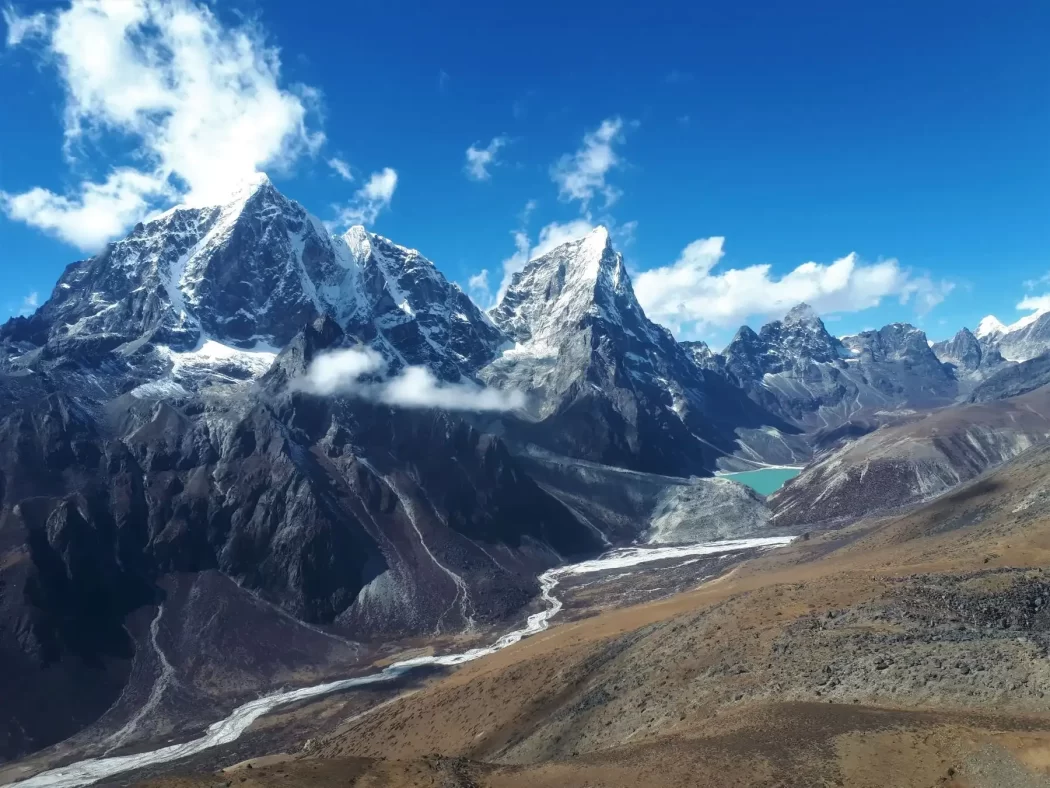
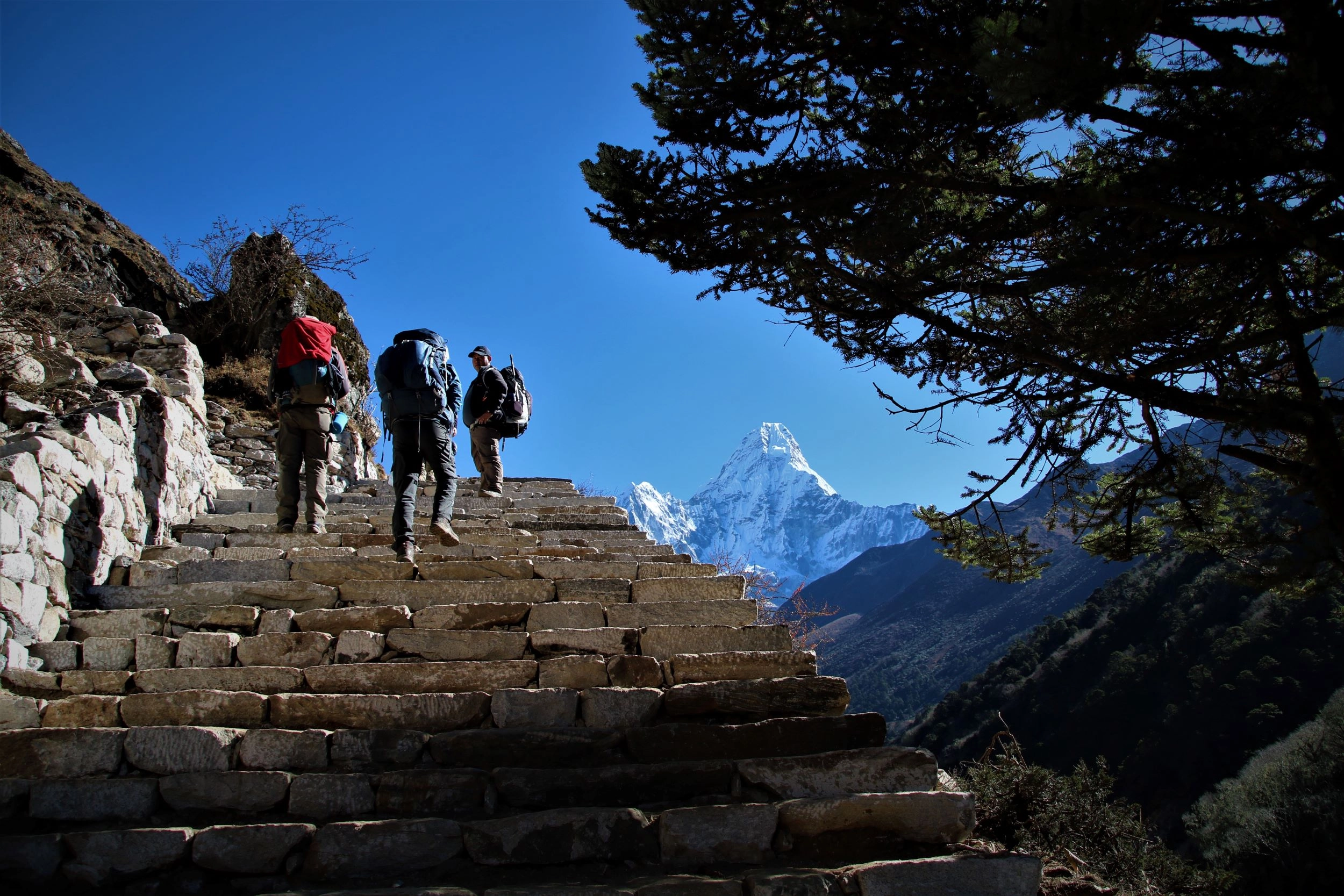
Everest Region
Here at Vertex Holiday, we acknowledge the fact that there’s an emergency for climate and the environment. We support the initiative taken out by Tourism Declares and Glasgow Declaration. We strongly believe that a proper climate action plan is needed in order to meet the guidelines of reducing our carbon emissions by 50% by 2030 and net zero by 2050.
As a responsible tourism service provider, Vertex Holiday is dedicated to meeting its goals by any means possible. For that purpose, we have created our Climate Action Plan accordingly and are committed to following them thoroughly. Our climate action plan has been established, incorporating five main points, i.e. Evaluate, Minimize, Remove, Counterbalance, and Evolve.
This Action plan does not promise a quick-fix solution for our carbon emissions, rather it is our strategy for meeting the goals of our commitment to sustainable tourism. In order to achieve our goals, we will be adopting all these measures, which will be focusing on low-carbon business. We are delighted to be a part of the global effort to minimize emissions, as per the guidelines of the International Panel on Climate Change.
1. Evaluate:
Most of our tours and trips include the activities like walking, hiking, trekking, and similar activities. As the major source of energy in Nepal is Hydroelectricity, most of our services need energy is mostly eco-friendly, covering our office and accommodation during any tour or trip. Besides, foods during any trip are mostly locally sourced, and their carbon footprint is very minimal.
The major source of carbon emission from our tours and trips is definitely the means of transportation, which may include from a four-seater vehicle to a 20+ seater bus depending on the total number of clients during the trip. Domestic Air transport, including Twin otter planes and Helicopters, are also major emitters.
Major carbon emissions from Vertex Holiday’s services are from transportation and fuel used to prepare foods. Thus measuring our carbon footprint is a little bit complicated. However, for every trip, we keep a recording of the “distance of driving” as well as the “amount of fuel the vehicle consumes.” Our calculations are based according to the “amount of fuel consumed” divided by the “number of passengers” for measuring the CO2 emissions per person.
As measuring accurate CO2 emission is a rather complicated task. However, this method will provide us with insight into our average emission data. Moreover, we will be open to any other newer means of measuring our carbon footprint in the coming days.
2. Minimize:
As per the guidelines, we will be committed to reducing: if not minimizing, our carbon emissions. Due to the COVID-19 situation, we haven’t been able to properly evaluate our emissions, as the tourism industry was almost paralyzed. However, at the end of 2022, we ensure to properly analyze all of our recorded data of all tours and trips.
However, for the minimization of our Greenhouse Gases emissions, we are committed to taking the necessary actions. This includes customization of our trip itineraries to a point where it requires a minimal amount of carbon-emitting services like transportation. Moreover, we will prioritize the usage of newer vehicles, whose pollution tests have been timely analyzed and approved by the respective authorities
3. REMOVE
Removing carbon from the atmosphere is an essential step toward reaching our goal of net zero by 2050. As a small-scale tourism operator, we cannot promise any high-end technologies for removing carbon.
For this purpose, we will discard old and high carbon-emitting vehicles for transportation. Besides, we will promote hiking, walking, and trekking activities instead of tours that use vehicles. Furthermore, our itineraries are optimized in a way for the minimal possible emission.
However, we will be committed to cutting off high carbon-emitting services. For reference, we will prioritize hiking and trekking trips, which don’t require camping equipment, where fossil fuels are mostly used for the preparation of food.
4. Counterbalance
As a tour and trips provider, we acknowledge the fact that we require certain services which emit greenhouse gases into the atmosphere. Such unavoidable emissions may include transportation, food, and other fossil fuel-consuming activities. For such emissions, we will incorporate traditional methods of carbon sequestration.
Since the beginning of our company in 2016, we have been actively taking part in plantation and reforestation projects organized by different governmental and non-governmental organizations. Besides being physically involved, we will be committed to involving ourselves in such activities, including monetary donations to such causes.
In the coming days, we will commit our agency to organize similar activities in remote destinations along with trekking and hiking trails. Moreover, we will prioritize destinations that are eco-friendly as per our commitment to responsible tourism. Besides, we will be committed to awareness campaigns in rural communities about the importance of de-carbonization.
5. Evolve and Collaborate
As our line of the industry requires us to collaborate with third-party service providers for transportation, accommodation, and other essentials, during most of our trips and tours, we will be constantly learning and adapting innovative means for cutting off carbon emissions.
As technology is advancing toward greener alternatives for energy worldwide, we, too, will be transitioning towards adopting new technologies. As the hype about electric vehicles and renewable energy is taking off worldwide, we will also be focused on integrating these alternatives.
The EVs are a comparatively newer trend here in Nepal, and the numbers of such service providers are very low, thus, it’ll take us time to integrate these means of transportation into our tours and trips. However, in the future, it is going to be more likely to collaborate with such a service provider, which totally depends on the fairer policies from the Government of Nepal.
Besides, we will put our time and effort into learning and implementing new means of reducing carbon emissions from a wide range of resources on the Internet. This includes the International and National organizations dedicated to sustainable climate action. We will commit ourselves to our Climate Action Plan, as outlined by the International Panel for Climate Change, in order to reach our declared goals of net zero.
This is our climate action plan for our Declaration of Climate Emergency. We are open to any further suggestions regarding our Climate action plan. If you have any queries, then kindly contact us.
The Himalayas Waterfalls of Nepal Overviews & Introduction :
‘The country of the world’s 8th highest peaks and massive mountain ranges Himalayan waterfalls of Nepal, the country of the world’s 8th highest peaks with a series of massif mountain ranges. It certainly makes Nepal a land of immense waterfalls due to its unique and amazing landscape topography.
The country is also rich in water resources, listed as the world’s second-largest hydropower. Wherever one travels in Nepal, on leaving the city and towns, coming across numerous streams and rivers. The main tributaries of larger rivers and streams of the country are the source of Himalayan mountain glaciers.
Where smaller streams and rivulets flow downstream to join the main big rivers through high cliffs and ridges. Which forms a high and beautiful cascading waterfall that can be seen all over the highs and valleys of Nepal.
The high Himalayan Mountain range, with towering cliffs and rocky ridges, makes Nepal a country of natural wonders. Countless waterfalls, from highest to lowest and big or small, can be found all over Nepal.
From the Far East to the Western Himalayas range with lovely scenic foothills known as Churia or Siwalik. Extends higher to Mahabharata towards the Greater Mahabharata range of high hills and mountains, ending at towering Himalayan peaks.
Around the world with biggest and largest waterfalls like Niagara Falls in the USA and Canada North America. Similarly, Angel Falls of Venezuela in South America with Iguazu Falls of Argentina and Brazil, South America. Including Victoria Falls in Zimbabwe, Africa, and Olo’Upena Falls of Hawaii in the USA.
In comparison to the largest waterfalls on other continents, Nepal might have smaller ones, but the country boasts many waterfalls. Located throughout the country, which makes it one of the wonders of Nepal, with the largest Hyatung Waterfall in the Terhathum district. Listed as the second largest in Asia, it flows from a height of 365 m or 1 198 feet high.
Hyatung Waterfalls of Terhathum, situated in Far Eastern Nepal on route to the world’s 3rd highest Mt. Kanchenjunga base camp. Likewise, one of the longest and largest waterfalls of Pachal Jharna in the Kalikot district of Karnali province.
Located in the Far West, one of the prides of Nepal, at the highest point of 381 m or 1,250 feet. Apart from hundreds of bigger and smaller high waterfalls in Nepal, the main famous is Davis Fall / Pathle Chago. In the tourist city of Pokhara, Nepal Mid-West, the waterfall flows down from a height of 150 m high.
The other famous Rupse Falls, which is in the district of Myagdi on route to Jomsom town of Upper Mustang areas. A great volume of waterfalls close to the motorable road flows down from a height of 300 m high.
The next is the Tindhare Waterfall, nearest to Kathmandu valley.
Located in the district of Kavrepalanchok, at 300 m high, a few hour drive from Kathmandu towards mid-east hills. The Hyatung Falls of Terhathum district flow from a height of 200 m high.
The Best Time To View The Himalayas Waterfalls Of Nepal:
The best to view the Himalayan waterfalls of Nepal is from pre-monsoon and post-monsoon times. The pre-monsoon time of June to early July, when monsoon heavy rains begin. The higher mid-hills of Nepal will be wet with lush green vegetation and a rise in water volumes on streams and rivers. Waterfalls around the country begin to get active with raging waterfalls from high towering hills and ridges.
Mid-Monsoon, the heaviest rainfall of all-time maximum of 1,900 millimeters with the highest precipitation of 3,500 mm. From July to August, it makes a natural wonder with cascading waterfalls all over the green hills.
As well as on high rocky ridges with sheer cliffs, where torrential waterfalls to streams and swelling rivers. This an exciting time to visit Nepal for people who are interested in viewing the Himalayas waterfalls of Nepal. Apart from the middle of the monsoon, the post-monsoon time of September, most waterfalls will be active.
Truly a great time in Nepal with lush green flora with endangered fauna that exists during the wet monsoon season. Where walk leads you amidst high raging waterfalls as it flows down from towering hilltops and high ridges.
Places To Visit For Views Of Himalayan Waterfalls:
Nepal with amazing landscapes and bio-diversity with great variation in altitude. From low 60 m to the world’s highest, Mt. Everest, at 8,848.86 m high.
Dramatic changes from sub-tropical to cooler hills and towards remorseless fields of ice snow with arctic zone terrain. All within a mere distance of 150 km. Making Nepal a country a unique country on this planet earth.
Places to visit for views of Himalayas waterfalls in Nepal are especially around the mid and low foothills where all rivers and tributaries flow from mountains towards lower hills and valleys, as well into a deep river gorge.
The most interesting place for waterfalls is on the foothills of the Annapurna Himalayas. Not far from the main tourist city of Pokhara, taking a drive of a few hours to Bhirethati village. As the trail follows gradually up towards Tirkhedhunga village, just after Bhirethati lies the beautiful and huge cascading waterfalls.
Walk further up to Tirkhedhunga village, about 1,400 m high, and stay in a nice local lodge. Just close to the village, one can enjoy a wonderful flow of waterfalls on both sides of Tirkhedhunga village. The bigger one is just a few minutes up to a stream reaching a gorge, and you marvel at the beautiful turbulence of waterfalls.
Just next to the village below the bridge exists another waterfall, a great place for overnight enjoying the views of waterfalls.
Around Pokhara, a short drive south of the city to Davis waterfalls, the area is made into a park garden. Enjoy overlooking the great volume of water that rushes into a huge waterfall, an interesting place to experience.
Khopra Ridge community Trek is a short and exciting adventure in one of the hidden pockets of the Annapurna region blessed with natural beauty with waterfalls, Mountains, Flora, and fauna.
The other great place to visit for views of the Himalayas waterfalls on the way to Annapurna circuit trek near the Besisahar town, situated within Lamjung district. Where drive continues to the village of Syange, with close views of the raging flow of waterfalls.
As the drive continues winding uphill to Jagat village, facing grand views of waterfalls opposite Masrsyangdi River. From Jagat, heading further to Tal Besi village, the entrance of Manang district enjoys views of several waterfalls. Located close to the village of Tal and then walk or drive to Dharapani village, facing views of waterfalls.
Manaslu circuit Trek located in the west central of Nepal, 70 miles from Kathmandu, is an adventurous route for the extensive landscape, waterfalls, River, and the world’s 8th highest Mt. Manaslu.
The next best area for a view of waterfalls is on the road to the border of Nepal and Tibet / China. Close to Kodari and Tatopani town, where views of waterfalls are seen nearly everywhere along the roadside. As well on the opposite Bhote Kosi River flowing from a high ridge and rocky cliffs.
There are more places for the best views of waterfalls during the monsoon time from June to mid-September months.
Waterfalls are seen all around the seasons, but the best and most exciting views are in the wet monsoon and summer seasons. When the water levels are high in large volumes, it makes the raging turbulence on waterfalls around the mid-hills of Nepal.
Places To Visit And Enjoy The Adventure Sports On Waterfalls:
Waterfalls in Nepal have been turned into adventure sports activities called Canyoning. Where all types of people and age groups can enjoy, guided by expert canyoning instructors and guides. Includes variation of exciting thrills, a short hike climbs up to a ridge. Then jump or rappelling down with the surge of the great flow of waterfalls to a deep pool down. An exciting full of thrill canyoning adventure around various Himalayan waterfalls in Nepal.
The Ultimate Guideline of Manaslu Circuit Trek An exciting and enjoyable high-altitude walk with a taste of local culture Manaslu Circuit Trek provides Ultimate guidelines for all interested wide-world travelers, adventurers, and explorers. An adventure around Nepal’s Far North Mid-West Himalayas, where one can enjoy for two weeks or longer.
Mountains in Manaslu Conservation Area
Located in the central part of Nepal within the district of Gorkha around the Gandaki Zone. At present, known as State-4 of the country, it is a beautiful and scenic mountain destination situated remote higher region of Gorkha.
Close to the border of Tibet / China and on the main trail to another side of Manang district. After crossing the high Larke-La Pass from the end of Manaslu Valley to the Manang region close to the route of Annapurna Circuit Trekking.
Manaslu Circuit Trekking is an exclusive adventure walking around the world’s 8th highest Mt. Manaslu, and its group of peaks. Includes Bauddha and Himal Chuli with other lesser peaks above 7,000 m and below 6,000 m, around its massive range. Besides exceptional scenery and the grand vista of surrounding dramatic landscapes with white peaks, the local culture is equally impressive.
The walk follows the Budhi Gandaki River to its glacial source around High Manaslu valley. route as the walk reaches many nice hill villages with ancient traditional farm life and raising livestock.
As the trail follows much higher, the rice paddy gives away high-altitude vegetation and crops. Has amazing rows of terraces growing barley, millets, and buckwheat, the only few crops that survive on the harsh terrain.
On reaching the higher side of Manaslu, facing constant views of high snow-capped peaks with majestic Mt. Manaslu. Staying in lovely village lodges and guest houses, as well with time to explore around to soak into local cultures.
Certainly, a great enjoyable walk, Manaslu Circuit trekking is a combination of the charming traditional custom of age-old heritage. In the harmony of the beautiful surrounding scenery of the towering snow mountain range that follows you throughout the trek.
Preparation & Information For Manaslu Circuit Trek:
The Ultimate Guideline of Manaslu Circuit Trek For the wonderful adventure Manaslu Circuit Trek, choose the best seasons of the year. The most favorable time and high seasons are spring and autumn/fall, where days are bright and sunny. Pack the right necessary gear according to the season after booking with Vertex Holiday as well as collect important details and information regarding the trekking with dos and don’ts.
Be aware that the Manaslu Circuit trek falls within the Restricted Areas of Nepal, where all visitors require special permits as the area was closed to the outside world and flung its door open from 1992 onwards. Allowing limited numbers of trekkers, after joining with Government Regisrated Companies of Nepal, should be accompanied by authorized licensed guides. To run this trip, all reputed trekking agencies require a minimum of 2 /out of 3 people in a group where FIT (Free Individual Travelers) or Solo trekkers are not allowed to enter from the village Jagat onwards.
Manaslu Circuit, in the protection of MCAP (Manaslu Conservation Area Project), all trekkers need an entry ticket for this marvelous trek. As well as for ACAP (Annapurna Conservation Area Project). After crossing Larke-La Pass enter Manang district at Bhimthang to Dharapani onwards, located within the famous Annapurna Circuit route.
The Trail And Route On Manaslu Circuit Trek:
For Manaslu Circuit Trek, there are two options either choosing the clockwise routes from Dharapani village around Manang areas. The most popular route starts from the Gorkha district and then ends at the Manang region in the Lamjung district. The motorable road has reached to Machha-Khola beyond the early starting point of Arughat town and Soti-Khola village.
Starting the walk from Machha-Khola village after spending an overnight completing a long drive from Kathmandu or Pokhara. The trail follows the Budi Gandaki River for some days, leaving the low sub-tropical farmland and villages. As the walk leads you to cooler hills at Jagat village, the entrance point for Restricted Area around high Manaslu Valley.
From Jagat village on an uphill trail to a nice village of Philim, and then heading to much cooler high areas. As the climb leads through Deng, Namrung villages within a lovely forest of rhododendron and pine trees. The climb leads to Budhi Gandaki River and then down and ups coming across the same river on reaching Lo-Gaon.
One of the charming villages on the Manaslu Circuit has good lodges and food menus, with excellent views of Mt. Manaslu.
From Lo-Gaon, heading west past several farm villages and yak herder camps with a temporary shelter to Sama-Gaon. The main village around the high Manaslu valley is located on the caravan route to the Tibet border, as well as Manaslu Base Camp.
Spending a day for acclimatization and a short hike to viewpoints and exploring the village enriched with ancient culture and customs.
After Sama-Gaon towards Larke-La Pass, spending overnights at the last village of Samdo, then reaching Dharmasala. The base of Larke-La Pass is at the end of Manaslu Valley and Gorkha district, the place also called Larke Phedi. A small settlement with few simple and basic lodges for travelers and trekkers. In high and busy seasons, sometimes the trekkers have to spend overnights in a tented camp near the lodge.
Next, early morning carrying pack lunch for the long day’s walk uphill to Larke-La pass. The highest spot of the adventure at 5,106 m / 16, 752 feet, rewards a spectacular panorama of a mountain range. After a tough effort and long climb to the top of Larke-La, overlooking glorious views of snow-capped peaks.
From the top, a long downhill reaches the other side of the base at Phedi and back into tree lines. On completing the toughest part of Manaslu Circuit, trekking reaches a lovely settlement in Bhimthang, also called Bhimphedi.
The Ultimate Guideline of Manaslu Circuit Trek, People with more time can enjoy an extra day at Bhimthang for a great hike to the hidden Ponkar glacial lake. Offers magnificent views of Mt. Manaslu and surrounding high peaks.
Finally, the long walk of two weeks or fewer ends on reaching a roadhead at Dharapani village around Manang district.
The Other Important Things To Know On Manaslu Circuit:
On the trek, smaller villages and temporary settlements for overnight stops have basic facilities. But with neat and clean rooms serving simple food as per the menus. Larger villages like Jagat, Lo-Gaon, Sama-Gaon and Dharapani offer good lodges with comprehensive food menus of various choices.
As for electric power, it is important and necessary to charge electronic gadgets and items. Most big villages do have hydroelectricity power, where one can use the facilities on paying some amount as per the lodge rules. Smaller villages and settlements like Dharmasala, Bhimthang, or Gho do not have proper electricity. But the lodges have solar power, which one can use for charging electronic items.
Ten reasons why Langtang Valley Trek should be on your bucket list. Langtang Himal, although 8,000 m below and above 7 000 m peaks, but a fascinating adventure destination to enjoy. Located a mere aerial distance of 32 km. from the capital Kathmandu, close to the border of Nepal and Tibet.
The landscape of Langtang Valley
An exciting country to experience, where all travelers can fit in on this beautiful scenic walk to Langtang Valley. Which falls within Langtang National Park, the first mountainous park in Nepal Himalayas, established in 1976.
The country within Langtang valley and around is enriched with exotic flora and fauna, along with picturesque snow mountain scenery. A perfect Himalayan destination for all types of people and age groups, and an adventure of a week or more.
Where one can enjoy and experience the immense local cultures of Tamang, the mountain tribes of the Central Himalayas. Langtang valley offers wonderful trekking in the close harmony of pristine surroundings and its beautiful scenery.
Langtang valley is a great marvelous short adventure that all can experience, located on the laps of the massif Langtang Himal range.
Langtang Valley Trek requires TIMS (Trekking Information Management Systems) to enter from the town of Dhunche, the headquarters of the Rasuwa district. As well as the entrance of Langtang National Park from Dhunche town to Langtang Valley.
01: Getting into Langtang Valley.
The exciting overland journey from Kathmandu to the starting point of trekking to Langtang Valley. An interesting and exciting drive of more than five hours is the best way to observe a rural hill village’s farm life. As well as to experience the changes in landscapes and climates from sub-tropical to the cooler mountain air.
02: The Dhunche town and Syabrubesi villages, start and endpoint of treks.
An exciting town of Dhunche, headquarter of the Rasuwa district where Langtang valley is located. Where the air is cooler at 1,900 m high at the entrance of Langtang National Park, observe the Tamang people. Its immense culture the main major hill tribes of Langtang Himal and around Central Himalayas.
The drive from Dhunche leads downhill on a winding zig-zag and exciting experience journey to Syabrubesi village. Enjoy the comfort of a nice cozy lodge and witness the great traditional custom of Tamang’s old heritage culture.
03: The trekking trail and route to Langtang Valley.
A pleasant start on the first day walks, on crossing a bridge with a slow climb into a beautiful forest. Lined with tall rhododendron, oaks, bamboo, pines, and fir trees following the rhythm of Langtang upstream.
Take easy with rest walking into the cool shade of woods, entering a river gorge, and then reaching Langtang village.
04: Change of altitude and landscapes:
why Langtang Valley Trek, The walk leads to various changes as the altitude gains slowly, where temperatures get much cooler along with higher elevation. As the walk proceeds to leave, the tall tree lines to reach a wide exposed beautiful Langtang valley, where the Kyanjin settlement is situated. A perfect altitude to feel the mountain spirit and to get acclimatized along with a grand vista of snow peaks.
05: At Kyanjin, the highest overnight stop at 3,830 m /12, 565 feet high.
Langtang valley is a scenic and picturesque spot to spend a few days in the comfort of a nice cozy lodge. Kyanjin is located at 3,830 m, the highest point for overnight halt, situated in the heart of Langtang valley. A lovely settlement with many good lodges and guest houses, where rooms face views of snow-capped peaks.
06: Enjoy the day hike to the highest viewpoints.
why Langtang Valley Trek, At Kyanjin, several places for a spectacular view of snow peaks panorama. A hike with a climb of a few hours to Kyanjin-Ri at 4,773 m / 15,655 feet high or much higher. One can climb to Tserko-Ri at 5,033 m / 16,500 feet both high ridges offer breathtaking views of a surrounding array of peaks.
07: Panorama of peaks from Kyanjin-Ri and Tserko-Ri:
Enjoy the glory of the Central Himalayas from the highest point of Langtang valley. Overlooking Ganesh Himal (7,405 m), Langtang Lirung (7,234 m), Ghengu Liru (Langtang- II 6,571 m), and Kim shun (6,745 m). Includes Shalbachum (6,918 m), Chimsedang, Naya-Kanga / Ganja Chuli (5,846 m), as far as Gangchenpo, Tillman’s Fluted Peak.
The panorama stretches to Jugal Himal in the east with Dorje Lakpa (6,980 m), with an array of peaks. Includes views of Mt. Shisapangma across the border in Tibet / China.
08: Langtang valley and route enriched with flora/fauna.
why Langtang Valley Trek, Besides its glorious mountain vista, Langtang valley and the route is equally fascinating for exotic flora and fauna.
The hills and valleys are covered with oaks and pine forests, with alpine scrub and grasses, which fade to rocks and snow. Oaks, Chir pine, maple, fir, blue pine, hemlock, spruce, and various species of rhododendron are the main forest species.
Langtang valley and the whole area is a perfect habitats for wildlife, including wild dogs, red pandas, and pikas. As well herd of musk deer, Himalayan black bear, Himalayan Thar, mountain goats, serow, rhesus monkey, and common langurs.
09: Langtang valley and surrounding natural garden in springtime.
Trekkers visiting Langtang valley in springtime will be overjoyed when wildflowers are in full bloom. Blankets of various miniature flowers of violets and other colorful species with flaming rhododendron of different species.
Makes the hills and valley alive with riots of colorful flowers from tall trees to short bushes. Trekking in springtime will be a paradise walking within a natural garden.
10: The charm and beauty of Langtang valley trek.
The charm and beauty of Langtang valley trekking is its varied elevation, where trekkers will enjoy the walk without a problem of catching altitude sickness or AMS (Acute Mountain Sickness).
As happens on other high-altitude trekking adventures, Langtang valley is safe from altitude.
As elevation gains at a slow pace and gradually, where one gets acclimatized to spending overnights at certain heights. By the time you reach scenic Langtang Valley at Kyanjin on the highest spot.
Where everyone feels in good spirits to enjoy the fantastic views and scenery of the surrounding towering peaks. As well as a great moment in the harmony of beautiful local colorful cultures of age-old Buddhist heritage.
The top 20 best things to do in Nepal A country of great bio-diversity from sub-tropical to arctic zone climate’ for tourists to choose from for the right kind of holiday. There are more than twenty great exotic places around Nepal, an amazing country with boundless holiday destinations.
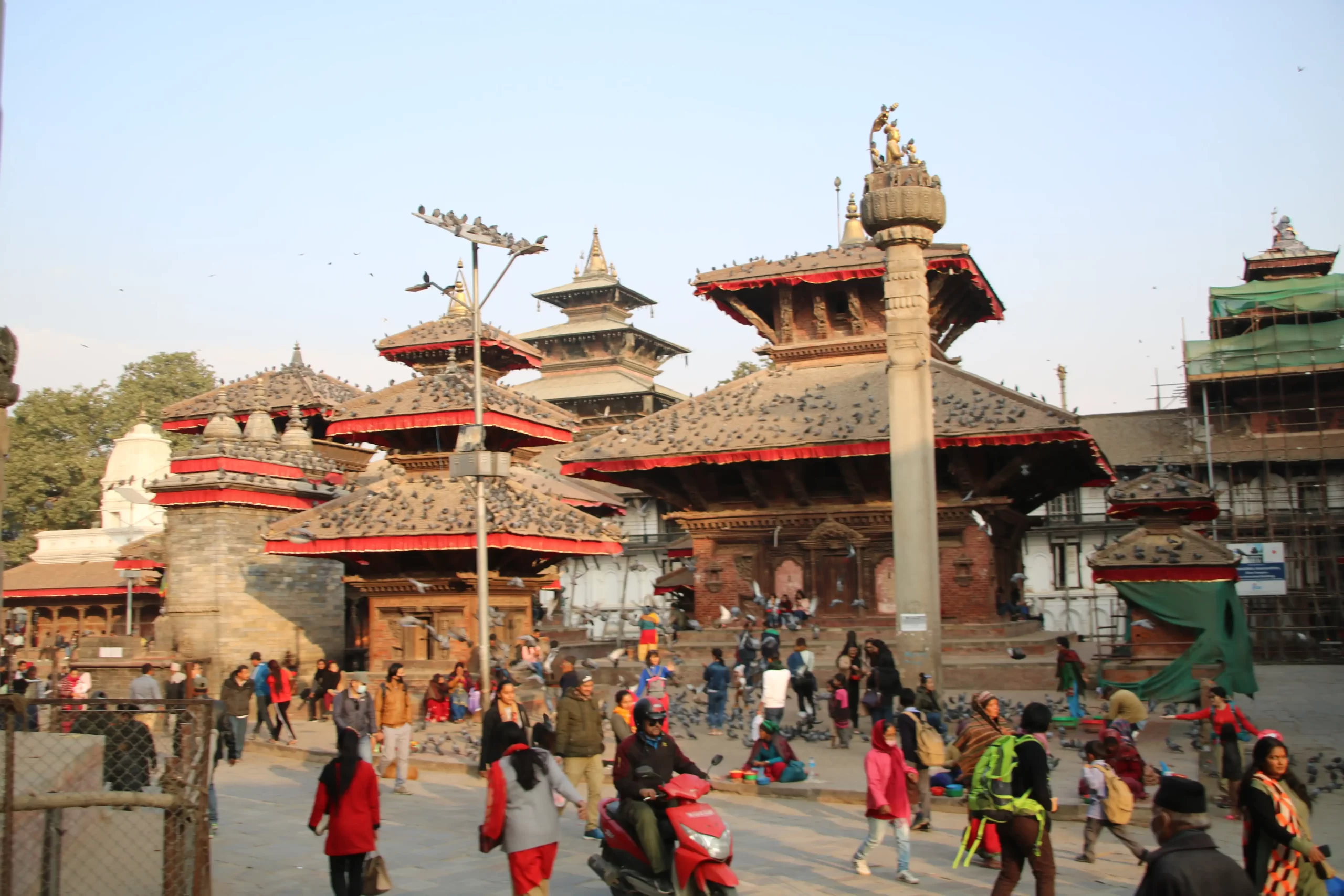
Main Temple Area of Kathmandu Durbar Square
In this Nepal Travel Guide, we are targeting on best areas where one can enjoy. From dense sub-tropical jungles of the Terai belt to cooler scenic hills and towards the arctic zone filled with snow and glaciers.
Nepal, a country with an area of 147 181 sq. km, is sandwiched between Tibet / China and India. The country, occupying only 0.03% of the earth, treasures the world’s 8th highest peaks and is rich in flora/fauna. Includes countless world heritage sites, as well as the birthplace of Lord Buddha ‘The Light of Asia’.
Nepal is one of the world’s richest countries in terms of bio-diversity with its unique dramatic landscapes, where the elevation ranges from 60 m to the highest place on earth, Mt. Everest, at 8,848.86 m / 29,031.69 feet. Within a mere 150 km. Distance, where visitors can experience various great changes in climate.
This makes Nepal an exceptional country for worldwide travelers, where one can choose from a wide range of holidays. From leisure, moderate, and adventurous to challenging adventure destinations in the close shades of the world’s highest mountain range, the great Himalayas.
Nepal is an enjoyable destination for cultural and heritage tours, hiking, trekking, and peak climbing to major mountaineering as well as various exciting extension trips like rafting the Himalayan Rivers, mountain biking, and jungle safari for rare wildlife. One can relax in the comfort of mountain resorts, and marvel at the panorama of Himalayan peaks with sunrise and sunset views.
The top 20 best things to experience in Nepal, provide visitors with where and what to do, before planning your holiday. We have provided the most exciting activities that one can enjoy while visiting amazing Nepal and the Himalayas.
01: Sightseeing Tour:
20 best things to do in Nepal, In the first place, on arrival in Kathmandu, the capital and commercial hub of Nepal. Kathmandu, although a semi-modern and metropolitan city, retains its ancient glories of historical monuments with temples and monasteries.
Including old palaces from the Malla regime to the former Shah Periods, a sightseeing tour will be a great introduction to Nepalese culture. Includes the arts and craftsmanship of bygone times, most of the historical places, and old temples and Buddhist monuments of Stupas are enlisted in UNESCO World Heritage Sites. Kathmandu and adjoining Patan / Lalitpur and Bhaktapur cities are worth visiting to experience the Nepalese cultures.
On booking the tour with Vertex Treks and Travels, one can request various foreign language-speaking guides, including English, French, Italian, Spanish, German, Russian, Japanese, Korean, and Chinese, as well as Hindi. Sightseeing Tour from a day to a week around Kathmandu valley and beyond to scenic and historical places of Nepal.
02: Trekking the Nepal Himalayas:
The main flow of tourism in Nepal is for trekking; the country offers a wide range of destinations. Trekking the foothills and towards high ridges, crossing high Himalayan passes, from a few days to a week or more.
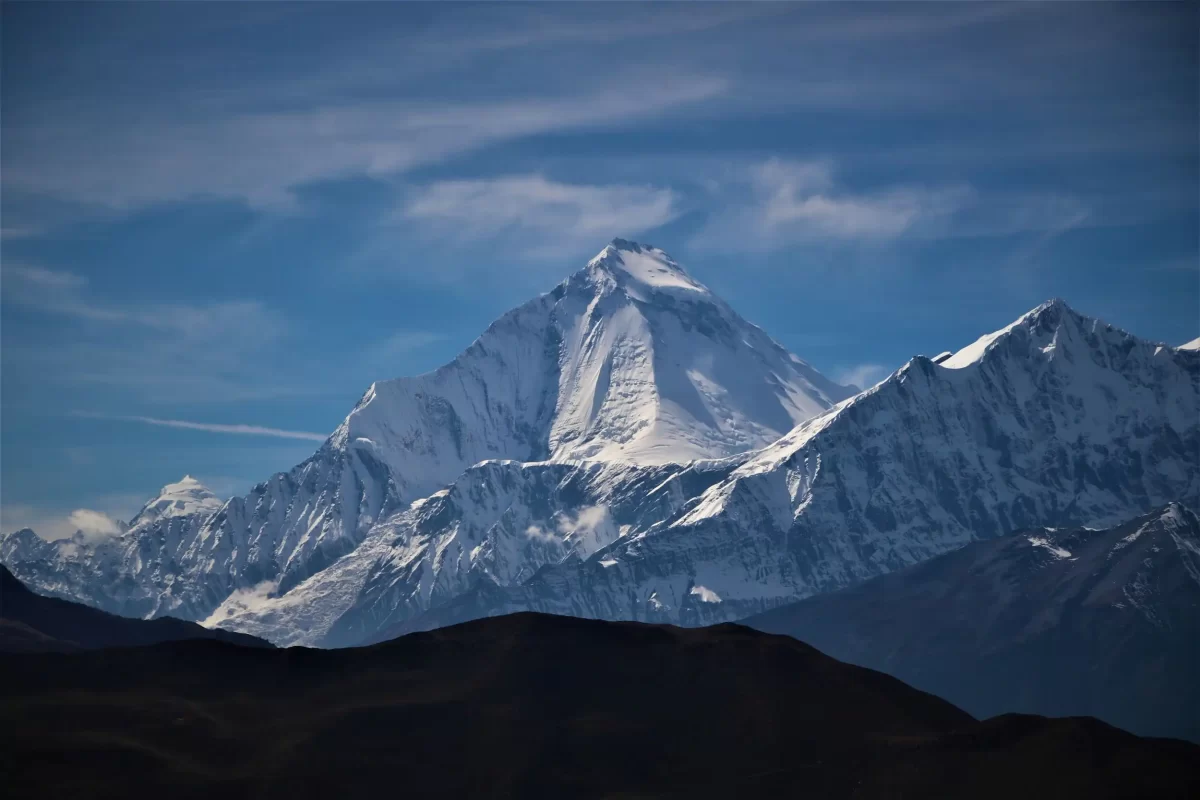
Mount Dhaulagiri as seen from Mustang
20 best things to do in Nepal, Nepal and the Himalayas offer countless various trekking destinations of moderate, adventurous to challenging grades. One can enjoy trekking in the comfort of nice and cozy mountain lodges and resorts facing views of snow peaks.
You can choose from a wide range of trekking to choose from as per your physical fitness and duration of holidays in Nepal, ranging from mainstream routes to off-the-beaten tracks, with a choice of overnight stops. Either in nice local lodges or enjoy sleeping in tented camping within the complete wilderness amidst giant peaks of the Himalayas.
The most popular trekking regions are Annapurna Himalayas, the Annapurna Circuit trek, the Annapurna base camp trek, and many more, where one can enjoy from less than a week to two weeks and more.
The next is the Everest region, a popular and famous trek to Everest base camp trek with a climb of high Kalapathar hill offering a grand sweeping panorama of the world’s highest peaks in harmony with local Sherpa culture. Langtang Himal is another scenic and exciting trek for a week or more, the closest Himalayan destination to Kathmandu. As well Manaslu Circuit is gaining popularity among interested trekkers and adventurers, a scenic walk of fewer than two weeks.
Besides popular mainstream areas, there are other beautiful and higher Himalayan destinations, from the Far East to the remote West of Nepal.
03: Trekking Peaks:
Nepal with world’s highest mountains and various lesser peaks below 8,000 m and above 5,500 m. Provides excellent and exciting adventure climbing to the summit of trekking peaks, a great experience to start your mountaineering adventure. The most famous and popular trekking peaks are Island, Lobuche, and Mera peaks around the Everest region.
20 best things to do in Nepal, Annapurna areas offer Tent peaks, all of Chulu’s peaks range, and many more within the massif Annapurna Himalaya range. All trekking peaks are guided by expert mountain guides approved and certified by the Tourism and Mountaineering Department of Nepal.
04: Hiking on the valley rims of Kathmandu and Pokhara:
Hiking is another way to refresh in the cool air and breeze on the mid-hills of Kathmandu and Pokhara valleys. A nice and best experience to observe rural farm life, walking into a lovely forest lined with rhododendron and pine trees.
As well as enjoying stunning views of the Snow Mountain range with striking sunrise and sunset views on route hiking. While in Kathmandu, there are several scenic hills where one can enjoy a short hike for a day or two. Enjoy the scenic hike on the hills of Kathmandu valley rims of Phulchowki, Shivapuri, Nagarjuna, and Chisapani to Nagarkot hills.
In Pokhara, people who are not interested in trekking for longer days can enjoy a short hike to Sarangkot hill, which offers a sweeping spectacular panorama of Annapurna and Manaslu Himalayas with views of Pokhara valley and the lakes.
Likewise, one can take a boat ride across Phewa Lake and hike up for less than two hours to Shanti Stupa, known as Peace Stupa, a Buddhist pagoda located on a high ridge above Pokhara valley. From the top overlooking fascinating views of Annapurna’s array of peaks and surrounding beautiful landscapes.
The next scenic hike is beyond Pokhara valley to Dhampus, and Australian Camp takes you above 2,050 m high with a panorama of Annapurna, Dhaulagiri, and Manaslu Himalaya range with Machhapuchare Himal, the famous Fish-Tail Peak. It is a hike for a day or two, with scenic views and walking in a serene forest, and staying in a village lodge.
05: Rafting the Himalayan Rivers:
An exciting thrill in rafting the Himalayan Rivers is another great activity in Nepal and its various glacial rivers. One can enjoy rafting for a day or more, including the longest rafting expedition of a week. Paddling through mighty rapids and bouncy waves on Sun Koshi River as well as rafting in the Karnali River.
On longer rafting rivers, accompanied by kayaks for safety measures, where all camping gear is carried on rafts. Rafting the Himalayan Rivers offers smooth and scenic floats to adventurous and challenging whitewater rivers. Staying overnights in a tented camp on the sandy beaches or in the comfort of River Resorts.
06: Mountain Biking:
Mountain Biking is a great way to experience the country in-depth and rural farm life. Over the past few decades, Nepal has become the mecca for mountain biking. Around Nepal wide range of exciting places where one can ride on the main road and the back trails. It is a wonderful biking route with networks of roads that one can enjoy for a day or two as well as one can choose longer duration mountain biking tours for a week, staying in local lodges or tented camps.
07: Wild-Life and Jungle Safaris:
Nepal is a unique Himalayan country; most wide world people are unaware that Nepal is a land of great bio-diversity. For outside visitors a country of high Himalayan Mountains, but surprisingly Nepal has more than one can expect.
In Nepal, before or after major trips, one can enjoy a day or two and more by joining exciting wildlife safaris. The country is famous for national parks around the low land of the Terai arc landscape, stretching from the Far East to the West, where dense tropical jungles are located, and the famous Chitwan and Bardiya National Parks, including Koshi Wild-Life Reserves.
Travelers can choose various places for wildlife safari as well as bird-watching activities. These parks are famous for endangered species. As well as exotic birdlife, one can observe wild animals in their natural surroundings. Riding an elephant and exploring the forest on the lookout for rare Royal Bengal Tigers, One Horned Rhinoceros. Includes more than 100 different animals with more than 600 species of birds; enjoy the safari in the comfort of a nice jungle lodge and resort.
08: Home Stay Activities:
In the last few decades, around the Himalayan scenic hill villages, a Home Stay program has been established. It is an enjoyable and interesting way to experience the Nepalese hill tribes’ fascinating culture and customs in the close harmony of the Himalayas.
A homestay in local traditional farm hill villages offers ample time to interact with the locals. As well as join in farm activities and explore the village and scenic viewpoint hills. Home Stay is lively and enjoyable in the comfort of a nice cottage, having typical Nepalese meals. Every evening the village provides folk cultural programs with song and dance where one join in the merriment.
09:Mountaineering Expeditions:
Nepal with the world’s highest peaks is the major hub for mountaineers and climbers as well as veteran adventurers. Nepal Himalayas offers more than 200 peaks from 8,000 m to below 7 000 m and above 6,500 m mountains.
Mountaineering was the first tourism in Nepal from the days when Tenzing and Hillary conquered Mt. Everest in 1953. From then onwards, many mountaineering expeditions have been active in Nepal Himalayas in good seasons of the year.
At present, Nepal Himalayas draws more than 100 climbers every season of the year for daring feats on mountaineering expeditions.
10: Adventure Sports Activities:
Nepal is a premier country for all types of adventure sports activities besides trekking, mountaineering, and rafting. While in Nepal, one can join in exciting adventure sports like Para-Gliding in Pokhara or Kathmandu. Similarly, enjoy the Zip-Linear / Flyer that zooms with fast speed covering a distance of 1 km. Within a few minutes. Other activities like Bungee Jumping, Ultra-Light Flight, and canyoning in the cascading waterfalls.
11: Yoga and Meditation:
Nepal is a country that fascinates all types of visitors, providing a wide range of exciting activities and programs. Besides major holidays in Nepal, keen and interested people can join in Yoga and Meditation classes and courses.
While in Kathmandu and at Pokhara, several excellent schools and institutes run Yoga and Meditation programs. For more information and details, you can contact Vertex Holiday.
12: Everest Mountain Flight:
It is an ideal trip for travelers with limited time yet interested in viewing the Himalayas and Mount Everest from a bird’s eye view, taking Everest Mountain Flight which operates every early morning in the best seasons of the year. It offers a breathtaking experience watching over more than 360° wide panorama of the Himalayan snow mountain range with Mt. Everest. An hour’s flight flies north towards Mid-East Himalayas and back to Kathmandu.
13: Helicopter flights to Everest:
Another great way to see Mt. Everest and other giant peaks of the Himalayas is by taking a ride on a helicopter. One can book for a charter or join in with other passengers in a small comfortable chopper.
The Helicopter flight to Everest lands at scenic viewpoints, where one can catch the closest views of Mt. Everest. The helicopter services operate after booking with a local agent like Vertex Holiday and Tours, an overwhelming experience joy ride.
14: Rock climbing indoors and outdoors:
Climbers, sportsmen, and adventurers with a great interest in climbing practice and exercise can enjoy it for a day or more. Joining for Rock Climbing operates indoors as well outdoors around serene quiet areas of Kathmandu city.
Rock climbing is done with the guidance of expert and professional mountain guides or instructors. The gear required for the climbing exercise is provided by the institute and runs in a few places around Kathmandu. Interested sportsmen can contact Vertex Treks and Travels.
15: Volunteering program activities:
Most travelers visit Nepal for various exciting adventures and leisure activities, where few groups of people. School and college groups also come to Nepal for good purposes, like volunteering activities around rural villages.
Interested visitors to Nepal, apart from other major holiday programs, can enjoy a few days to a week getting engaged in volunteering programs around farm villages and schools, like maintaining hygiene, clean drinking water, and maintaining walking trails. As well as teaching in local primary schools and handling educational materials is also popular volunteering activity.
16: Bird watching for Ornithologists and beginners:
Nepal is a country rich in wildlife and the natural scenery of rolling green hills with beautiful forests. Where 8 % of the world’s population of birds, or more than 857 species, is found in Nepal; Due to its amazing landscape diversity with varied climate condition, all types of birdlife exists. This includes migratory and residential birds and exciting country for keen bird watchers for ornithologists as well for all bird-watching lovers.
17: Botanical and nature lovers:
Nepal is also a natural garden covered with various species of wildflowers and rhododendron, from tall trees to smaller bushes. In springtime, the hills and valleys are alive when flowers are in blooming season with riots of colors.
A haven for botanical students and nature lovers, 2 % of all the flowering plants in the world are found, including 600 indigenous plant families and 319 species of exotic orchids located all over the hills and valleys of Nepal.
18: Festivals of Nepal:
Nepal is also rich in culture with ancient heritage and a traditional way of life, celebrating festivals and joyous events. Nearly all around the year, it will be a wonderful experience to observe and be part of the festivals.
Nepal has more than 60 ethnic groups, with 70 native spoken languages, and each tribe and religion celebrates its events. Around the mountains, it is great to be in the Tiji Festival of Upper Mustang and Mani Rimdu at Tengboche Monastery around Everest.
19: Nepalese foods to experience:
While in Nepal, it will be hard to miss the delight of Nepalese cuisine, the famous Dal Bhat. It is a set of Boiled/steamed rice with various types of lentils made into a soup, including seasonal vegetables and mild curry. Various types of meats, from chicken, buffalo meat (a substitute for beef), mutton, and wild boar, are optional.
Includes varieties of pickles and homemade hot sauce, followed by sweet curds a great meal and very filling. Besides Dal Bhat, there are other foods, from simple snacks to lavish meals, as well as different types of fresh bread.
20: Nightlife in Nepal:
Nepal has limited nightlife, but one can enjoy visiting local bars and restaurants with live bands. A typical Nepalese restaurant runs folk cultural programs, where visitors can witness dance and songs from all parts of Nepal. Late nights customers can enjoy at Dhore Saj, a restaurant serving all meals with a live group of singers. Includes male and female groups, where songs are all about teasing girls and boys but lively to watch.
The other late-night joints are the casinos, located in 5-star deluxe hotels that operate nearly around the clocks, where one can try luck in card games or on the roulette table while enjoying refreshing drinks.
National parks in Nepal are best known for their high snow mountains, diverse landscapes, rich ancient cultural heritages, and wide range of biodiversity. Furthermore, these attributes are key features of protected areas of Nepal, including the 12 national parks.
Nepal’s geographical features can be divided into three types stretching from east to west: the southern plains, green hills in the middle, and High Himalayas in the north where the plains of Terai serve as a source of food grains, green hills as fertilizers, and the northern Himalayas as a source for irrigation.
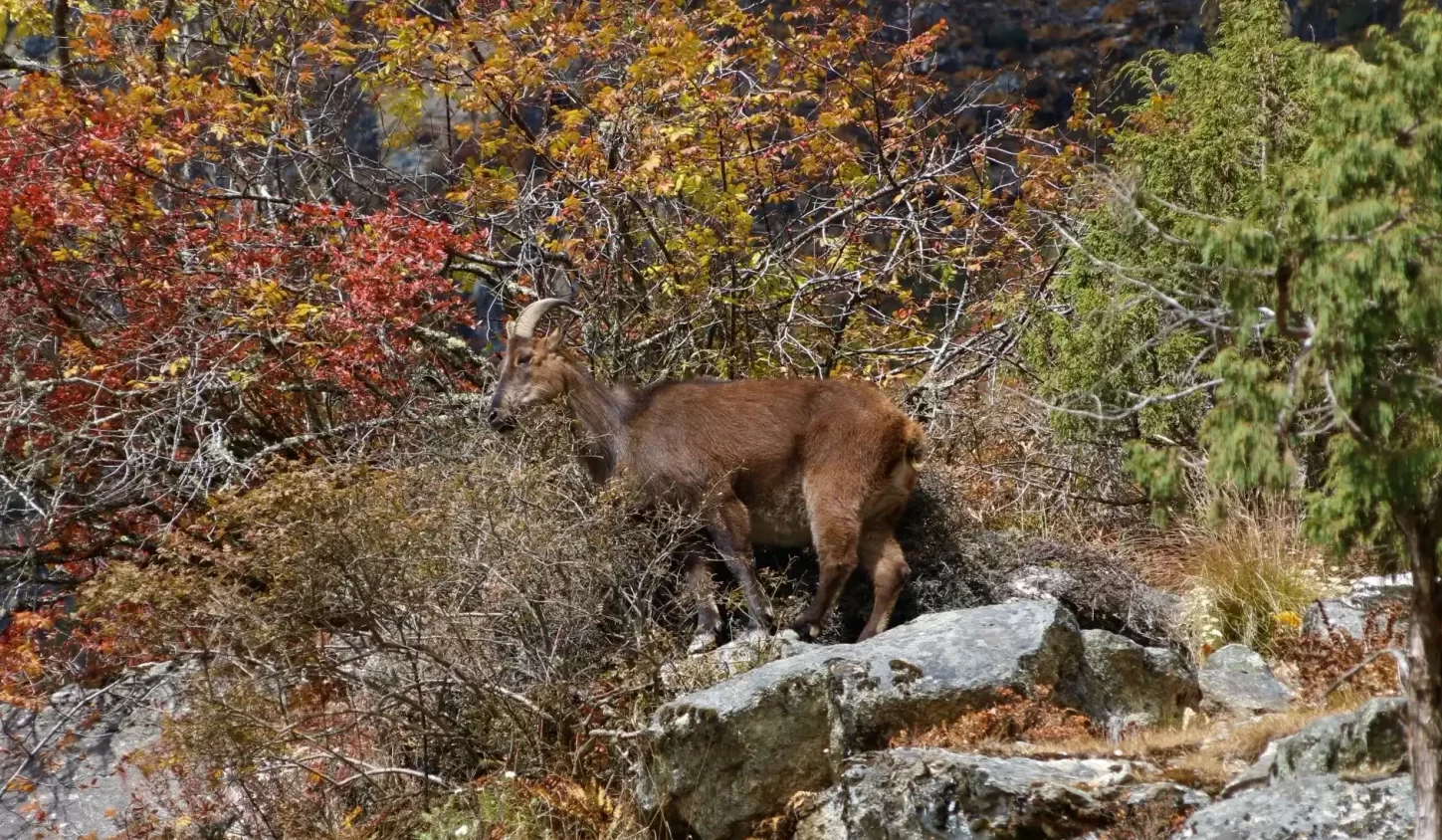
A Jharal in Sagarmatha National Park
Nepal, a land of geographical variations with the lowest point of 60m (Kechana, Jhapa) to the highest point of 8848m (Everest), creates diverse climatic zones allowing for a wide range of ecosystems and biodiversity to flourish within.
These diverse geo-climatic features make up Nepal’s 12 National parks, comprising towering mountains, sloppy valleys, and lush green forests. Making them a perfect habitat for exotic flora and fauna, including some rare and endangered species to explore.
In a world where concerns about climate change and loss of biodiversity are major issues worldwide, a climate action plan and the urgency of preserving biodiversity are vital.
Hence, the role of protected areas like National Parks, Conservation Areas, and Wildlife reserves in order to help solve the issues with depletion of biodiversity along with climatic issues becomes crucial.
After the endorsement, not the National Park and Wildlife Conservation Act in 1973 AD, the Government of Nepal has been empowered to act accordingly to establish protected areas for the conservation of native ecosystems.
Since then, Nepal has been prosperous in establishing a fair network of protected areas, covering around 23.39% of the total land area.
Here are 12 Beautiful National parks to Explore in Nepal Detail Information
1. Khaptad National Park
Khaptad National park, established in 1984, covers an area of 225 sq km of Bajhang, Bajura, Achham, and Doti districts of Far Western Nepal, with an additional area of 216 sq km as a buffer zone. The elevation of KNP ranges from 1400 – 3300 meters, whereas the buffer zone’s altitude ranges from 900 – 2700 meters above sea level.
Consisting of 22 moorlands, steep slopes, and streams along with green forested hills are the landscape feature of this National Park. Khaptad Daha ( lake ), located in the northeastern part of the park, is also an important attraction.
With six different ecosystems comprising Rhododendron, Fir, Oak, Chir Pine, and Hemlock forests: 567 different species of flora, including flowering and non-flowering plants, have been recorded from the Khaptad National Park.
23 mammals, 287 birds, and 23 Herpeto species, including rare and endangered: Musk Deer, Leopard, Himalayan Black Bear, Wild Dog, Impeyan Pheasant, Peregrine Falcon, and White Rumped Vulture, are symbolic wildlife of this national Park.
This national park is adorned with religious sites as well, especially Khaptad Baba ashram, a renowned Hindu pilgrimage site dedicated to Lord Shiva that is visited by devotees during the fool moon of July- August and during the Jestha Purnima (June-July).
Sahashra Linga, located at an elevation of 3200 m, Ganesh Temple, Nagdhunga(stone resembling snake ), and Kedhardhunga are significant religious sites ideal for meditation and spiritual activities excluding animal sacrifice.
2. Bardiya National Park
Bardia National park, with an area of 968 sq km and a buffer zone of 328 sq km, is a protected area located in the Banke and Bardia, and Surkhet districts of Nepal were established as a wildlife reserve in 1976 and declared a national park in 1988.
The elevation ranges from 152 m in the Terai plains to the highest peak of Sukarmala at 1441 m above the sea level, comprising landscapes of Karnali floodplains, Babai river valley, and the Siwalik Hills with Upper and lower tropical bioclimatic zones.
With seven types of ecosystems, 839 species of flora are recorded in this national park, with major vegetation being Chir Pine, Hill Sal, Lower Tropical Sal, and mixed broad-leafed forests.
A total of 59 mammals, 407 birds, 52 amphibians/reptiles, and 124 fish species have been identified in this protected area, out of which 13 mammals, five birds, and three reptile species are under the rare endangered list.
Symbolic mammals of Bardia National Park include Royal Bengal Tiger, Asiatic Elephant, One-horned Rhinoceros, and Black Buck antelope whereas bird species are Bengal florican, White-backed Vulture, peacock, and the their-headed Geese.
BNP has played a key role in multiplying the numbers of Blackbuck, whereas the number of Rhinoceros have adapted to the new habitat after they were translocated from Chitwan National Park in 1986.
Besides, research on Nilgai, Gharial, Freshwater dolphin, and fisheries are being conducted timely. The unique flora and fauna combination of the park has been able to attract significant numbers of internal and external tourists seeking wildlife safaris and elephant safaris.
3. Rara National Park
Rara National park, the smallest national park in Nepal with an area of 106 sq km along with a 198 sq km buffer zone, was established as a protected area in 1976 and is located in the districts of Mugu and Jumla.
Topographically, its elevation ranges from 1800 meters to 4039(Chuchemara Peak) meters above sea level, along with two other major peaks, Ruma Kand(3731m) and Malika Kand(3444m).
The National park is comprised of green forested hills with beautiful mountain vistas reflecting on the biggest lake of Nepal: Rara (2990m), with an area of 10.8 sq km and 167 m deep, which drains into the Mugu-Karnali River.
As a protected area, Rara National Park encompasses 11 types of ecosystems and ten vegetation types ranging from Upper Tropical to Upper Alpine bioclimatic zones: including Chir Pine, Walnut, Maple, Alder, Oak, Cypress, Spruce, Blue Pine, Fir, Birch, Rhododendron, Exotic Himalayan flowers, and Alpine Scrub.
The Park is rich in biodiversity, with 51 mammals, 241 birds, two hereto (amphibians/reptiles), and three endemic species of fish. Rare and endangered species of Snow leopard and Red Panda, along with Musk deer and Himalayan Black Bear, Impeyan Pheasant, Kalij Pheasant, Cheer Pheasant, Koklass Pheasant, White-crested pheasant, and Chukar Partridge are symbolic species.
Rara National Park is gaining popularity as a tourist destination, as the development of infrastructures for food and accommodation commodities are available. Journey to Rara lake A scenic flight to Talcha Airstrip (2735m), followed by hiking of around 3 hours amidst the forested trail, is the best way to reach the Lake.
Journey to Rara lake Jeep tours directly from Kathmandu is a more popular method of reaching this wonderful holiday destination. However, a direct Helicopter tour is also an alternative for travelers seeking a luxury plan. Major tourist activities include boating on the lake, a pony ride, and hiking to the Murma Hilltop (3630), with panoramic views of mountain peaks and Rara Lake.
4. Shey Phoksundo National Park,
Shey Phoksundo National park is a protected area in Nepal with an area of 3555 sq. km and a buffer zone (1349 sq. km), located in the Mugu and Dolpa districts of the far western region were established in 1984. Topography ranges from Aankhe(2130 m) to Kanjirowa Peak(6883 m) and encompasses seven bioclimatic zones of temperate, alpine, and Nival forming 21 ecosystems and ten vegetation types.
The largest national park of Nepal comprises Trans Himalayan Landscape, glaciers, Phoksundo Lake (3589m), diverse forests, rivers, and alpine meadows. The turquoise-colored deepest lake of Nepal, Shey Phoksundo (136.20 m), and the country’s highest waterfall (167m), along with tributaries of Thuli Bheri and Langu rivers, drain from the Dolpo.
The biodiversity features of this protected area are also significant, as this national park serves as a habitat for 1579 flora species, including 30 endemic (native) flowering and rare medicinal plants, along with 35 mammals, 208 birds, and three hereto species of wildlife, out of which 19 mammals and two birds’ species are classified as rare and endangered.
Snow Leopards, Tibetan Wolf, Wild Dog, Blue Sheep, and Musk Deer are symbolic mammals: whereas Himalayan Griffon, White Breasted Deeper, Chir Pheasant, and Monal Pheasant are symbolic birds in this protected area.
This national park is also popular for Upper Dolpo and Shey gompa trekking with villages like RIngmo within the fluency of Tibetan Buddhist culture and is decorated with colorful Gompas (monasteries) and many other religious sites. Shey Gompa, established in the 11th century, and Thashung Gomba, near the high-altitude lake, are major tourist attractions.
Trekking tours are a popular form of tourism activity; however, a special permit is required for international tourists due to its inclusion in the Restricted Area category. A flight to Dunai Airport is a convenient way to reach the national park, followed by a trekking journey amidst the Trans Himalayan landscape decorated by rural villages.
5. Chitwan National Park
Chitwan National park, listed as a UNESCO World Heritage Site, covers an area of 952 sq. km with a buffer zone of 729 sq. km; it is located in the districts of Chitwan, Nawal Pur, Parsa, and Makwanpur in the southern central plains of Nepal.
With two bioclimatic zones of lower and upper tropical, elevation ranges from 110- 850 meters encompassing 7 ecosystems and two vegetation types. The Churia hills, Ox-Bow lakes, flood plains of Rapti, Narayani, and Reu rivers, along with lakes of Lamictal, Devital, and Beeshazar wetlands, are major ecosystems in the park.
919 species of vegetation, including endangered species of Tree fern, Cycas, Screw, pine, and several other orchids, are recorded in the park.
Wildlife is comprised of 43 mammals, 539 birds, 56 amphibians/reptiles, and 124 species of fish in the protected area, out of which 13 mammals, six birds, and three reptile species are listed as rare and endangered.
Greate One-horned Rhinoceros, Bengal Tiger, Asiatic Elephant, Black-necked Stork, Grey-headed Eagle, Brahmini Duck, Gharial, and Maskey Frog are symbolic wildlife species of Chitwan National Park.
This protected area has played a major role in raising the numbers of Rhinoceros, allowing for translocation to other national parks and wildlife reserves as well as a symbolic presentation of rhinos as gifts to various nations.
It is a major tourist destination in Nepal, included in major tours along with Kathmandu and Pokhara, offering various wildlife activities like wildlife safari, Elephant safari, Jeep safari, birdwatching, and jungle walks.
Elephant breeding centers, Peacock Breeding centers, and Gharial breeding centers are also popular sites in the park. Besides, Tharu local communities and their unique culture are significant attractions, as a walking tour into their villages will provide significant insight into Nepal’s diversity.
6. Langtang National Park
Langtang National park is the first Himalayan Protected area of Nepal covers an area of 1710 sq. km with 420 sq. km of a Buffer zone, stretches along with the north-central districts of Rasuwa, Nuwakot, and Sindhupalchowk was established in 1976 with elevation ranging from 845 meters to 7245(Langtang Lirung) meters.
With 11 Bioclimatic zones of upper tropical, temperate, alpine, and Nival, landscape features of this park range from mid-hills to snowcapped mountain peaks above 7000 meters coming of rivers, and a glacial lake (Gosaikunda 4200m), rivers, valleys, glacier, and moraines.
Eighteen types of ecosystems are present in the park, housing 14 vegetation types: estimated to be 3689 species of flora, including Alpine scrubs, Alpine meadows, Trans Himalayan Steppe, Birch, Rhododendron, Fir, Larch, Mountain Oak, Blue Pine, Chir Pine, Laurel, and mixed broadleaf forests.
Known to be rich in biodiversity, Langtang National Park is inhabited by 46 mammals, 345 birds, 11 herpetofauna, and two fish species, including some rare and endangered. Snow Leopard, Musk Deer, Red Panda, Impeyan Pheasant, Ibis Bill, White Winged Redstart, and Snow Partridge are symbolic wildlife species in Langtang National Park.
The Langtang Valley trek, Gosaikunda trek, and the Tamang Heritage Trek are popular trekking destinations in the Langtang National park, equipped with natural and cultural delights. Breathtaking views of the Langtang mountain range, diverse landscapes, green forested hills, trekking peaks (Kyanjin RI &Tserko RI), and river valleys are the major highlights.
Himalayan Tibetan Buddhism influenced the village, with the majority of inhabitants sharing ancestry with Tibetan refugees. Several Buddhist monuments like Gumba (Monastery), Mani Walls, Chhortens, Prayer Wheels, and colorful Prayer flags adorn the Langtang region.
7. Shivapuri Nagarjun National Park,
Shivapuri Nagarjun National park is a protected area of Nepal, covers an area of 159 sq. km & buffer zone of 118.61 sq. km located in Kathmandu, Nuwakot, and Sindhupalchowk districts: it was established as a wildlife and watershed reserve and in 2002 gazetted as a national park.
Its elevation ranges from 1000 m to 3732 meters encompassing six bioclimatic zones, five ecosystem types, and four vegetation types. Landscape features are comprised of Mountain slopes, green forests, and streams that flow into the Bagmati and Bishnumati rivers in the capital city of Kathmandu.
Likewise, the biodiversity of Shivapuri National Pak is comprised of 2122 flora, including Mountain Oak, Laurel, Chir Pine, Schima Castanopsis (Chilaune,) and other broadleaf forests. Wildlife is comprised of 19 mammals, 311 birds, and three hereto species.
Leopard, Himalayan Black Bear, Wild Boar, Golden Throated Barbet, Slender Billed Babbler, White Gorgetted Flycatcher, and Barred Cuckoo Dove are symbolic of the protected area.
Day hiking is popular tourist activity in the National park, with options for short Shivapuri Day hiking trips from Budhanilkantha or Sundarijal, exploring through the green forested trails followed by a view of Kathmandu valley and mountains on the northern horizon.
Nagarkot, Shivapuri, and Chisapani hike along with trekking trails to Gosaikunda, Langtang, and Helambu across this national Park. Budhanilkantha Temple and Sundarijal serve as major pilgrimage sites as well as entry points to the National Park.
8. Sagarmatha National Park,
Sagarmatha National park was established in 1976 as the world’s highest elevated protected area. SNP covers an area of 1148 sq. km with a buffer zone of 275 sq. km, with elevations ranging from 2800 to 8848.86 meters. Park is comprised of 6 bioclimatic zones encompassing eight ecosystems and eight vegetation types.
Enlisted on the UNESCO World Heritage Site list in 1979, this national park is located in the Solukhumbu district of the mid-eastern Himalayan region of Nepal. The landscape is comprised of the world’s highest mountain peaks (Everest, Lhotse), glaciers, lateral moraines, rugged terrain, high-altitude wetlands (Gokyo lake system), rivers, alpine pastures, rivers, and green forests.
Around 1074 species of flora are estimated in the Park, including Alpine meadows, Alpine scrubs, Rhododendrons, Birch, Fir, Chir Pine, Blue Pine, and Mountain Oak. 33 mammals, 208 birds, 5 Herpeto, and one fish species of wildlife inhabit this protected area.
Out of these, six mammals and two bird species are considered rare and endangered. Snow Leopard, Musk Deer, Red Panda, Blue Sheep, Impeyan Pheasant, Bearded Vulture, Tibetan Snow Cock, and the Yellow-Billed Chough are some symbolic wildlife species in Sagarmatha National Park.
Everest Base Camp trek and Everest Three Passes Trek are the most popular tourist destinations in the park, along with Gokyo Valley and other side hikes offering the best view of the world’s highest mountain peaks, along with Mountaineering and peak climbing activities.
Besides adventure activities, the cultural significance of Sagarmatha National Park is also important, as it is dominated by Sherpa culture and villages like Namche Bazaar and Khumjung. Tibetan Himalayan Buddhism is prevalent in the region, with Tengboche and Pangboche Monasteries decorated with prayer wheels, flags, Mani walls, Chhortens, and stupas.
9. Makalu Barun National Park,
Makalu Barun National park, with an area of 1500 sq. km with a buffer zone of 830 sq. km, is located in the districts of Solukhumbu and Sankhuwasabha districts, ranges in altitude from 450 m to 8463 meters above sea level with ten bioclimatic zones, 20 ecosystem types, and 12 vegetation types.
This protected area is home to the world’s 5th highest peak Mt.Makalu (8463m), along with Mt.Chamling (7319 m), Mt.Baruntse (7129m), and Mera Peak (6445m). Besides towering peaks, the landscape feature comprises glaciers, high-altitude lakes, alpine pastures, forests, and river valleys.
Makalu Barun National Park’s biodiversity comprises 3037 flora with eight species of native flowering plants, including Alpine Scrub, Alpine Meadow, Birch, Rhododendron, Fir, Mountain Oak, Maple, Magnolia, Chir Pine, and Hill Sal.
With 81 mammals, 421 birds, 14 hereto, and 13 fish species, this Park’s wildlife is comprised of Snow leopard, Musk Deer, Himalayan Black Bear, Spiny Babbler, Impeyan Pheasant, and Slety Bellied Tesia, are symbolic wildlife species of this protected area.
Makalu Base camp Trekking and Mera Peak climbing is popular tourist activity in the Makalu Barun National park, along with chances to encounter some wildlife species. As the trails are recently opened for tourists, camping equipment is a must.
However, Homestay treks in the form of ecotourism offer tourists an opportunity to explore the rural farming villages of Rai, Magar, Sherpa, Gurung, Limbu, Brahmin, and Chhetri ethnic communities with Hinduism and traditional Buddhist cultures.
10. Shuklaphanta National Park,
Shuklaphanta National park was formerly a Hunting Reserve (1969), then declared a Wildlife Reserve in 1976, and finally Gazetted as a National Park in 2017. Located in far west Nepal of Kanchanpur, covers an area of 305 sq. km with a buffer zone of 243.5 sq. km with elevations ranging from 174 m to 1386 meters above sea level.
Landscape features comparison lower Siwalik Hills, open grassland, lush green forests, river beds, and tropical wetlands: forming three bioclimatic zones, three ecosystem types, and three vegetation types.
Biodiversity in this protected area is comprised of 700 flora, 56 mammals, 450 birds, 56 Reptiles, 15 Amphibians, and 24 fish species, along with some rare and endangered wildlife species.
Chir Pine, Hill Sal, Tropical Sal, and Mixed Broadleaf forests are major vegetation in the national park: inhabiting Swamp Deer, Bengal Tiger, Asiatic Elephant, Hispid Hare, Bengal Florican, Back Capped Kingfisher, and Finns Weaver as symbolic wildlife.
Successful translocation of GreateOne-Horned Rhinoceros from Chitwan National Park and the conservation of near-extinct Swamp Deer has been a major achievement of this protected area.
Bound by the Mahakali River in the west and south, Shuklaphanta National Park serves as a corridor for the seasonal migration of wildlife species. As the latter part of the name,” Phanta,” translates to grassland, it is the largest continuous grassland in Nepal.
Elephant Safari, Jungle walks, and Bird watching are major activities in this protected area; however, people interested in wildlife photography and studies will find this park intriguing.
11. Banke National Park,
Banke National park was established as a protected area in 2010, covering an area of 550 sq. km and a buffer zone of 343 sq. km: stretching in the Banke, Salyan, and Dang districts of western Nepal. Located within the Terai Arc Landscape, this park’s landscape is mostly floodplains of the Rapti and Babai Rivers, including the foothills of the Chure range.
Banke National Park is comprised of 8 ecosystem types Sal, Deciduous Riverine forests, mixed hardwood forests, and grasslands. Biodiversity in this protected area comprises 124 flora, 34 mammals, 300 birds, 24 reptiles, 7 amphibians, and 58 fish species.
Vegetation symbolic to this park is Sal, Karma, Khair, and Sisau: whereas wildlife species of Asiatic Elephant, Bengal Tiger, Striped Hyena m Four Horned Antelope, Giant Hornbill, Black Stork, Bengal Florican, Gharial Crocodile, and Python are under the protection of this national park.
Within the buffer zone are settlements of diverse ethnic groups, such as Indigenous Tharu, Brahmins, Chhetri, Magar, Majhi, Tamang, and Gurung: with agriculture as their major source of livelihood. Facilities for health, communication, and lodging are well established in the southern part of the national park.
Major tourist activities in the national park include Elephant safari, Jungle Walk, and Bird Watching. However, if you are a student seeking research or seeking for wildlife photography destination: then Banke National Park can be an ideal destination.
12. Parsa National Park,
Parsa National park protected area was established as a wildlife reserve in 1984 as it was used as a hunting area for the royals; however, gazetted as a national park in 2017. It is located in the districts of Bara, Parsa, and Makwanpur of south-central Nepal near Chitwan National Park.
With eight ecosystem types, two bioclimatic zones, and two vegetation types: this park’s elevation ranges from 435 meters to 950 of the Siwalik Hills, with a rugged landscape mostly composed of gravel and conglomerate, where the ground is very porous. Biodiversity is comprised of 919 species of flora comprising tropical and sub-tropical vegetation of Sal, Cotton Silk, Pine, and Sabai grass, inhabiting 30 mammals, 500 birds, 13 reptiles/amphibians, and eight fish species: including some rare and endangered wildlife.
Parsa National Park’s symbolic wildlife comprises of Royal Bengal Tiger, Wild Asiatic Elephant, Gaur Bison, Leopard, Sloth Bear, Hyena, King Cobra, Banded Krait, Palm Civet, Crow Billed Drongo, Thick Billed Pigeon, Long-tailed Broadbill, Great Hornbill, White Backed Kingfisher, and Golden Backed Woodpecker.
Major achievements of the Parsa National Park include patrolling, anti-poaching, and research programs. Besides, an orphanage center for abandoned wildlife falls under the maintenance of this protected area.
For tourists and visitors, a small guest house is available, along with a tea house providing snacks and tea, including Nepali food. A view tower near the headquarter offers opportunities for catching a glimpse of various wild animals and birds.
Elephant safari, jungle walks, bird watching, and wildlife photography are major tourism activities. At the top of Kailas Bhakta hill is a temple called Dugdeshwar Mahadev, dedicated to Lord Shiva and Goddess Parvati, overlooking the view of the Terai landscape.
The Highest Mountains in the World are located around the great Himalayas range, extending from Afghanistan, Pakistan, India, Nepal, and Tibet.
The world’s highest peaks of above 8,000 m / 26, 247 feet are in the Himalayan range. Falls within Pakistan, Tibet / China, and Nepal, with most world’s highest mountain ranges array of peaks.
Sunset at Everest
The world’s highest mountain range and peaks are Mt. Everest at 8,848.86 m and 29, 031.69 feet high. Straddles the border of Nepal and Tibet / China, where the north face is in Tibet. The south col is situated in Nepal, with many great mountains that line the border between both countries.
The Highest Mountains in the World After the world’s number one, Mt. Everest, K-2 is the second-highest, situated around the Karakoram Himalaya range. Which also borders Pakistan and Tibet / China, located far west Himalayas. The K-2, with its original name, is Mt. Godwin Austen soars high at 8,611 m / 28 250 feet.
The third highest is Mt. Kanchenjunga at 8,586 m / 28, 169 feet high, borders Nepal and Sikkim. A small North-Eastern state of India, where most mountaineering and trekking are popular from the Nepalese side.
The fourth highest Mt. Lhotse, at 8,516 m / 27 940 feet, falls within Nepal, located close to Mt. Everest. Similarly, the fifth-highest Mt. Makalu stands at 8,463 m / 27 766 feet high and is located in North East Nepal. The 6th high is Mt. Cho-Oyu at 8,201 m / 26 906 feet, located between Nepal and Tibet / China.
Likewise, the 7th highest Mt. Dhaulagiri at 8,167 m / 26 795 feet, and the 8th world’s highest Mt. Manaslu. Towers are 8,163 m / 26, 795 feet high; the tenth highest is Mt. Annapurna-I at 8,091 m / 26,545 feet.
An amazing thing to know about the world’s highest mountains and landscapes where Nepal and the Himalayas come first on the list.
The Himalayan massive mountain range extends from near Afghanistan in the west and runs parallel to the Far East in Bhutan.
Then finally, a Himalayan array of peaks gets smaller and ends further east near northern Myanmar, of the world’s 14 eight thousand meters peaks, where the eight highest peaks are located in Nepal Himalaya.
The three world’s highest mountains border neighboring countries Tibet / China and Sikkim / India. Mt. Everest and Mt. Cho-Oyu stand on both sides of the country, Nepal and Tibet. Mt. Kanchenjunga, the world’s third-highest peak, borders Sikkim / India on the eastern range of Nepal Himalayas.
Mt. Everest, the world’s highest peak, forms the frontier of Nepal and Tibet / China; apart from Everest, Cho-Oyu, and Kanchenjunga, where the rest of the highest peaks are all within Nepal, Lhotse, Makalu with Dhaulagiri including Manaslu and Annapurna Himal.
Besides the world’s highest mountains of above 8,000 m peaks, Nepal captures more than hundreds of lesser peaks. Ranging from above and below 7,000 and 6,000 m, smaller mountains compared to the giants eight thousand meters.
All the highest mountains on the planet earth are concentrated in the Himalayas range, compared to the Andes of South America. As well as the great Alps of central Europe, located in Switzerland, France, Austria, and north of Italy.
The Names, Legend, And History Of Himalayan Peaks:
The Highest Mountains in the World, The highest mountains are named in tribute to the pioneers and explorers as well as in respect to natural spirits and gods.
Mt. Everest was Peak XIV (fourteen) before it was named Everest in honor of George Everest in the early 20th Century. While in Nepal, it is known as Sagarmatha, and for Sherpa and Tibetans is Chomolungma. In both languages means a ‘Great Mother.’ Similarly, K-2 has no specific form of the name. Which is the 2nd peak of the Karakoram Himalaya Range, originally christened Mt. Godwin Austen, was an early pioneer and explorer.
The name K2 for Karakoram has two peaks in the same range of 200 km, apart from K-I and K-II. The name Mt. Kanchenjunga pronounced ‘Kanchendzonga’ in Tibetan origin language, means five jewels referring to its five main peaks.
Mt. Lhotse, of Tibetan origin, means West peak, the adjoining peaks of Everest around Khumbu- Nepal, and Rumbuk in Tibet.
Mt. Makalu is a pyramid-shaped peak of black rock, as the name refers, and Mt. Cho-Oyu means blessed or blessing.
Mt. Dhaulagiri, the name ‘Dhau,’ comes from the ancient Sanskrit word for dazzling, white, and beautiful, and ‘Giri’ for mountain.
Mt. Manaslu, the name also comes from Sanskrit, meaning ‘Manas’ mind or soul of the god. The native of Tibetan origin calls ‘Kutang’ means a paradise country or the region of high scenic Manaslu valley.
The most interesting name is Annapurna, which means ‘Crops / Food Enough,’ a great name for the massive Annapurna Himalayas. ‘Anna for crop’ and ‘Purna means enough’; the logic is the mountain forms the glaciers, which turn into a river. The river irrigates the farm and agriculture fields, hence yielding more crops, thus the name ‘Anna-Purna or Crop Enough.’
Mt. Annapurna-I was the first 8,000-meter peak ever climbed by a French Expedition way back in the 1950s. Three years before Mt. Everest was conquered by Tenzing and Hillary in 1953, one of the toughest peaks to climb.
Himalaya word also derived from Sanskrit, means snow for “Him and Alaya” for the snow range. The Himalayas are the youngest mountain range in the world, and they are still growing by a few centimeters each year.
The new height of Mt. Everest has increased by a few centimeters at present, standing at 8,848. 86 m high.
The history of brave, courageous mountaineering expeditions of all of the 14th world’s highest mountains is as follows:
01: Mt. Everest was the first ascent by British Expeditions on May 29th, 1953, climbed by Tenzing and Hillary.
02: Mt. K2 at 8,611 m / 28,250 feet first ascent by Italian Expeditions on July 31st, 1954, by A. Compangnoni and L. Lacedelli.
03: Mt. Kanchenjunga, the first ascent by British Expedition on May 25th, 1955 led by the late George Band with J.Brown, and Norman Hardie.
04: Mt. Lhotse, first ascent by the Swiss Expedition on May 18th, 1956 summited by Luchsinger and E. Reiss.
05: Mt. Makalu, the first ascent on May 15th, 1955, by French Expeditions.
06: Mt. Cho-Oyu was summited on 19th October 1954 by the Austrian Expedition with Nepalese climber Pasang Dawa Lama.
07: Mt. Dhaulagiri was climbed by a Swiss Expedition with a Nepalese climber Nima Dorji and Nawang Dorji Sherpa on May 13th, 1960.
08: Mt. Manaslu, first ascent by Japanese Expedition with Nepalese climb Gyalzen Norbu Sherpa on May 9th, 1956.
09: Mt. Nanga Parbat in Pakistan at the height of 8,125 m and 26,660 feet high, first ascent by the Austrian Expedition, climbed by Hermann Buhl on July 3rd, 1953.
10: Mt. Annapurna-I, the first 8,000 m climbed by French Expedition on June 3rd, 1950 by Maurice Herzog and L. Lachenal. The first 8,000 m highest mountain climbed in the history of mountaineering.
11: Mt. Gasherbrum-I at 8,068 m and 26,470 feet, located between Pakistan and China, the first ascent by the German Expedition on July 4th, 1958.
12: Mt. Broad Peak at 8,047 m and 26,400 feet high first ascent by Austrian Expeditions on June 9th, 1957.
13: Mt. Gasherbrum-II is located within Pakistan & China at the height of 8,035 m and 26,360 feet high, the first ascent by Austrian Expeditions on July 7th, 1956.
14: Mt. Shisapangma in Tibet / China rises as the last 14th world highest mountain at 8,013 m and 26,289 feet, first ascent on May 02nd, 1964 by a group of Chinese mountaineers led by Hsu Ching and a team of 9 climbers.
Mountaineering The World’s Highest Mountains:
Nepal with hundreds of snow-clad giant peaks with most of the world’s 8,000 m and 7,000 m peaks. This makes Nepal the number one country for mountaineering expeditions, as well as for climbing lesser heights peaks.
From the times of the late Tenzing Sherpa and Edmund Hillary, the first conqueror of Mt. Everest on May 29th, 1953. Since then, Nepal has become a leading and renowned premier country for all types of adventures.
Nepal, with the world’s eight highest mountains, draws hundreds of mountaineers from all parts of the globe. Especially for Mt. Everest’s climb from the South Col route of Nepal, the North Col of Tibet gets fewer mountaineering expeditions.
The main seasons around Nepal and the other Himalayas are in mid-spring from March to May, and a few in autumn times. As well as the high seasons for trekking, mountaineering expeditions, peak climbing, or other adventures.
The other world’s highest mountains get fewer mountaineers for Mt. Dhaulagiri, Mt. Manaslu, and Mt. Annapurna, including Mt. Makalu, Lhotse, and Kanchenjunga, where Mt. Lhotse is close to Mt. Everest and shares the same Everest base camp.
Location Of World Highest Mountains:
Mt. Everest, Chomolungma, or Sagarmatha, is located in Nepal’s Far North Mid-Eastern Himalayas, including Mt. Lhotse and Mt. Cho-Oyu. The world’s 1st, 4th, and 6th Mountains also fall half on the Tibetan side of China.
Mt. Makalu and Mt. Kanchenjunga are situated further northeast of Nepal, the 5th and 3rd world’s highest peaks.
Likewise, the 7th world’s highest, Mt. Dhaulagiri, is located Far West, as the world’s 10th high, Mt. Annapurna. Including the 8th highest Mt. Manaslu in Mid-West Nepal, these are the world’s 8th highest peaks from the 14th world’s highest mountains.
Other world’s highest mountains are located in the Pakistan Karakoram region of the Far Western Himalayas. The world’s 2nd highest Mt. K2 or Mt. Godwin Austen, Mt. Nanga Parbat, Mt. Gasherbrum-I, and Mt. Broad Peak.
Mt. Everest, Cho-Oyu, located between Nepal and Tibet / China, the last 14th highest Mt. Shisapangma, is wholly within Tibet.
The world’s highest mountains, the Himalayas, are an important source of various river networks that feed millions of South Asian people.
The great Travel destination located between the two giants China and India, the Himalayan country of Nepal is renowned worldwide mostly because of Mount Everest, the world’s highest mountain and the birthplace of Lord Gautam Buddha.
However, these aren’t the only reason anyone travels to this mysterious land. Instead, there is much more than that makes Nepal a great travel destination.
One’s lifetime isn’t enough to explore all the major attractions available in Nepal; however, you can choose destinations favorable to your preference.
Thus, the Vertex Holiday list for “What makes Nepal a great Travel destination?” is a small effort to give you an answer to the questions “Why should I visit Nepal?” or “What are the major attractions for tourists in Nepal?”
1. World’s Highest Mountain Range
The primary attractions for the Himalayan country are indeed the towering snowcapped mountain peaks, including Mt.Everest: located in the Mahalangur mountain range in the Sagarmatha National Park of Solukhumbu district, the central-eastern region of Nepal.
Himalayas is home to eight of the world’s highest mountain ranges in the world, namely Mt.Everest (8848m), Kanchenjunga (8586m), Lhotse (8516m), Makalu(8481m), Cho Oyu (8168m), Dhawalagiri I (8167m), Manaslu (8163m) and Annapurna I( 8091m).
According to Wikipedia, the number of mountain peaks higher than 6000 meters above sea level in Nepal is over 1300, out of which many are open for mountaineering expeditions.
Amadablam (6812m), Machapuchhre/Fishtail (6993), Annapurna South (7219m), Langtang Lirung (7234m), Island Peak/Imja Tse(6160m), Ganesh Himal (7422m), Mera Peak(6476m), and Dhampus Peak (6012m). Some of them are more popular among climbers from all over the world.
Furthermore, Nepal should be the world’s best destination for mountaineering and peak climbing. However, it isn’t as it should be. The main reasons might be lack of exposure, lack of proper infrastructure, political instability, and lack of enthusiasm among the youth of the country.
However, after the successful ascent of 14 summits, including the world’s highest mountain Everest, by Nirmal Puja (Nims Dai), the love for the sport has spread like wildfire as more people are showing their interest in climbing.
Hiking to Everest Base Camp
2. Best trekking /hiking trails
Trekking/Hiking is a major attraction of this Himalayan country, as most tourists and travelers visit Nepal solely for the purpose of exploring the mountainous topography along with the grand mountain vistas.
Not everybody has the time and resources to climb high mountain peaks. However, they can witness the majestic mountain ranges from a close distance. Besides, this activity allows travelers to explore other aspects like lifestyle, culture, biodiversity, and other interesting features of remote destinations in Nepal.
Everest Base Camp (featured in the ten best trekking trails list by Lonely Planet) along with Everest Three Passes trek, Annapurna Base Camp trek, Dhawalagiri Base Camp trek, Annapurna Circuit trek, Manaslu Circuit trek, Langtang Valley trek, Upper Mustang trek, Shey Phoksundo, Makalu Base Camp, Kanchenjunga Base Camp, Ghorepani Poonhill, Khopra Ridge Community, Tamang Heritage Trail, and Ruby Valley trek are some major trekking destinations in Nepal.
Besides, the current trend for sustainable tourism has motivated the local people of the mountains to organize community-based homestays, adding more destinations in the form of ecotourism.
Whether it is a trekking/hiking trip to the base camp of the world’s highest mountain peaks, circuit-styled trails, short hiking, or off-beaten path trails: Nepal has a wide range of destinations to choose from.
Basically, the Trans Himalayan region serves as a paradise for trekkers/hikers, offering them with once in a lifetime’s worth of holiday experience. The alluring nature of the Himalayas will make you fall in love with this land, and you will surely want to come back again, as suggested by the official slogan of the Nepal Tourism Board „Naturally, Nepal once is not enough.”
3. UNESCO-listed World Heritage Sites
For tourists and travelers interested rather in the historical and cultural aspects, Nepal offers plenty of holiday packages where one can explore the ancient medieval art and architecture still intact amidst the modern concrete cities of Kathmandu, Lalitpur, and Bhaktapur.
These UNESCO enlisted heritage sites to showcase the engineering genius of artisans from the 6th century to 17th century AD, built during the reign of the Malla and Lichhavi kings, also known as the golden era of Nepal.
The monuments range from Palace/Durbar Squares, Courtyards, Temples, Stupas, Chaityas, Stone Pillars, and Stone water taps: decorated with intricate carvings and artistry.
7 sites in the valley, Basantapur Durbar Square, Patan Durbar Square, Bhaktapur, Swoyambhunath (Monkey Temple), Pashupatinath Temple, Bouddhanath Stupa, and Changu Narayan Temple have been identified by UNESCO as World Heritage sites along with Sagarmatha National Park, Chitwan National Park, and Lumbini ” birthplace of Gautam Buddha. “
Sightseeing tours around these heritage sites must include activities in all types of holiday packages and enhances the travel experience. Tours around these sites provide deep insight into the Rich Ancient History of Nepal, ideal for travelers, including students interested in the archaeological sector.
Whether for solo or family tours, UNESCO world heritage sites are a major destination for tourists in Nepal, with an option for customized itinerary whether it is a single-day or a multi-day tour.
4. Ethnically and Culturally Diverse
Another great reason that makes Nepal a great travel destination is to witness the mysterious way of life of different ethnic groups of people living in perfect harmonious conditions. In Nepal, with a population of less than 30 million, the diversity in ethnicity and linguistics is a noteworthy feature for attracting western tourists and travelers.
More than 125 ethnic groups have been identified according to the official census of 2011, whereas there are more than 100 languages, including written, spoken, and mother tongues. During the reign of King Prithvi Narayan Shah, who started the unification campaign of Nepal, has said that Nepal is a garden of four castes and 36 sub-castes, which is a common term when defining the cultural aspect of Nepal.
Like most other countries worldwide have different classes, the demographics of this Himalayan country are divided into different castes based on occupation and profession. As per the Varna system from the Vedic culture, the four different castes(class) are Brahmins(Priests, Sages, and Educators), Chhetri ( Warrior and Administrative class), Vaishya( Merchants and Trader class), and Shudra (people of menial occupations).
Among these four main castes are sub-castes, with their own distinct identities varying in different aspects. Some major groups are Chhetri (16.6%) and Brahmin (12.11%).Magar (7.1%), Tharu (6.1%), Tamang (5.8%), Newar (5%), Kami (4.8%), Musalman(4.4%, Yadav(4%) and so on.
The major religious group, as per the 2011 census, are Hinduism (81.3%), Buddhism (9%), Islam (4.4%), Kirat (3.1%), Christianity(1.4%), Prakriti(0.5%), and others. The best thing about Nepal is these diverse spiritual groups reside in harmony, and there haven’t been any cases of religious clashes in between.
Moreover, people love to celebrate festivals, whether it is their own or of another religious group, depicting the fact that unity in diversity is the true strength of a nation.
However, the hierarchical caste system was a big issue in the past, seen as a big social problem in the process of being abolished with the availability of education and awareness.
This diverse cultural and ethnic feature is a major attraction for tourists and travelers, including those interested in anthropology. There is a lot to explore about this feature, and you can have an insight into it once you travel to different destinations in Nepal.
5. Rich in Biodiversity
When one seeks a reason that makes Nepal a great travel destination, the climate and weather are major subjects to put light on. High Himalayan peaks, including the world’s highest mountain on the northern belt, act as a barrier to precipitation coming from the Indian Ocean and the Arabian Sea, resulting in adequate rainfall during the monsoon season essential for diverse flora and fauna to flourish within.
These diverse factors drive the biodiversity of Nepal to become a unique feature, making it one essential reason for traveling to this wonderful land. Green cover is estimated to be around 40 to 45 percent of the total land area: comprising tropical, subtropical, temperate, and alpine vegetation.
Most of the forests are under the protection of some sort ranging from community-based to government-based organizations. Twelve National Parks, Ten Wetlands (Simsar), Six Conservation Areas, One wildlife Reserve, and One Hunting Reserve are major efforts to conserve and protect biodiversity.
Besides, these sites make for an amazing destination for tourists and travelers to take tours, including trekking, wildlife safari, birdwatching, canoeing, jungle walks, breeding center visit, or hunting trips.
Trekking and Mountaineering are popular in Himalayan National Parks and Conservation areas like (Everest) Sagarmatha National Park, Langtang National park, Annapurna Conservation Area, and Kanchanjunga National Park, whereas Chitwan National Park, Bardiya National park, Banke National Park, Koshi Tapu Wildlife Reserves are popular for wildlife safari and Elephant safari.
According to National Trust for Nature Conservation (NTNC), there are 208 mammals, 867 birds, 123 reptiles, 551 amphibians, 230 freshwater fish, and 651 butterfly species that inhabit the forests of Nepal. Diverse wildlife makes Nepal an important holiday destination, as well as a learning center for students of biodiversity and wildlife, as well as making Nepal a great travel destination.
Among the rare and endangered species make the significant amount, including Horned Rhinoceros, Red Panda, Bengal Tiger, Snow Leopard, Asiatic Elephant, Musk Deer, Four Horned Antelope, Ganges River Dolphin, Himalayan Lynx, Pangolin, Grey Wolf, Spiny Babbler, Crimson horned Pheasant, White Rumped Vulture, Asian Wooly Neck Stork, Gharials and so on.
6. Best Climate and Weather
Nepal, the land of the Himalayas, is a rich country when its natural resources are evaluated. Likewise, the diverse geographical elevation ranging from 60 meters to 8848 (world’s highest mountain, Everest) meters above sea level results in diverse climatic conditions: the hot, humid tropical climate in the southern belt, the cool subtropical climate in the mid-hills, and cold temperate alpine climate in the northern Himalayan belt.
The southern plains of Terai mostly have hot weather with high humidity during the summer season and receive a significant amount of rainfall during monsoon, followed by a cold wave during winter, whereas the spring season and autumn season is more pleasant.
The mid-hills are mostly cool with the regular monsoon, followed by colder winters with chances of snowfall in the higher hills. The spring and autumn season is the ideal time for traveling to Nepal, as the pleasant weather with clear blue skies along with seasonal wildflowers, including Rhododendron in bloom. Days are mostly sunny with clear views of the mountainous landscape along with green forested hills.
Whereas the Himalayan Mountainous region is icy cold throughout the year, accompanied by enough rainfall and snowfall during the monsoon season. Even though the weather in higher elevations can be unpredictable, the skies are mostly clear with enough sunlight days. Besides, the alpine meadows are decorated with exotic Himalayan wildflowers along with highly valued medicinal herbs.
Mostly throughout the year, the weather and climate of Nepal serve as the best time to travel to Nepal, adding significant value to the natural and cultural attractions for an amazing holiday experience. Mountaineering and Peak climbing trips are suitable during the spring season (April-May), as the risks of any climatic disasters are very low.
Whereas trekking, hiking, cultural tours, city tours, wildlife tours, mountain flights, helicopter tours, paragliding, rafting, mountain biking, and other adventure activities can be undertaken during any time of the year except for the monsoon season (June-August) as most regions receive rainfall on a daily basis and the views aren’t that clear. However, if you are a person who loves rainfall and daring nature, then Nepal is always open for travel.
7. Warm Hospitality and Friendly Approach
Nepal is called the land of Devas (Gods), and the Himalayas is the abode of Gods, as Lord Shiva is depicted meditating at the top of a mountain peak. Whether it is Hinduism (Sanatana Dharma) or Buddhism, this pristine land is known to be a land where great sages and saints have meditated and got enlightened.
It is widely accepted in this culture that the high elevated mountains, valleys, lakes, and spots help the consciousness of living beings to rise up. Thus, the people of this culture regard each and every entity of this entire creation as a form of divine consciousness; therefore, worship of animate and inanimate objects is popular.
This culture, therefore, has always had a slogan, “Atithi Debo Bhava,” which translates to “Guests are Gods,” which in turn fascinates the tourists and travelers visiting this diverse land. No matter what caste or creed you are from, no matter how rich or poor you are: this culture endorses treating guests with warm hospitality and a friendly approach. No matter which part of the country you’re traveling to, you will always find people smiling with their eyes lit up. Whenever a guest arrives home, whether known or unknown, it is a privilege for the homeowner to offer food and shelter.
As a matter of fact, this attitude towards visitors is indeed a major reason for tourists wanting to travel to Nepal again and again. As a matter of fact, the idea of guests being divine is true for everyone as they bring value with them: whether it is economical, cultural, or educational. In today’s economic-driven world, clients are a major part of the tourism industry, and helping the country’s economy so will help to uplift the living standard of local communities. Moreover, it’s not about belittling oneself but rather understanding the fact that travel is about exchange and guests should be treated with great reverence.
Besides the reasons mentioned above, there are many other topics that make Nepal a wonderful travel destination. If you would like to be notified about our stories and articles, then please subscribe to our newsletter. If you have any specific queries about Nepal and Holiday packages in Nepal, then you can contact Vertex Holiday directly via mail: [email protected]
For recommended reading, please check Popular Souvenir to buy from Nepal.
Various Cultural Heritage in Nepal is a country enriched with colorful festivals and diverse cultures. Nepal’s various heritages of diverse cultures and age-old traditional customs are interwoven with its main two religions, Hinduism and Buddhism. A country enriched with colorful festivals and ancient heritage culture, from the low land of Terai to the high Himalayas’;
Cultural Heritage in Nepal, wherever visitors travel will witness a wide range of inherited traditions, religious monuments, temples, monasteries, and culture. Besides the range of recent activities of the modern world, Nepal retains its old-time glories preserving ancient cultural heritage.
Kathmandu Durbar Square
For all, Nepalese Heritage Culture is a tribal identity, values, and traditional customs, handed down by past generations to others. Various tribes of Nepal absorb a sense of heritage culture throughout their lives, observing and experiencing traditional daily life. Nepal is a unique and extraordinary destination, with religious and cultural harmony between various spiritual practices, including Hinduism and Buddhism.
Nepal is a country of more than 60 ethnic tribal groups with 70 native spoken languages within a population of about 27 million, making the Himalayan country rich in distinct cultures, as the ancient traditions and religious practices are still intact.
Nepal’s various cultural heritages depend upon the areas from low Terai and the green hills to a high mountainous zone, where each series of country landscapes has a diverse climate, people, and cultures that Nepali people have adapted.
At present, the country has been divided into seven major zones, which include the warm low southern plains, extending to rolling mid-hills all the way to the high mountainous country of the Himalayas range, with various climates, vegetation, and people resulting in various diversities of food, culture, and farming including cattle live-stocks.
Major cities are mostly located in the lowland of the Terai, mid-hills, and valleys. The Southern Terai belt runs from East to West, the most populated area of Nepal with mainly Hindu religion. Practice their own heritage cultures linked with Hinduism, celebrating many festivals and religious rites all year round.
The hilly areas with mixed tribes of both Hindu and Buddhism religions make the hill villages more interesting to experience. Whereas the higher regions around the mountainous region of the Himalayas, dominated by hardy highlanders of Tibetan origin with their own community cultures, interwoven with Himalayan Buddhism similar to their predecessors: the Tibetans, who migrated some past centuries ago.
The Low Land Terai Belt, Culture, and Customs:
The low and southern land of Nepal is known as the Terai belt of sub-tropical climate, which is close to the Indian border, where most people are dominated by Indian-origin Nepalese, mainly following the Hindu religion and culture, celebrating various colorful festivals.
Apart from a few hill tribes settled in Terai, the lowland is populated by the indigenous Tharu and Dhimal tribes. The flat southern region of Indian origin of Nepal and Terai are known as Madhesi people in the Nepalese language. The Terai extends from east to west of the country along the border of the Indian states of Bihar and Uttar Pradesh. As well West Bengal, around its east-southern rim, the Madhesi people make near 30 % of the country’s population.
Cultural Heritage in Nepal, The Terai culture and society are mainly based on agriculture farming, known as the breadbasket of the country. The Madhesh people also include Maithalis and Bhojpuri, besides Tharu and Dhimal, having their own heritage cultures.
An ancient tribe of India, due to its close border with Nepal, Maithili is one of the largest Maithili linguistic groups. The Province 02 of Nepal and the second-largest ethnolinguistic group in Province 01, the eastern states of Nepal.
With a strong Hindu culture among the Bihari languages of Bhojpuri, Maithili, and Magahi. Maithili is rich in ancient culture as well its famed Maithili arts and paintings are renowned. The capital city of Province-2 Janakpur is famous for Janaki Temple and the birthplace of Sita, the consort of Lord Rama.
The most famous festival of low land, Terai, displays its culture and customs Diwali (festival of lights). Chhath is an important festival observed in the Terai region and falls on the seventh day after Diwali. The wedding anniversary of Rama and Sita, including Maghe Sankranti, especially for the Tharu and Dhimal communities, is celebrated with great reverence.
The Mid-Hills & Valleys Cultural Heritage:
The most unique and typical Nepalese culture can be observed around the valleys and mid-hills of Nepal. The true side of the country is where visitors can experience the authentic Nepalese cultural heritage from one area to another.
The valleys around rolling green hills, steeped with various traditions of both Hinduism and Buddhism, religions enriched with fascinating cultures. An interesting region around the valleys and mid-hills of Nepal, where one can come across various tribes of people. This makes the hills alive and exciting with a blend of different cultures of Hindu and Buddhist followers.
The hills tribes are the indigenous people of Nepal; Nepali is the main mother tongue, besides their own tribal language. The hills are mostly dominated by Hindu Chettris, Brahmin, and Dalits tribes depending upon the region-wise.
Cultural Heritage in Nepal, Most hills are also populated by Kirats and Mongol tribes of people with their ancestral Mongol background. Most of the mixed tribes are interwoven with the Hindu religion, and some follow the path of Buddhism. The culture of mixed people in their own community, the Magar, Gurung, Tamang, and Rai-Kirats, make up the percentage of hill tribes.
Travelers will have delightful times experiencing various exciting traditions and age-old cultures in the close shade of massive Himalayan peaks. The hills tribe cultures are basically related to their way of life, like farming, raising live stocks as well hunting. One can enjoy the merriment of traditional folk songs and dancing, which is a part of the culture of hill villages.
Various traditional ways of showcasing the cultures of the hill villagers and also their way of life are fascinating for tourists. The hill tribes and valleys of Nepal stretch from East to West, where one can find various different immense cultures. A community based on each and every tribal village has its own culture and custom, as well as age-old heritage.
The main tribes of Mid-High Hills and valley:
There are more than 32 major Hills areas with cities, towns, and large villages. Like the famous scenic Pokhara city, the beautiful Nagarkot, Jomsom, and Kathmandu, the capital city and commercial hub of Nepal. Mid-hills and valleys inhabit the majority of Chettries, Bhaun / Bharamins of strong Hindu religion, interwoven to various major festivals and cultures.
The other tribe is Newar, mainly populated within Kathmandu valley, some in Pokhara and a few in other parts of Nepal. The Newar community has a strong devotion to their heritage culture and custom, as well as is famous for various types of foods. Newar people are interwoven with both Hindu and Buddhism religion cultures; visitors will be amazed to see many temples and shrines.
Where ever you travel around, the streets of Kathmandu and other towns and cities are inhabited by the Newar community. Where one can find temples and religious courtyards of Hinduism and Buddhism, there are farmers, craftsmen, and shopkeepers.
Newar enjoys merriment of religious and cultural activities with major festivals of their own Newar community. The next most populated ethnic tribe around the mid and high hills of the country is the Tamang of Tibeto-Burman origin. Tamang makes the 5th largest tribe, spread within Kathmandu valley hills to Mid-West and East of Nepal.
Tamang is mostly a farmer, raising livestock as well as a craftsman, following Buddhism similar to Tibetan culture and customs. Every village of the Tamang community celebrates various religious events related to Buddhism culture; Tamang is also interwoven with Bon.
Cultural Heritage in Nepal, An ancient sect of pre-Buddhism, worship of nature and mountain spirits where Tamang village has a Buddhist priest called Lama. Tamang being a Bon, also has Jyakri, a Shaman or Soothsayer, in every village to heal illness and wade evils.
Gurung indigenous people are mainly concentrated around Mid-West Nepal around Annapurna and Lamjung Himal ranges. Gurung, like Tamang, follows Buddhism as well Bon sect of age-old culture and celebrates their own community religious events and festivals.
Gurung culture is linked to farming and raising livestock as well as enjoying merriment called Rodi-Ghar: Nightlife of the Gurung community for entertainment, performing dance and folk songs showcasing the part of Gurung culture.
Magar tribe makes up the 3rd largest population of the country, a hill people largely spread around Western Nepal. Including East to Mid-West, a tribe heavily involved in agriculture, farming, and raising livestock, which is part of heritage culture. As well as a traditional way of life, Magar ethnic hill tribes have their own rich custom interwoven with the Hindu religion.
Some Magar people are inclined towards Buddhism, similar to the origin background Gurung and Tamang of Tibeto-Burman ethnic roots, while celebrating various exciting festivals of their own Magar community and ancestral links to their ancient cultural heritage.
The Mahashivratri festival in Nepal Among the pantheon of the trinity Gods in Sanatana Dharma (Hinduism), Lord Shiva is a major God. He is depicted as a fierce figure with a garland of a Cobra around his neck, wearing tiger skin around his lower body, and carrying a trident and damaru. Also known as the God of Gods (Mahadev), goes by several other names like Bholenath, Shankar, Rudra, Bhairava, Nataraja, and many others. He is normally depicted meditating on the Kailash Mountain with his other half, Goddess Parvati. His role in the trinity pantheon is described to be of destruction, only to create a new creation.
The day before every new moon in each month of the Hindu Lunar calendar is dedicated to Lord Shiva as Shiva Ratri (the Night of Shiva); however, during the months of February and March, the day before the new moon is known as an auspicious day of Maha Shivaratri, where Maha refers to great. The word Shiva has a significant meaning to it, where “Shi” refers to “the Auspicious one, “whereas “Va” refers to “That which is not”, referring to the dark space where all of the matter and non-matter of the universe exists. Thus he is also known as Maha Kaala, where Kaala refers to darkness and time altogether.
History of Mahashivratri
The festival has its roots in ancient times, as suggested by the Skanda Purana, Padma Purana, and Linga Purana, estimated to be written as early as 700 to 1000 BCE. However, the exact date of the origin of the festival is unknown. According to Nepali folklore, Goddess Parvati took fasting and worshipped Lord Shiva with great reverence in order to fulfill her wish of being his wife.
It is said to be the night when her wish was fulfilled as he took her as his wife. However, there are many versions of the story according to different sects and regions. Among these, another famous legend is that this is the night when Nataraja (King of Dance) performed a cosmic dance for the destruction, creation, and preservation of existence. Thus, people can sing hymns and dance on this auspicious day.
In the Yogic culture, however, Shiva is referred to as Adiyogi (the first Yogi) and the first master of Yogic sciences. It is unknown where he came from and what he is, but he is known to be the source of Yoga. He is believed to have mastered all the possible ways for Humans to reach their ultimate selves and reach the point beyond liberation or Nirvana. His teachings include his 114 ways of reaching the divine self, whereas Lord Gautam Buddha is known just for one way. His teachings have been followed by great Yogic Masters like Sunita, Matsyendranath, Patanjali, and Gorakhnath and transferred to the reach of the rest of mankind.
Rituals and Celebration
Mahashivratri festival in Nepal, Hindus all over the world celebrate this festival with great reverence, especially in the UNESCO World Heritage Site listed Pashupatinath in Kathmandu and other temples dedicated to Lord Shiva. The deity is worshipped by chanting Om Namah Shivaya all night long without sleeping which is also called Jaagaran, which is supposed to help one gain victory over darkness and ignorance.
Devotees offer milk, sweets, leaves of stone apples, and cannabis as offering to the supreme lord as they are believed to be dear to him. Hundreds of thousands of pilgrims, including ascetics, visit the auspicious Pashupatinath Temple at this event. Besides worshipping Mahadev, devotees perform a rigorous dance to the hymns dedicated to the lord.
Shiva, the “Stoner” God
It might make the rest of the world after knowing that an intoxicant plant like Cannabis can be associated with a God. Also known as Somnath, where “Som” refers to intoxicants: Lord Shiva is often depicted smoking a joint on a chillum, and as a popular belief, people tend to follow the trend. He is supposed to have consumed even the deadly poison and venom of the cobra, thus turning his throat blue.
It is believed that smoking cannabis on this day helps one to reach near to the Lord himself. Thus a Hindu is supposed to consume this plant at least once during the Mahashivaraatri festival. Several ascetic Sadhus can be seen in the Pashupatinath temple smoking the stuff, where the general public can join them. However, for those who do not smoke, there are several other edibles, including sweets, porridge, or milk infused with cannabis.
Lingaa “The form.”
The most significant portrayal of the supreme God is the Lingaa, an ellipsoid mounted on a stone base. It is widely believed that the Lingaa is the depiction of energy just before the Big Bang referring to the energy for the new creation. There are several misconceptions and rough translations, where it is said to be the male genital inside the womb. However, according to the majority of different sects, like Shaivism and Yoga, it is otherwise.
The form is worshipped and bathed with oil, water, and milk so that the chances of cracks in the Lingaa are minimized. For people seeking yoga and meditation, Lingaa is supposed to provide assistance to meditate properly as the energy reverberating from the Form makes it easier to meditate. This portrayal is commonly found in Shiva temples all over the world and is dear to millions of devotees.
What can Travelers and Tourists expect from the Mahashivratri festival?
Mahashivratri festival in Nepal With a historical and religious value, the festival of Shivratri is one of the major festivals in Nepal. Besides the religious and spiritual value, the festival has great touristic significance. During this festival, tourists from all over the world come to Nepal just in order to experience the vivid cultural fest. The prayers, dances, and worship, along with the exploration of the Pashupatinath Temple, will inspire with awe. Ascetics and Sadhus are one of many attractions during this festival, where their lifestyle, outfit, and their rituals are interesting, including the Naga and Agora ascetics who live exposing their privates and perform stunts like lifting a stone tied with a thread with an erection.
Mahashivratri festival in Nepal If you are interested in knowing about the rich cultural and spiritual aspects of this Himalayan country Nepal, then you can subscribe to our newsletter. Or you can reach us via our mail at [email protected]. If you have any further queries, feel free to contact Vertex Holiday, as we are determined to provide an amazing holiday experience in Nepal.